- Saint Clare of Assisi, Domenico Molin (?), Circa 1720–1730

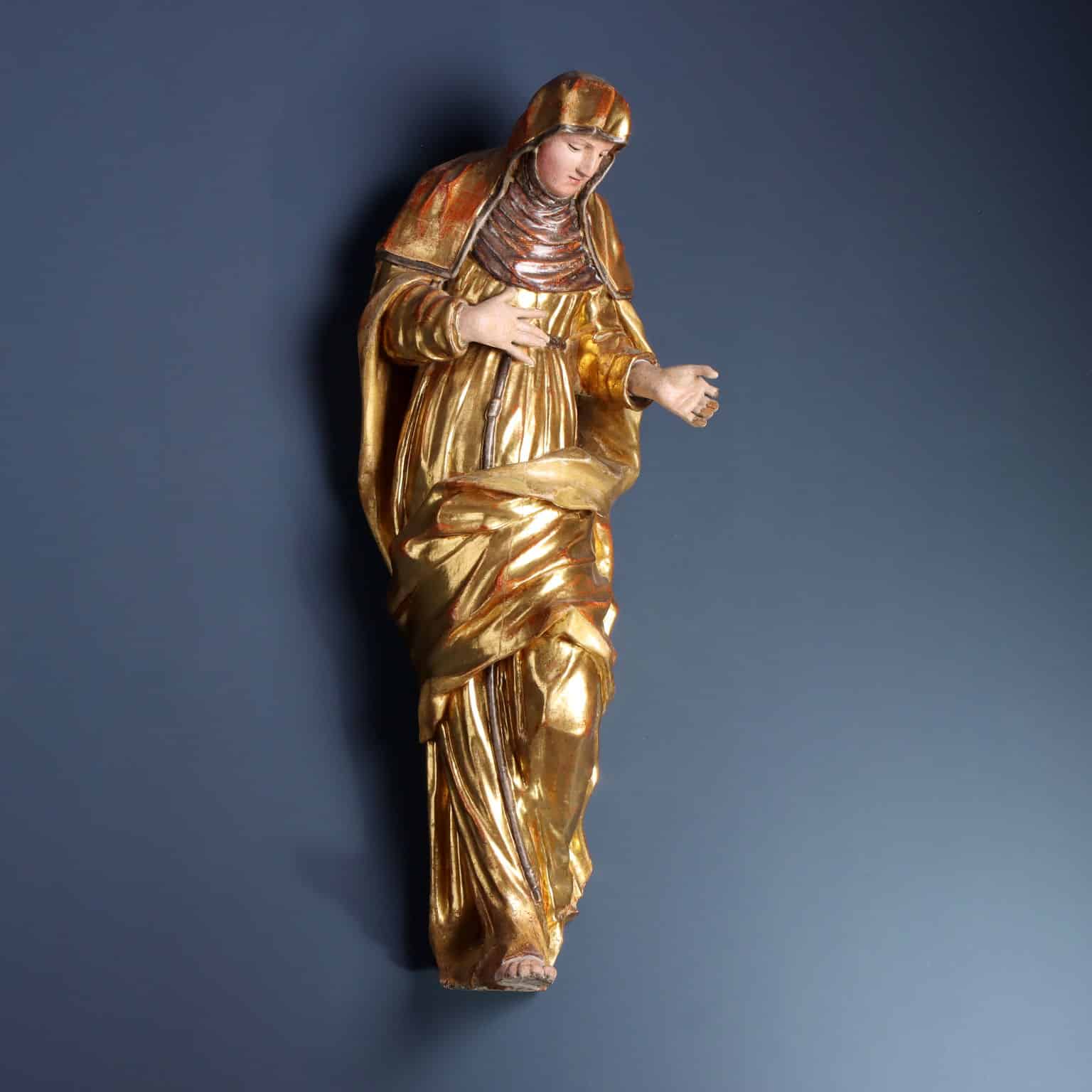
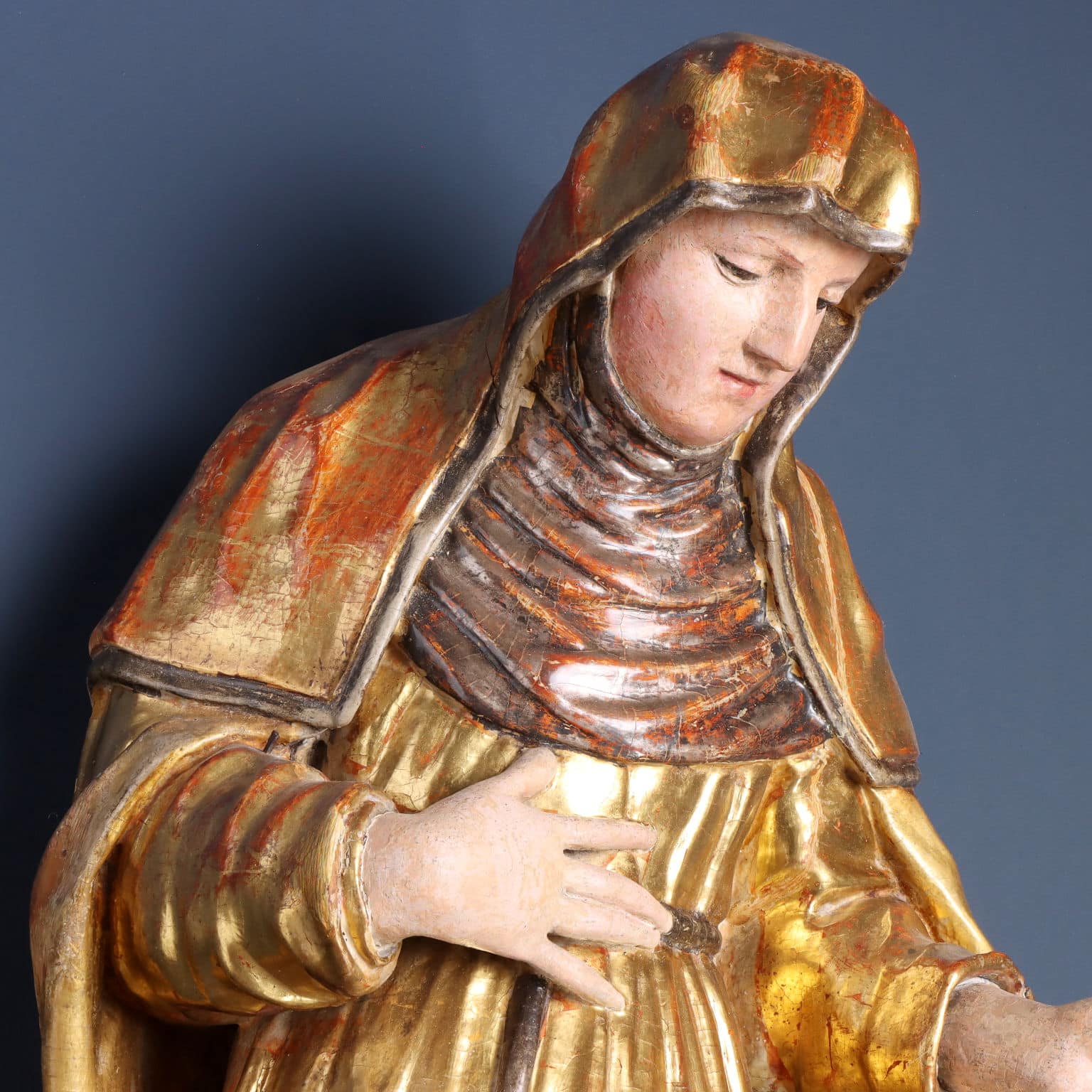
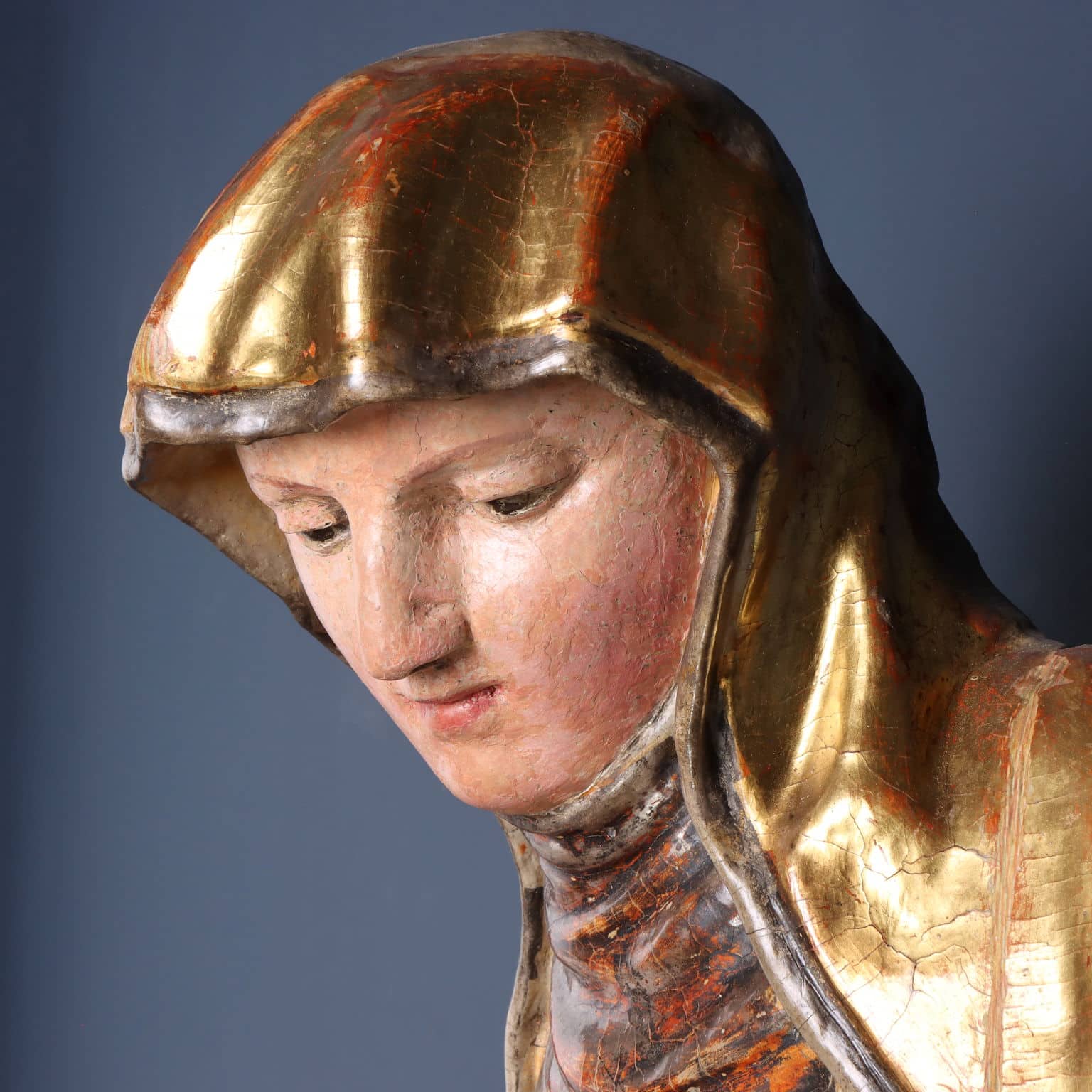
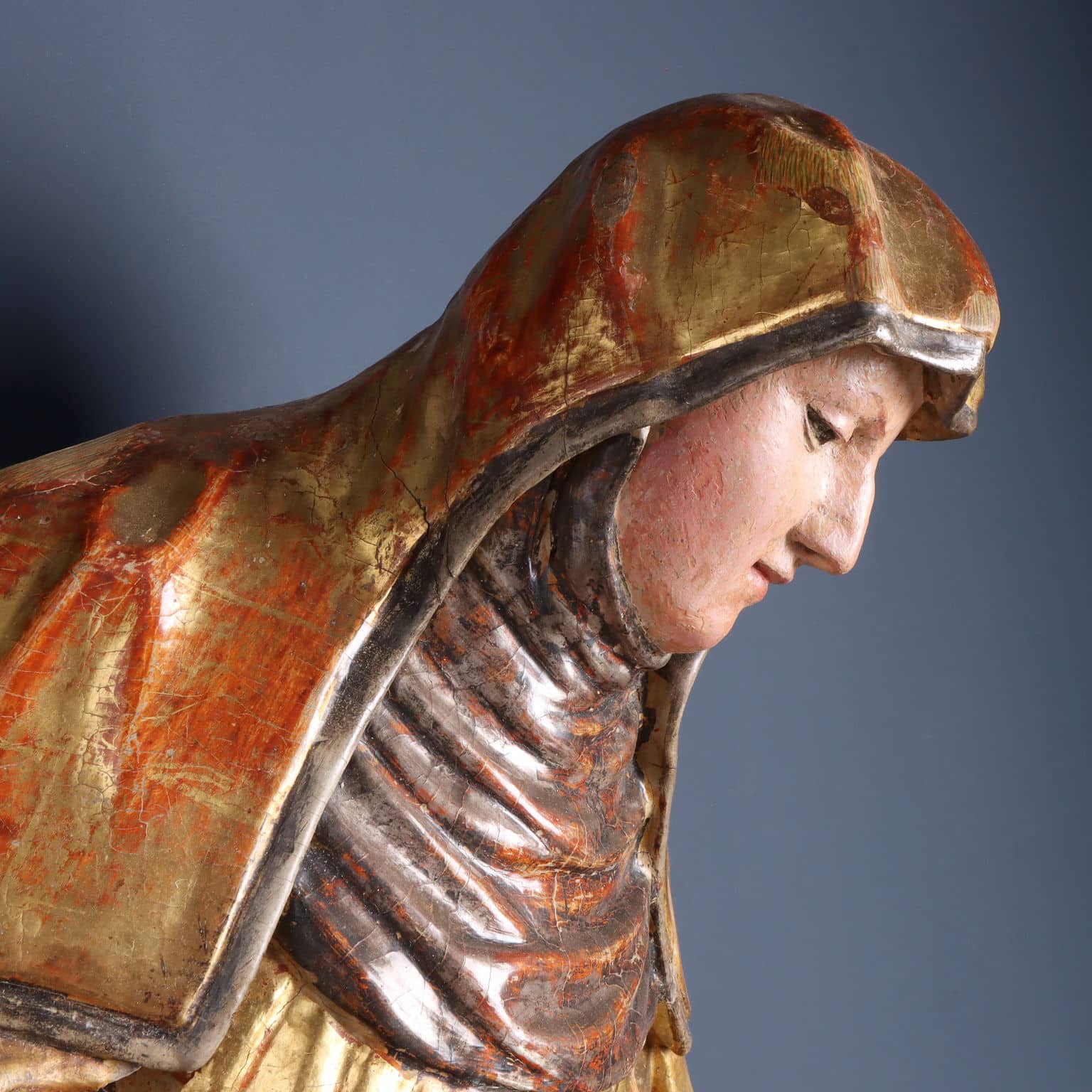
The sculpture depicts Saint Clare of Assisi, identifiable by the distinctive habit of the Poor Clares, with its rope cincture and short, bordered veil.
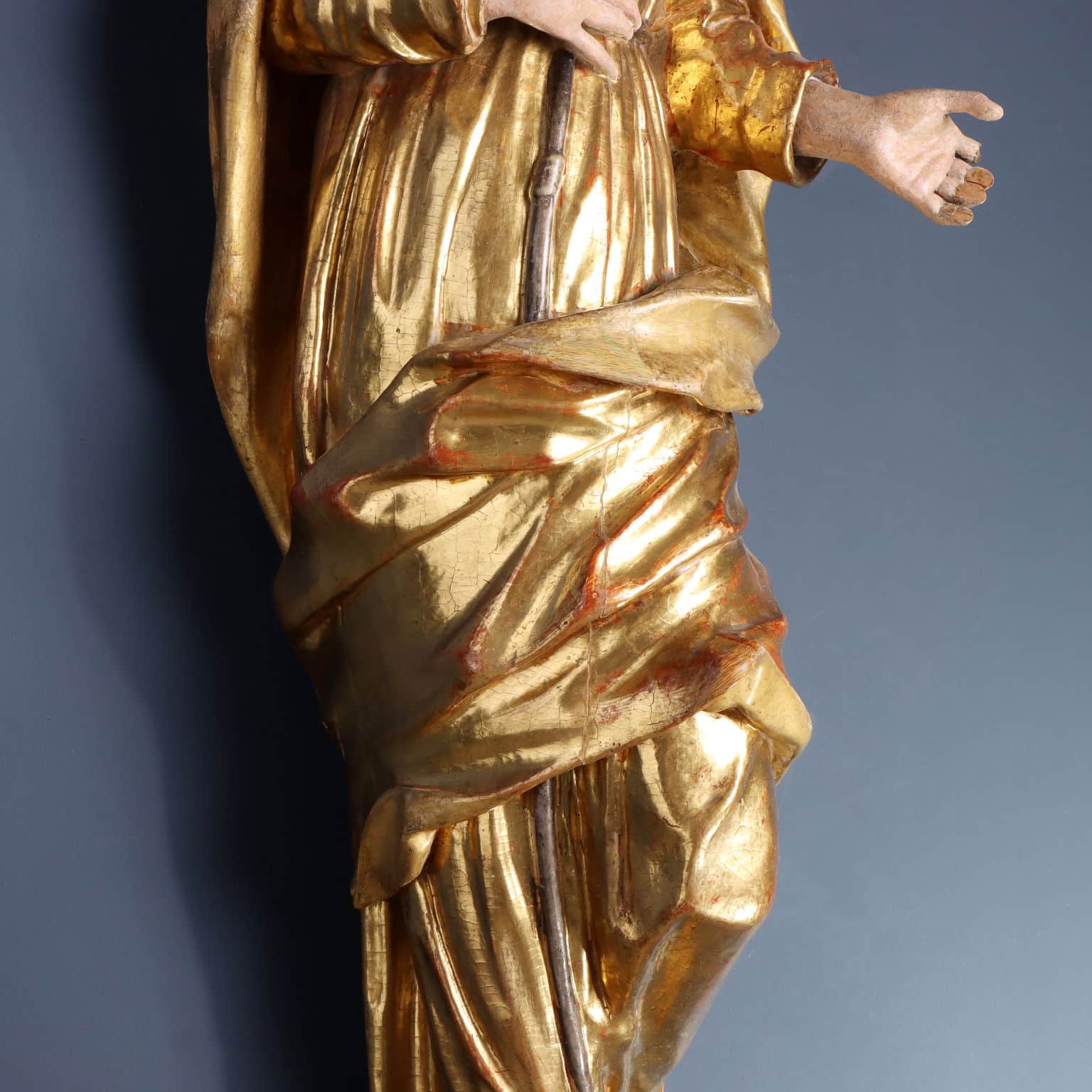
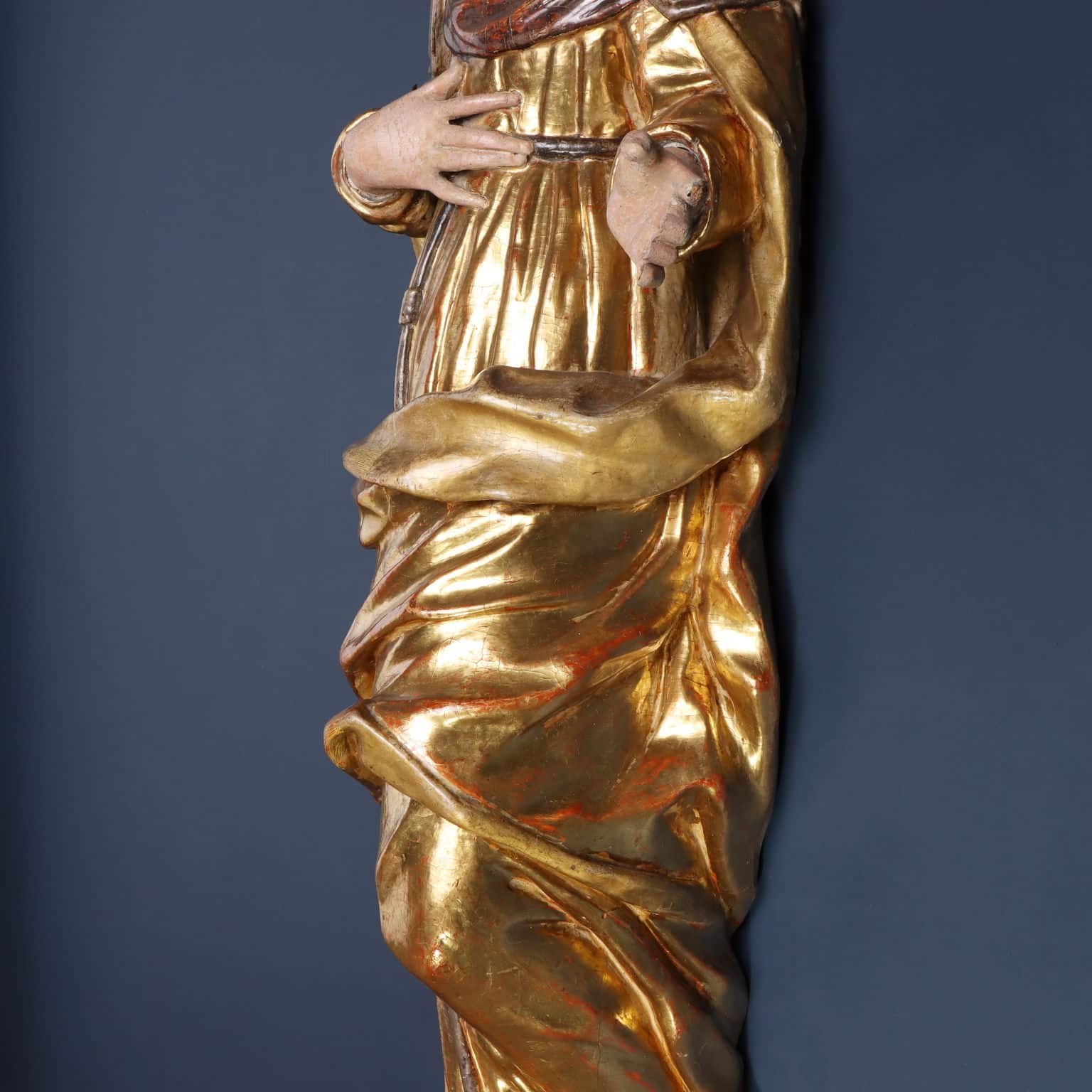
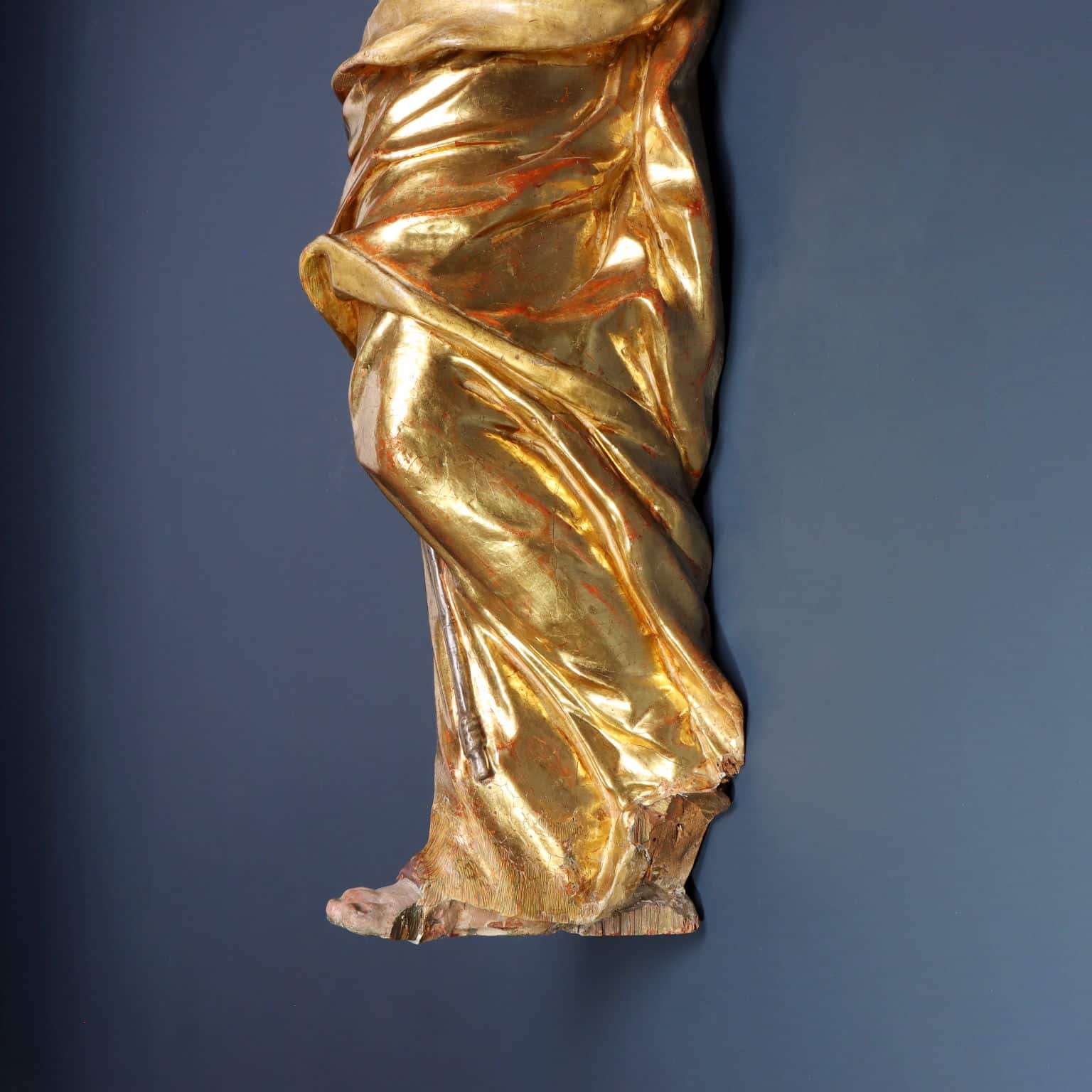
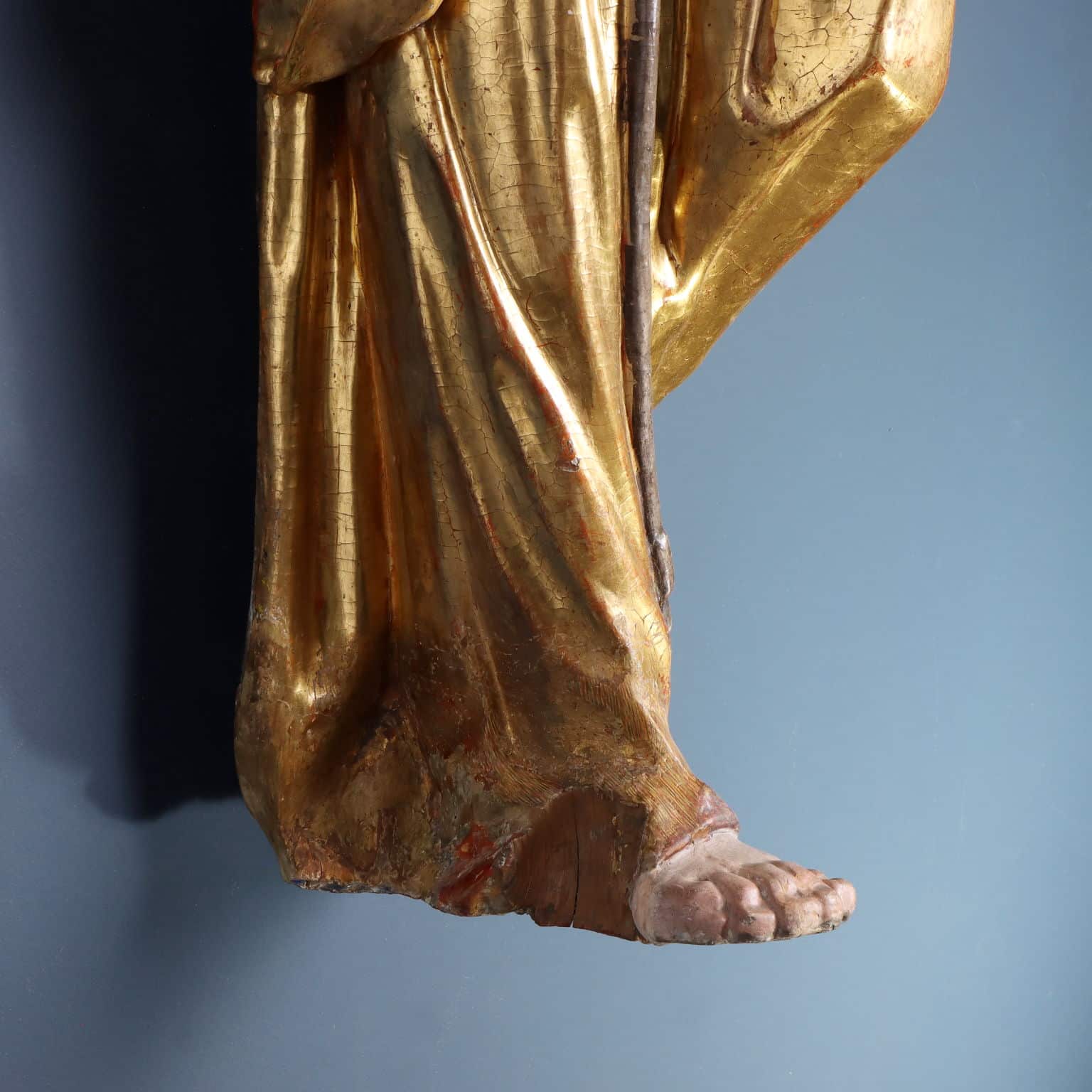
The saint is portrayed in a pronounced contrapposto pose, with her left leg advanced and her knee raised, lending considerable movement to the figure. This dynamism is further accentuated by the voluminous gilded drapery, articulated in deep folds and wrapped around the lower limbs.
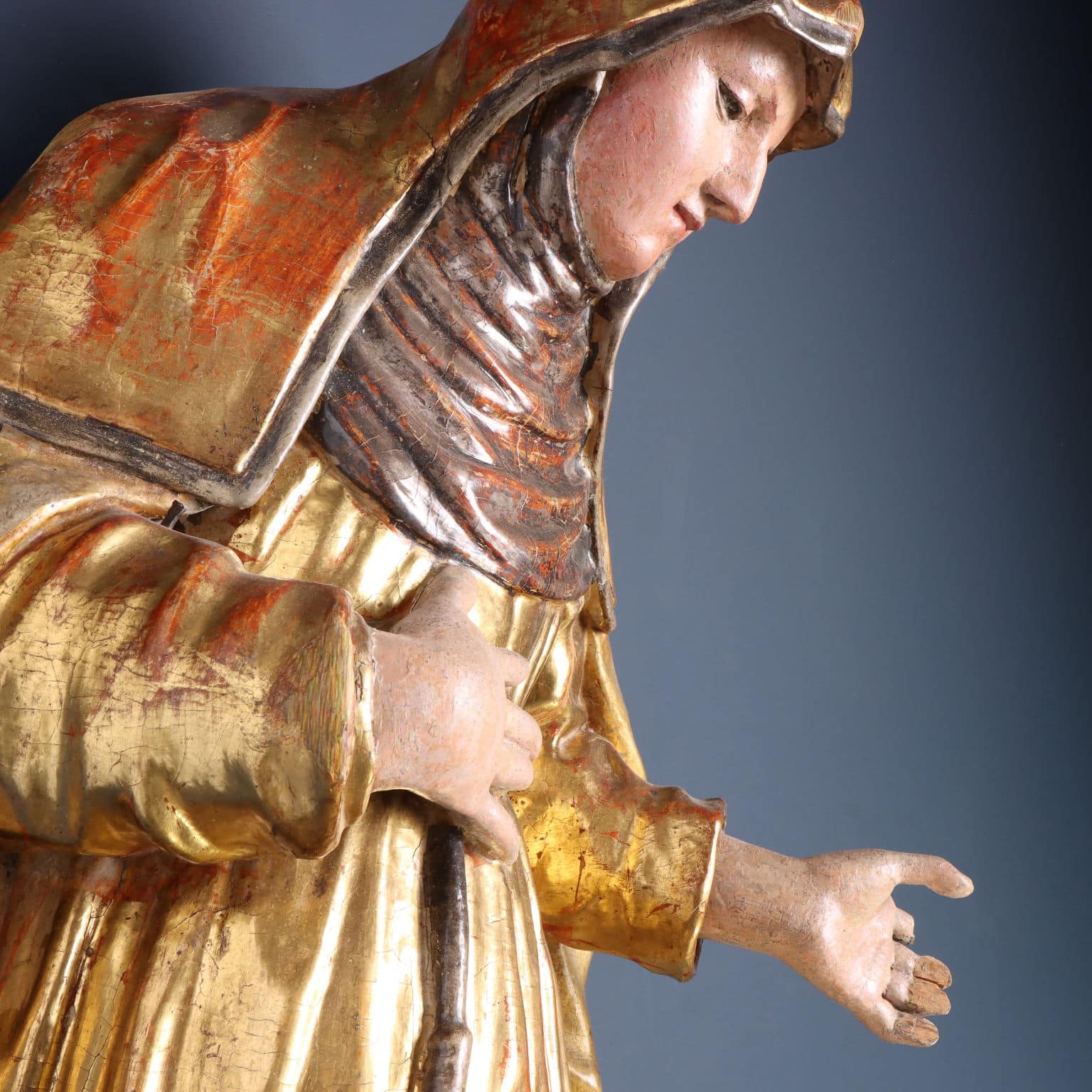
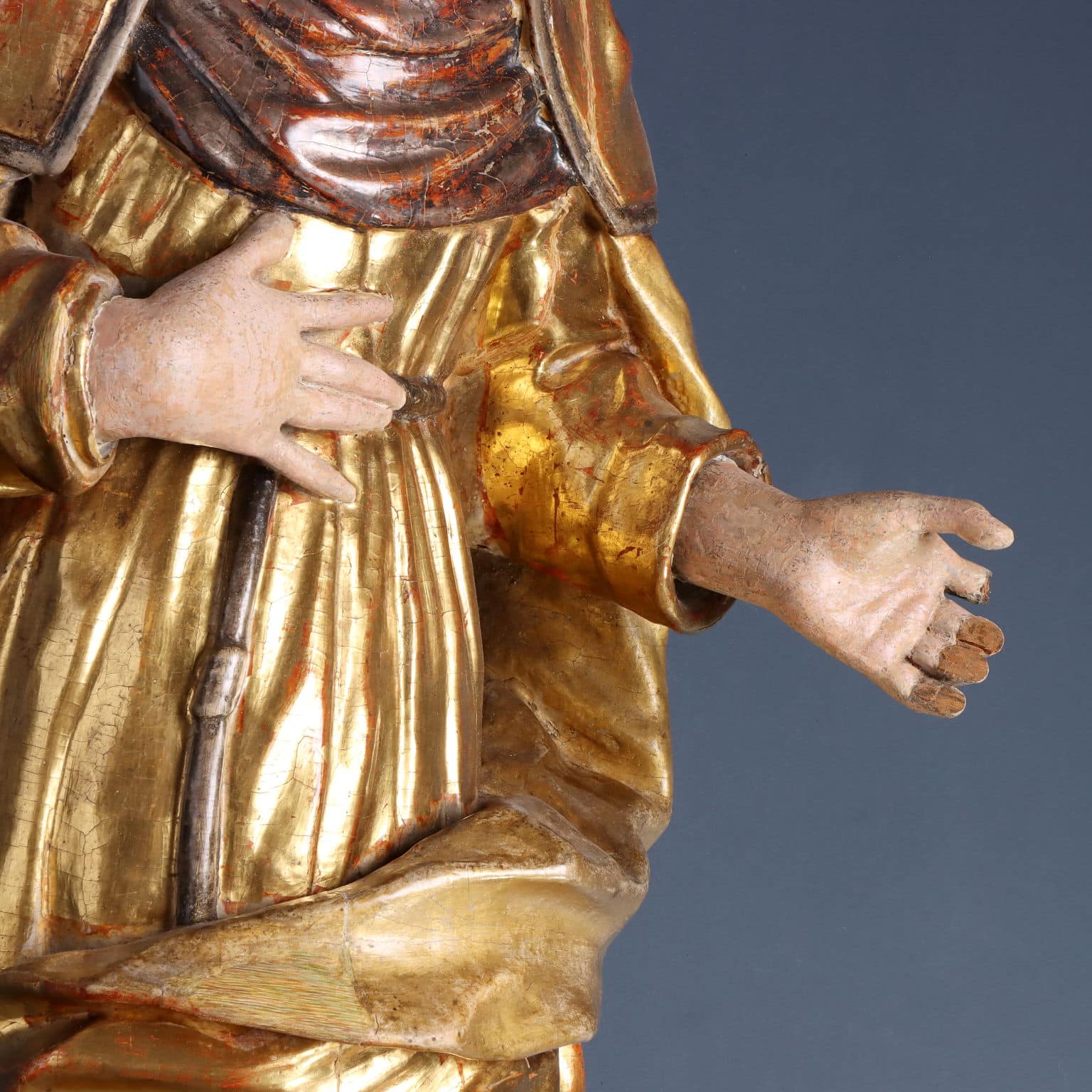
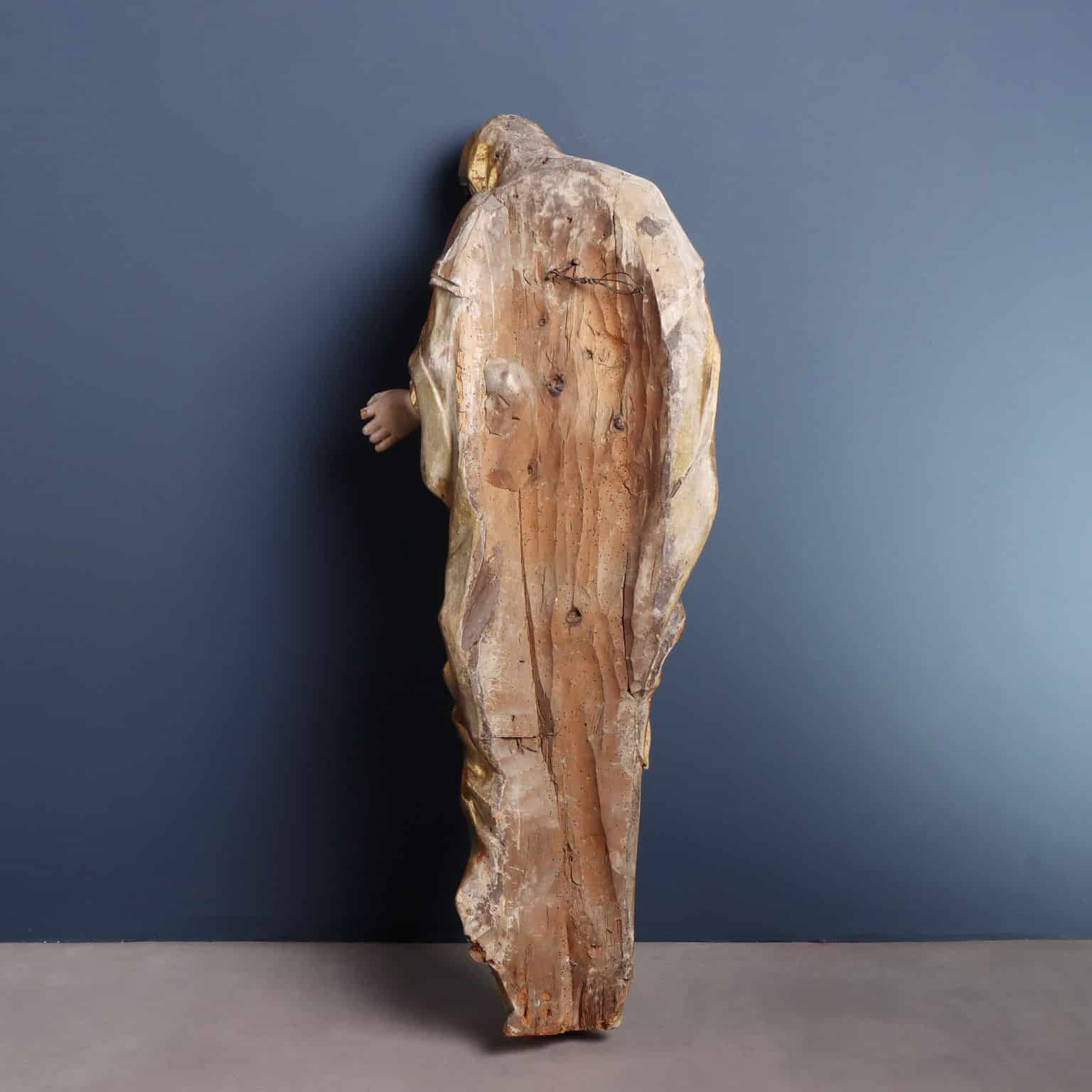
The mantle follows the sinuous contours of the body, while one hand rests upon her chest and the other extends sideways, with the palm open.
The figure is almost entirely gilded, with silvered details on the wimple and along the edge of the veil, while the exposed flesh areas — feet, hands and face — are lacquered.
As suggested by the gestures of her hands, one resting on her chest and the other outstretched, the saint appears to direct her gaze towards the centre of a composition.
This suggests that the statue, originally positioned within a wooden architectural setting or altarpiece, was oriented towards a painted altarpiece or sculptural element (possibly a Crucifix), which would presumably have been accompanied by a second sculpture on the opposite side, perhaps depicting Saint Francis of Assisi.
Dimensions: 101 × 39 × 25 cm
Code: ARARAR0322404
As noted by Giuseppe Sava in his expert report, the sculpture belongs to the Late Baroque artistic tradition of South Tyrol, a region where, between the seventeenth and eighteenth centuries, influences from both the German-speaking territories and the Italian peninsula converged.
Within this context, the principal point of reference is Domenico Molin, a sculptor originally from Val Badia (Gadertal), whose artistic training, according to historical sources, took place between Salzburg, Venice, Rome and Dresden, where he is also believed to have worked alongside Balthasar Permoser.
Saint Clare presents significant parallels with Molin’s wooden sculptures preserved in the Diocesan Museum of Bressanone (Brixen), particularly his Saint Gertrude, in the dynamic conception of the figure, the sinuous outlines of the mantles and the intricate arrangement of folds in the lower section.
Further similarities can be observed in the gestures and the treatment of the gilded surfaces.
However, Saint Clare displays a more linear and somewhat less mature execution. These characteristics allow the sculpture to be cautiously dated to between 1720 and 1730, corresponding to the early and still relatively undocumented phase of Molin’s artistic career.
The sculpture also features the distinctive motif of an outstretched arm from which the fabric falls in a sinuous movement, a compositional device that would become recurrent in Molin’s work, particularly during the 1730s and 1740s.

FineArt is the new ambitious Di Mano in Mano project that offers an exclusive choice of antiques and design works, presenting them for their singularity and uniqueness.

FineArt by Di Mano in Mano is a team of experts at your service to enhance furniture, paintings, finest antiques, art and design masterpieces at best.
Di Mano in Mano
Via Castellazzo 8, Cambiago (MI)
20040