- Two Angels, Hans Patsch, c. 1630–1635

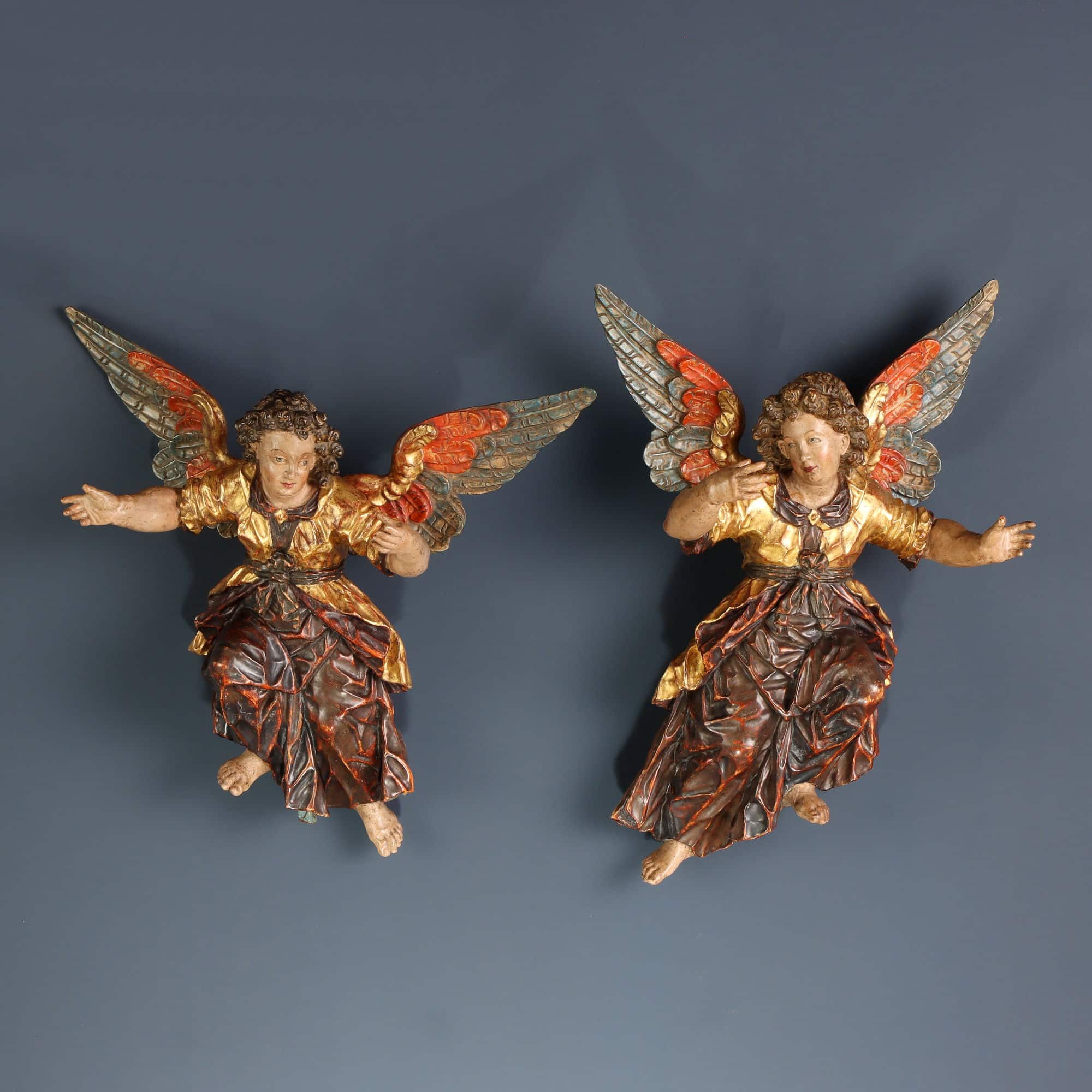
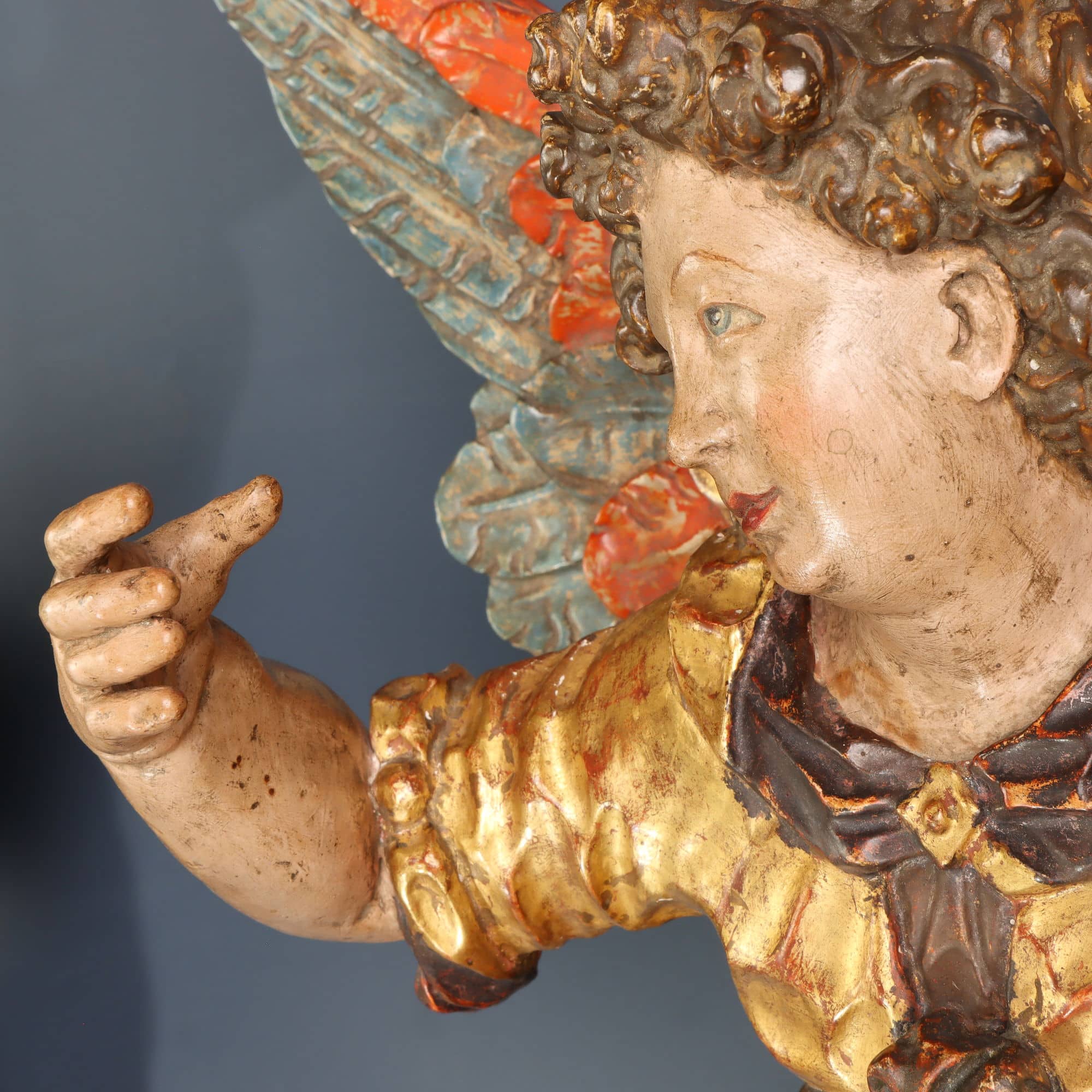
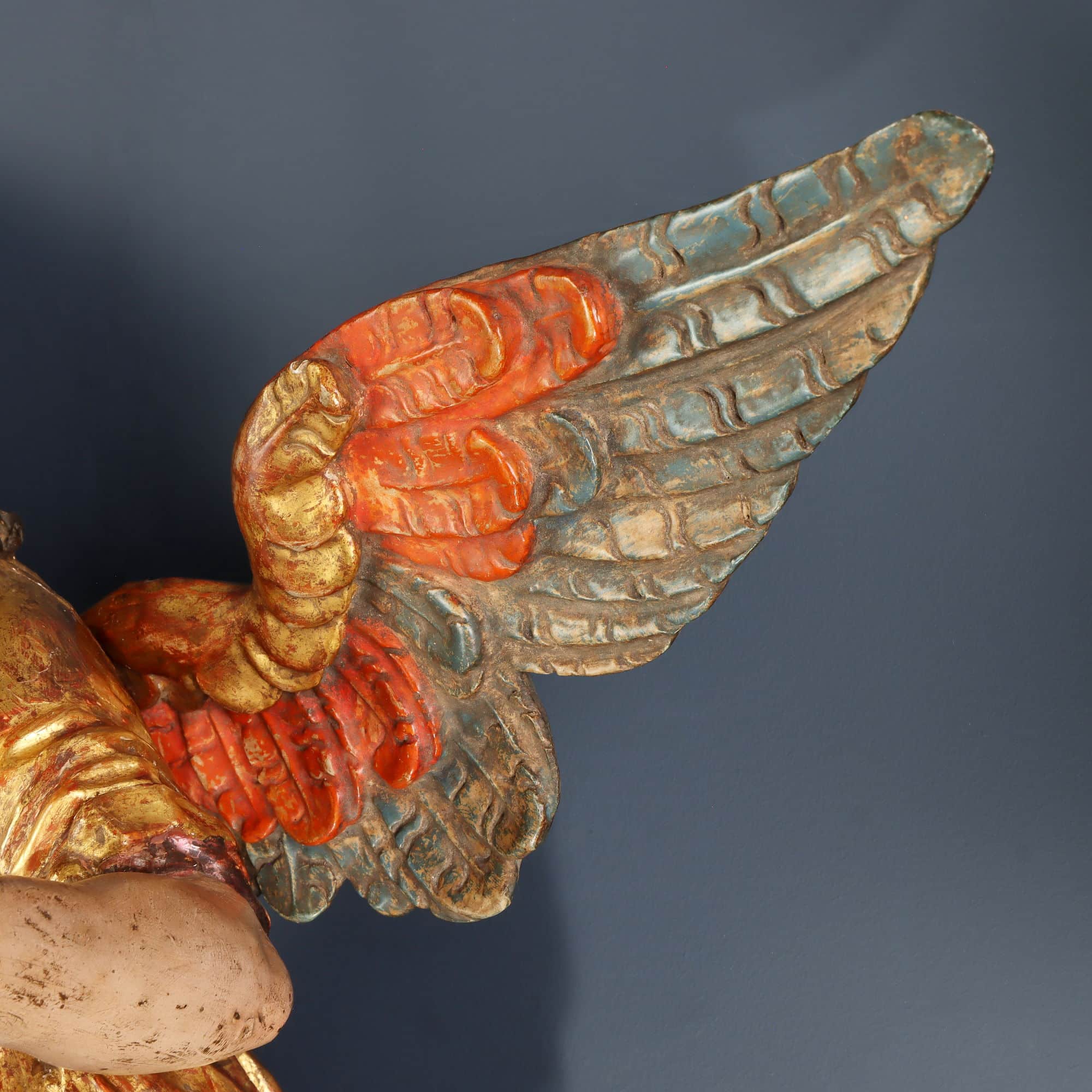
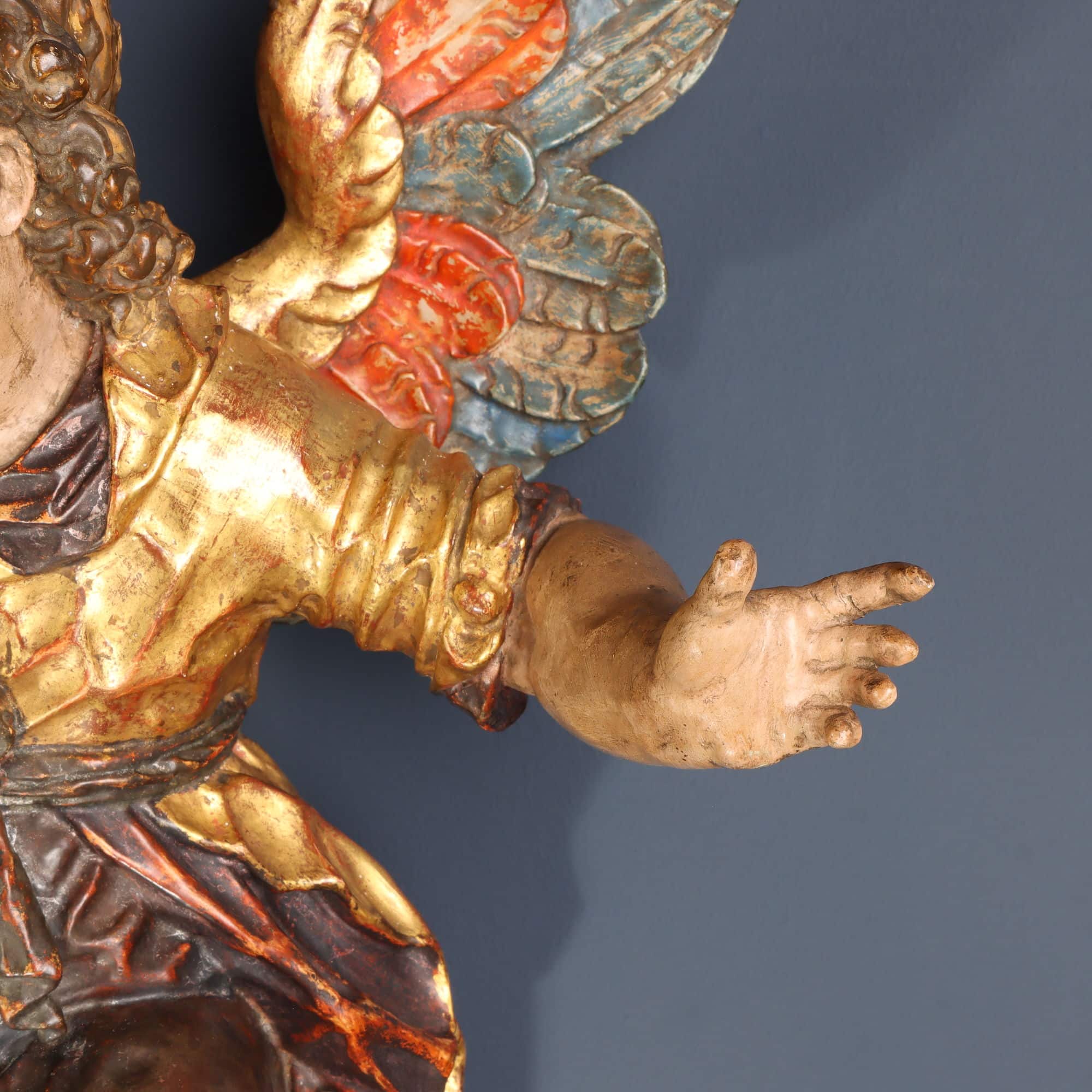
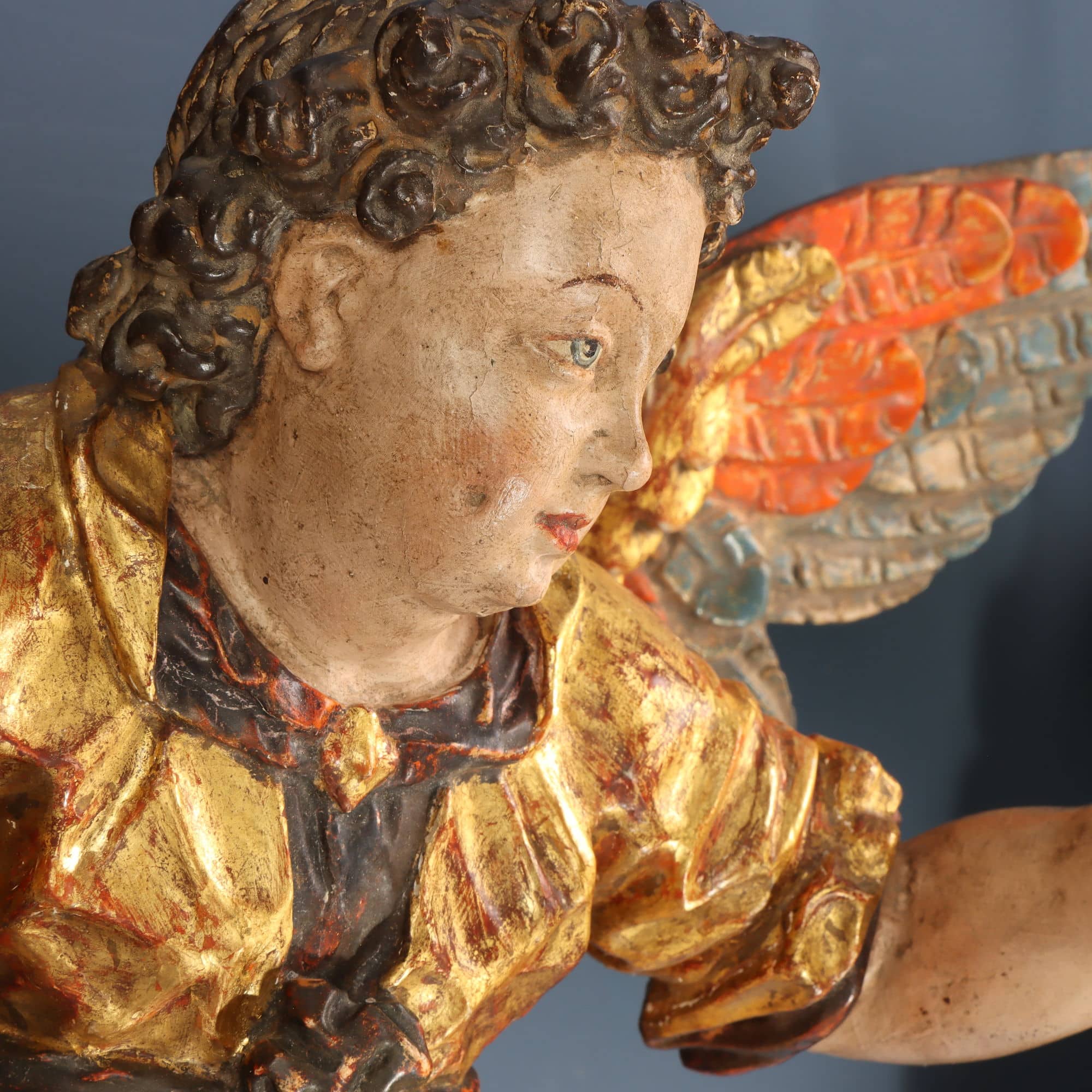
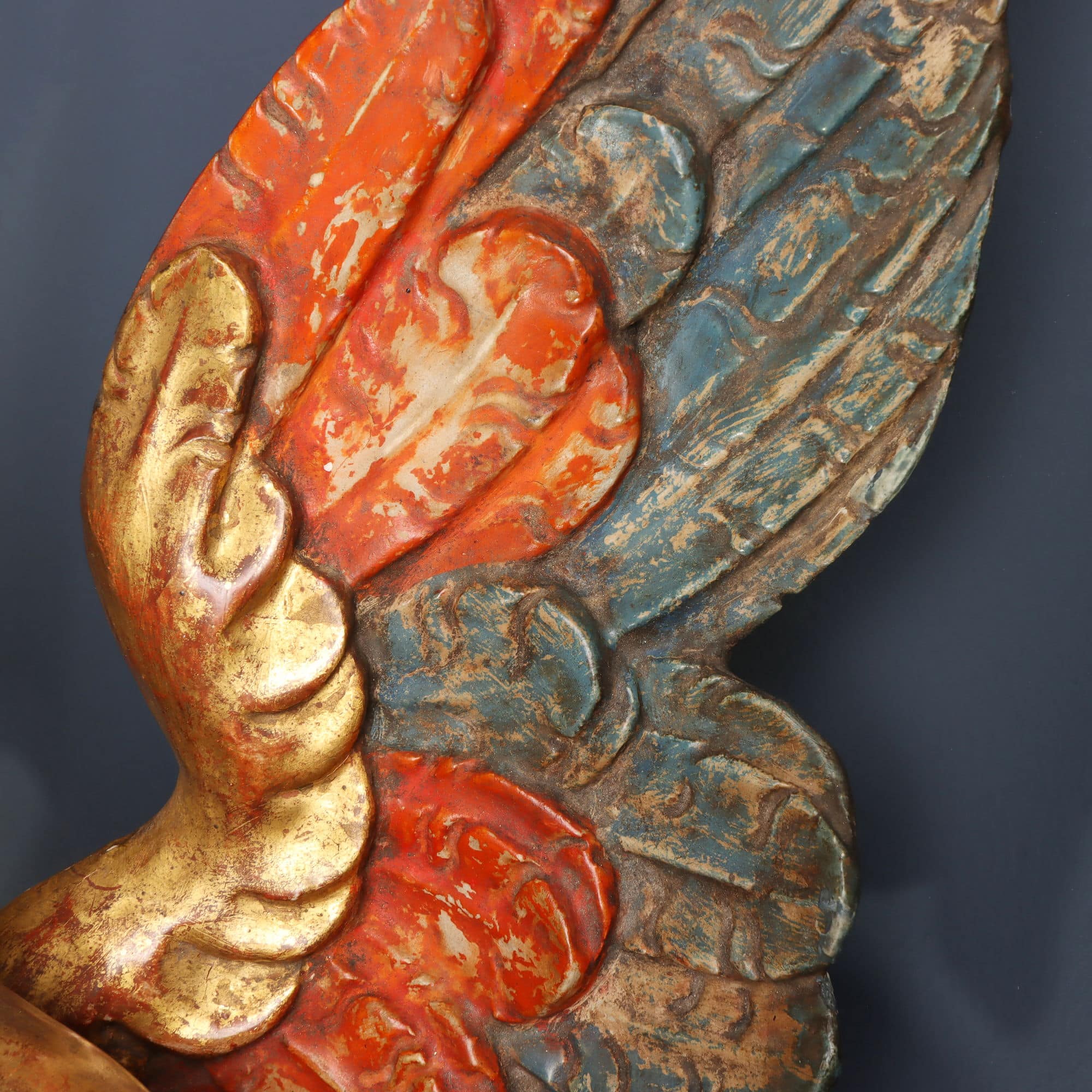
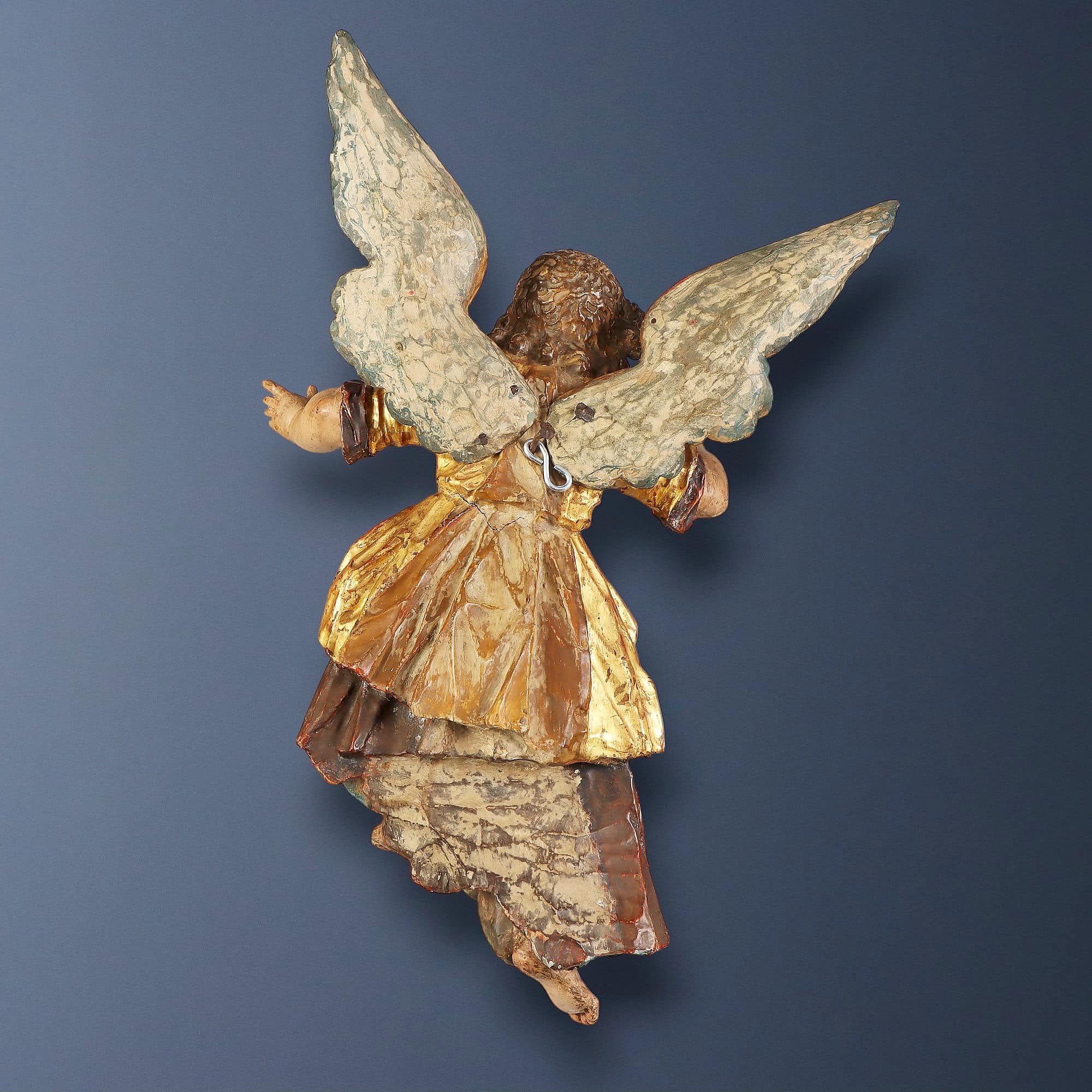
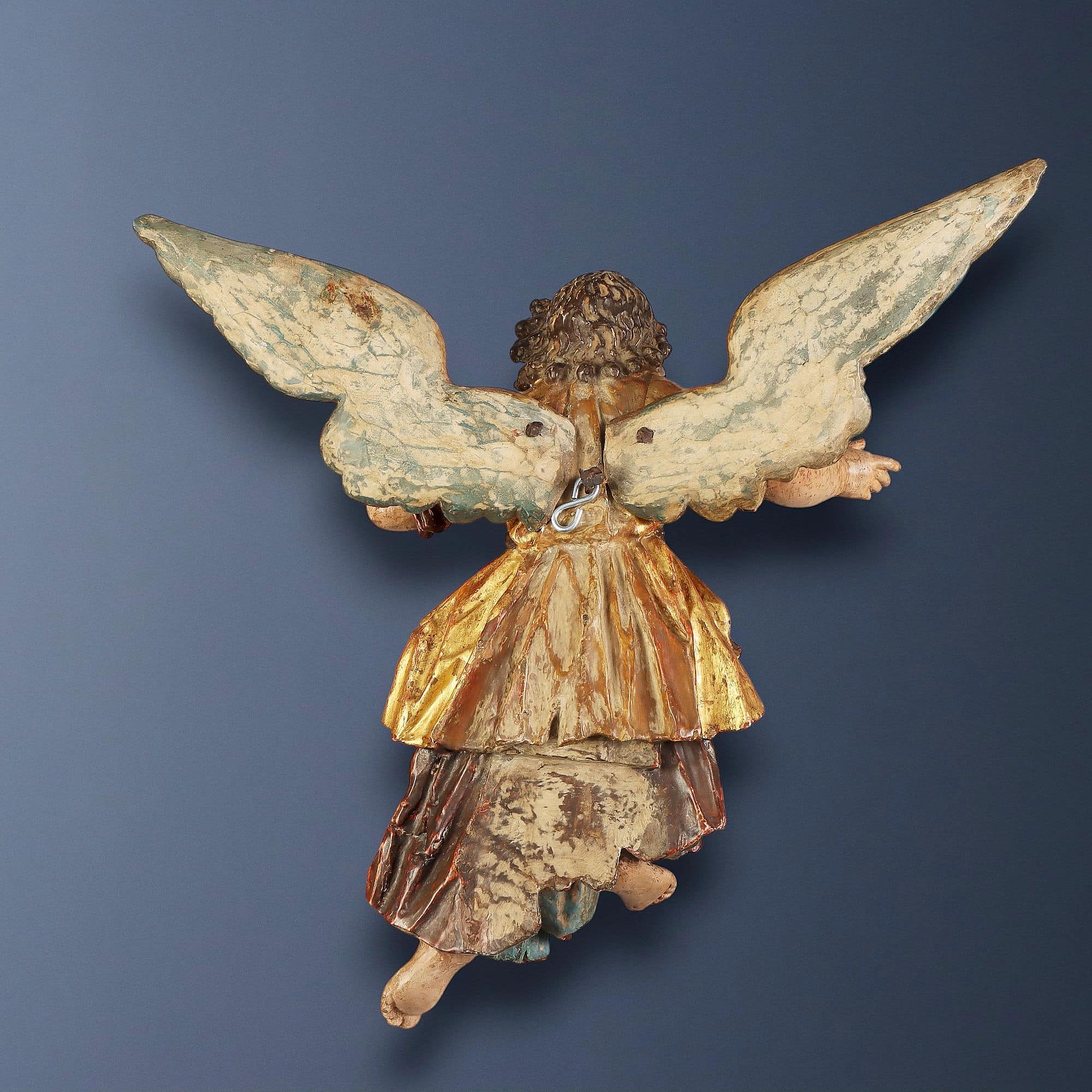
Pair of angels carved, painted and gilded in wood, depicted in mirrored poses, with outstretched arms and large, spread wings featuring polychrome feathers in shades of gold, red and blue-green.
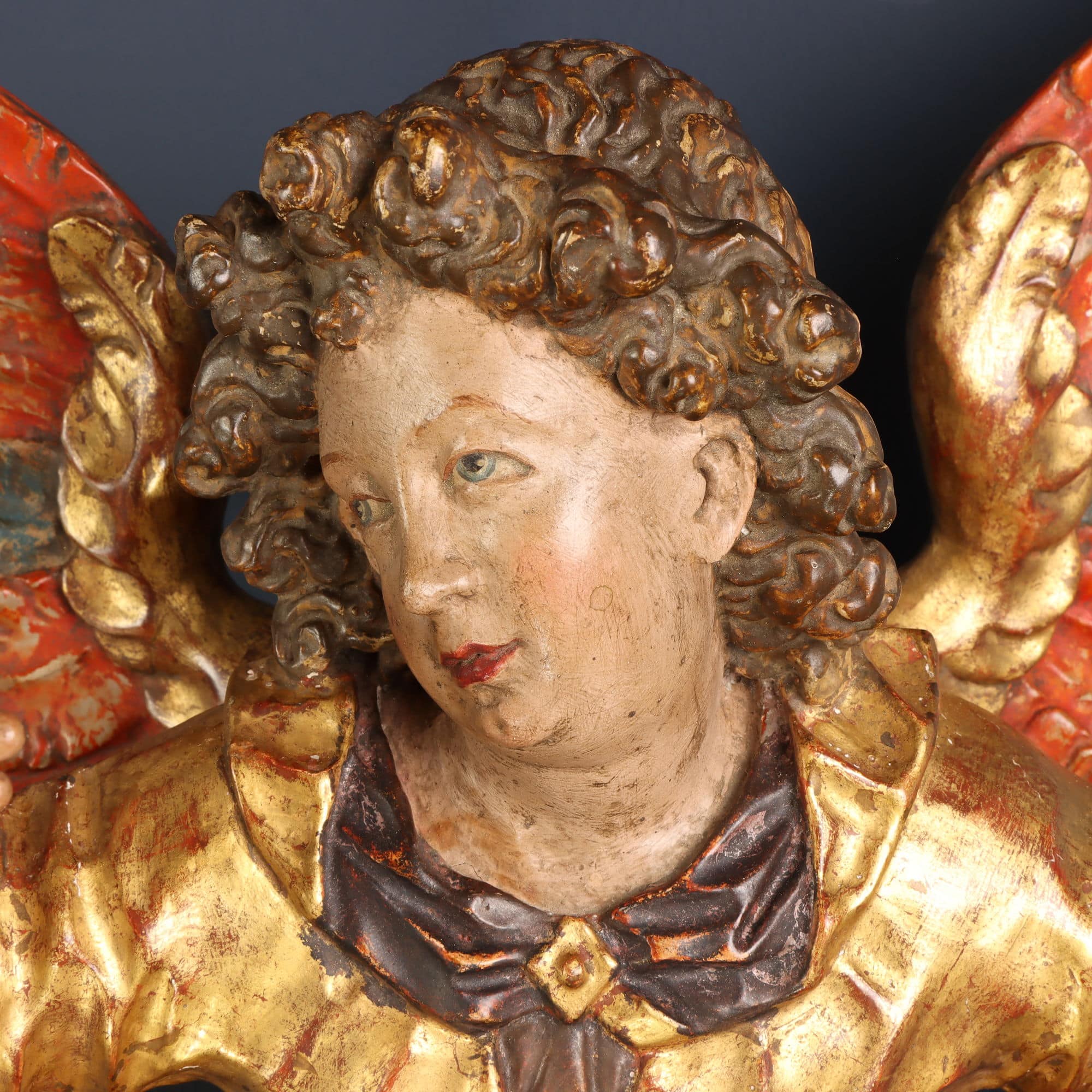
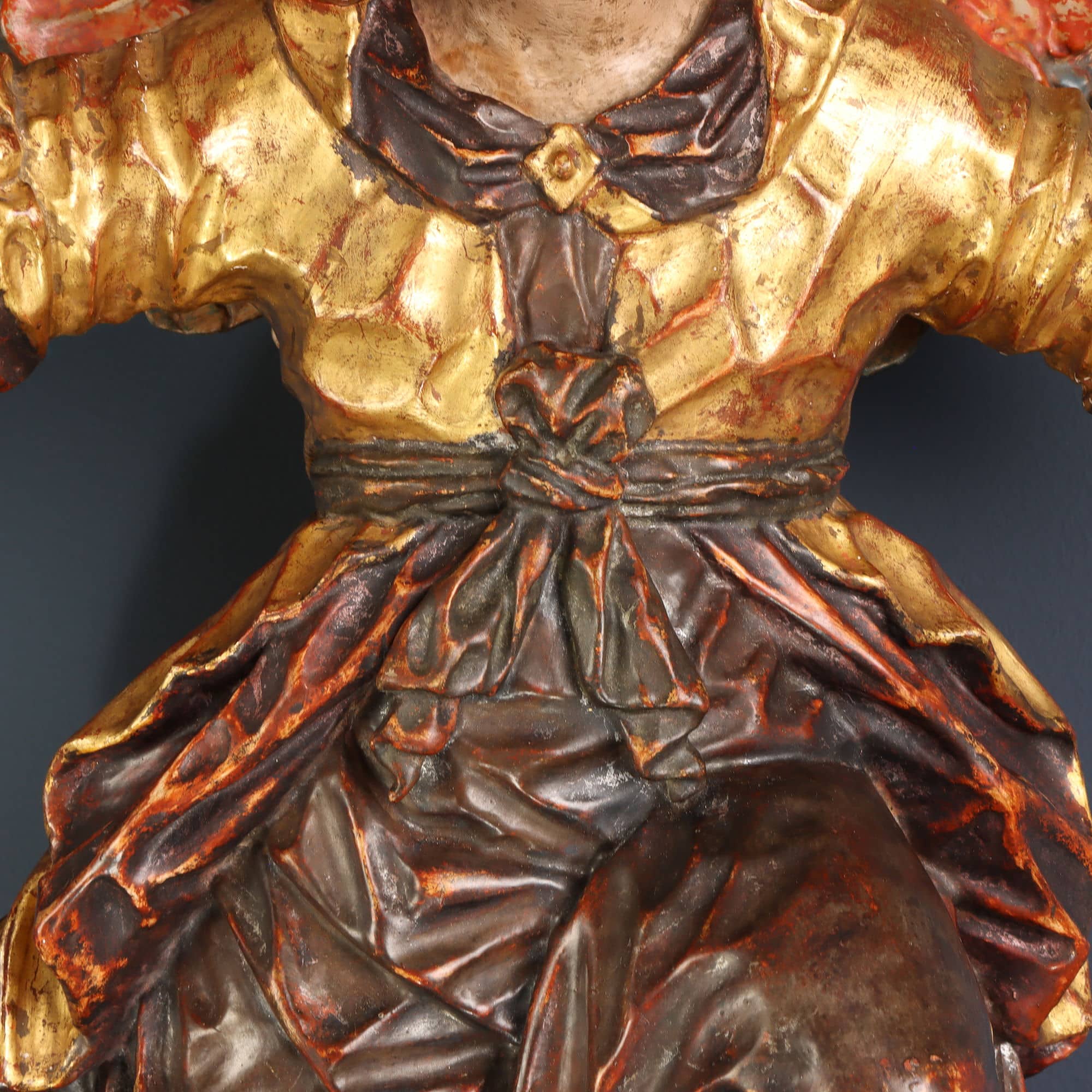
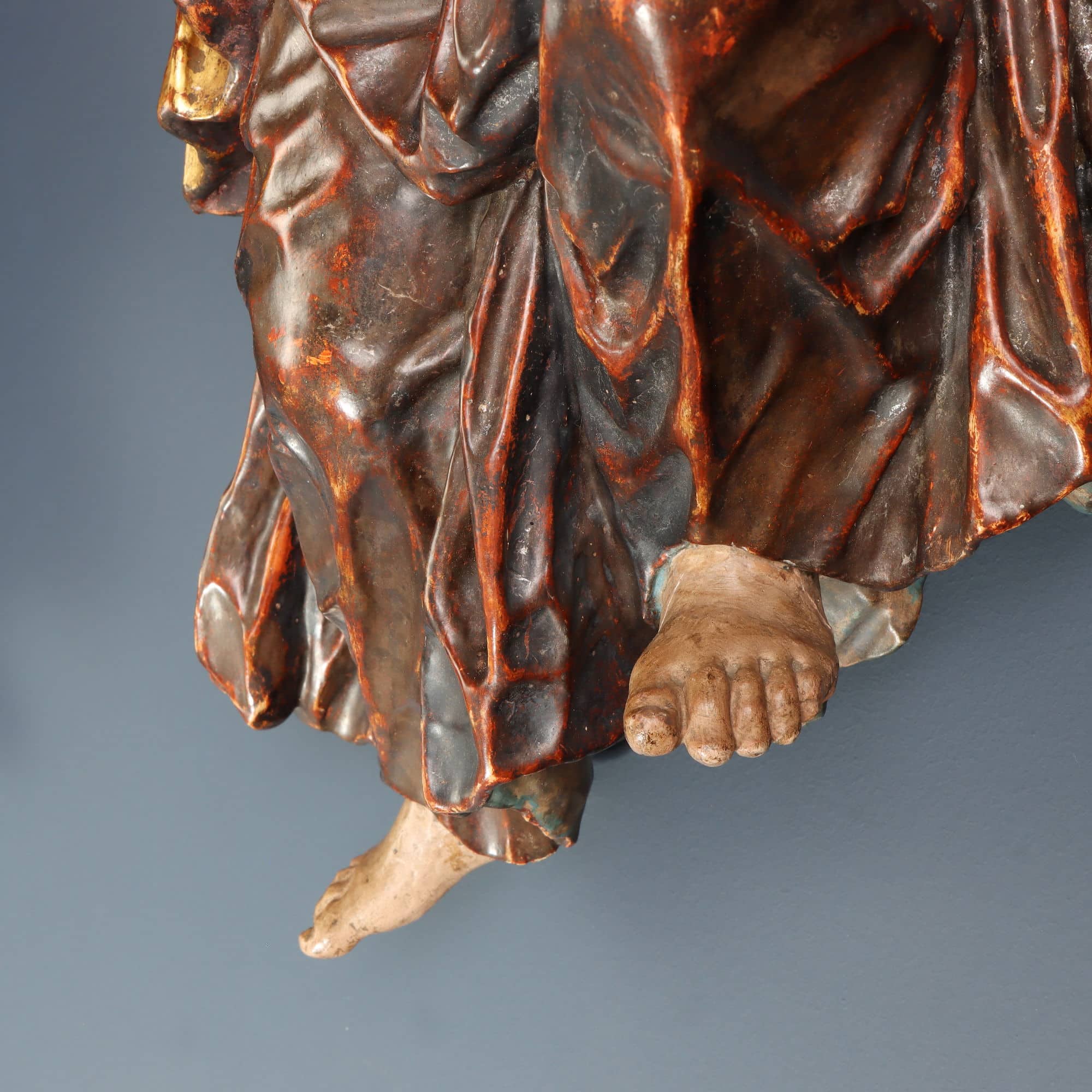
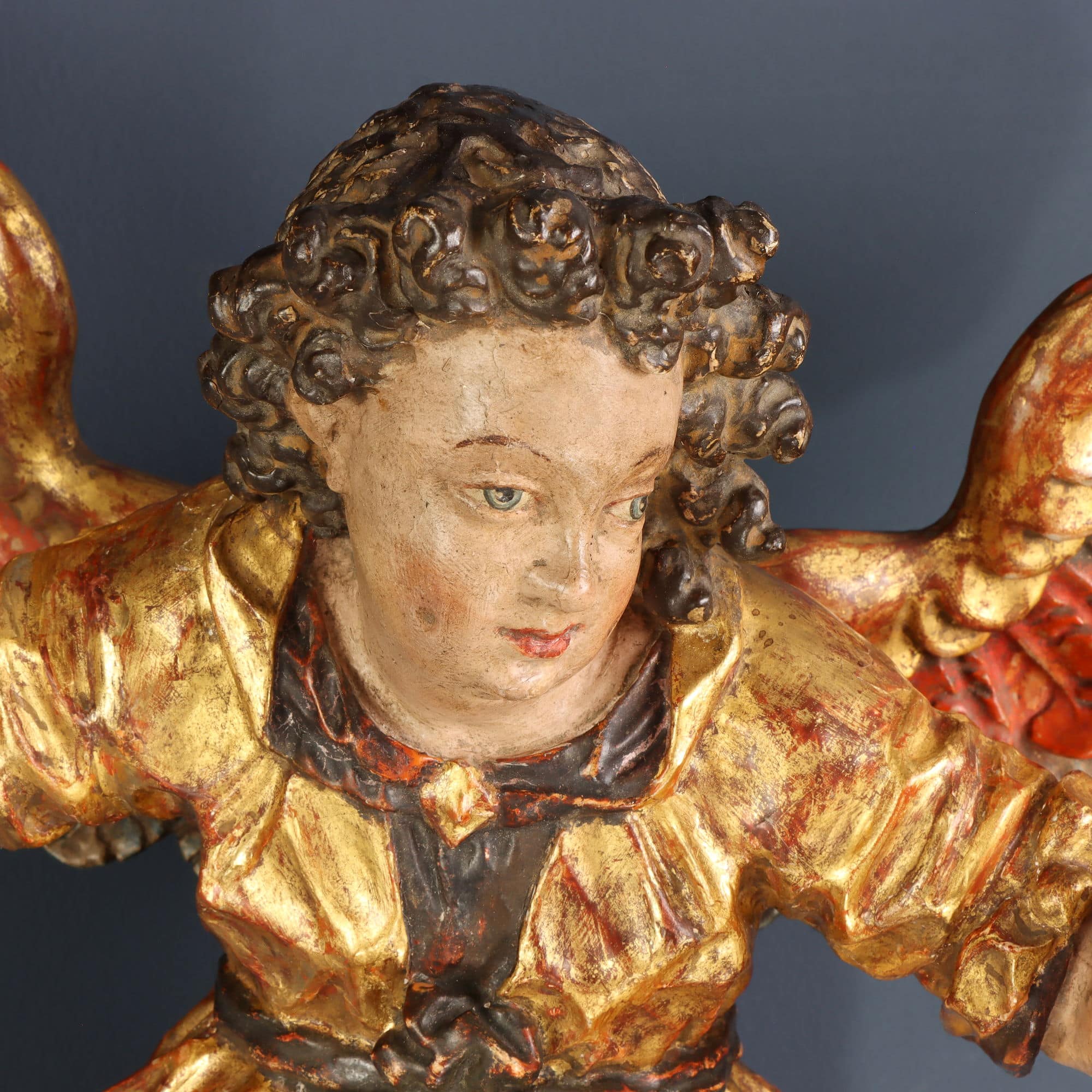
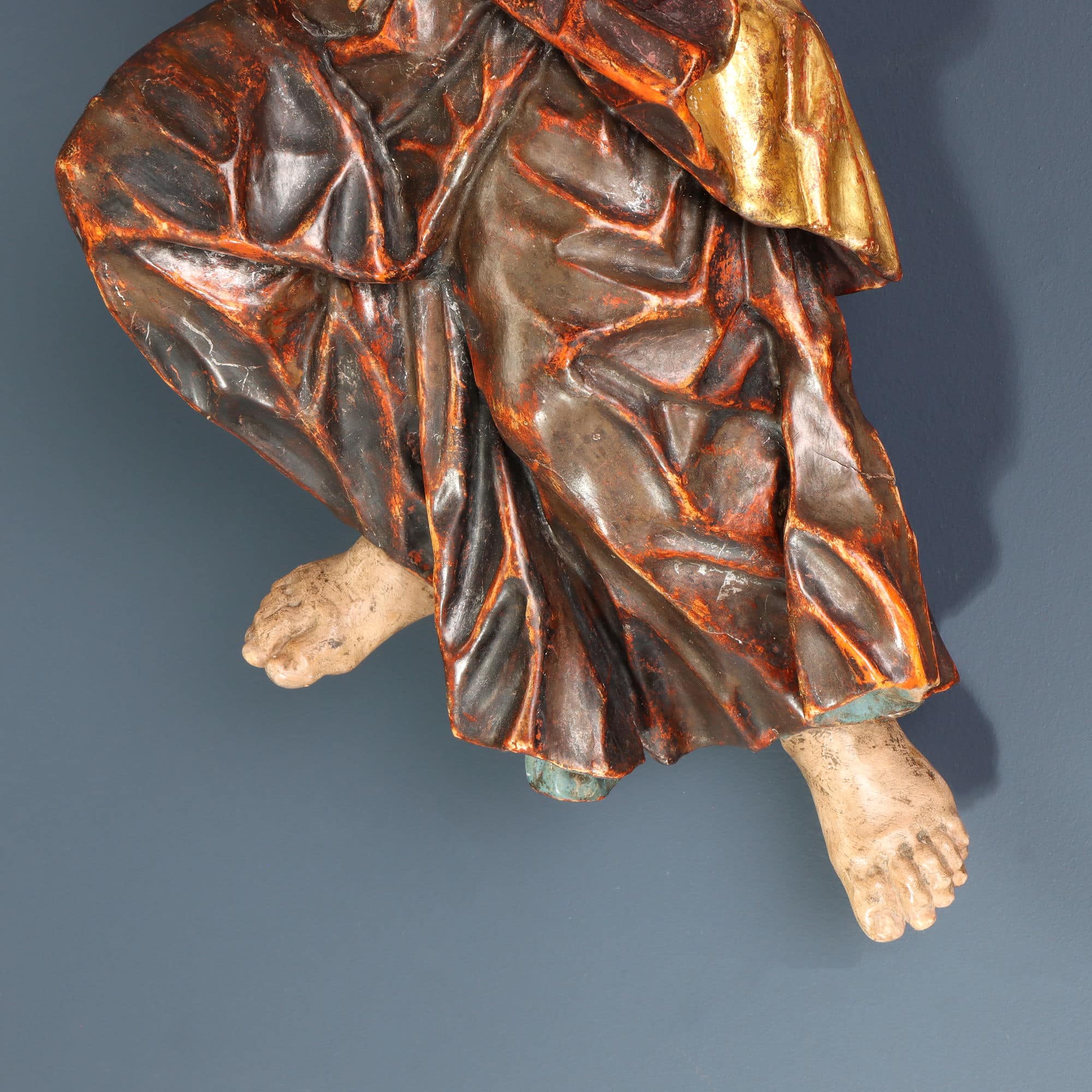
The figures wear long reddish-brown tunics, animated by densely arranged, angular folds, over which are fitted gilded doublets, cinched at the waist and revealing the diamond-shaped clasps beneath. Their plump faces, with light-coloured eyes and full lips, are framed by thick curls arranged in a radiating pattern.
Dimensions: 55 × 48 × 19 cm; 65 × 37 × 18 cm
Code: ARARAR0322403
The two sculptures can be attributed to the oeuvre of Hans Patsch, a Tyrolean woodcarver active during the first half of the seventeenth century. Initially trained within the Late Mannerist tradition, Patsch subsequently worked in the workshop of Christoph Rodt between 1619 and 1623.
His fully developed Baroque style is distinguished by the treatment of drapery, articulated into faceted surfaces that enhance the luminous effects of the gilding, as well as by his characteristic rendering of faces and hairstyles.
Particularly significant comparisons can be drawn with the sculptures of the Altar of the Crucifixion at Pfunds-Stuben, documented in 1630. The figure of Saint John the Evangelist offers close parallels in the treatment of drapery and radiating curls, while the Virgin Mary shares similar facial features, including prominent eyes and a dimple in the full chin.
Further affinities can be observed with the angels crowning the Altar of Saint Michael in Imst, particularly in their poses, garments and gold and reddish-brown polychromy. However, the most compelling evidence supporting the attribution lies in the modelling of the faces and the treatment of the hair.
The South Tyrolean provenance of the sculptures, together with comparisons to the artist’s later production, particularly the angels at Parcines, allows them to be dated to the early 1630s, during Patsch’s activity in the Merano area.
Originally, the figures were plausibly incorporated into a wooden liturgical structure, most likely an altar pediment, as suggested by their mirrored poses and balanced gestures.
The work is accompanied by an expert report by Professor Giuseppe Sava.

FineArt is the new ambitious Di Mano in Mano project that offers an exclusive choice of antiques and design works, presenting them for their singularity and uniqueness.

FineArt by Di Mano in Mano is a team of experts at your service to enhance furniture, paintings, finest antiques, art and design masterpieces at best.
Di Mano in Mano
Via Castellazzo 8, Cambiago (MI)
20040