- Rabbits and Live Birds with Game – Sinibaldo Scorza

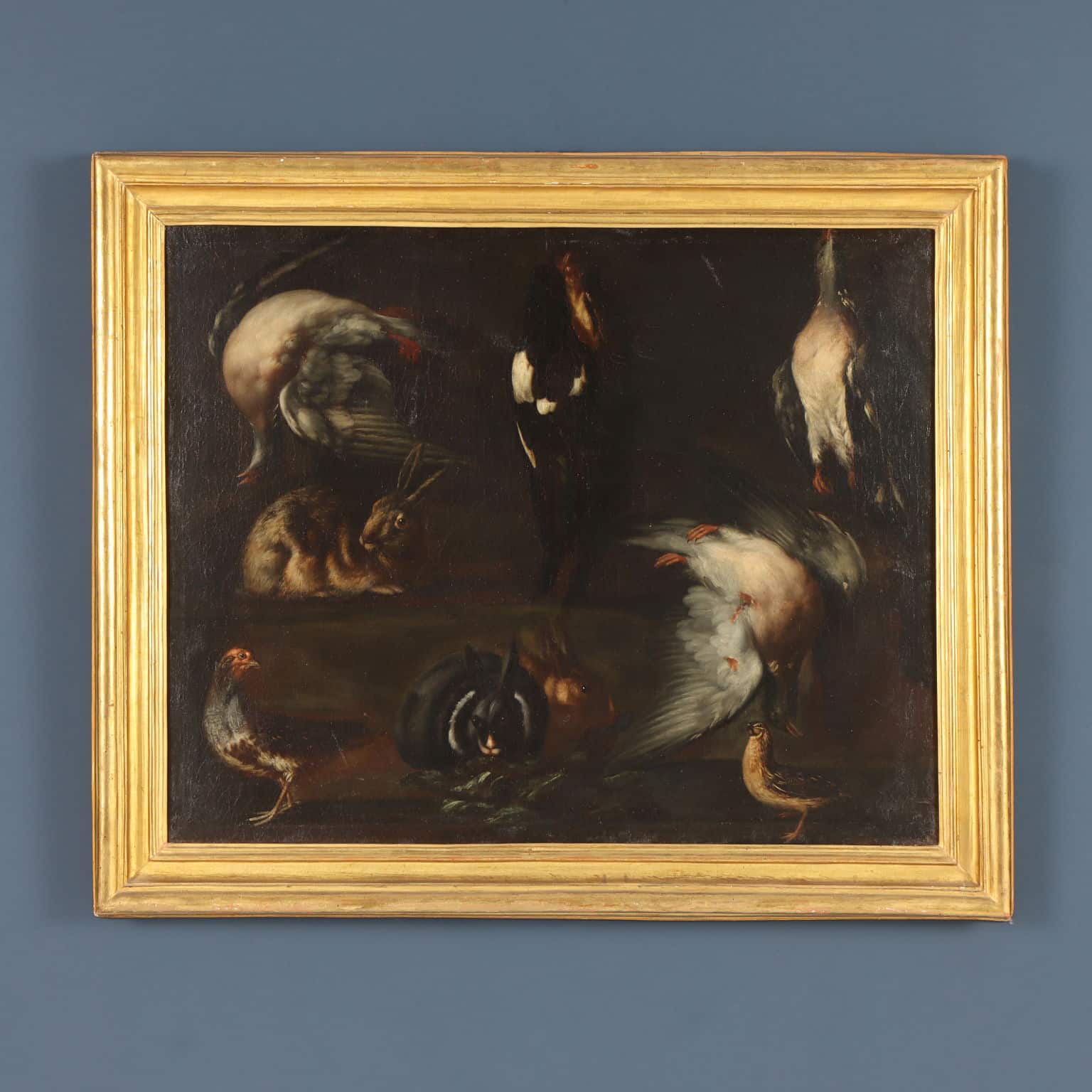
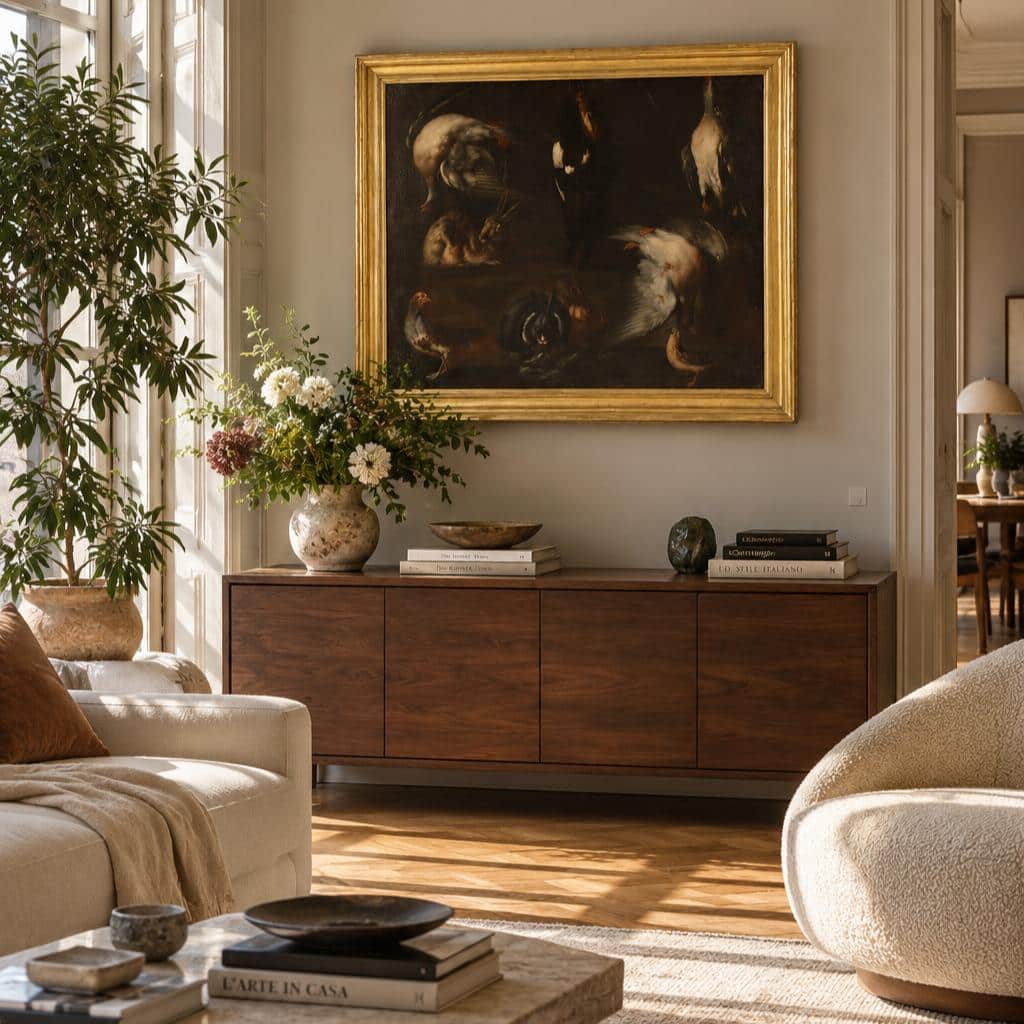
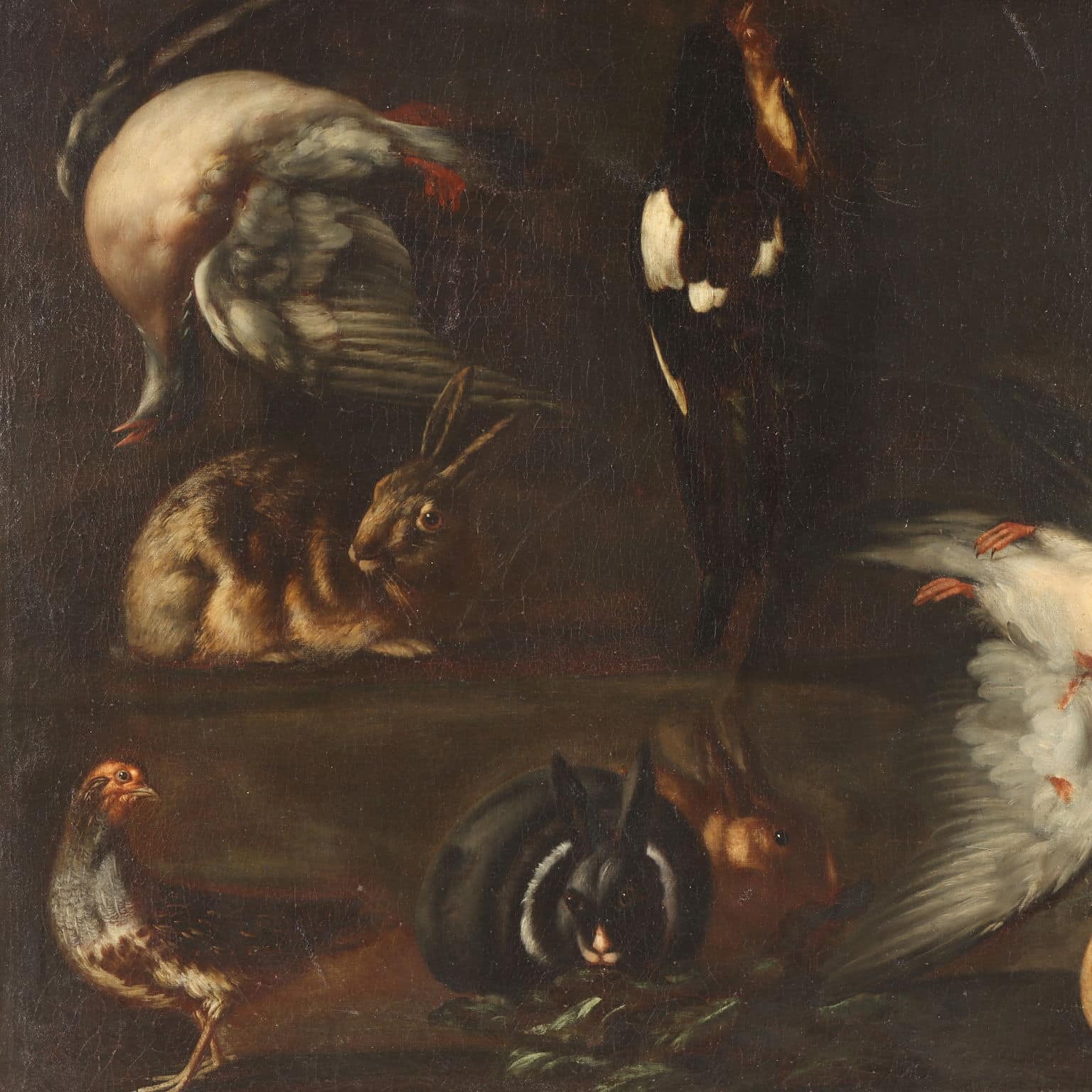
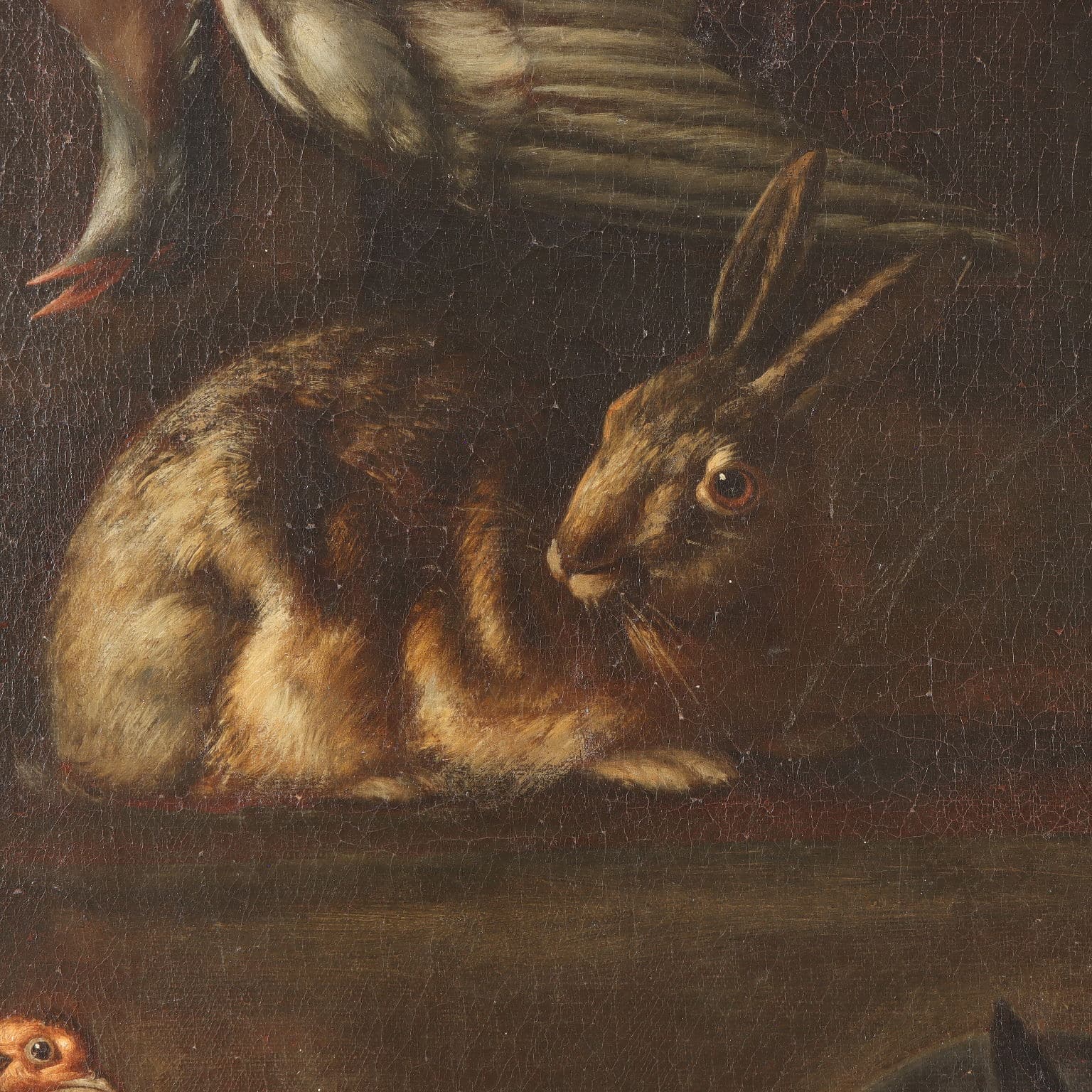
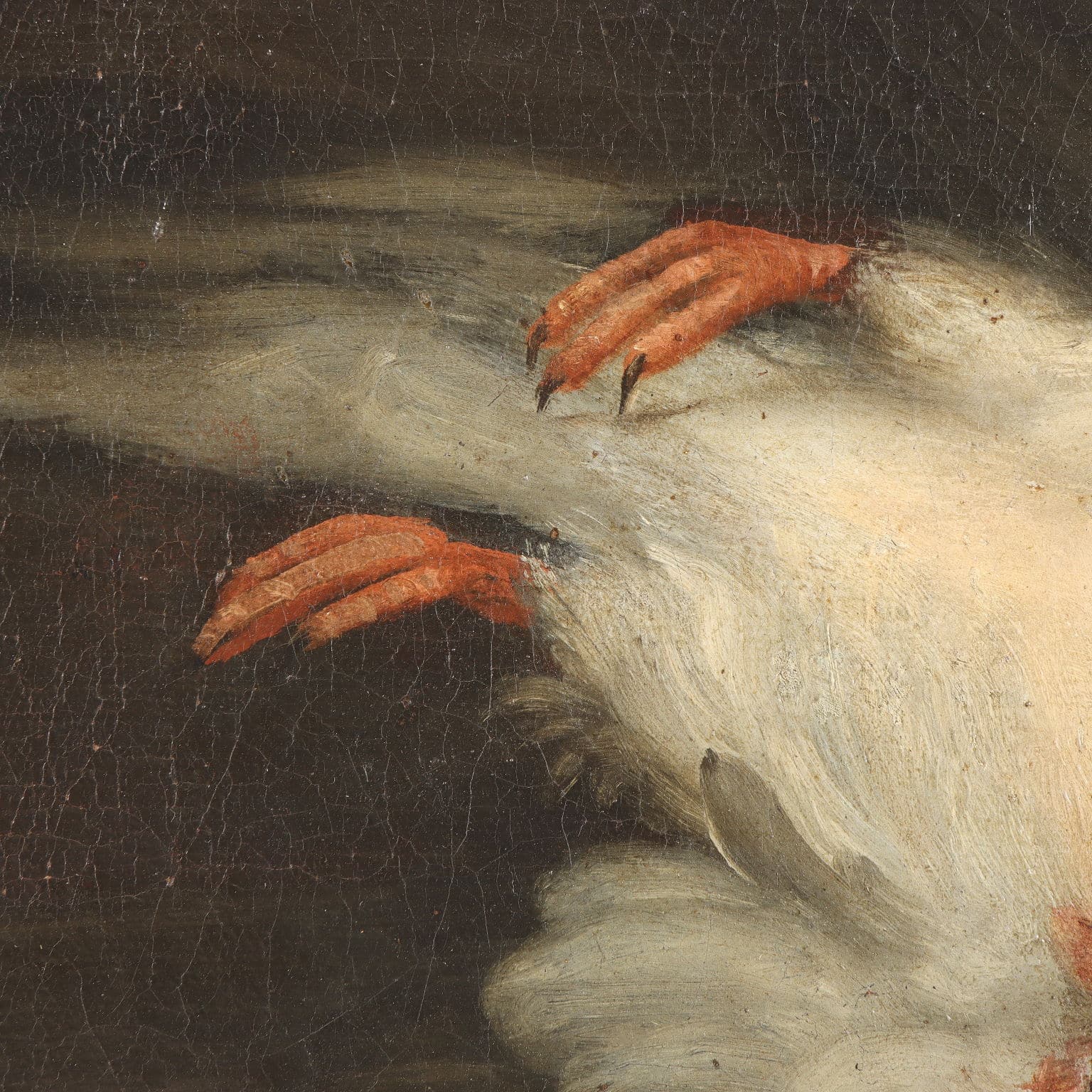
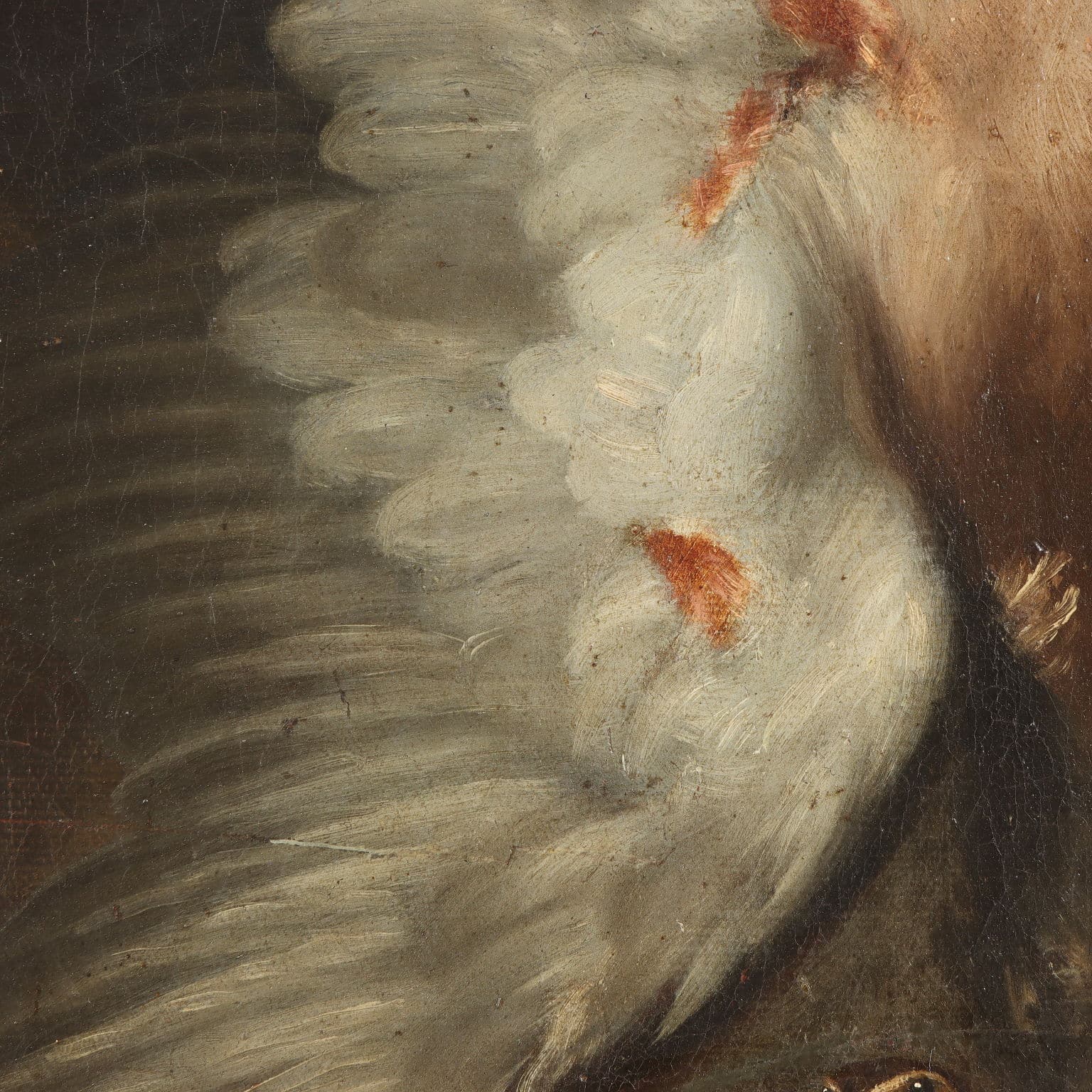
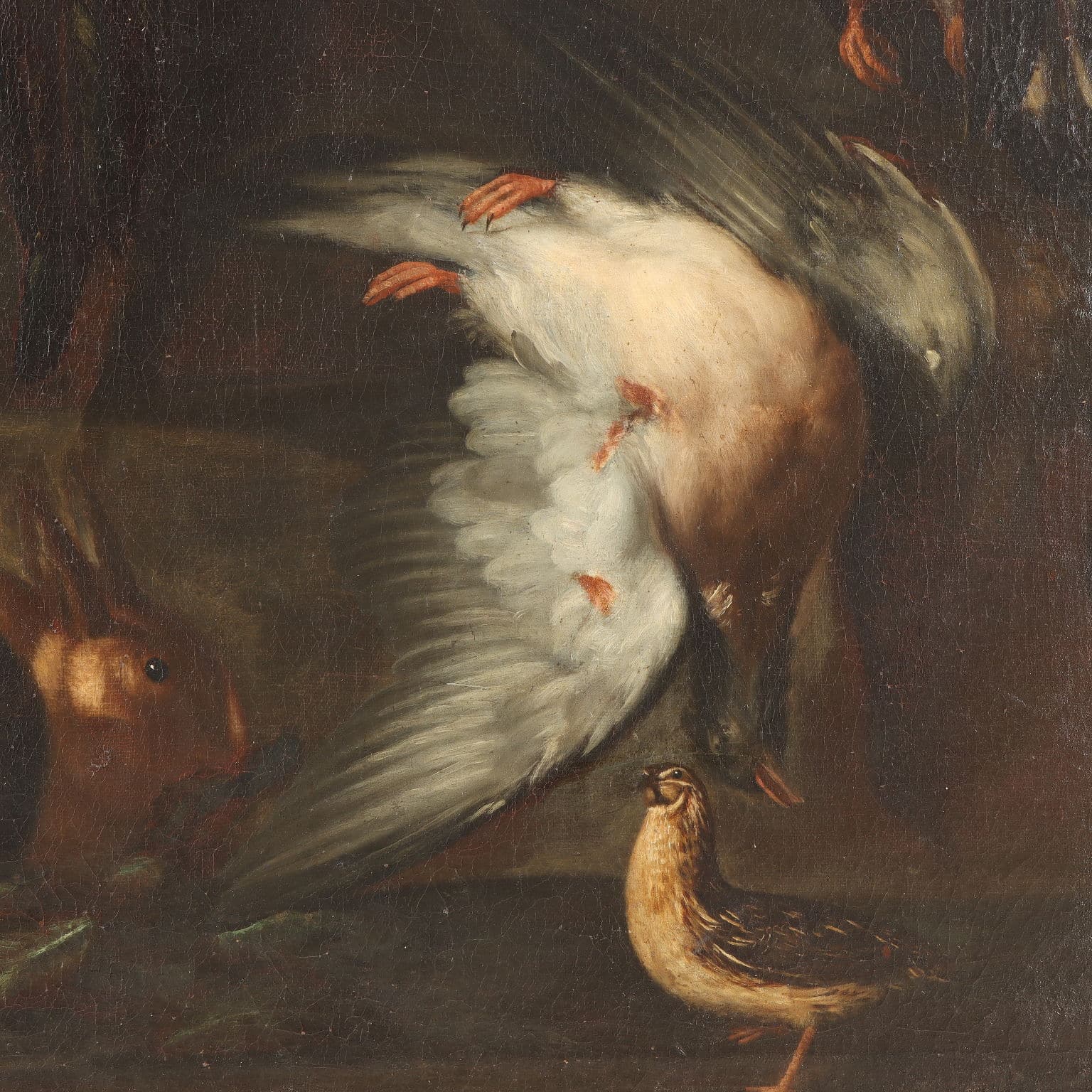
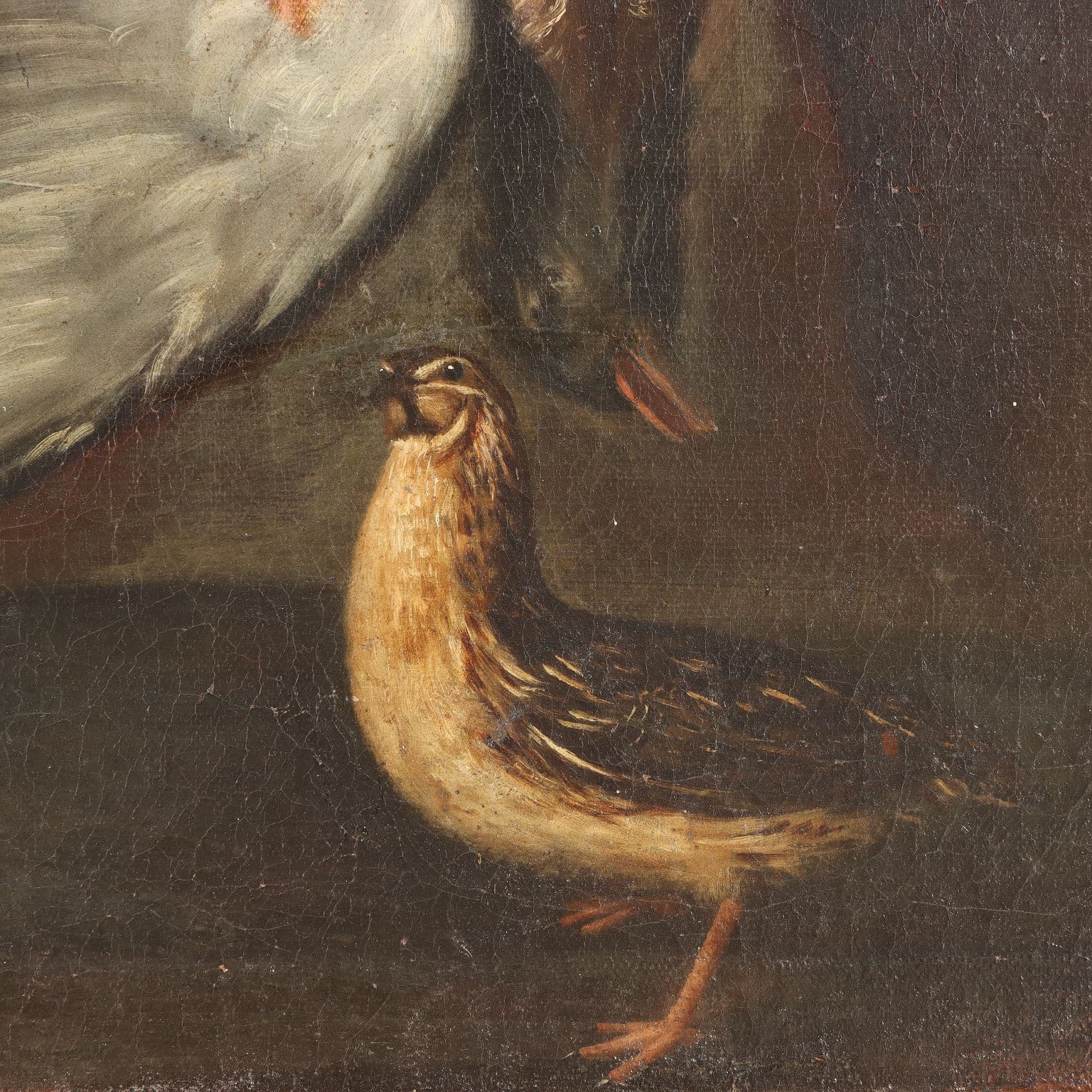
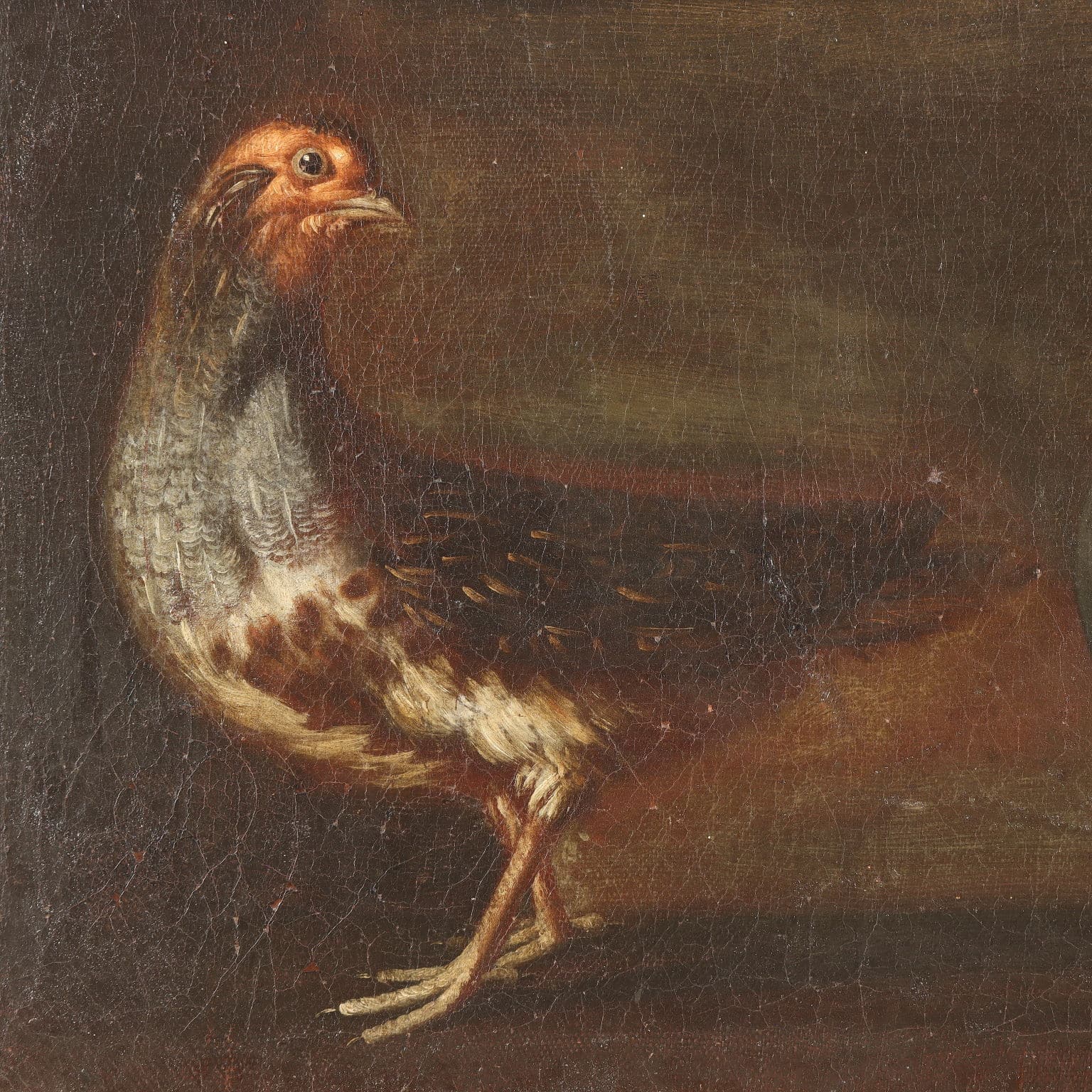
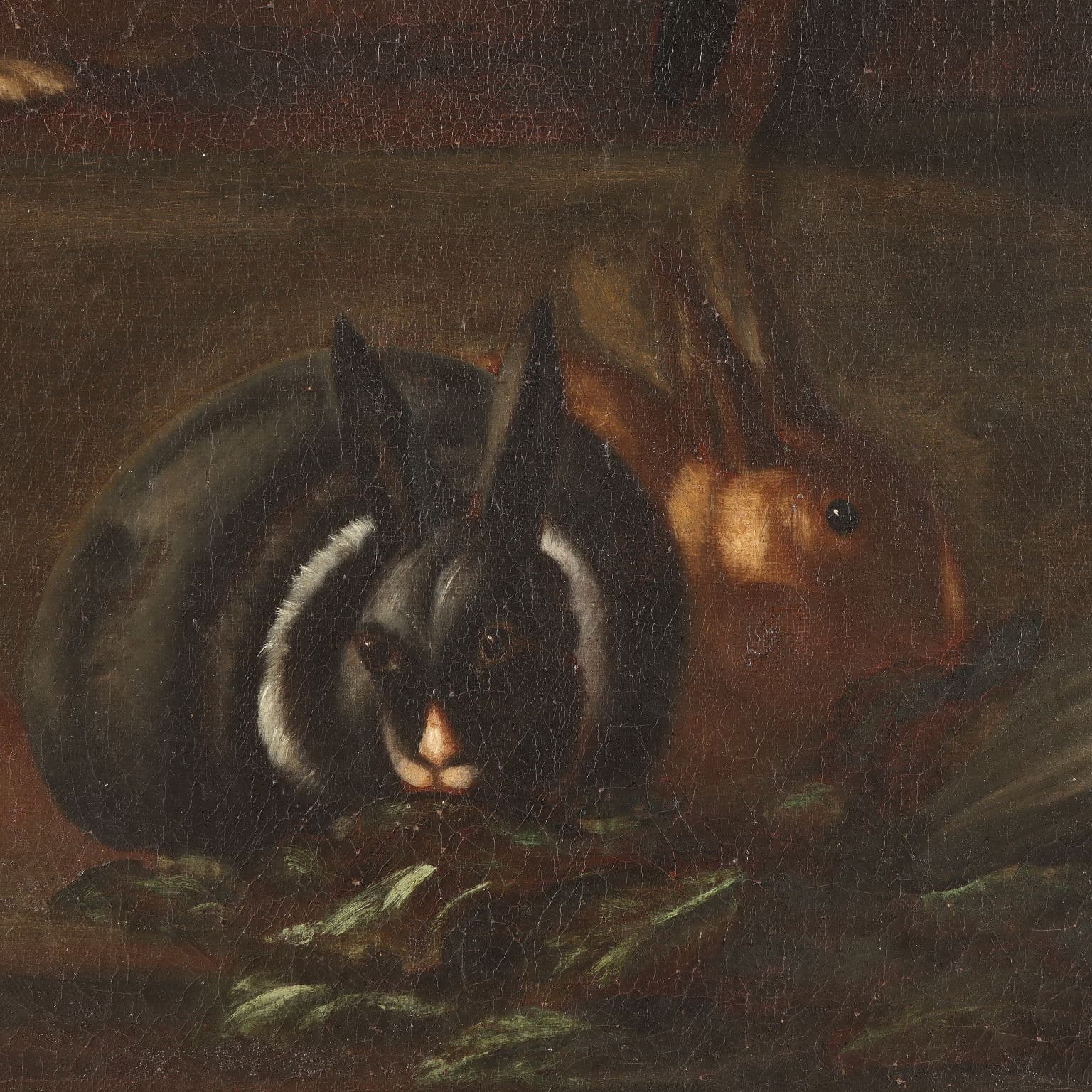
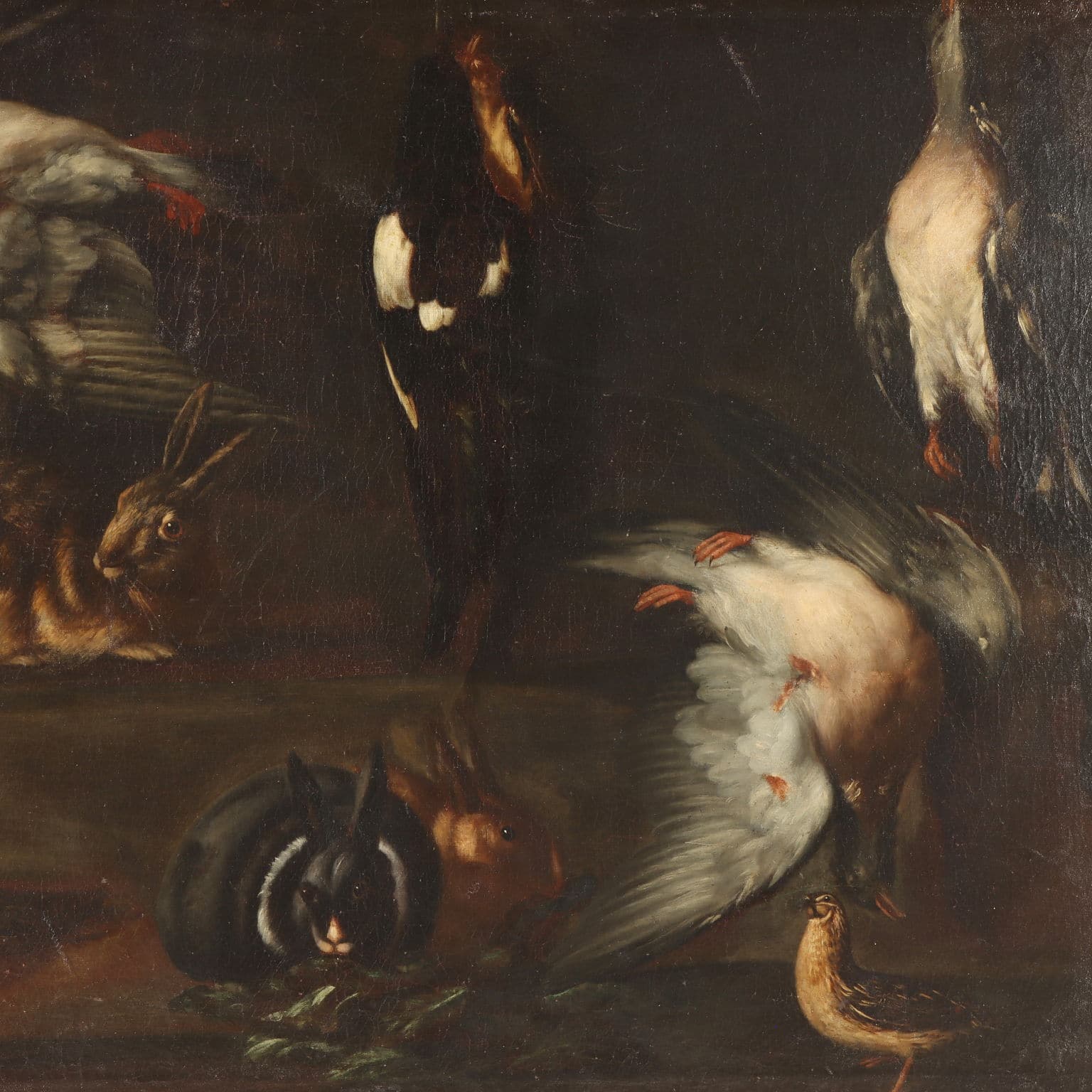
Against a completely dark background, several animals are depicted: game, including four different birds hanging by their feet or resting on an almost invisible surface, and, on the same surface, three crouching rabbits and two birds walking.
Live and dead animals are harmoniously arranged together, and only careful observation allows the viewer to distinguish between the vitality of the living creatures and the stillness of death: the alert gaze of the rabbits and birds, together with the movement of the latter, reveals which animals are alive.
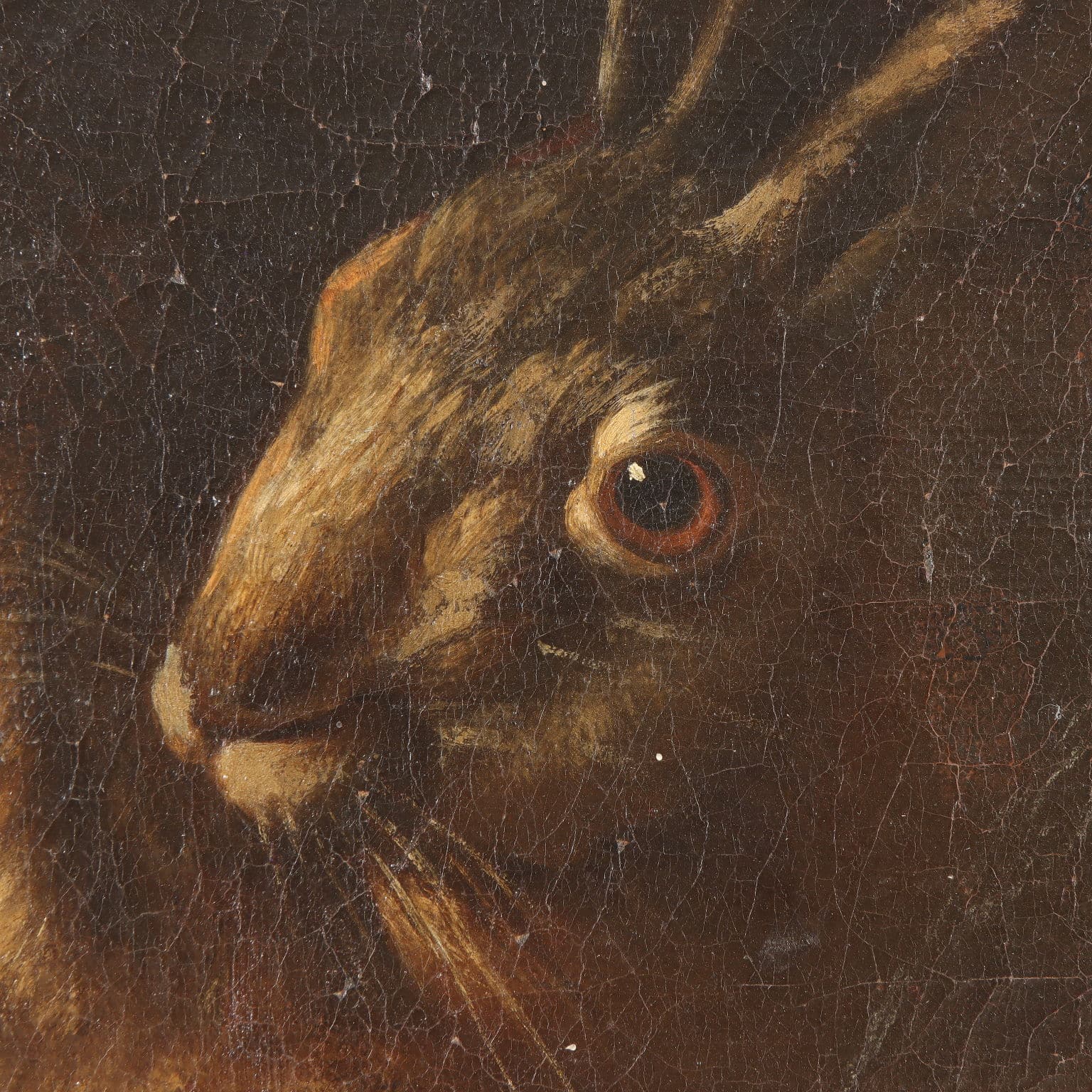
The artist’s technical skill is particularly evident in the virtuosity of his brushwork and in his rendering of the animals’ anatomical features, with plumage, skin and fur carefully differentiated in their details.
The painting has undergone restoration and relining in the past. It is presented in an antique frame.
Dimensions: 124 x 154 cm
Height: 91 cm, Width: 113 cm
(framed: Height: 111 cm, Width: 133 cm)
CODE: ARARPI0313845
Clearly belonging to the Genoese school, the painting can be attributed to Sinibaldo Scorza (1589–1631), an artist active in Genoa, where he studied in the house and workshop of the painter Paggi. This was not merely an artist’s studio, but also a meeting place for intellectuals. Here, the young Sinibaldo found important artistic references and had access to a library that was remarkably extensive and varied for its time.
At Paggi’s house he met the poet Giovan Battista Marino, who later became one of his patrons, and it was here that he began to develop his skills in drawing, engraving and naturalistic miniature painting, with particular attention to animals.
Our knowledge of Scorza’s artistic production is enhanced by the post-mortem inventory drawn up by his eldest son Giovanni in 1631. The document allows us, as it were, to enter his Genoese home only hours after his death and observe what he left to his heirs: his own drawings and those of other artists he admired, paintings, collections of prints, as well as a substantial library of 31 books. Although their titles are not recorded, their number nevertheless bears witness to the painter’s broad cultural interests.
Unfortunately, many of his works and drawings were destroyed in the fire at his house during the attack on the town of Voltaggio by French troops allied with the House of Savoy in 1625.
Scorza studied animals from life, producing precise and detailed sketches and drawings and demonstrating a remarkable ability to capture their distinctive features from both an artistic and a scientific perspective, in keeping with the emerging interests of his time.
Alongside his drawings, his sheets also contain detailed notes concerning, for example, the position of the animals’ legs and the type and colour of their fur. For this reason, he also produced numerous small-format paintings in which the animal is the undisputed protagonist and often the only fully finished element of the composition, while the backgrounds are treated more summarily or even left unfinished.
The purpose of these works was to study animal morphology, poses and behaviour in order to build up a repertoire that could subsequently be used to incorporate these figures into larger and more complex compositions.
Indeed, Sinibaldo Scorza did not paint animals alone, but also a wide variety of subjects, including landscapes, mythological and genre scenes, views and glimpses of the cities in which he lived.
His naturalistic inclination was further strengthened by his contact with the great Flemish painters he encountered in Turin and later met again in Rome. Throughout his work we find this distinctive attention to the natural world, observed in precise detail, with nature, trees and a variety of animals bringing life to landscapes that may at times be Arcadian, yet are always characterised by a strong taxonomic interest.
For Scorza, who was an avid reader with a broad literary culture, mythological tales and biblical or literary subjects also provided an opportunity to study landscapes populated by animals, each rendered with individual attention to detail.
It is therefore no coincidence that his favourite subject was Orpheus Charming the Animals with the Sound of His Lyre, of which at least nine or ten versions are known, ranging from large compositions to very small works. Despite their different dimensions, the compositions vary only slightly: the same domestic and wild animals gather harmoniously around Orpheus, seated on the ground.
Scorza applied a similar method to landscape views, which he studied en plein air before developing the final composition. Surviving sketches display an almost Impressionistic immediacy, and in some of them the artist used his own system of letters to note the different colours to be employed in the finished work.
FineArt is the new ambitious Di Mano in Mano project that offers an exclusive choice of antiques and design works, presenting them for their singularity and uniqueness.

FineArt by Di Mano in Mano is a team of experts at your service to enhance furniture, paintings, finest antiques, art and design masterpieces at best.
Di Mano in Mano
Via Castellazzo 8, Cambiago (MI)
20040