- The Mystic Marriage of Saint Catherine of Alexandria

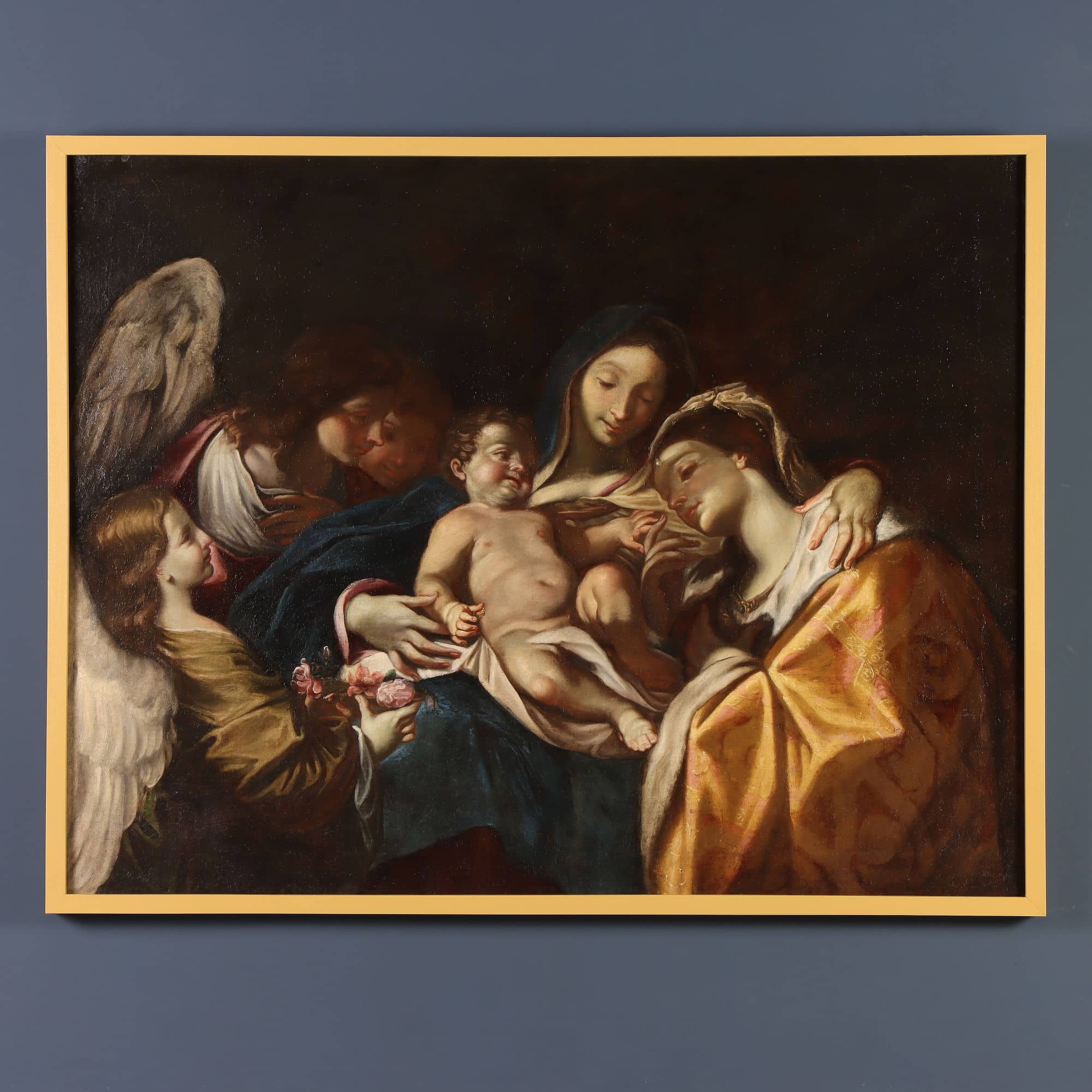
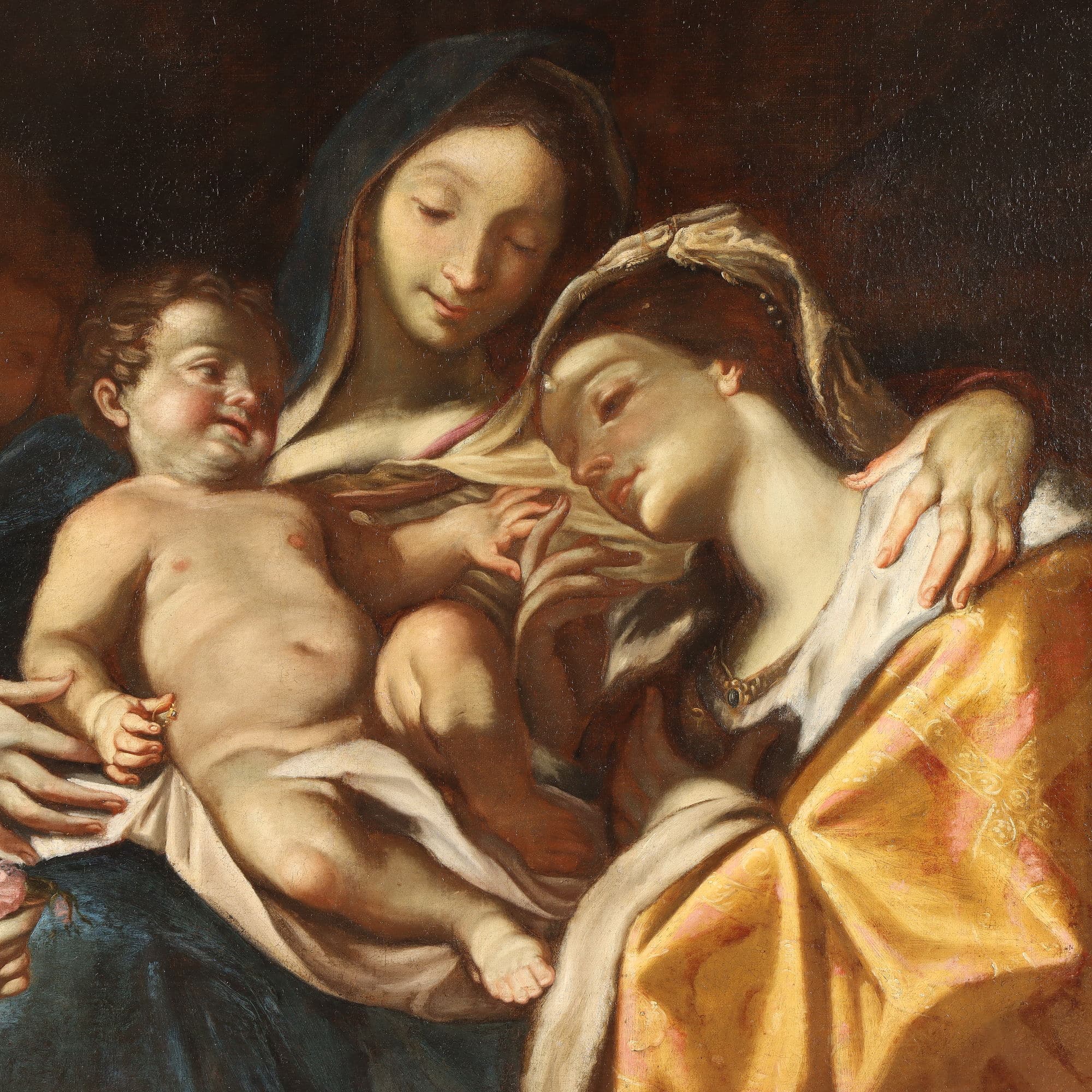
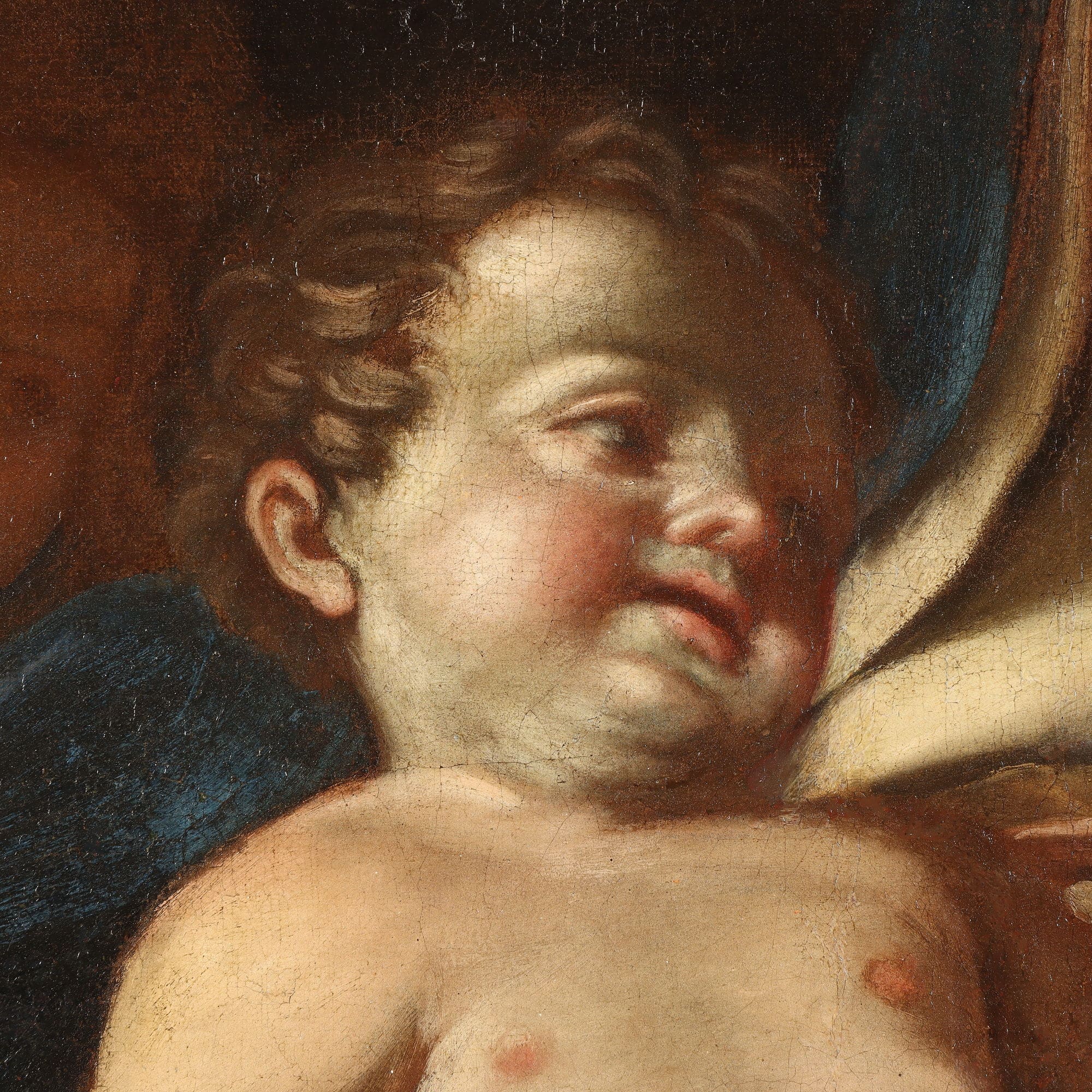
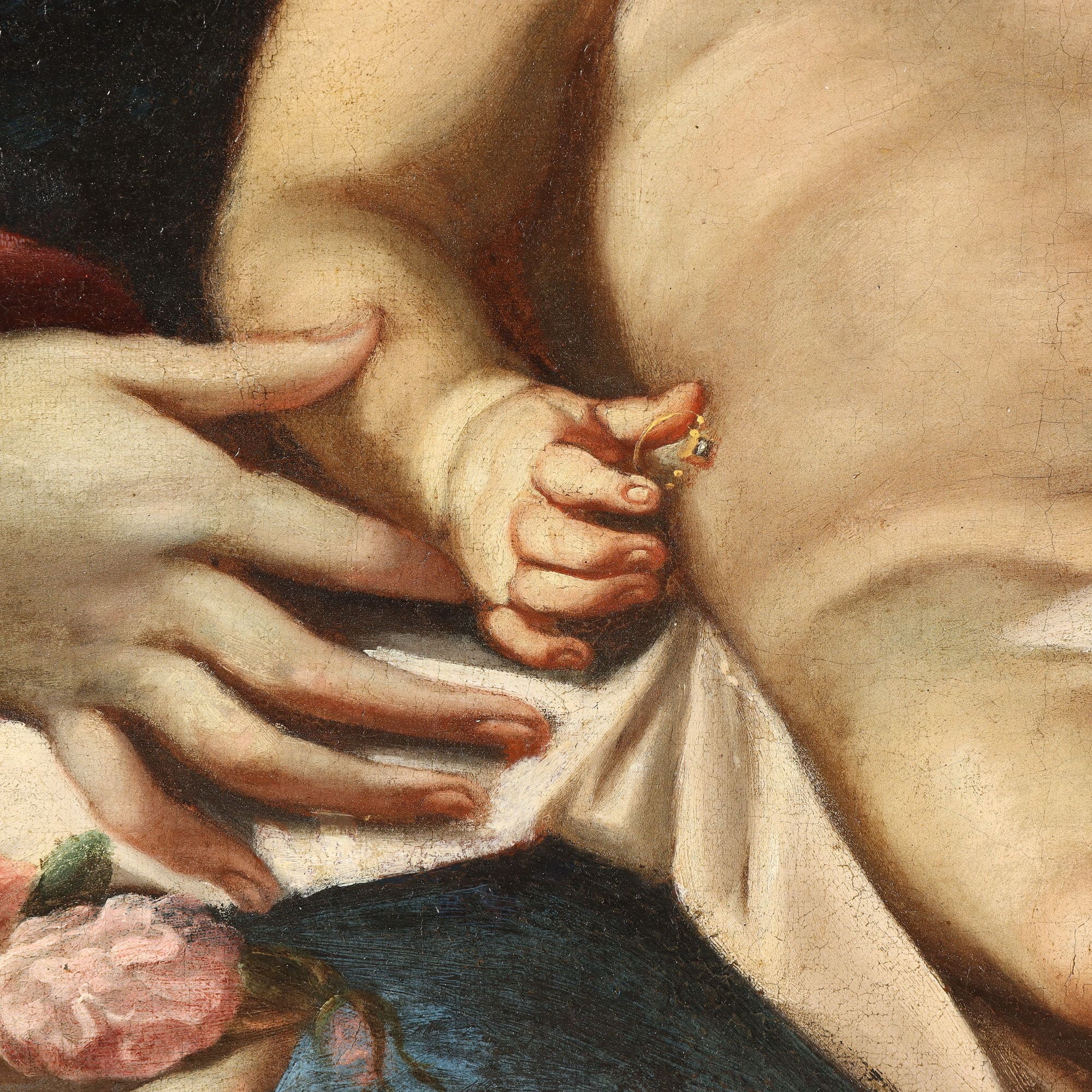
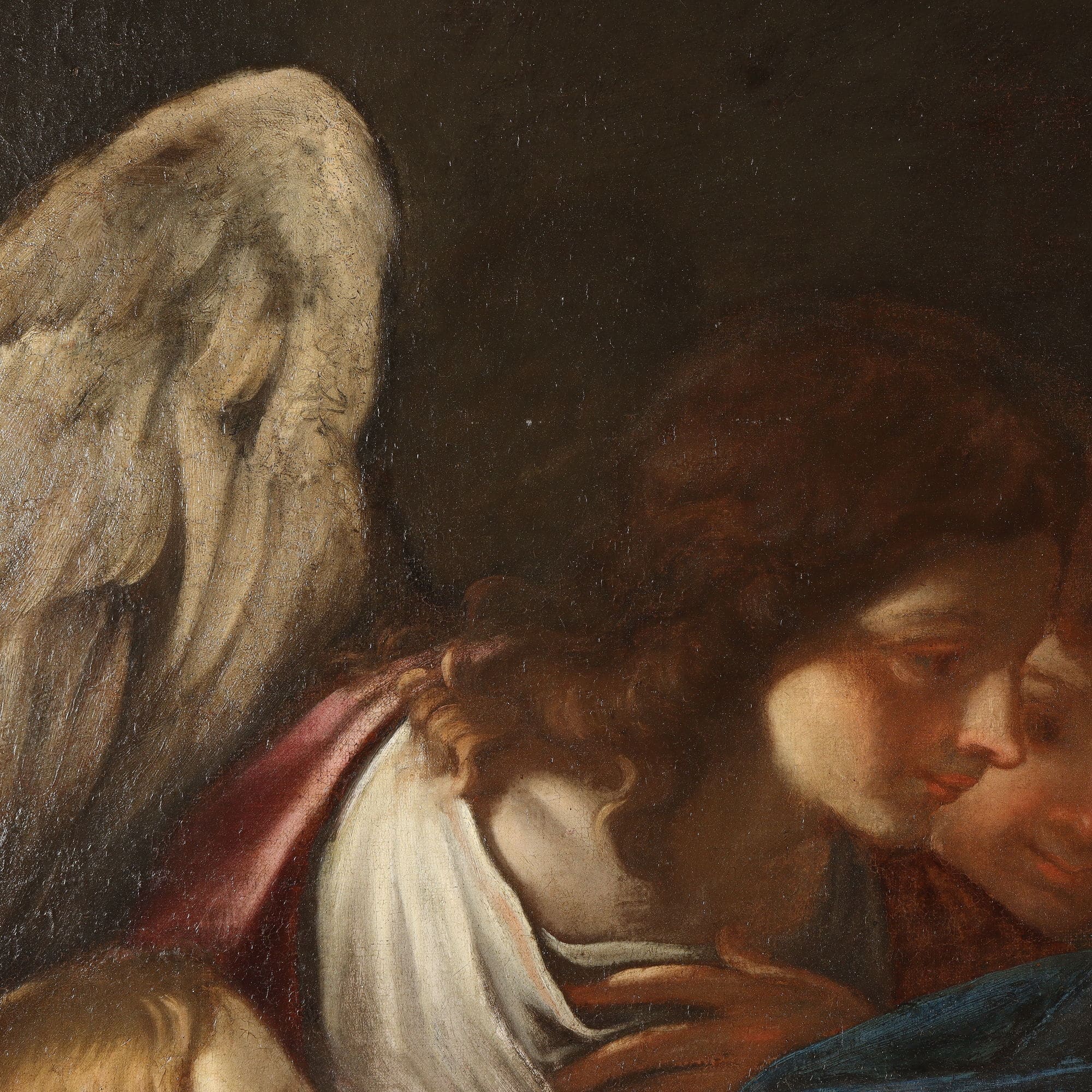
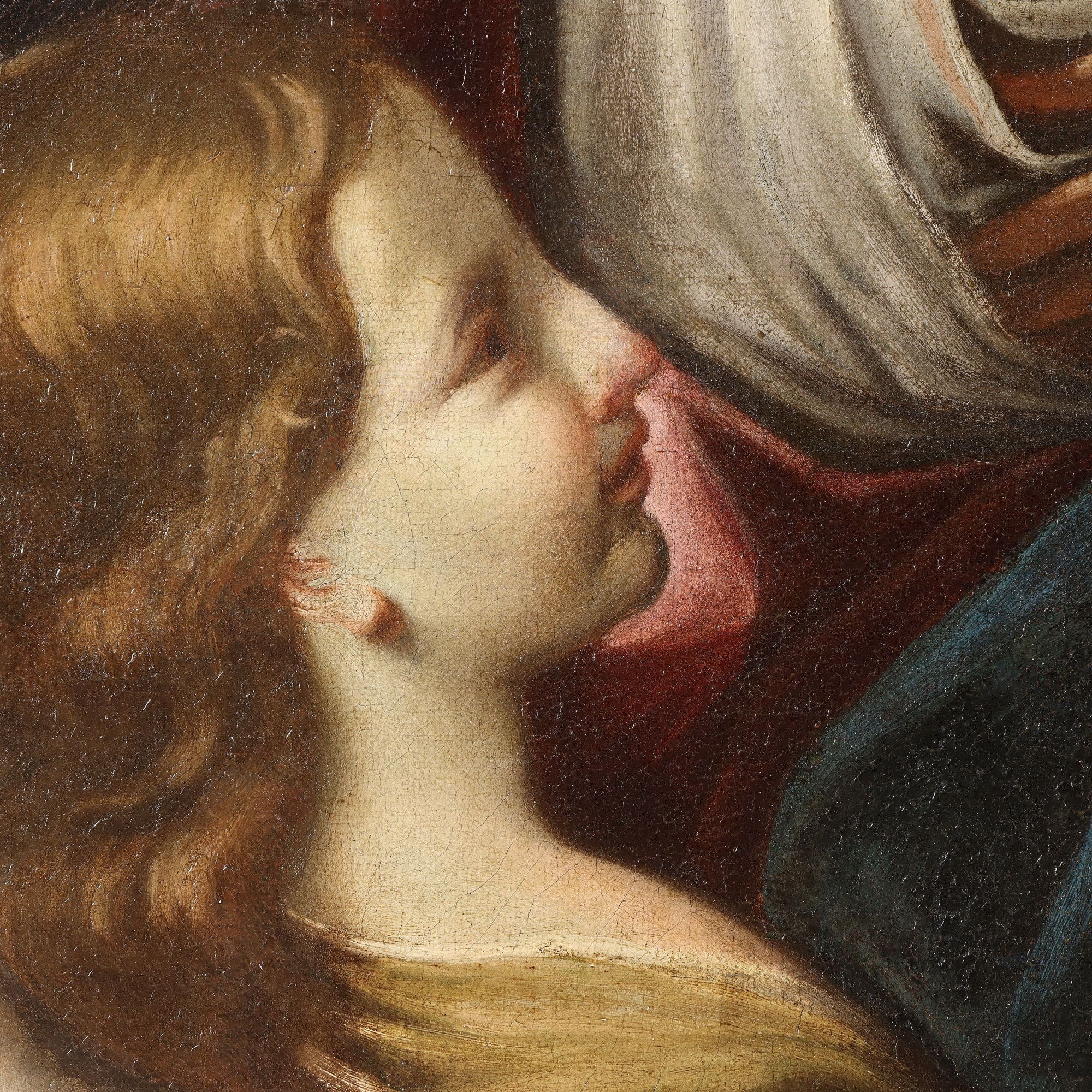
The painting depicts the Mystic Marriage of Saint Catherine of Alexandria. At the centre of the composition, the Christ Child, seated on the Virgin Mary’s lap, offers a ring to the saint, who gently inclines her head towards Mary as the latter embraces her shoulders.
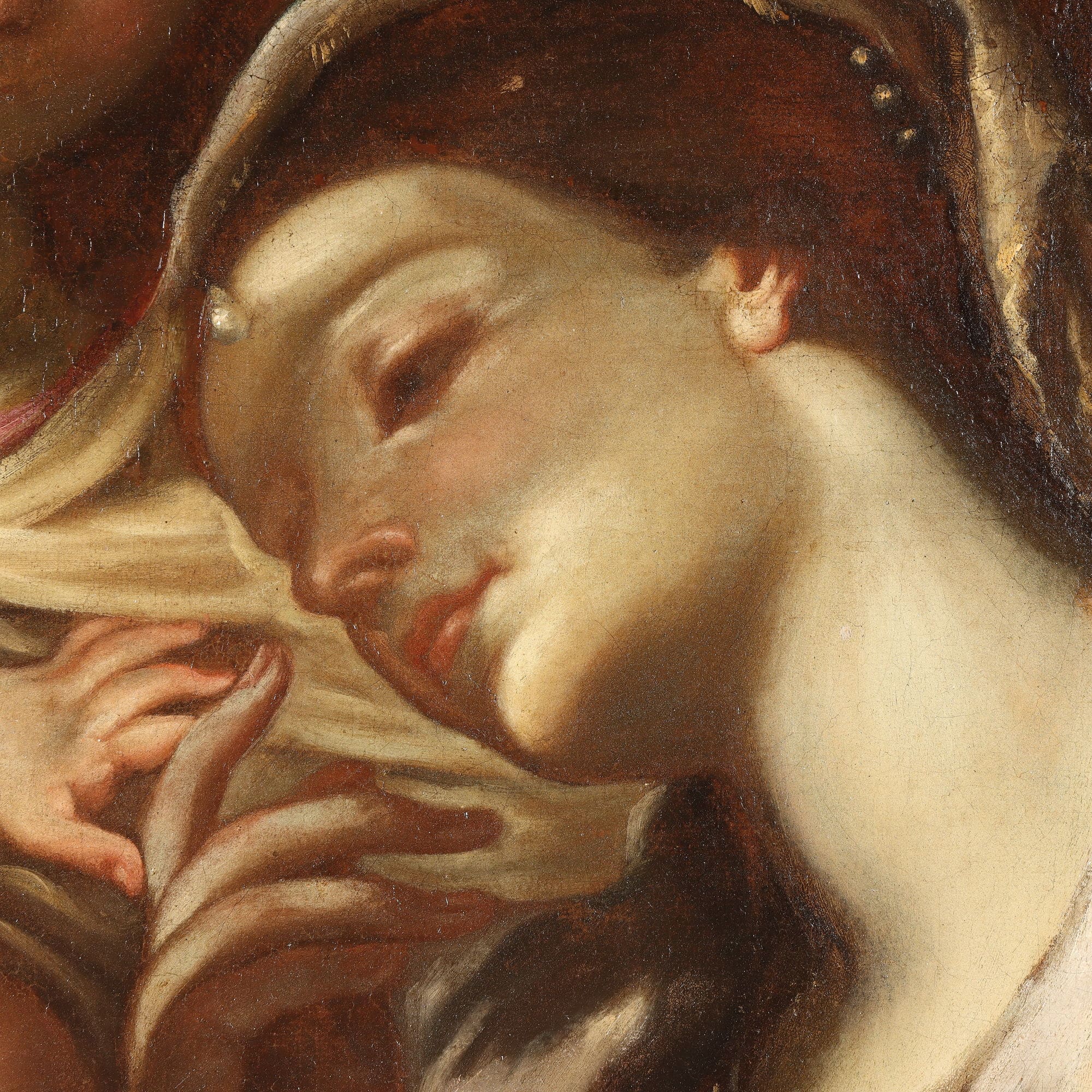
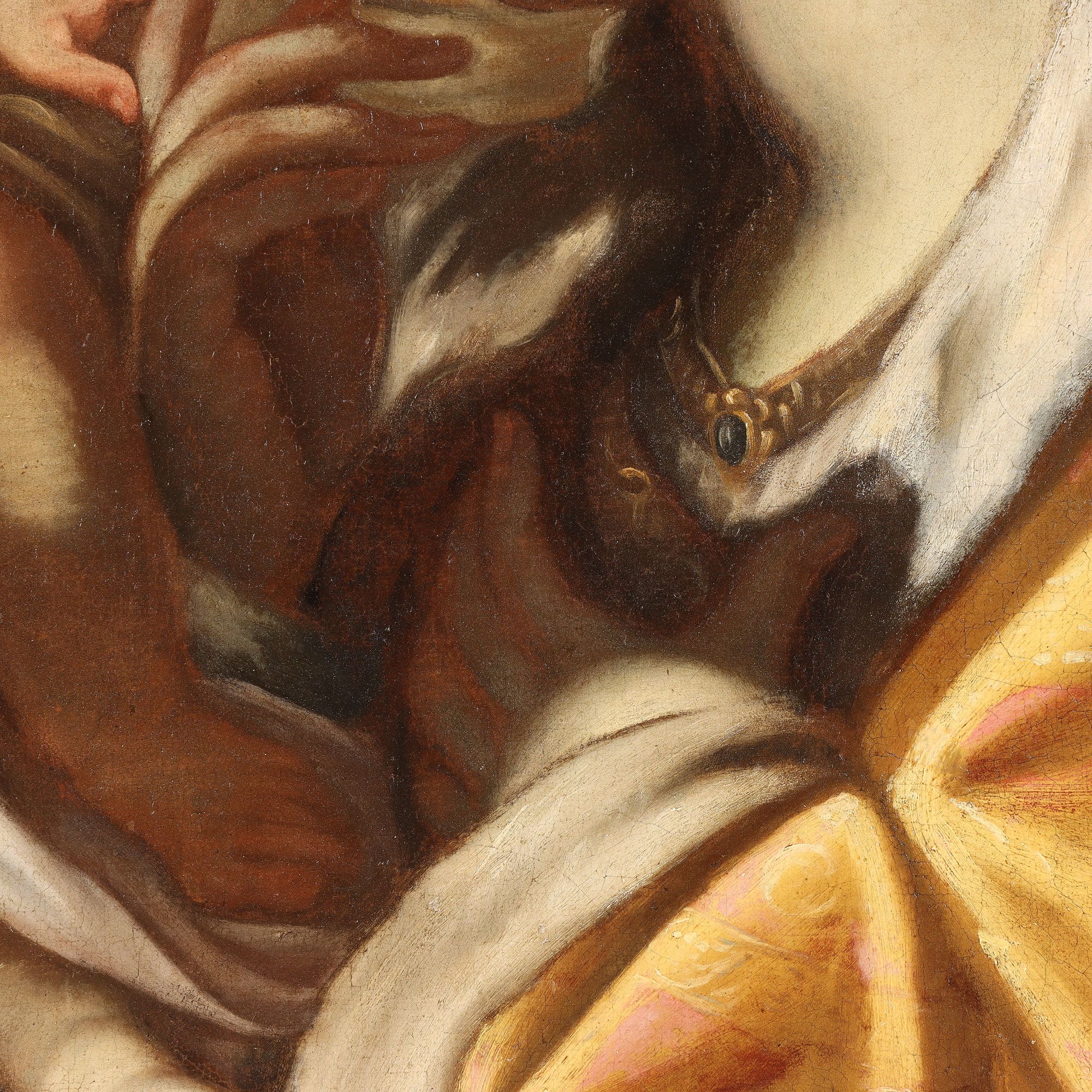
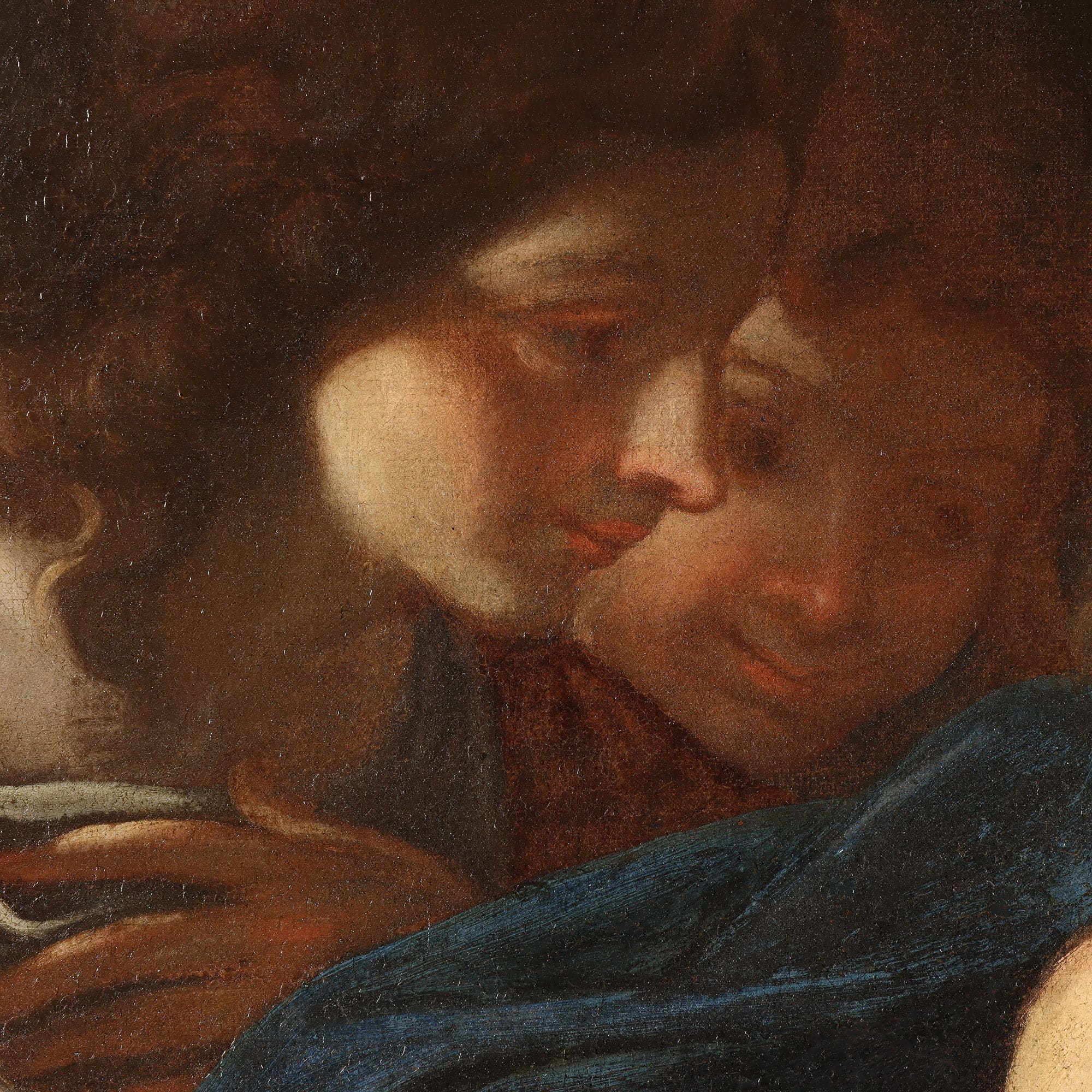
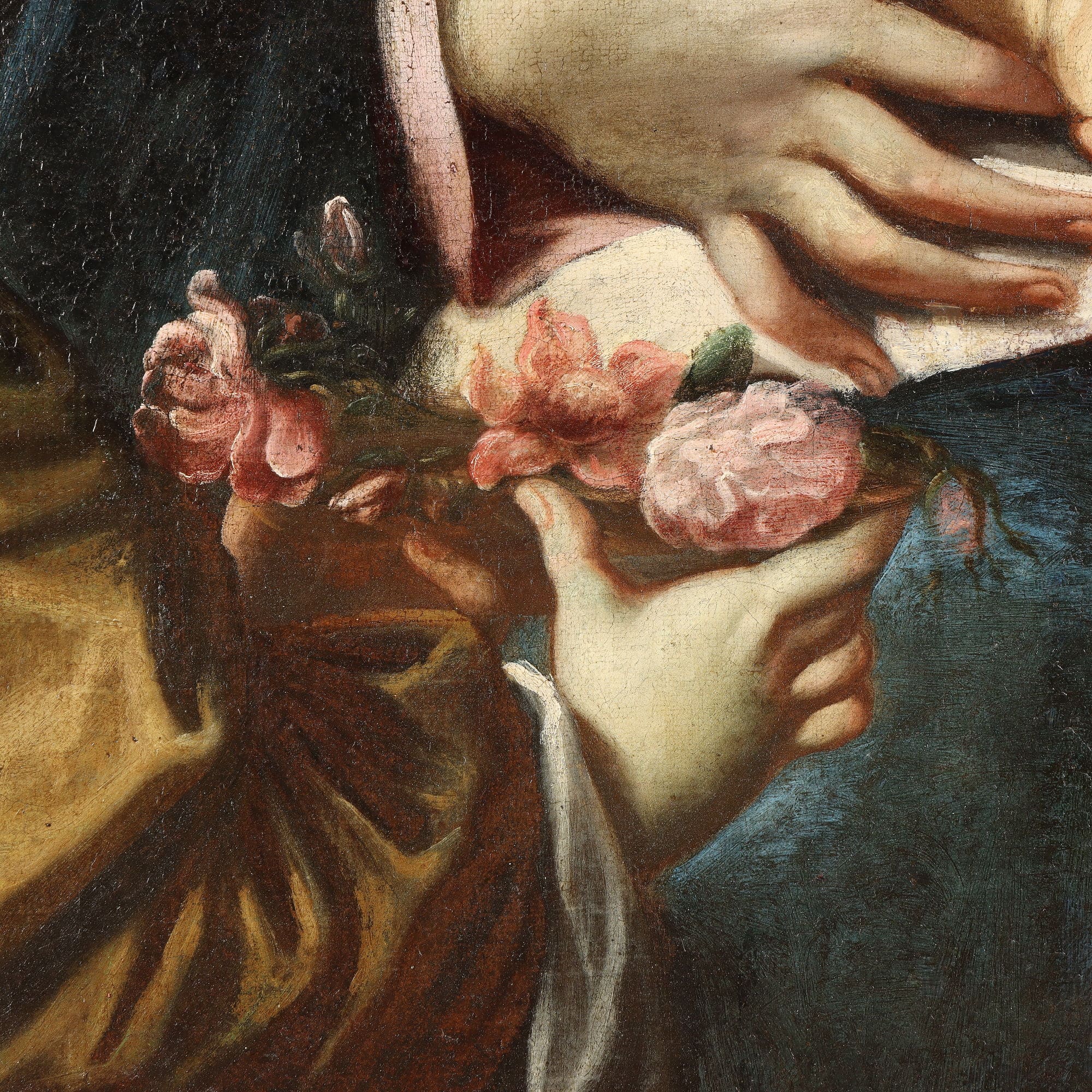
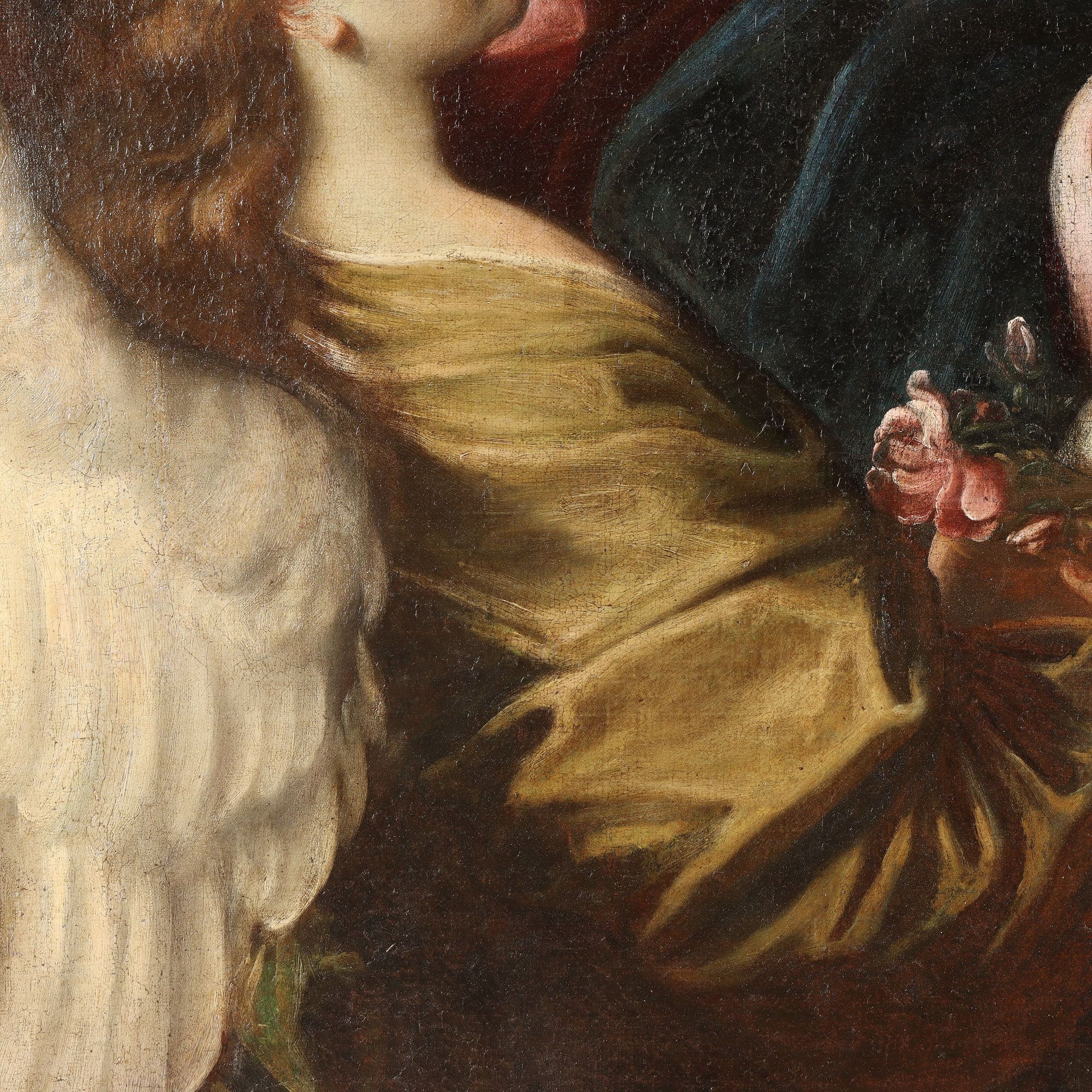
Catherine wears a diadem and a sumptuous brocade mantle in shades of pink and gold, trimmed with white fur. Three angels witness the scene, one of whom holds a wreath of roses, a symbol of purity. The figures emerge from the dark background through subtle chiaroscuro transitions, with voluminous drapery and delicate lighting effects.
Dimensions: 137 × 175 cm
Code: ARARPI0322402
The painting belongs to the mature period of Domenico Maria Canuti, a leading figure in Bolognese painting during the second half of the seventeenth century. Trained in the tradition of the Carracci and Guido Reni, whose school he attended after the master’s death, Canuti developed a distinctive artistic language, enriched by his experience of Roman Baroque painting during two stays in Rome, including an extended period between 1672 and 1676.
Equally significant were his familiarity with the expressive power of Mattia Preti and his knowledge of Rubens’s works in Mantua. These influences enabled him to move beyond a purely classicising approach towards a more innovative and fully developed pictorial language.
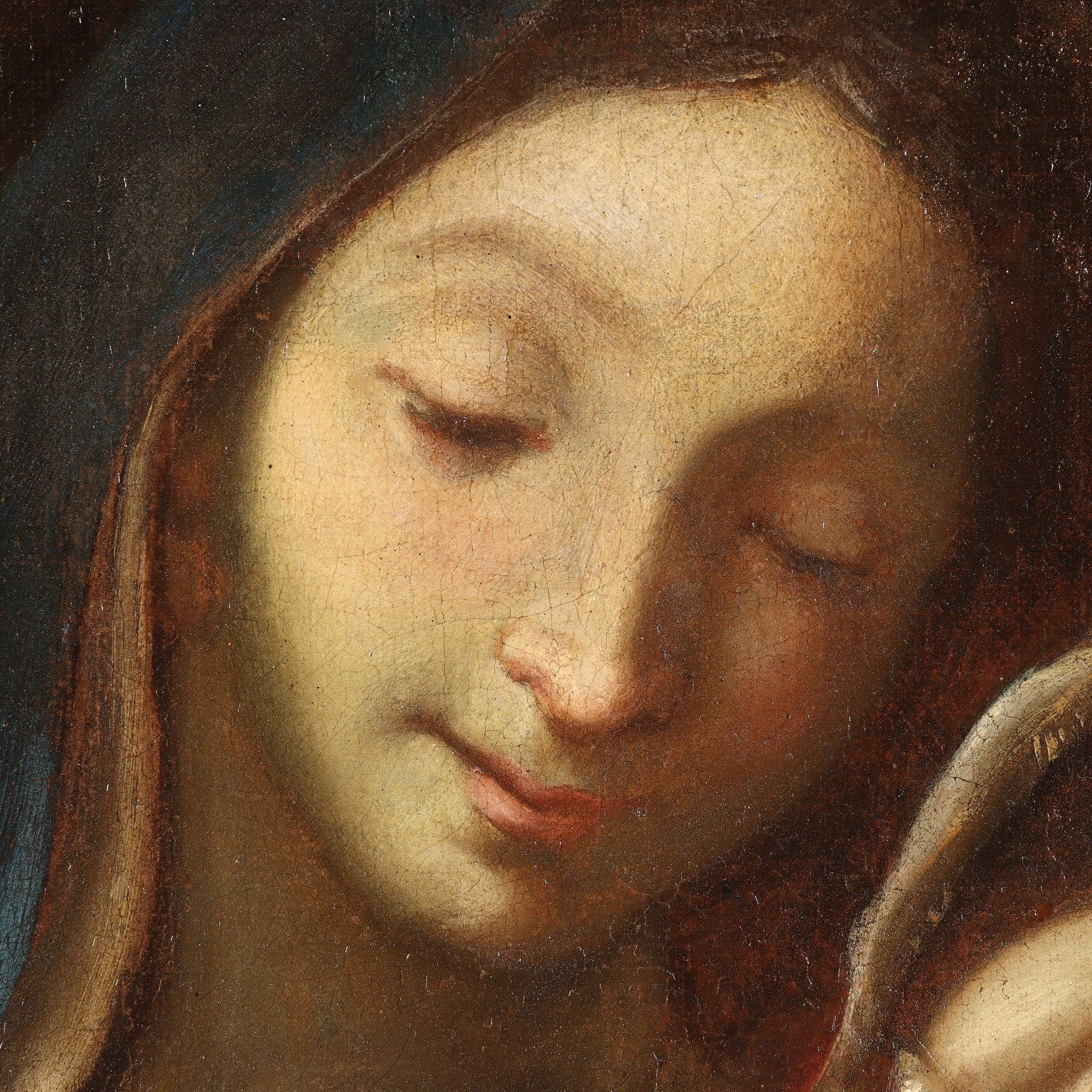
The foreshortened figures, the softness of the drapery and the treatment of the faces reveal significant parallels with the frescoes in the Library of San Michele in Bosco in Bologna (1677–1680) and with A Sibyl and an Angel in a private collection. Particularly noteworthy are the similarities in the voluminous mantle and the saint’s facial features.
The painting also bears a close relationship to two other versions of the same subject attributed to Canuti, from which it differs in the inclusion of a third angel and the decoration of the saint’s mantle.
Stylistic comparisons with works from the later stages of Canuti’s career allow the painting to be dated between his return to Bologna in 1677 and his death in 1684.
The painting is accompanied by an expert report by Professor Giuseppe Sava.

FineArt is the new ambitious Di Mano in Mano project that offers an exclusive choice of antiques and design works, presenting them for their singularity and uniqueness.

FineArt by Di Mano in Mano is a team of experts at your service to enhance furniture, paintings, finest antiques, art and design masterpieces at best.
Di Mano in Mano
Via Castellazzo 8, Cambiago (MI)
20040