- Four Florentine Pietra Dura Panels

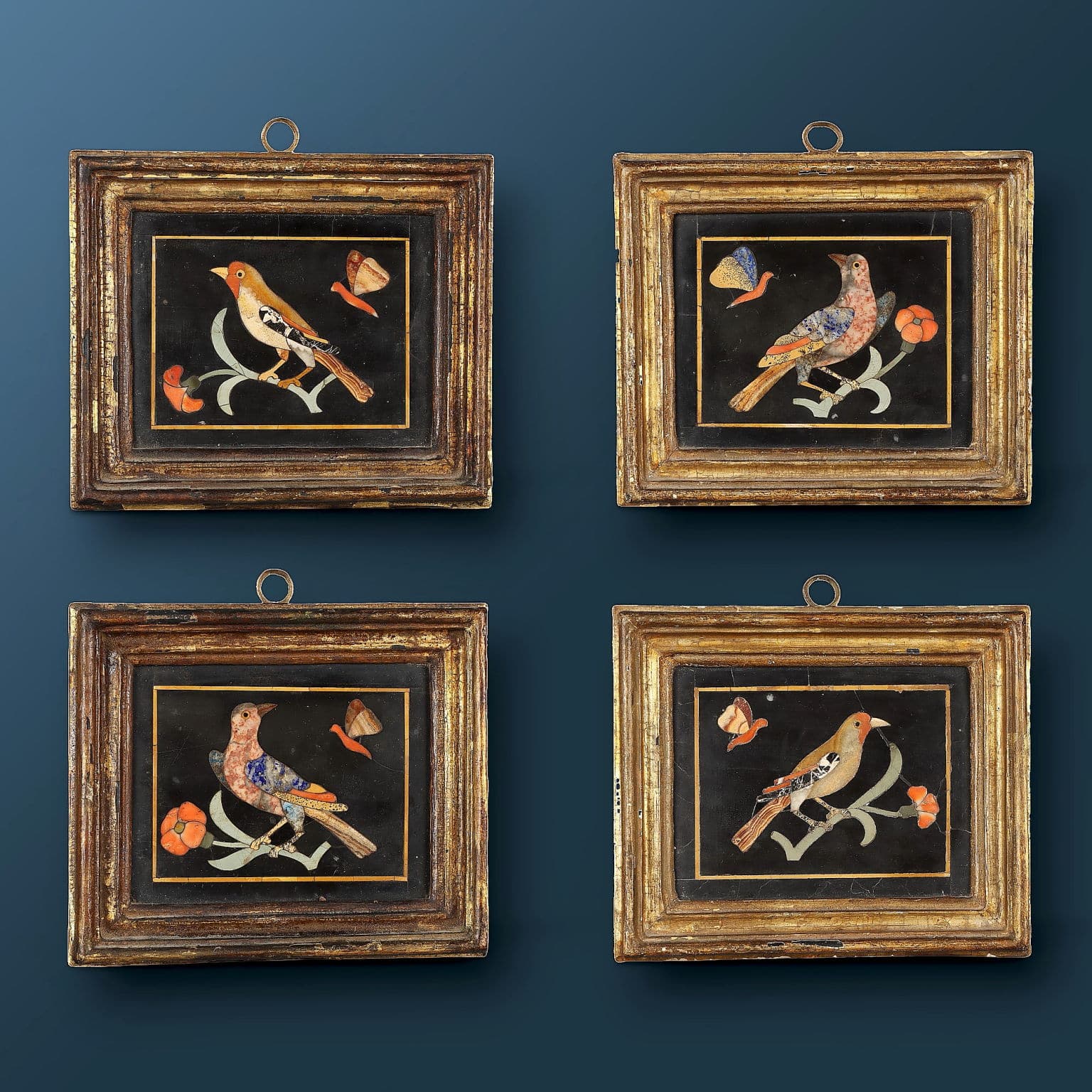
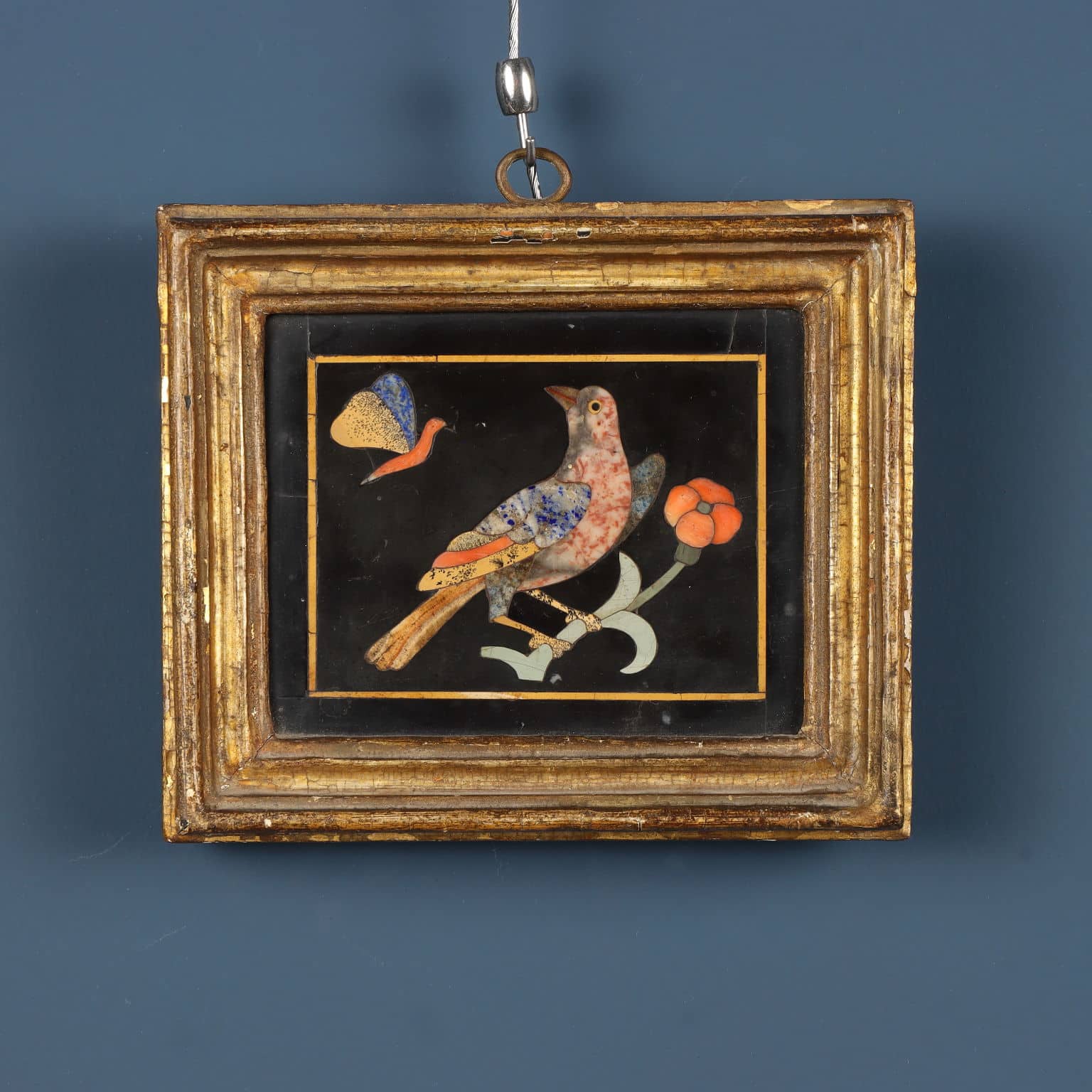
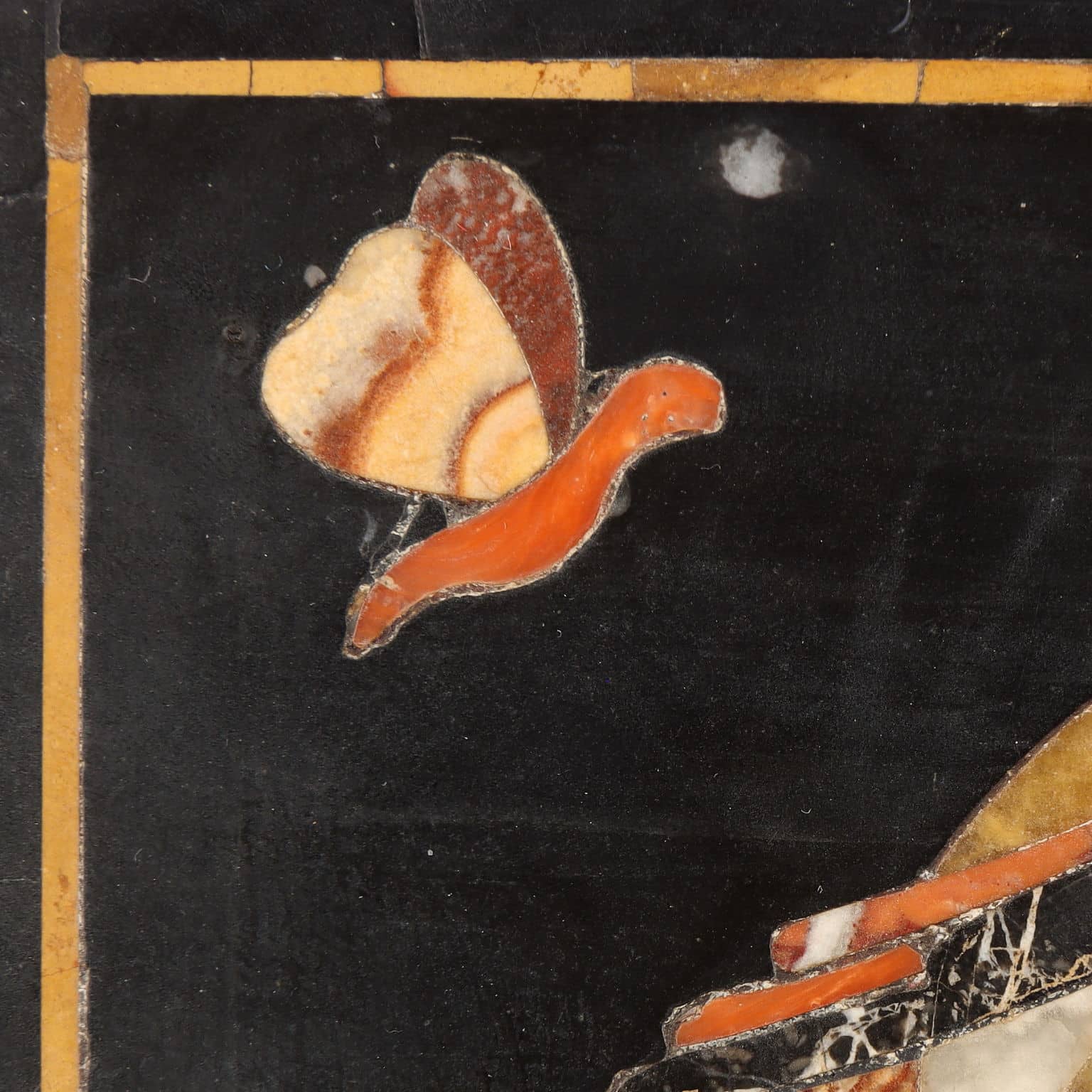
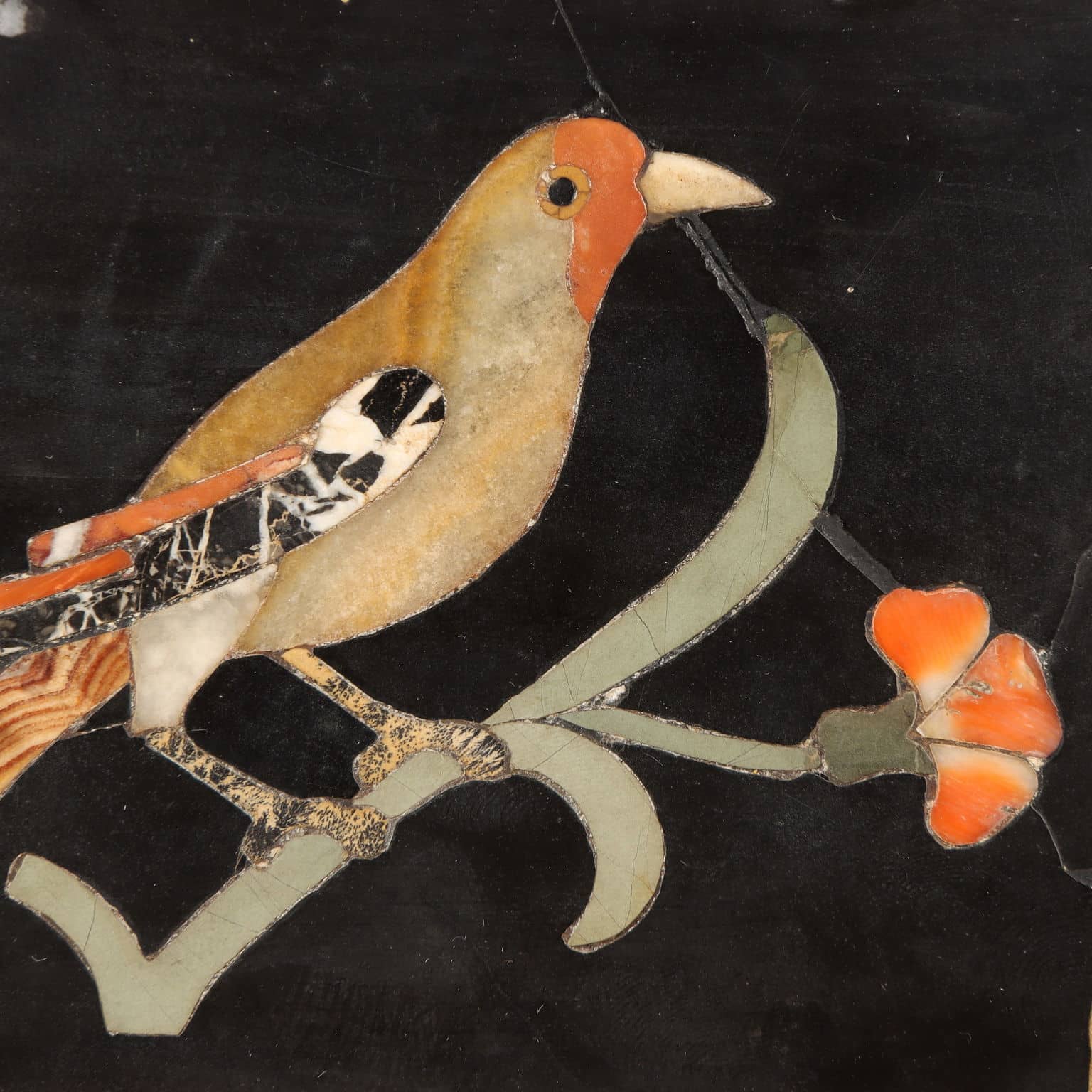
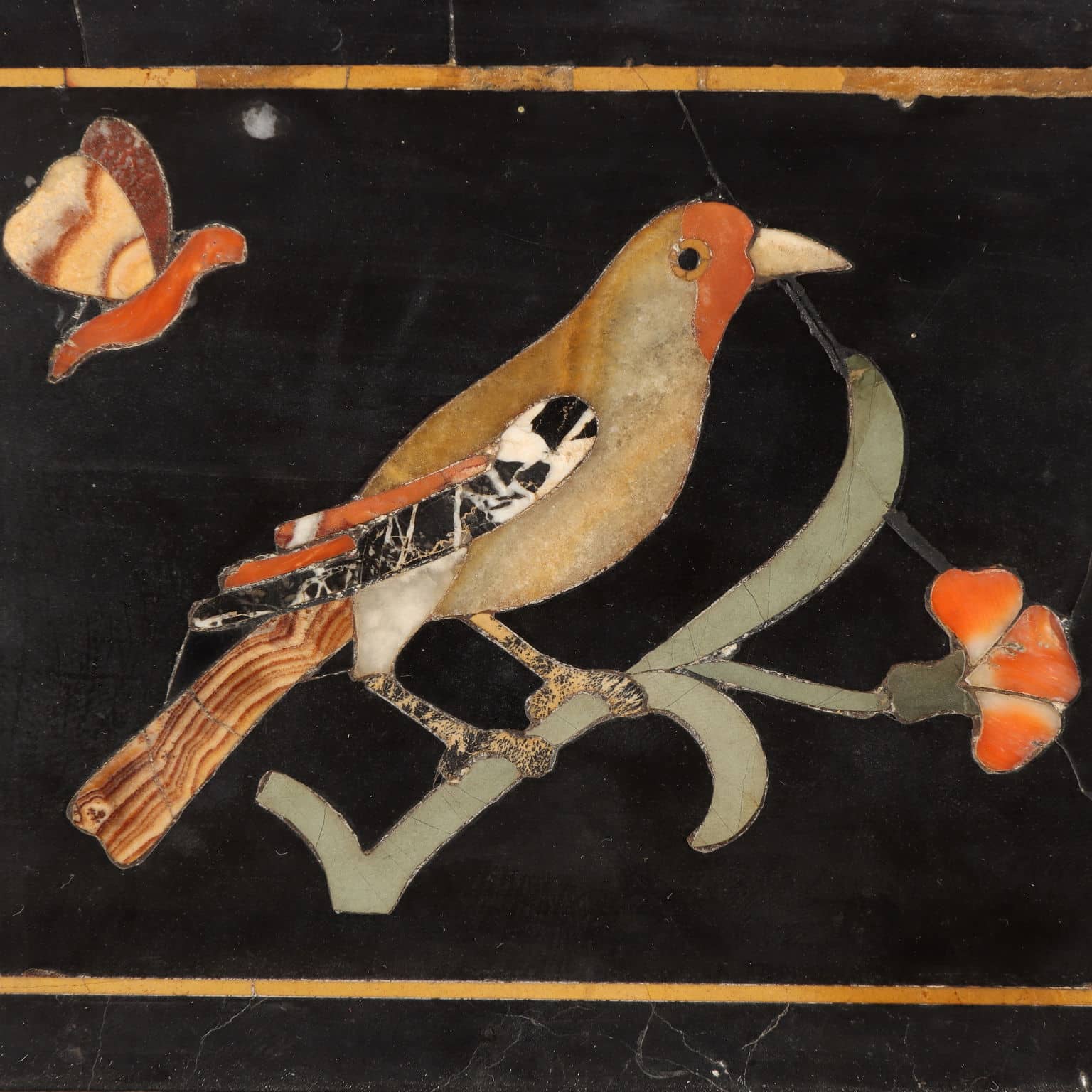
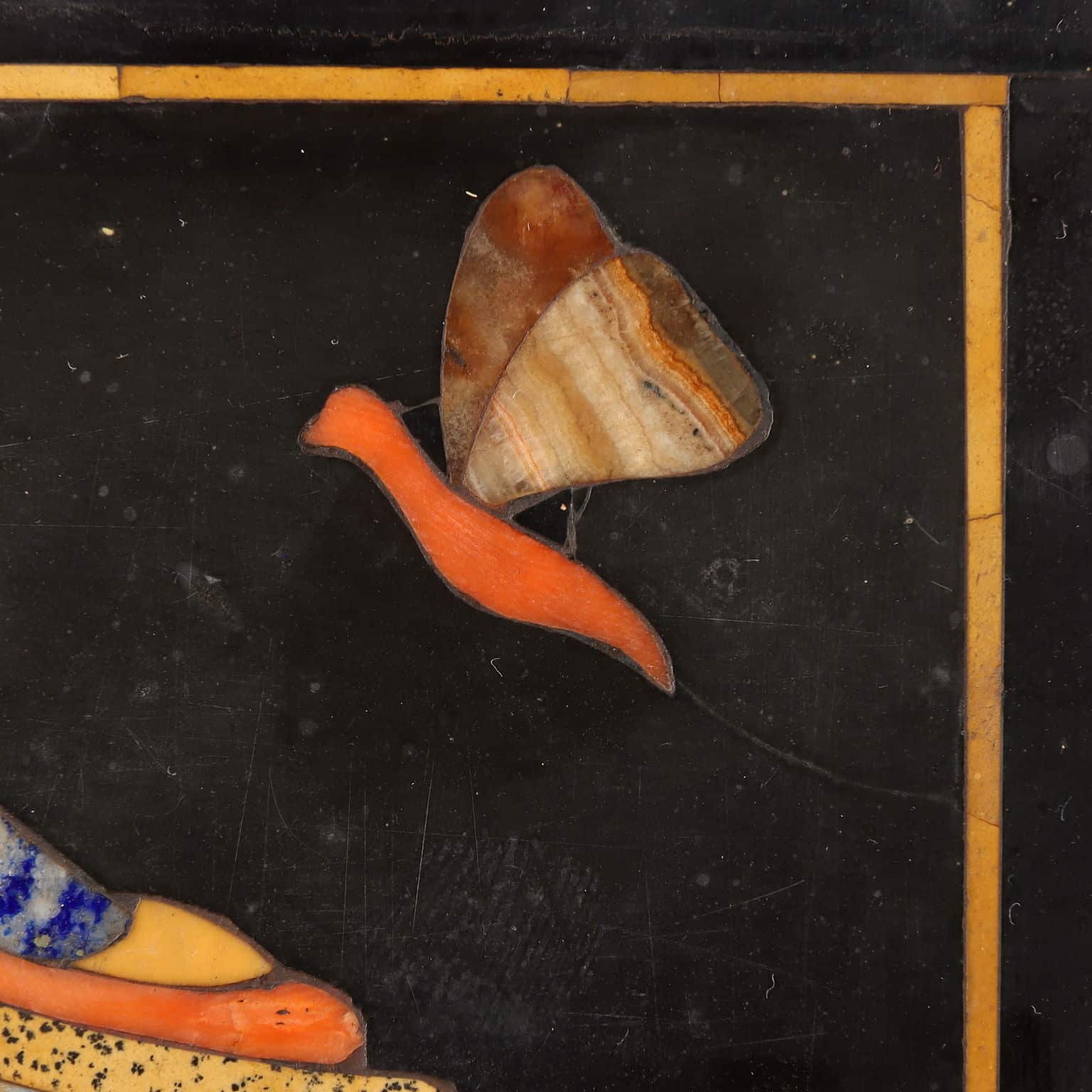
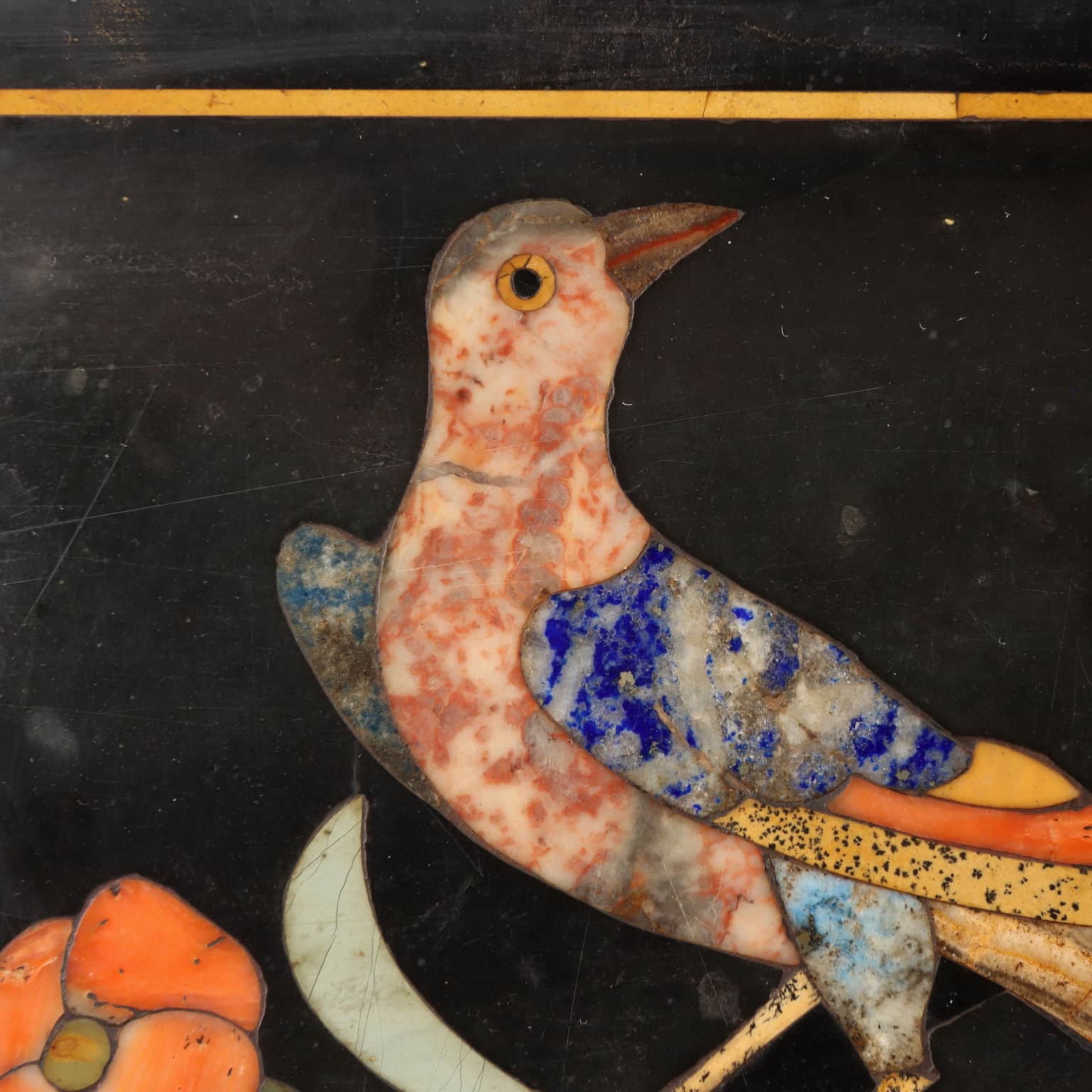
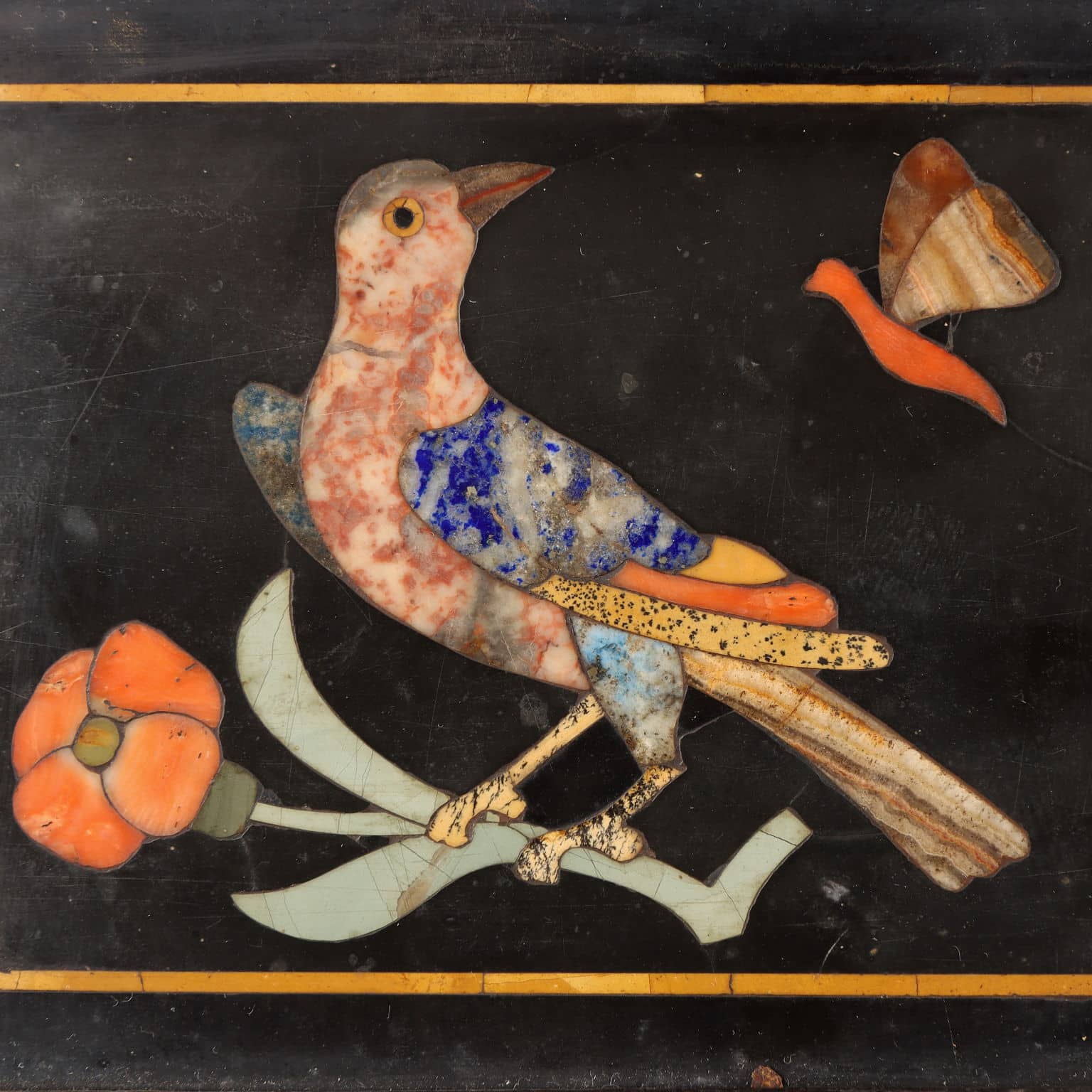
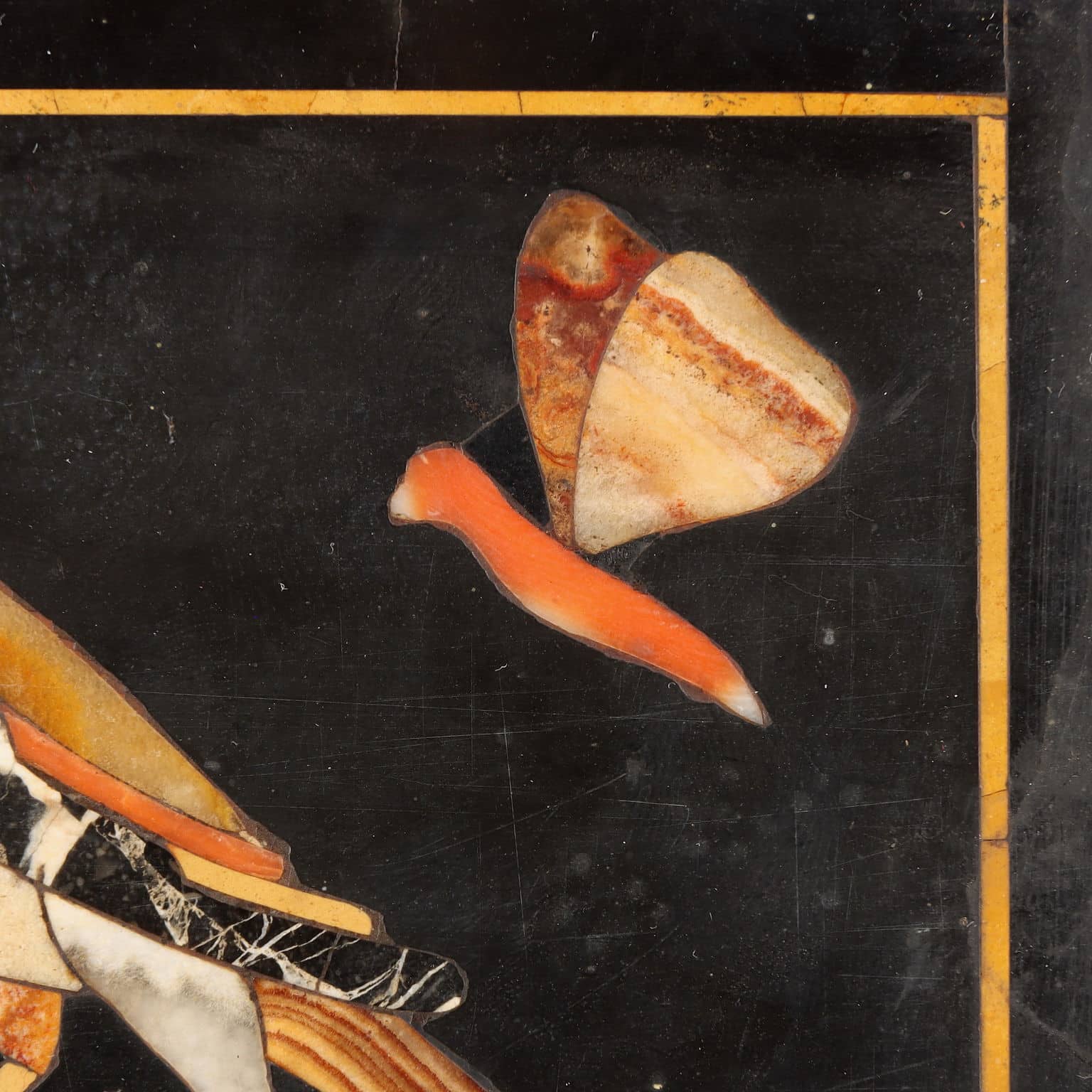
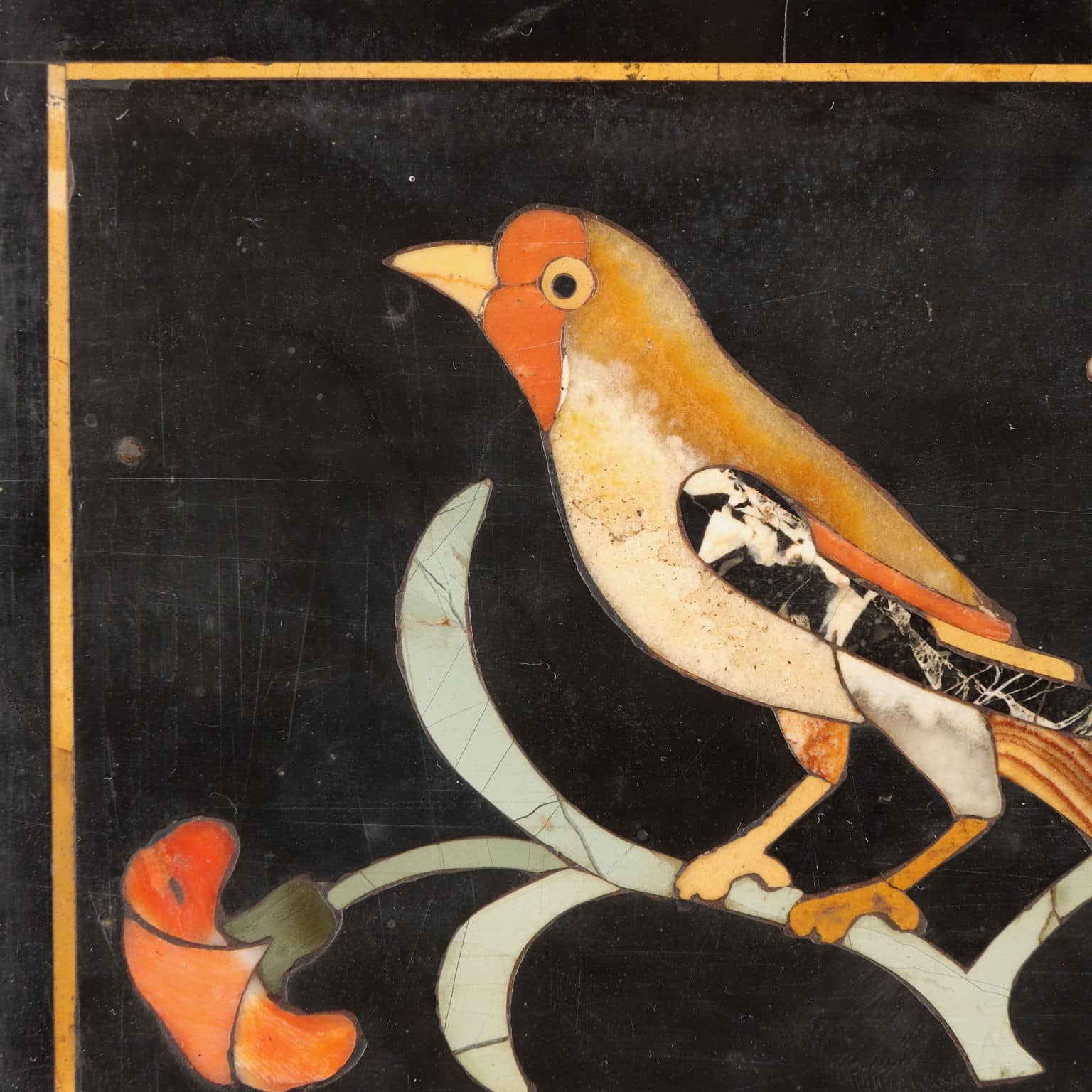
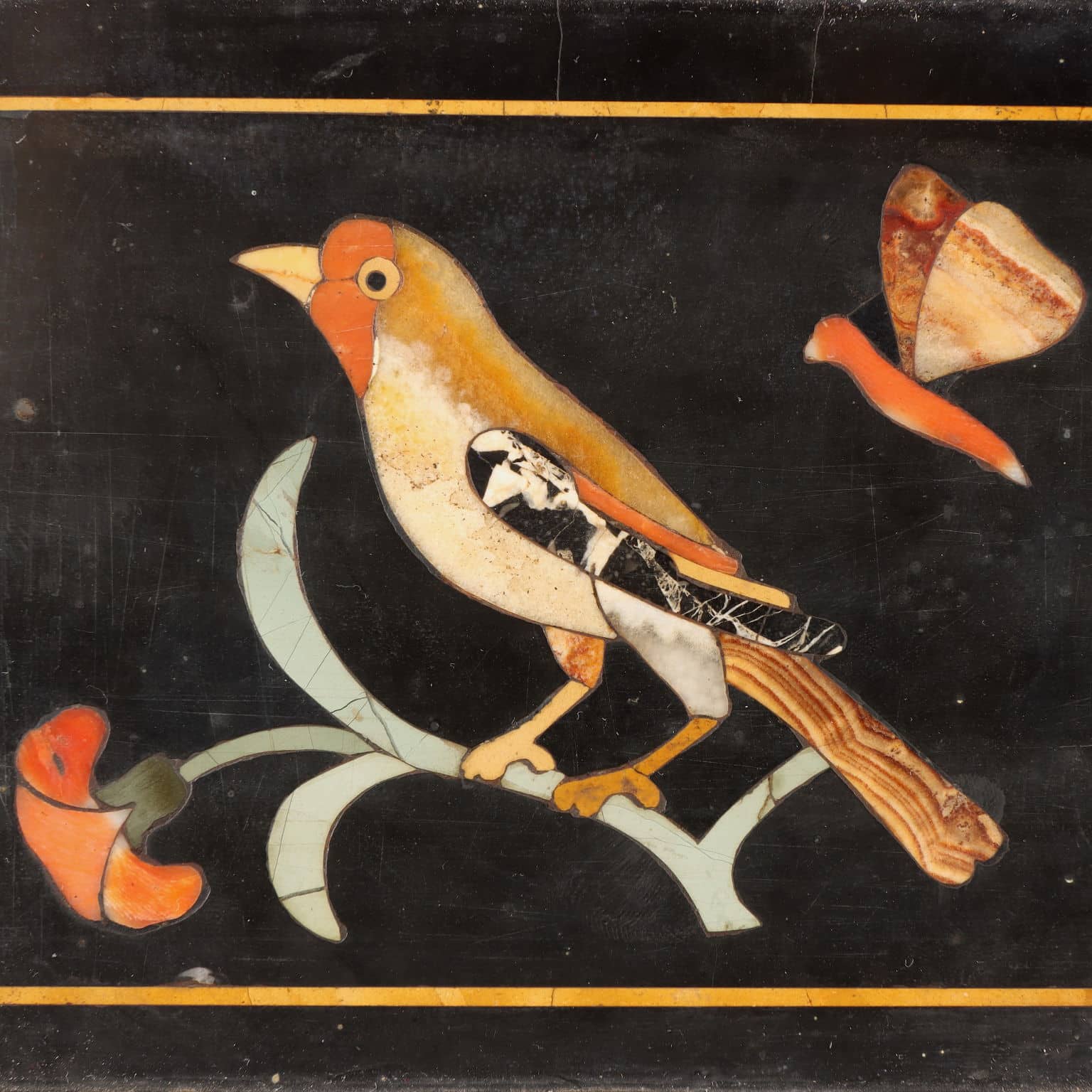
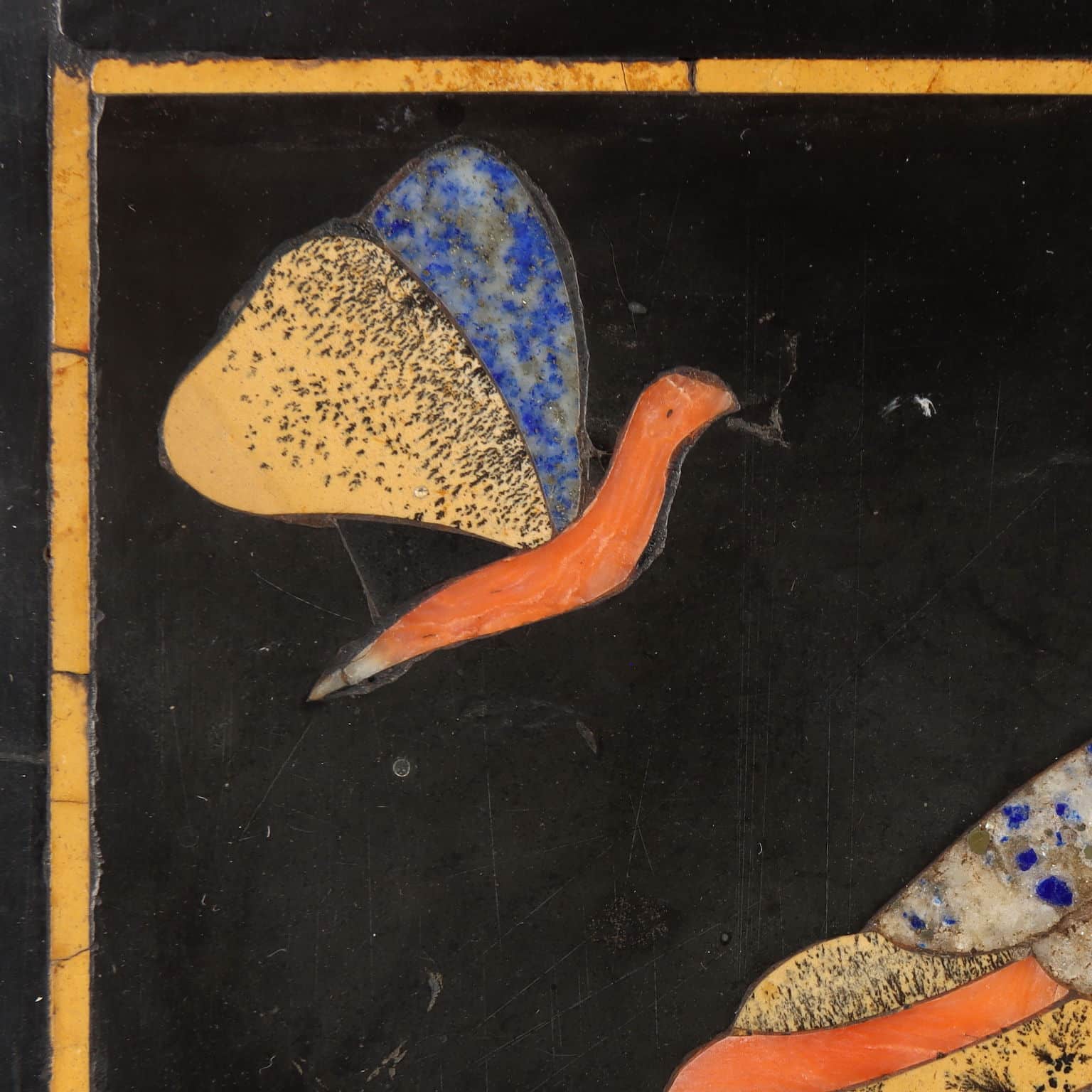
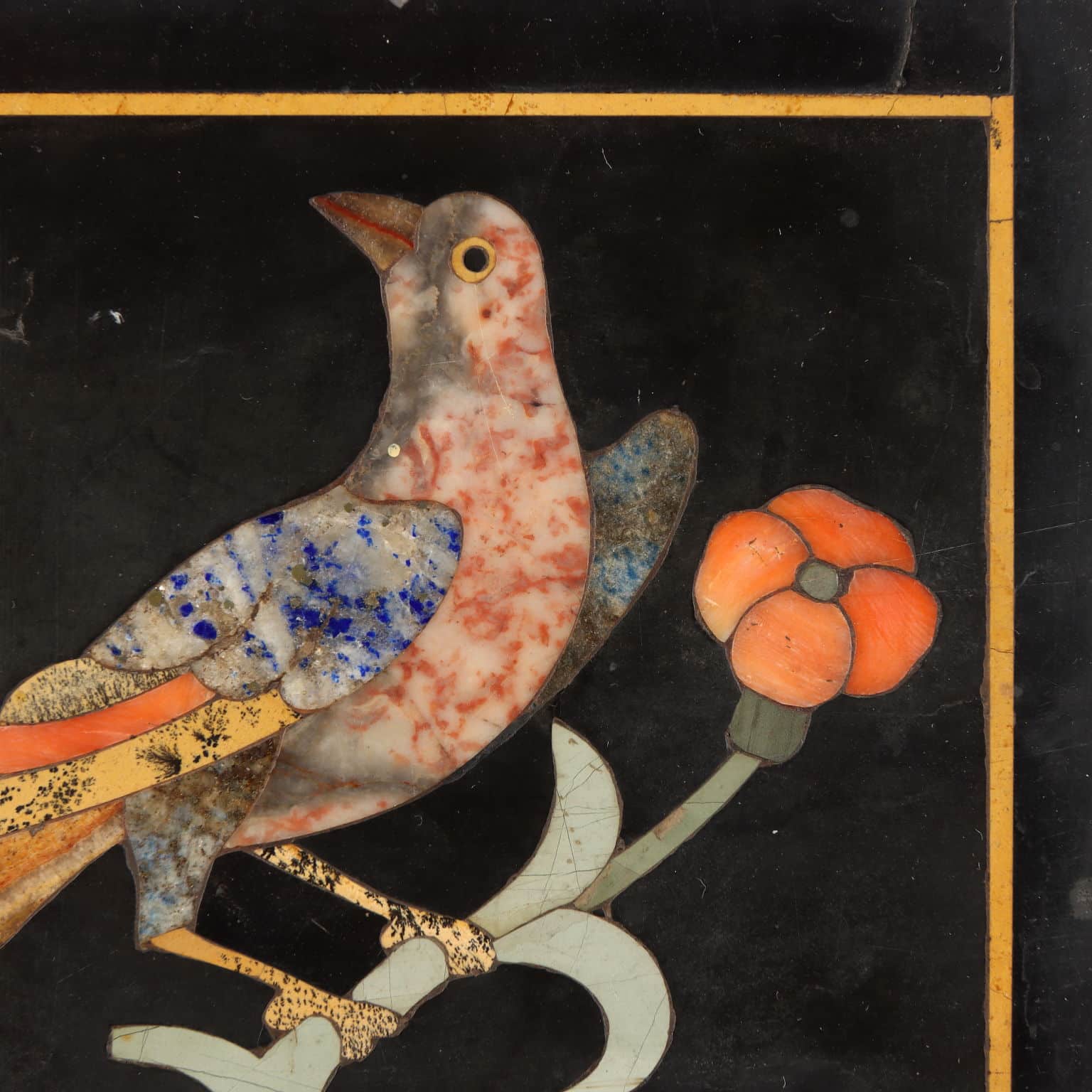
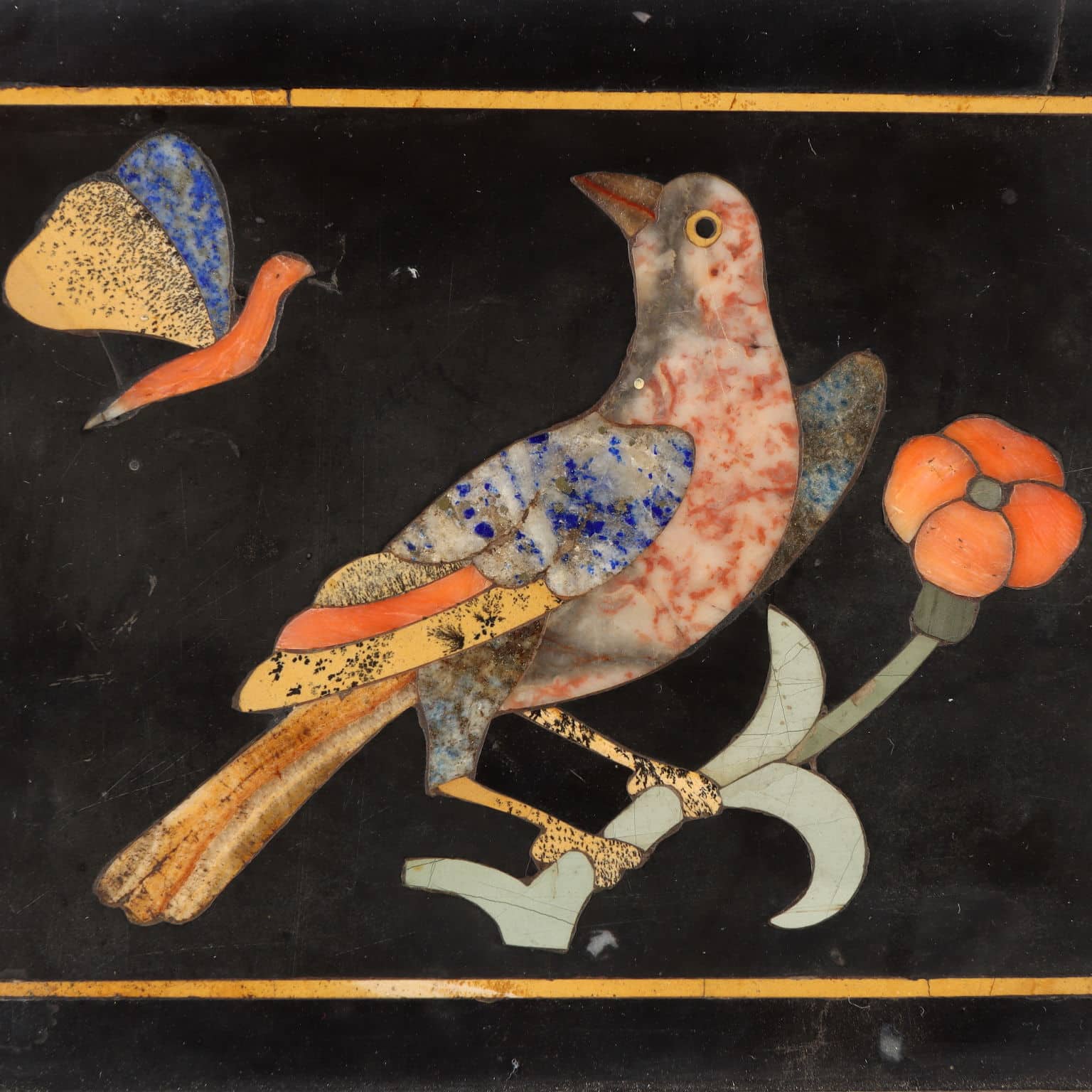
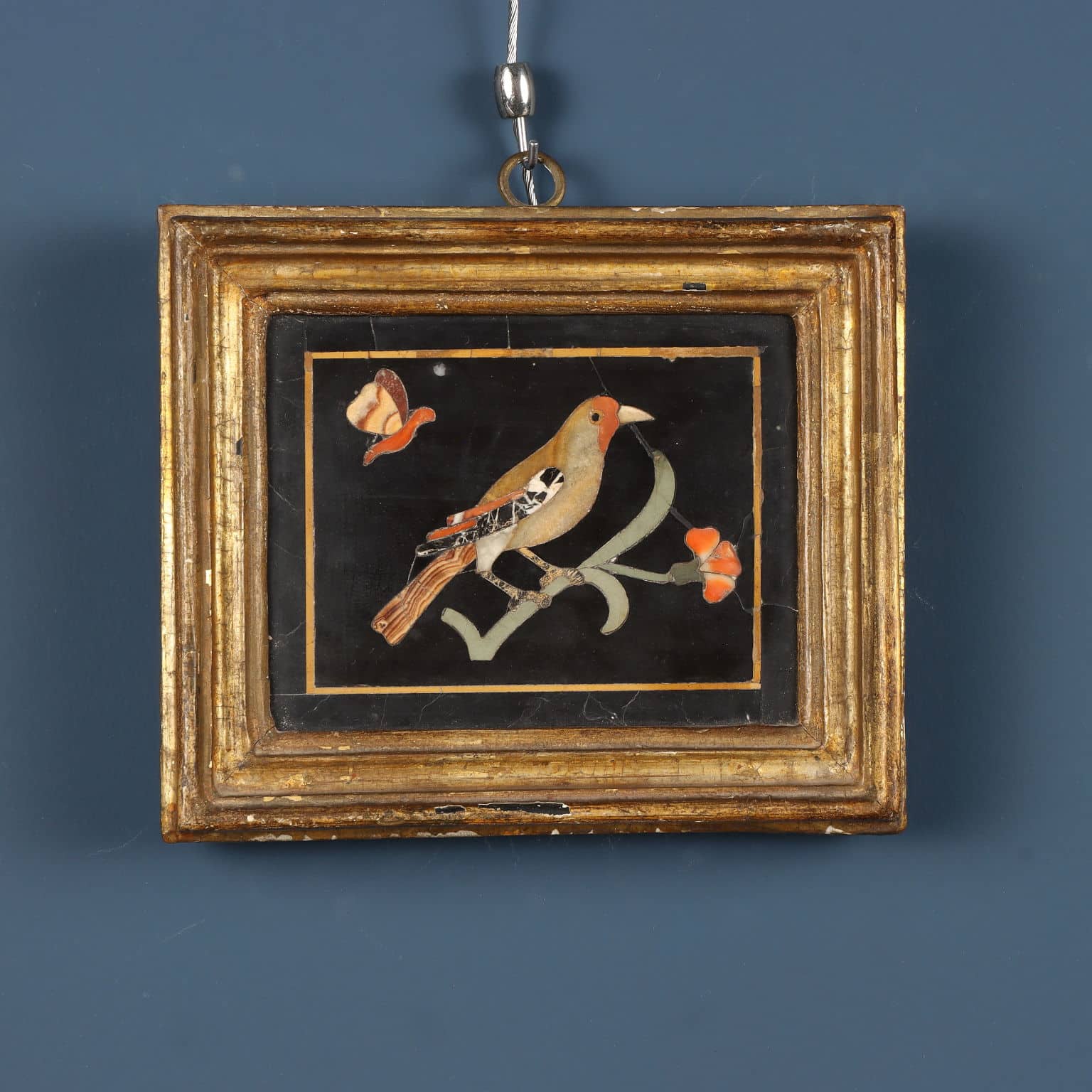
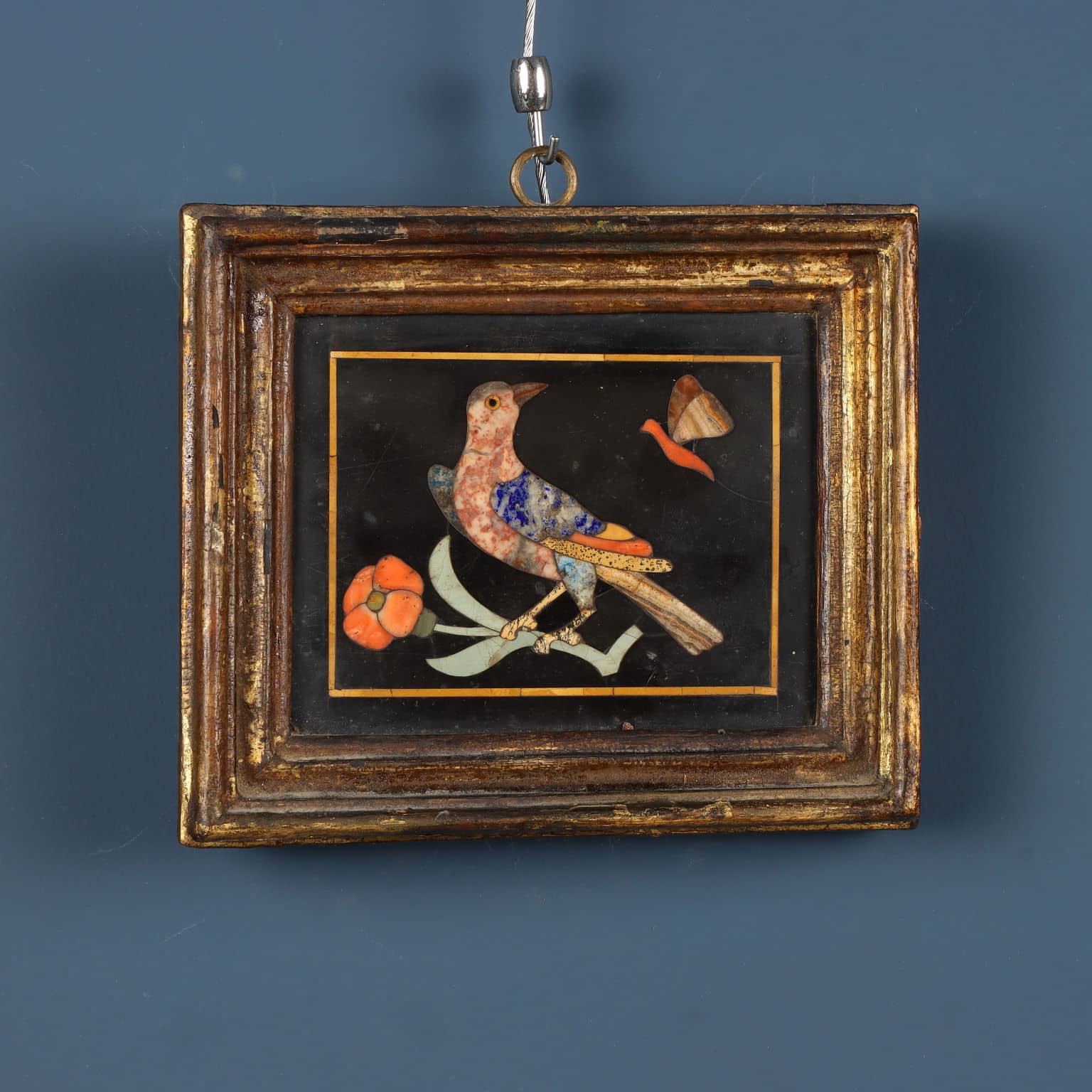
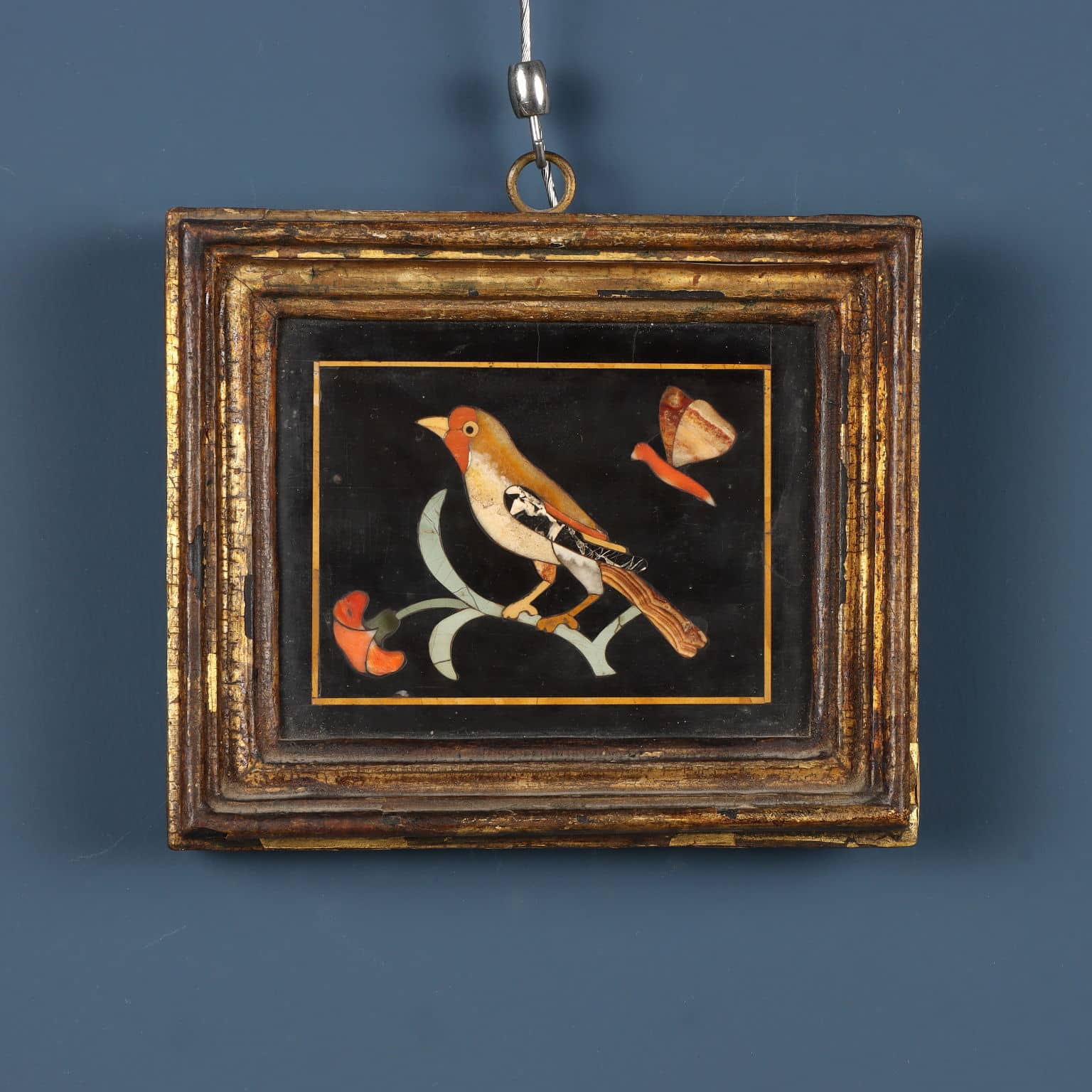
A group of Florentine commesso (pietra dura) panels in hardstones and rare marbles, comprising four plaques set within moulded frames, originally ebonized and later parcel-gilt (doratura a mecca). Arranged as two mirrored pairs, each panel depicts a bird perched on a flowering branch accompanied by a fluttering butterfly. The compositions are enclosed within a rectangular inlaid border and executed entirely in stone inlay on a touchstone (paragone) ground.
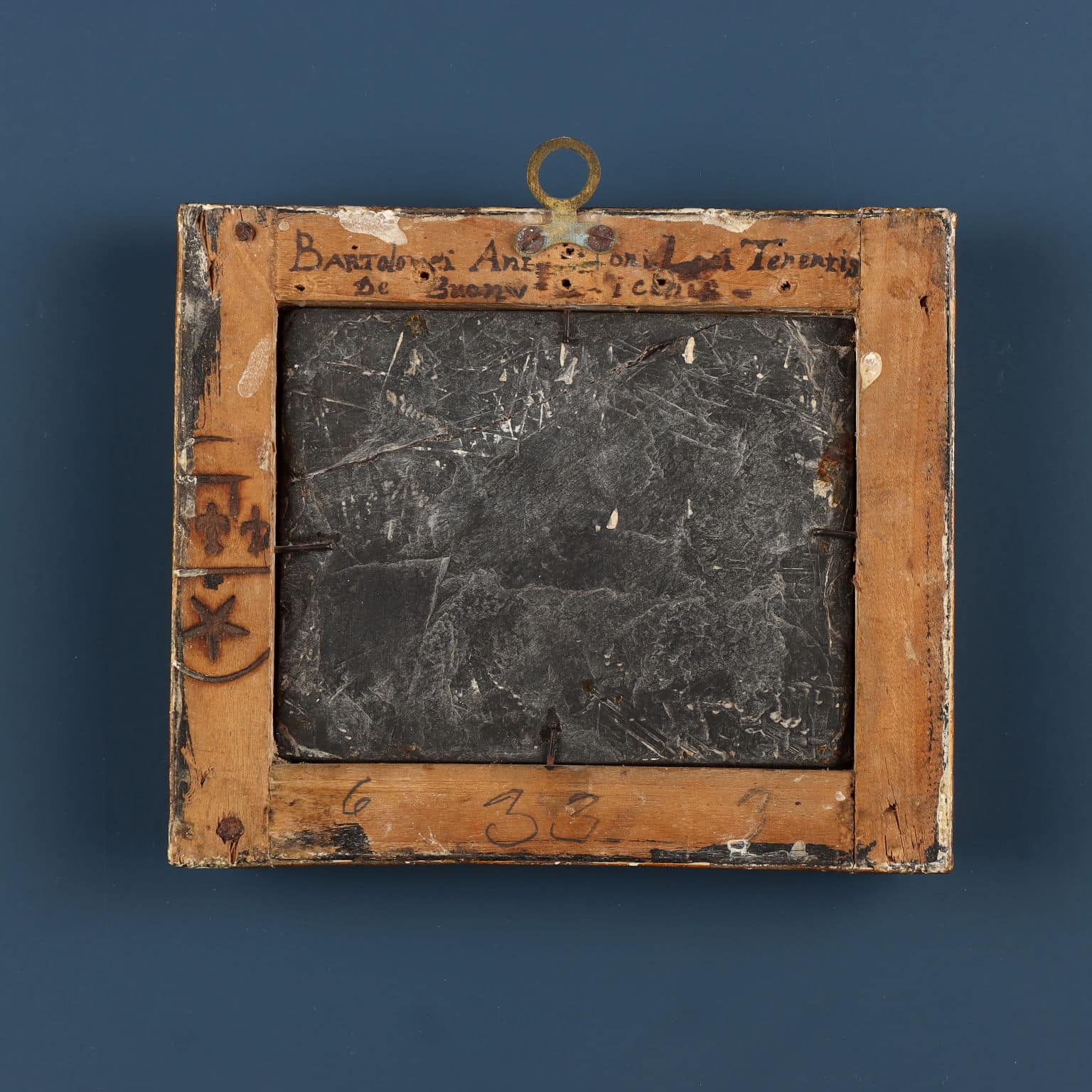
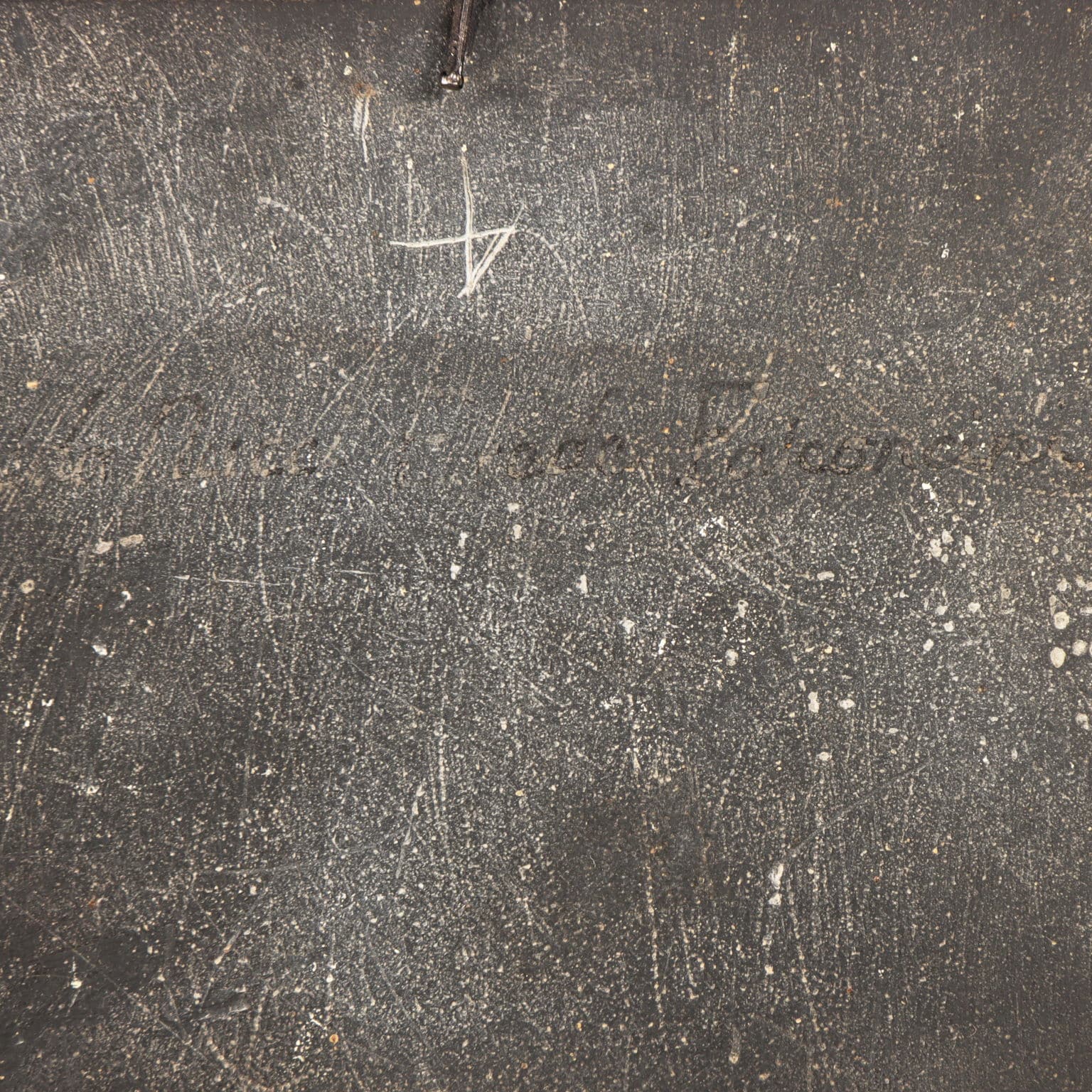
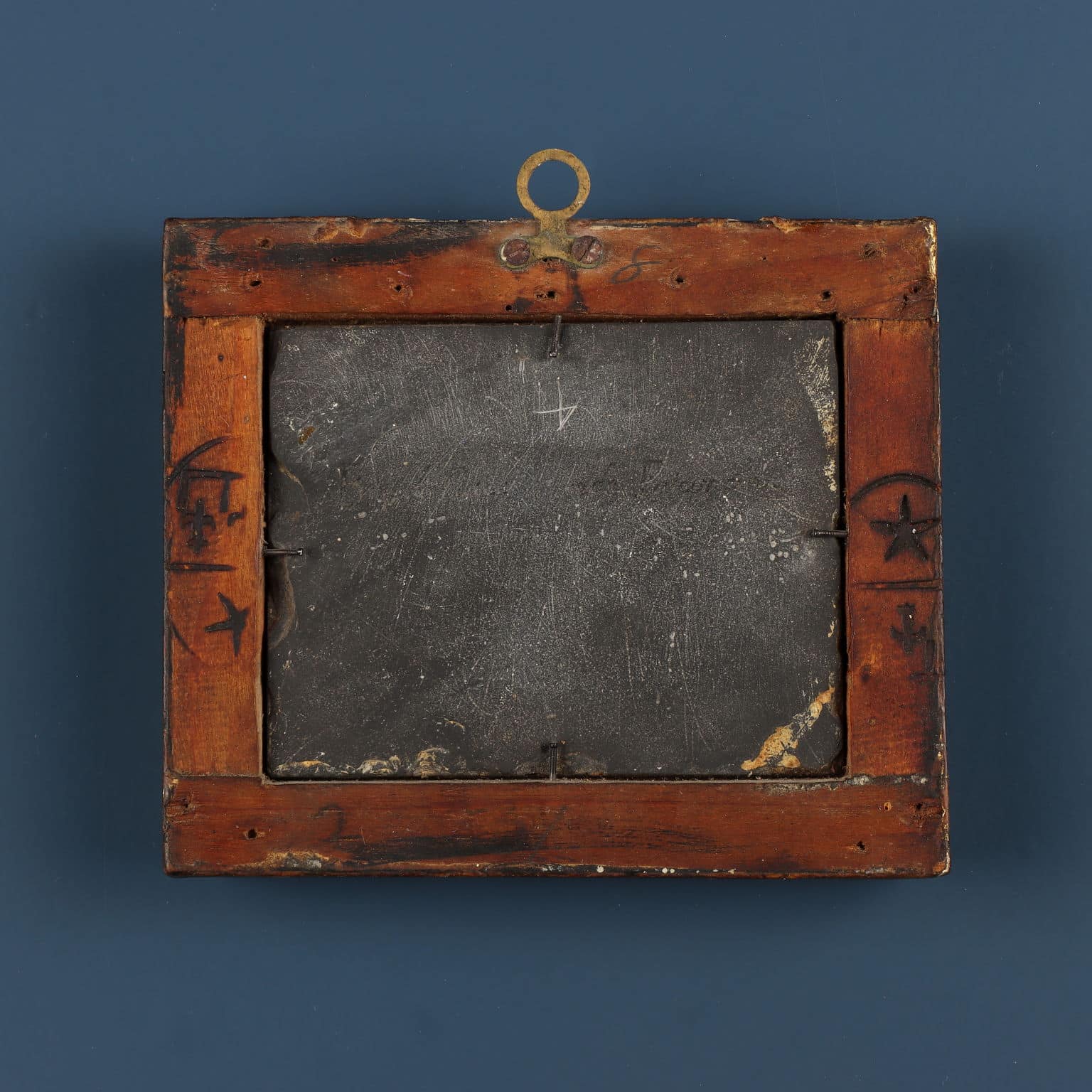
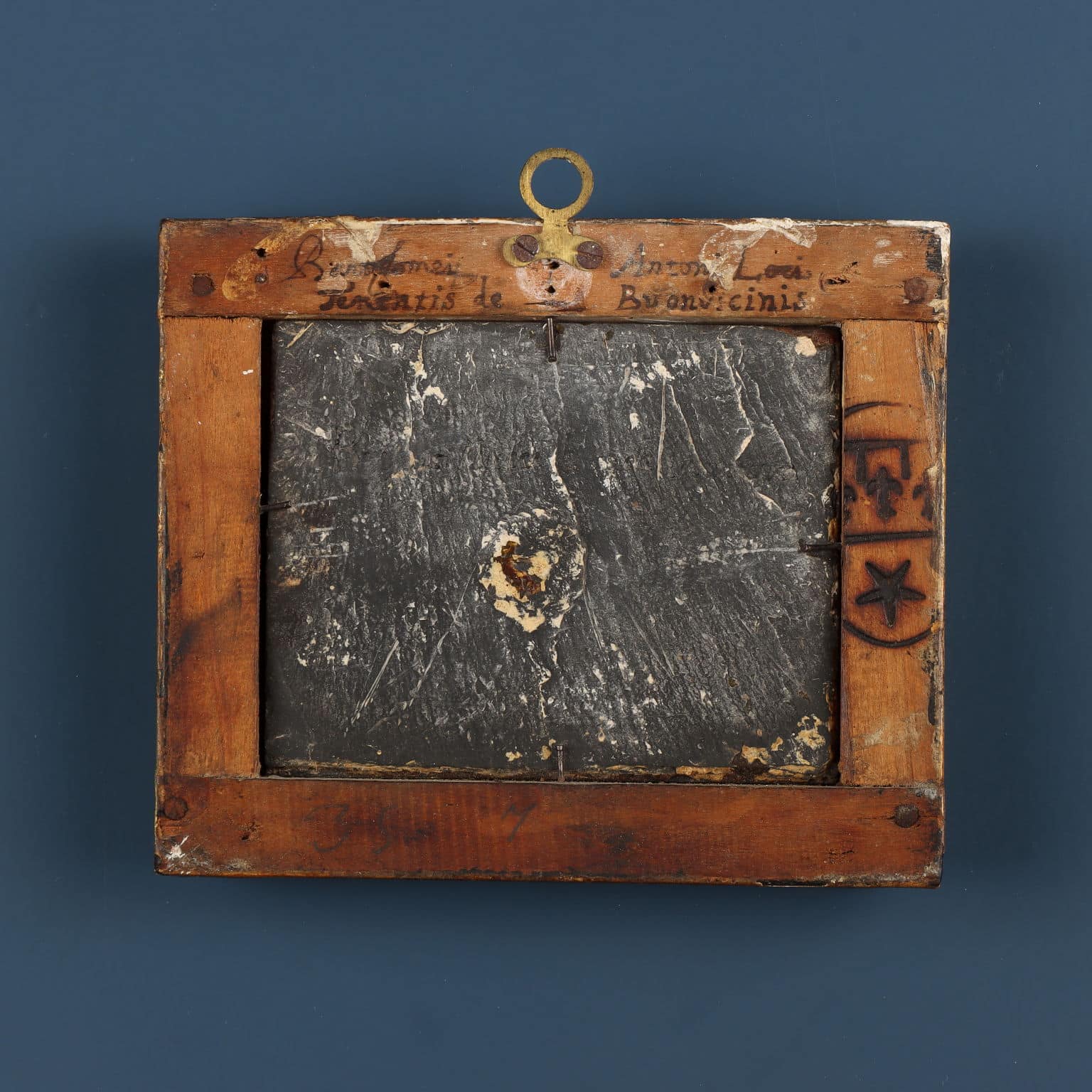
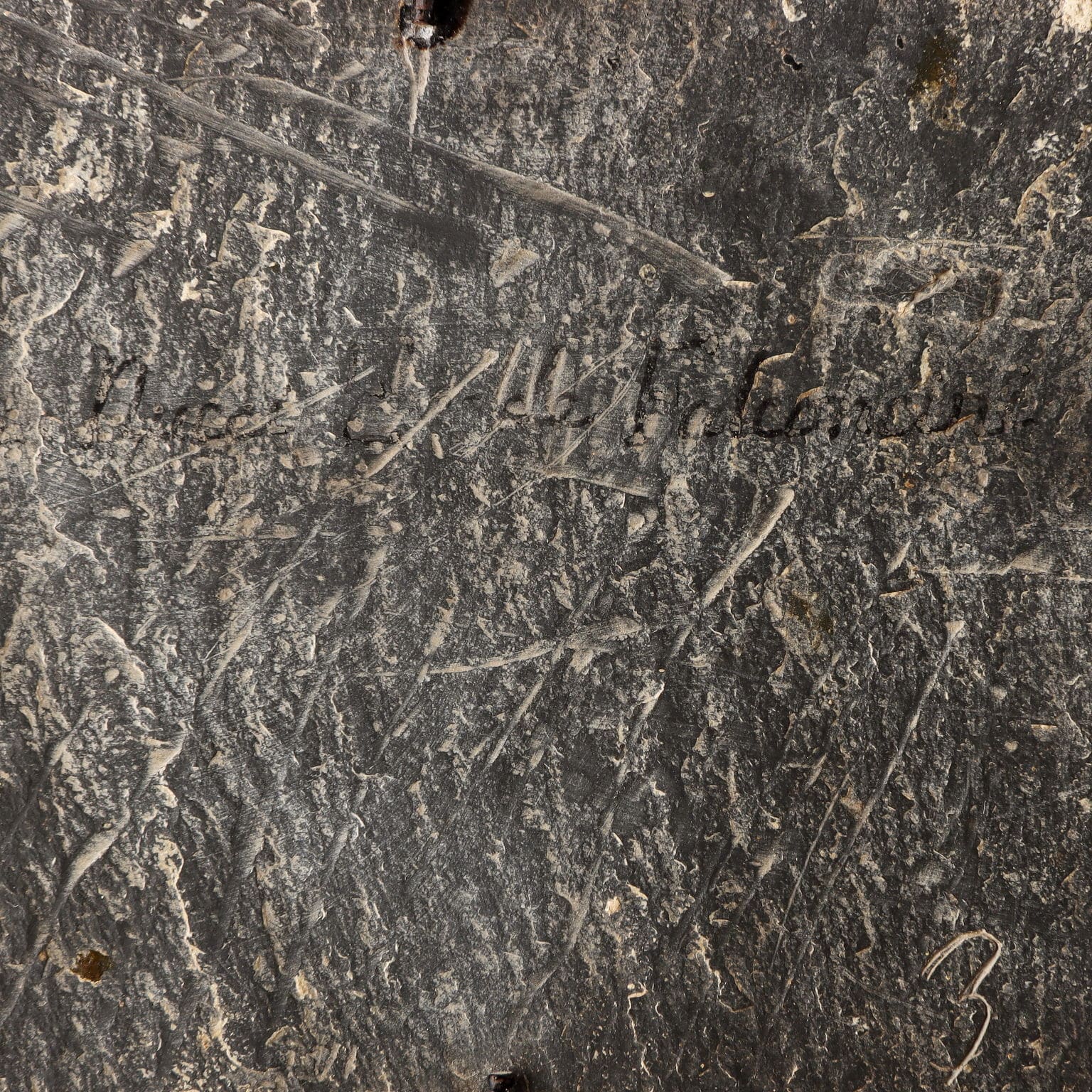
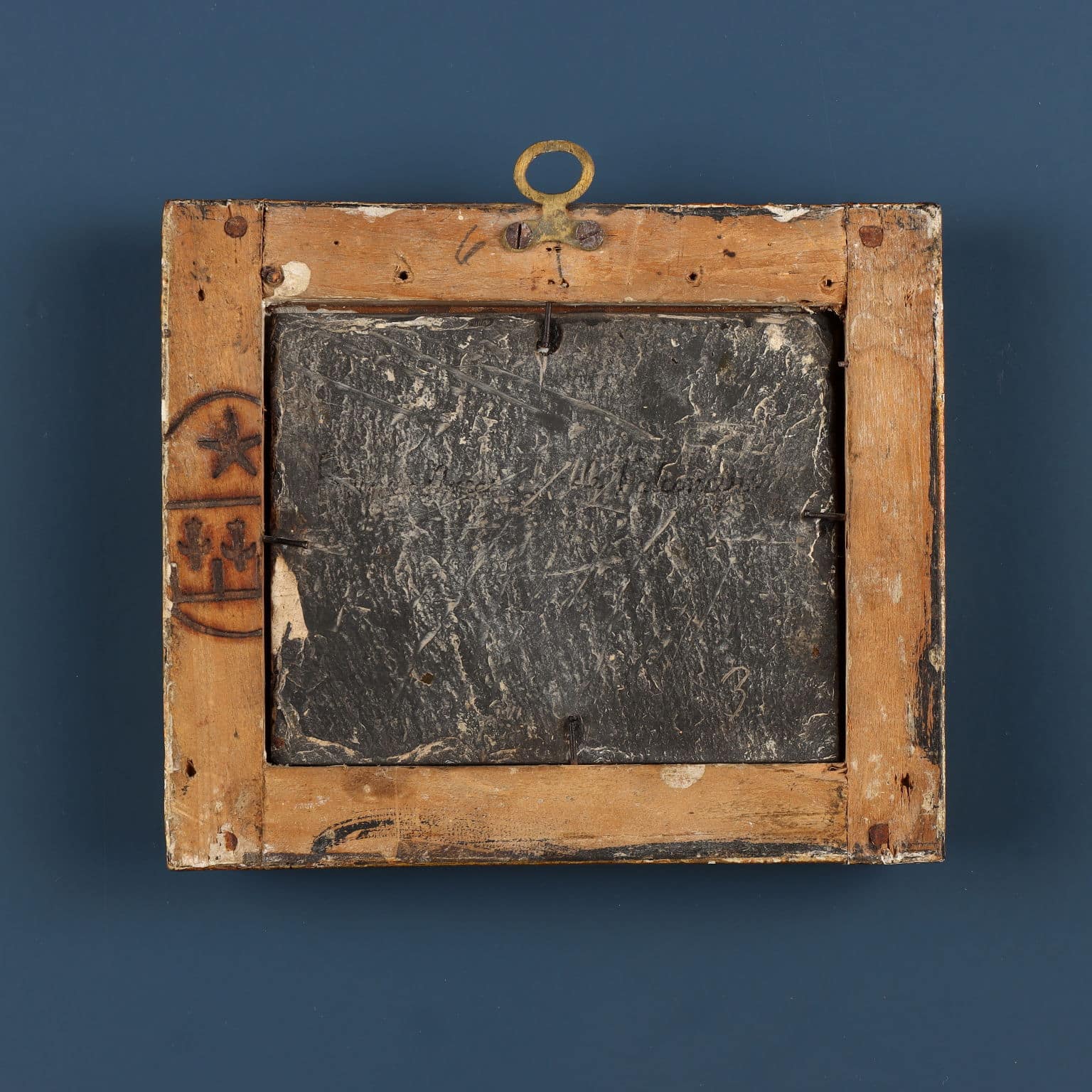
Three of the panels bear on the reverse a partially legible inscription reading: “B…igida Nucci E…ede Falconcini.” All four frames were originally ebonized and were gilt at a later date. On the reverse, each carries a branded mark depicting a five-pointed star surmounted by the Capo d’Angiò (Chief of Anjou), while two of the frames also bear the Latin inscription: “Bartolomei Antoni Loci Tenentis De Buonvicinis.”
Panel dimensions (H × W): 10 × 12.5 cm
Frame dimensions (H × W × D): 14.5 × 17.2 × 2.5 cm
Code: OGANOG0250862
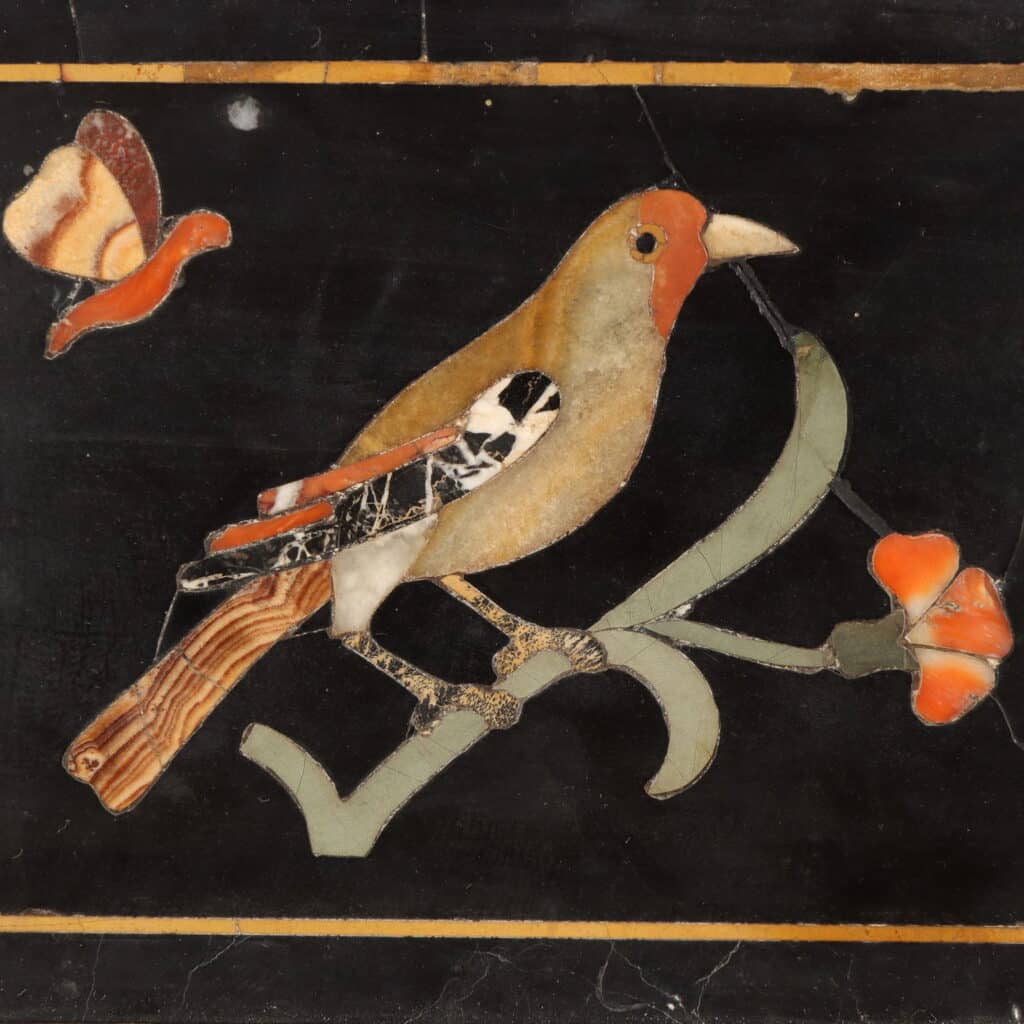
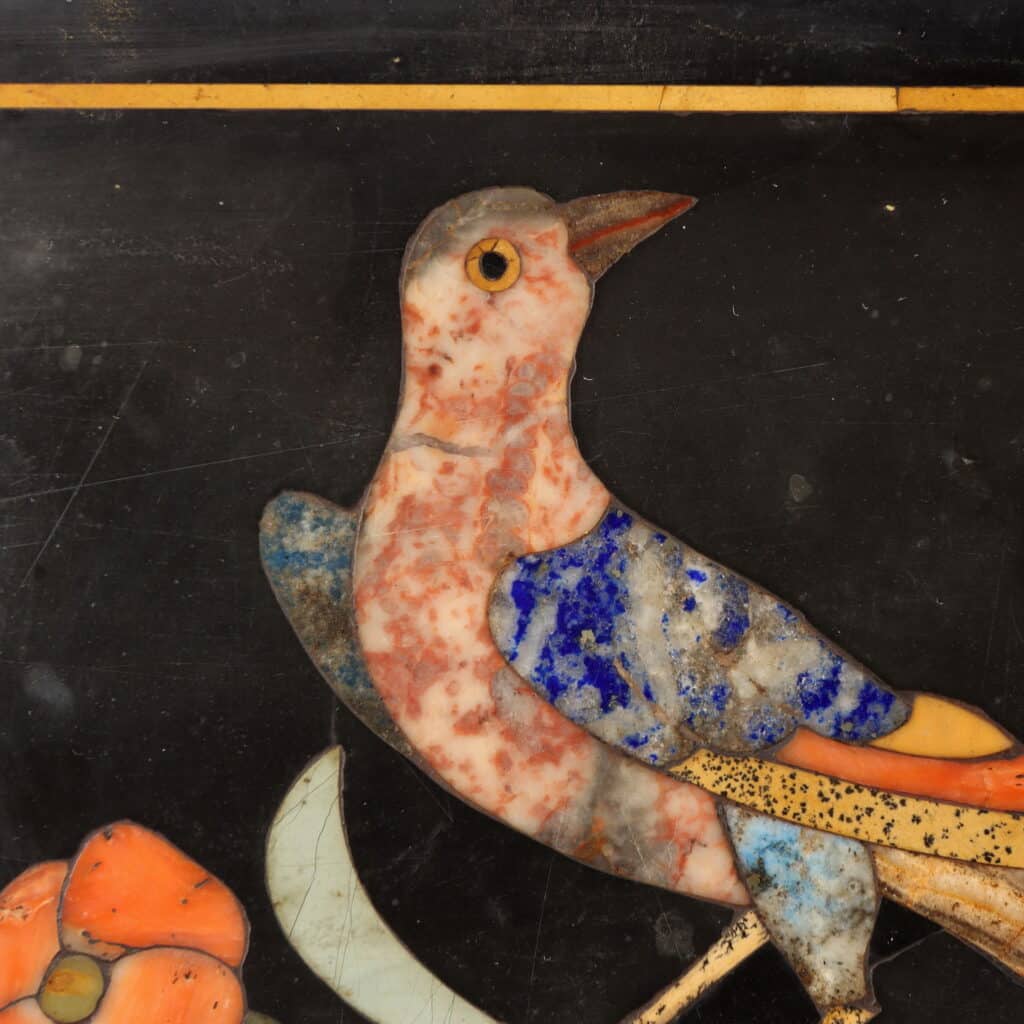
Florentine commesso, or pietra dura inlay, emerged during the second half of the sixteenth century through the humanist revival of the ancient Roman technique of opus sectile, in which precisely cut pieces of marble were assembled to create pavements and architectural decorations. In Florence, the technique evolved into an art distinguished by the use of coloured marbles and, above all, hardstones, which were employed to produce extraordinarily refined compositions depicting flowers, birds, fruit, city views, and even faithful reproductions of celebrated paintings. Through the meticulous selection and juxtaposition of stones, craftsmen achieved effects remarkably close to painting.
Unlike in Rome, where the technique remained primarily architectural, Florentine commesso found application in both ecclesiastical furnishings—such as altar frontals—and in luxurious domestic furniture, including table tops, cabinets (stipi), and independent pictures.
In 1588, with the aim of producing works worthy of the Medici court and diplomatic gifts of exceptional prestige, Grand Duke Ferdinando I de’ Medici founded the Opificio delle Pietre Dure, bringing together Florence’s finest stone inlay craftsmen within a single state workshop. The institution, which remains active today as one of the world’s leading conservation centres, continued its artistic production under the House of Lorraine and devoted more than three centuries to the decoration of the Cappella dei Principi at San Lorenzo, preserving its techniques virtually unchanged until the late nineteenth century.
It was within this artistic and cultural milieu that the present group of panels was created during the first half of the seventeenth century. They were likely intended either as decorative inserts for the drawers of an elaborate cabinet or, as preserved here, mounted individually as small framed pictures. The frames were originally finished in black and only later enhanced with doratura a mecca.
Each frame bears the same branded mark on the reverse—a five-pointed star surmounted by the Capo d’Angiò, described heraldically as “three golden fleurs-de-lis placed between the four pendants of a red label.” Two of the frames additionally bear the ink inscription “Bartolomei Antoni Loci Tenentis De Buonvicinis.”
The branded device was most likely an inventory or ownership mark and represents the earliest known indication of provenance. Research suggests a close similarity to the coat of arms of the Buonvicini family, an attribution supported by the accompanying Latin inscription, which clearly refers to that lineage and was probably added after the branding itself. Members of the Buonvicini family are recorded as descendants of “a long line of priori and gonfalonieri, beginning with Giovanni di Buonvicino in 1395,” and were formally admitted to the nobility of Pescia by decree of 1 March 1773.
Nevertheless, the attribution cannot be regarded as definitive, since the Buonvicini arms are traditionally described as bearing an eight-pointed golden star rather than the five-pointed device found here. Moreover, the branded mark may instead refer to a civic or workshop emblem rather than a family crest. The Capo d’Angiò, while traditionally associated with Guelf families, was also widely adopted by Tuscan and Romagnol municipalities historically aligned with the Guelf faction.
The partially legible pencil inscription on the reverse of three panels—probably to be read as “Brigida Nucci, erede Falconcini” (“Brigida Nucci, heiress of the Falconcini family”)—appears to represent a later ownership record. It almost certainly refers to Brigida Nucci, née Falconcini, who assumed the Nucci surname through her marriage to Orazio Nucci. Her existence is documented in the Carte Nucci, a collection of family and commercial papers preserved in the State Archives of Pescia (a branch of the State Archives of Pistoia) and digitized by the State Archives of Florence. These records place her activity between the late eighteenth and the first half of the nineteenth century, although her exact birth and death dates remain unknown.
The Nucci and Falconcini families ranked among the leading noble families of Pescia. The Nucci, originally members of the lesser nobility, rose in status after Pietro Nucci, a distinguished jurist, was appointed Rector General of the University of Pisa. By the nineteenth century they were considered among the wealthiest families in Pescia, their considerable estate including numerous farms, houses, and the elegant palace adjoining the city’s cathedral. The family became extinct in 1898.
The Falconcini family, originally from Volterra, likewise achieved considerable distinction. Benedetto Falconcini settled in Pescia in 1684 after being appointed Proposto (an office then equivalent to bishop) by the Pope, and the family subsequently secured its position through advantageous marriages. Its members also included important officials of the Grand Duchy of Tuscany, notably Persio Falconcini, who served as Secretary of State around 1630.
Finally, a series of late nineteenth-century inventory numbers has been added to the frames, although these do not contribute any further information regarding the ownership history.
Although the complete provenance of the panels cannot be reconstructed with certainty, the surviving documentary evidence allows us to state with confidence that these exceptional Florentine commessi formed part of the private collections of members of the aristocracy of Pescia for a significant period of their history.

FineArt is the new ambitious Di Mano in Mano project that offers an exclusive choice of antiques and design works, presenting them for their singularity and uniqueness.

FineArt by Di Mano in Mano is a team of experts at your service to enhance furniture, paintings, finest antiques, art and design masterpieces at best.
Di Mano in Mano
Via Castellazzo 8, Cambiago (MI)
20040