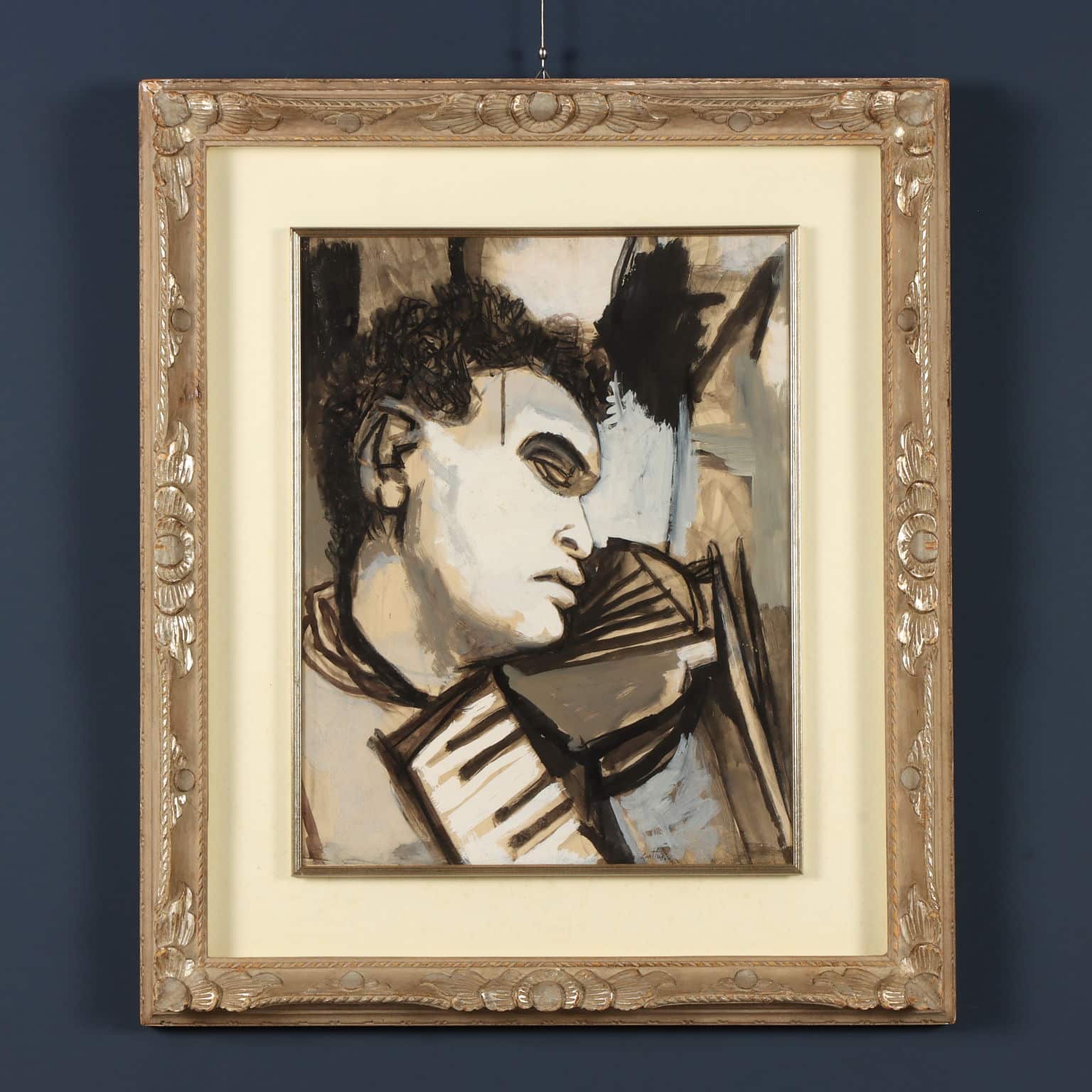
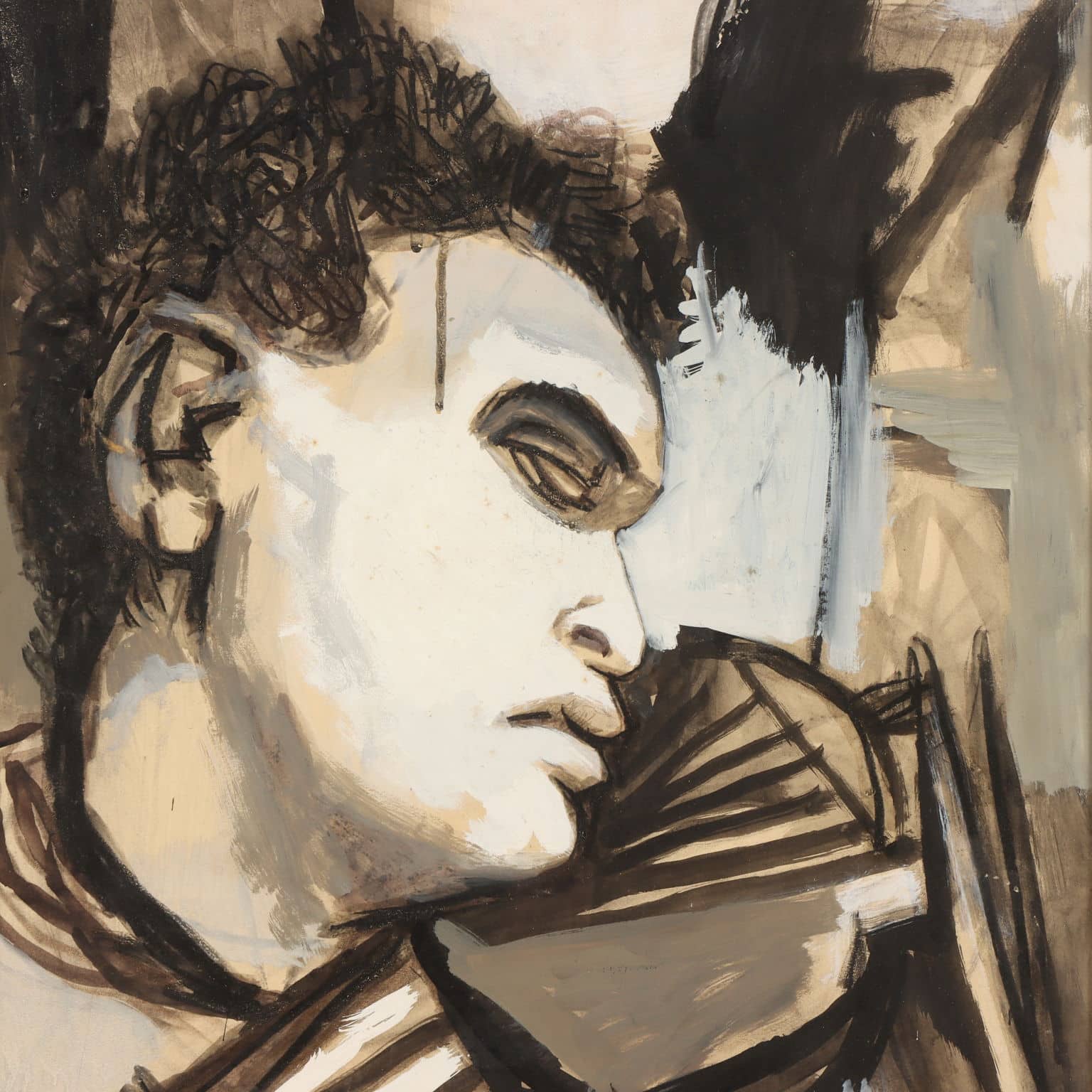
- Renato Guttuso, Accordion Player, 1961

The painting is published in the Catalogo ragionato generale dei dipinti di Renato Guttuso (General Catalogue Raisonné of Renato Guttuso’s Paintings) by Enrico Crispolti, Vol. 2, published by Mondadori, under catalogue number 59/28, where it is described as “Accordion Player, datable to 1959, whereabouts unknown.”
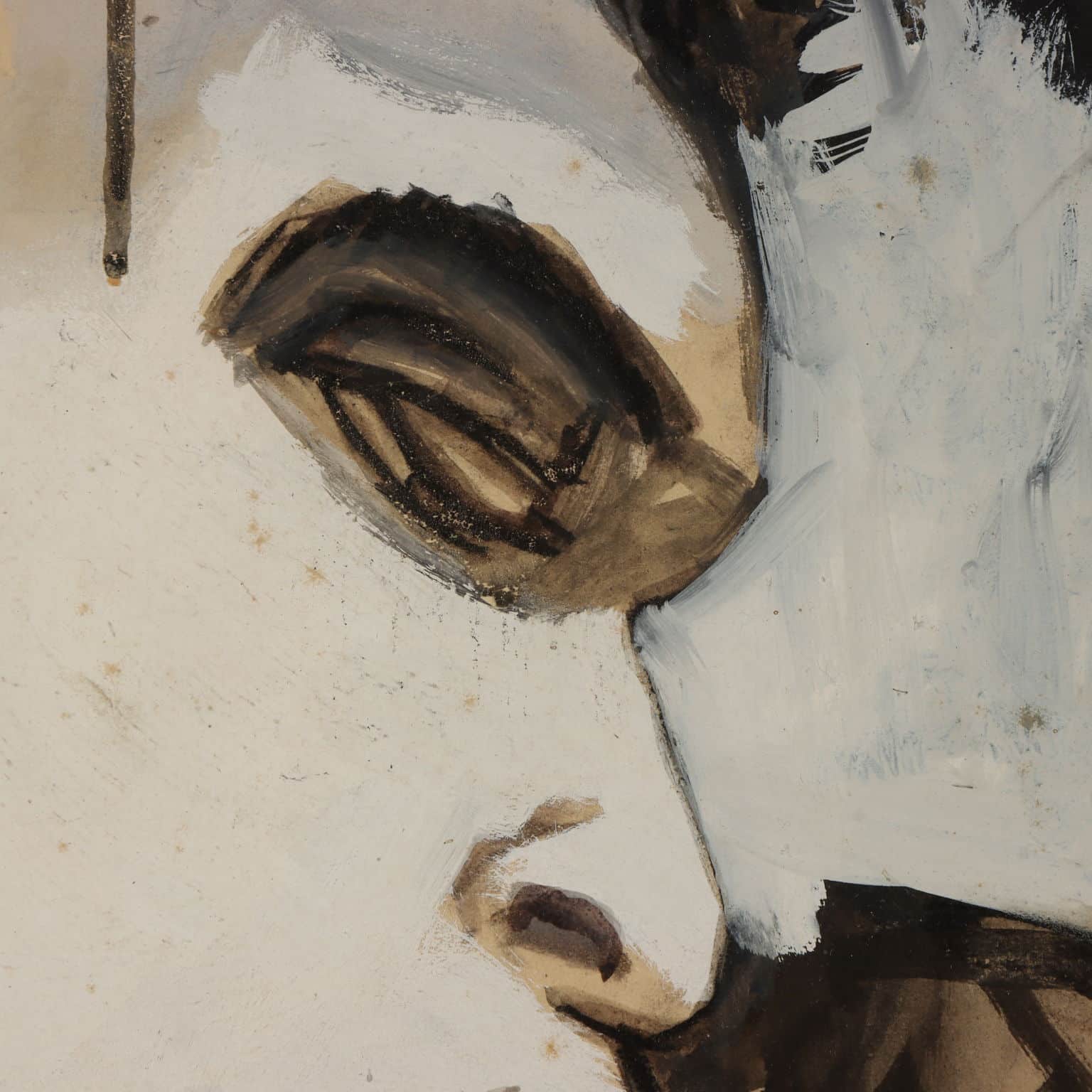
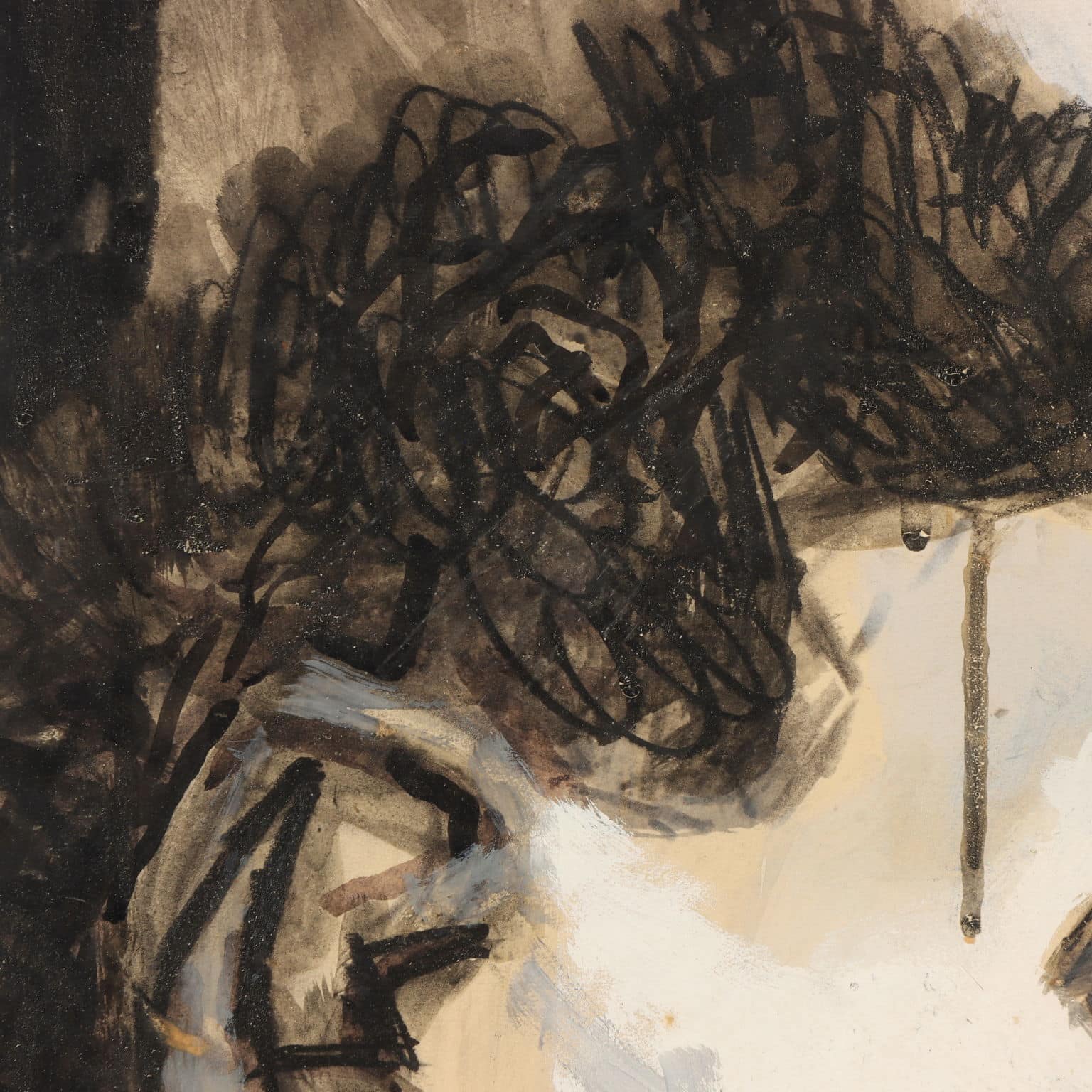
The work reflects the expressive style and popular subjects characteristic of the artist’s production, often associated with Social Realism.
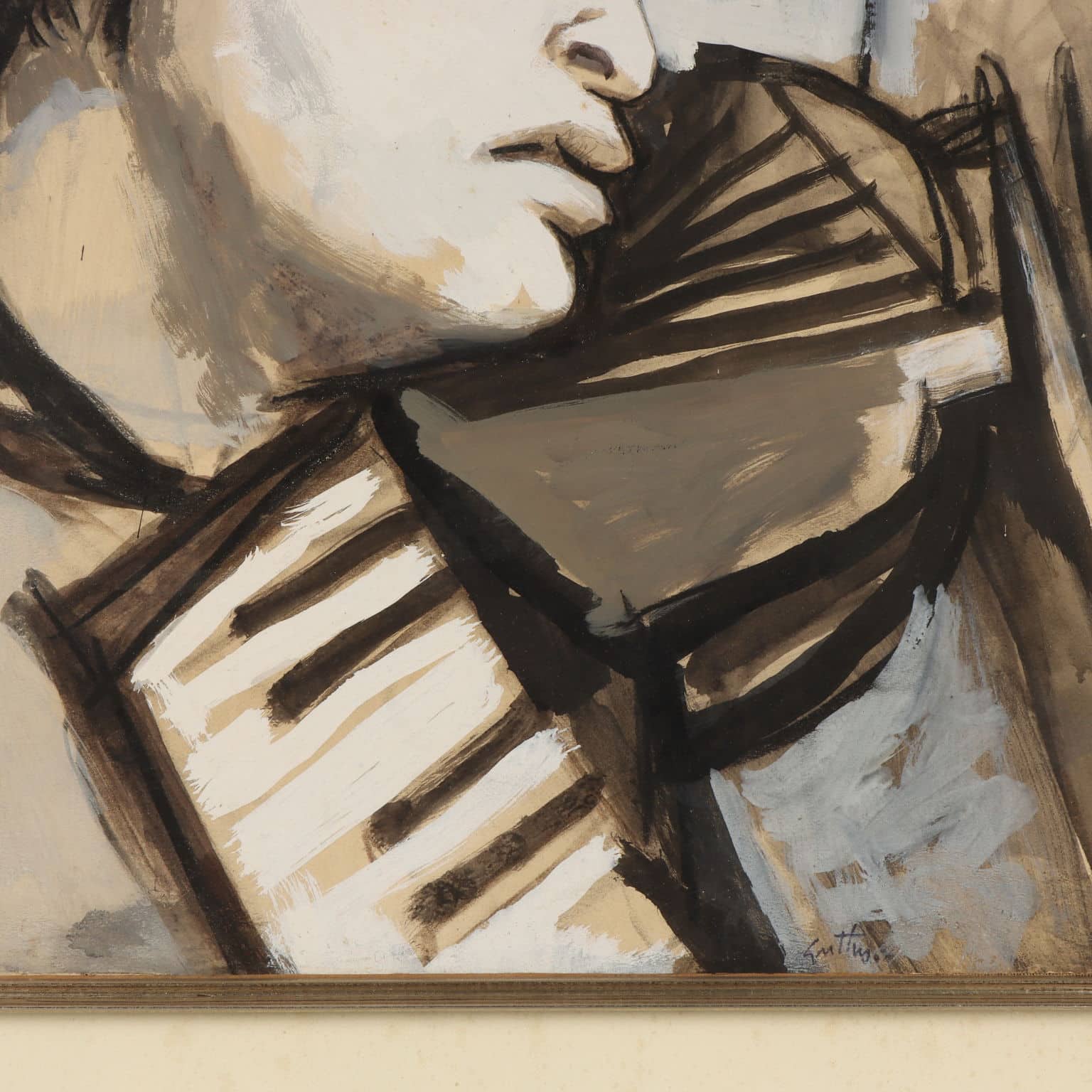
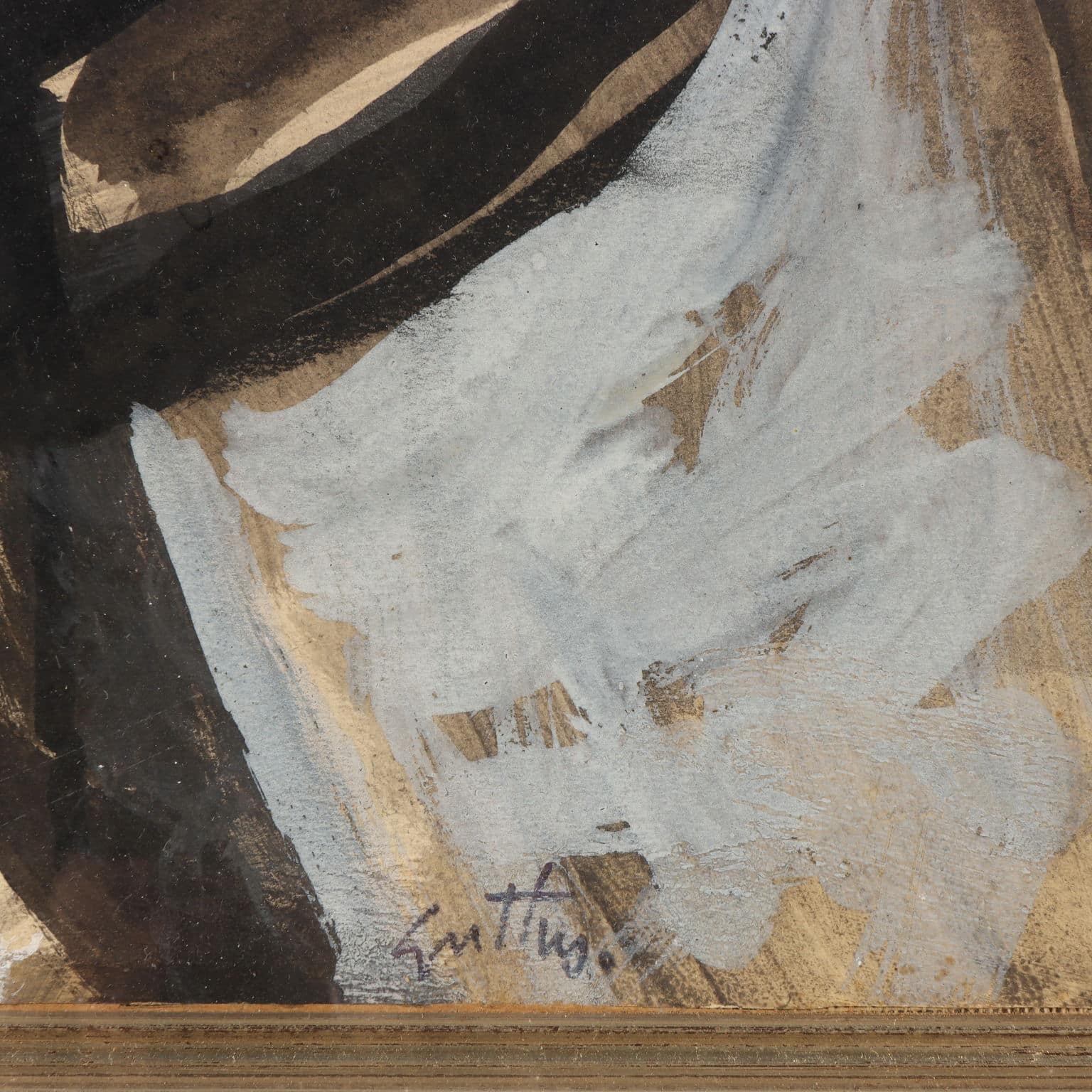
Signed lower right.
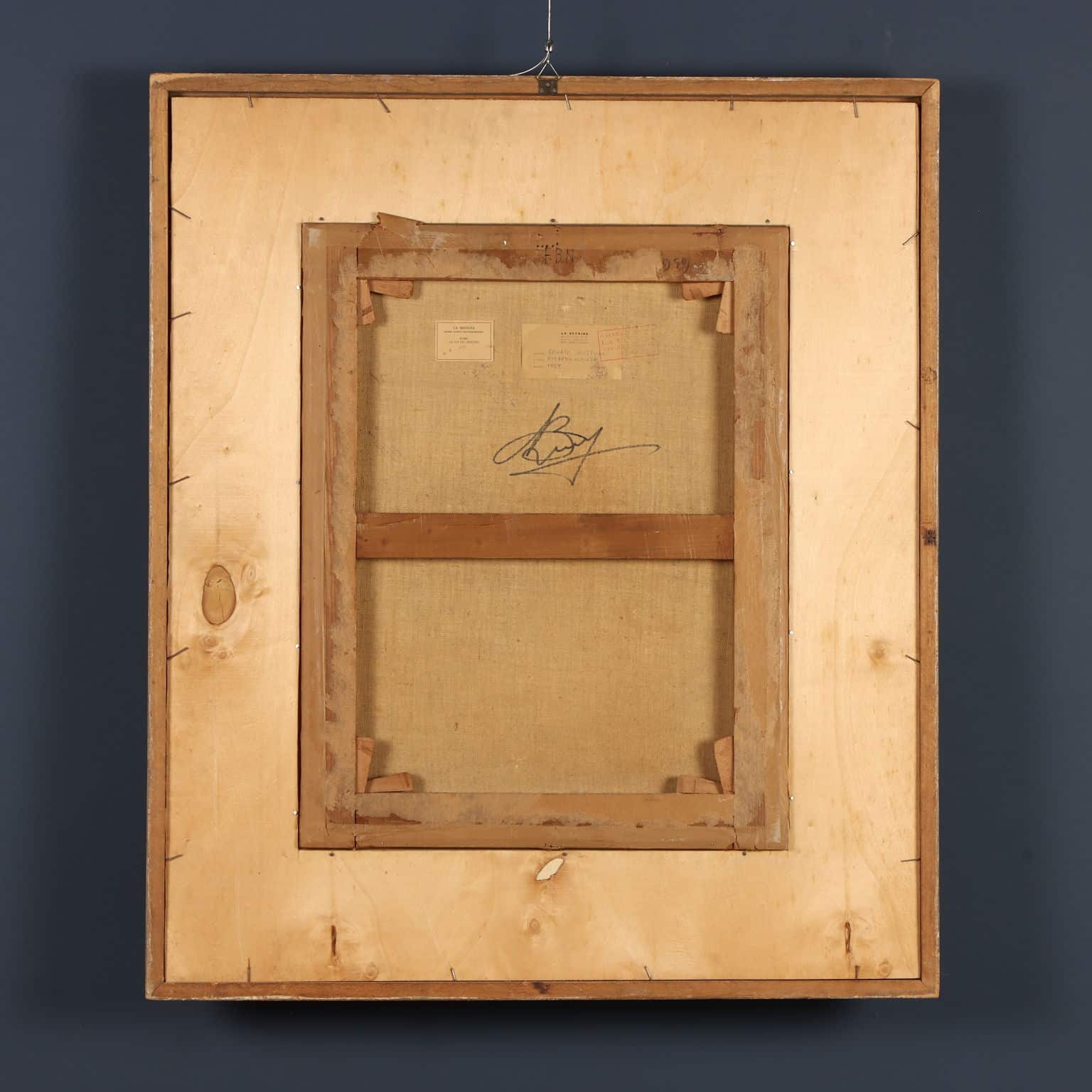
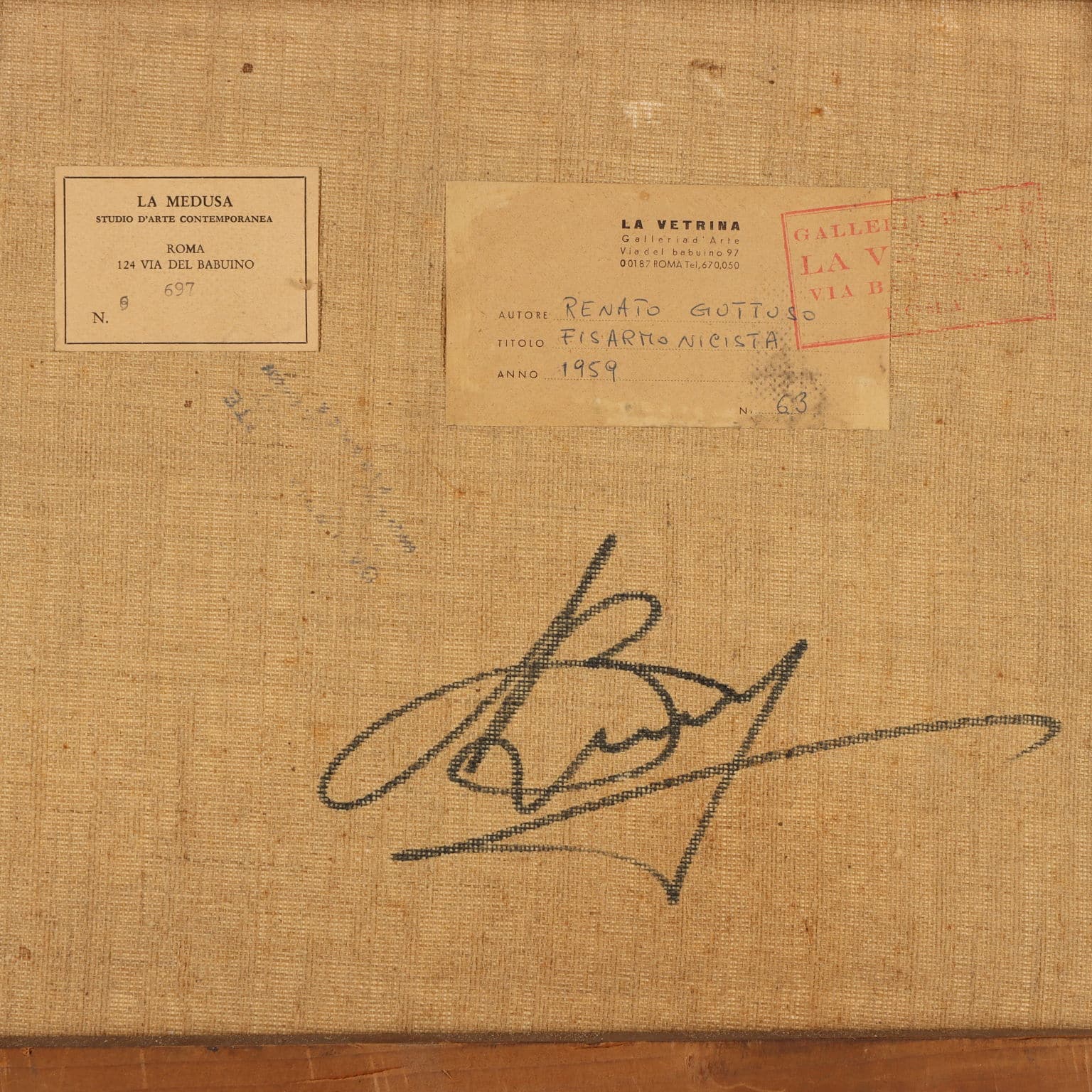
On the reverse, there is a label from the “La Vetrina” Gallery in Rome, bearing the title “Fisarmonicista” (Accordion Player) and the date.
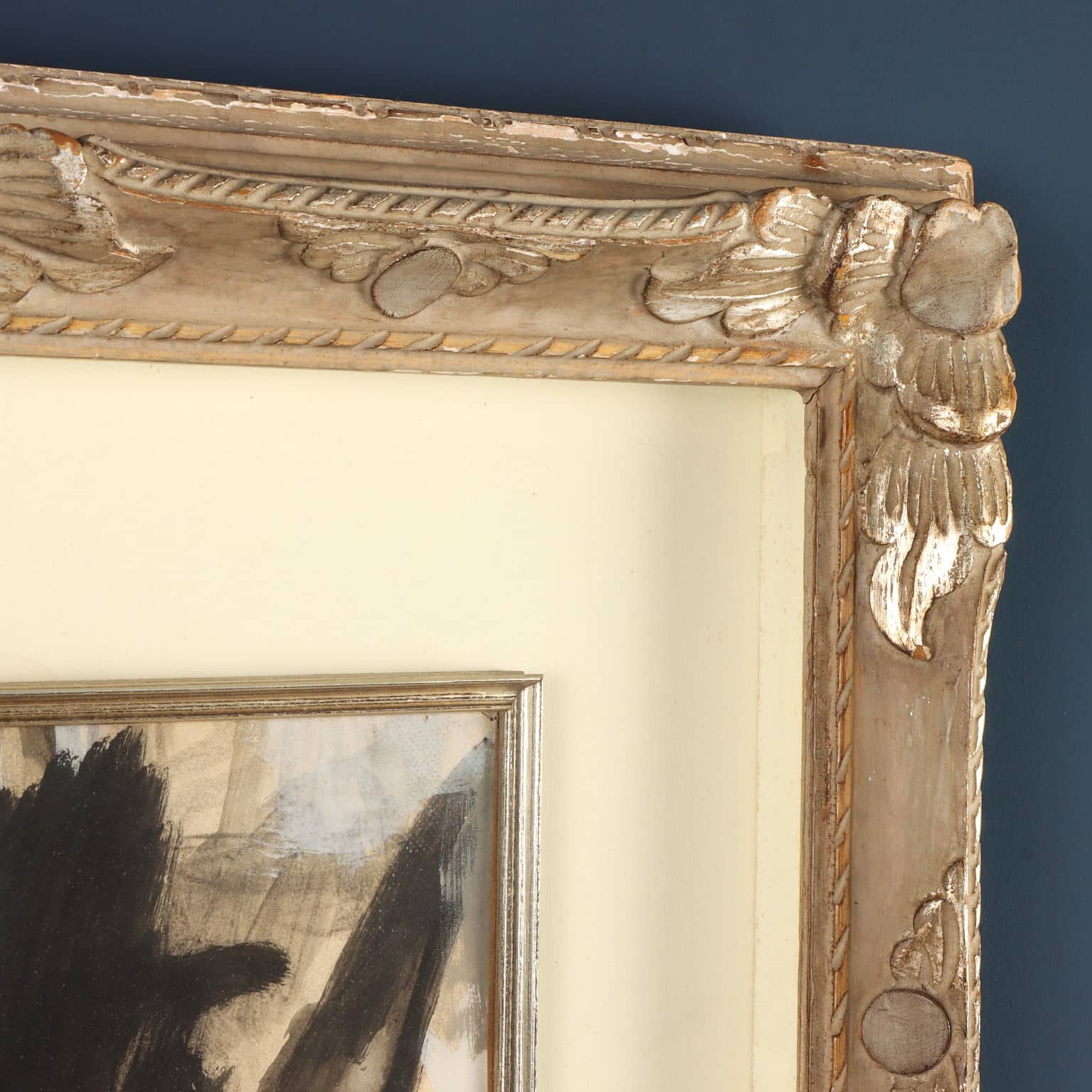
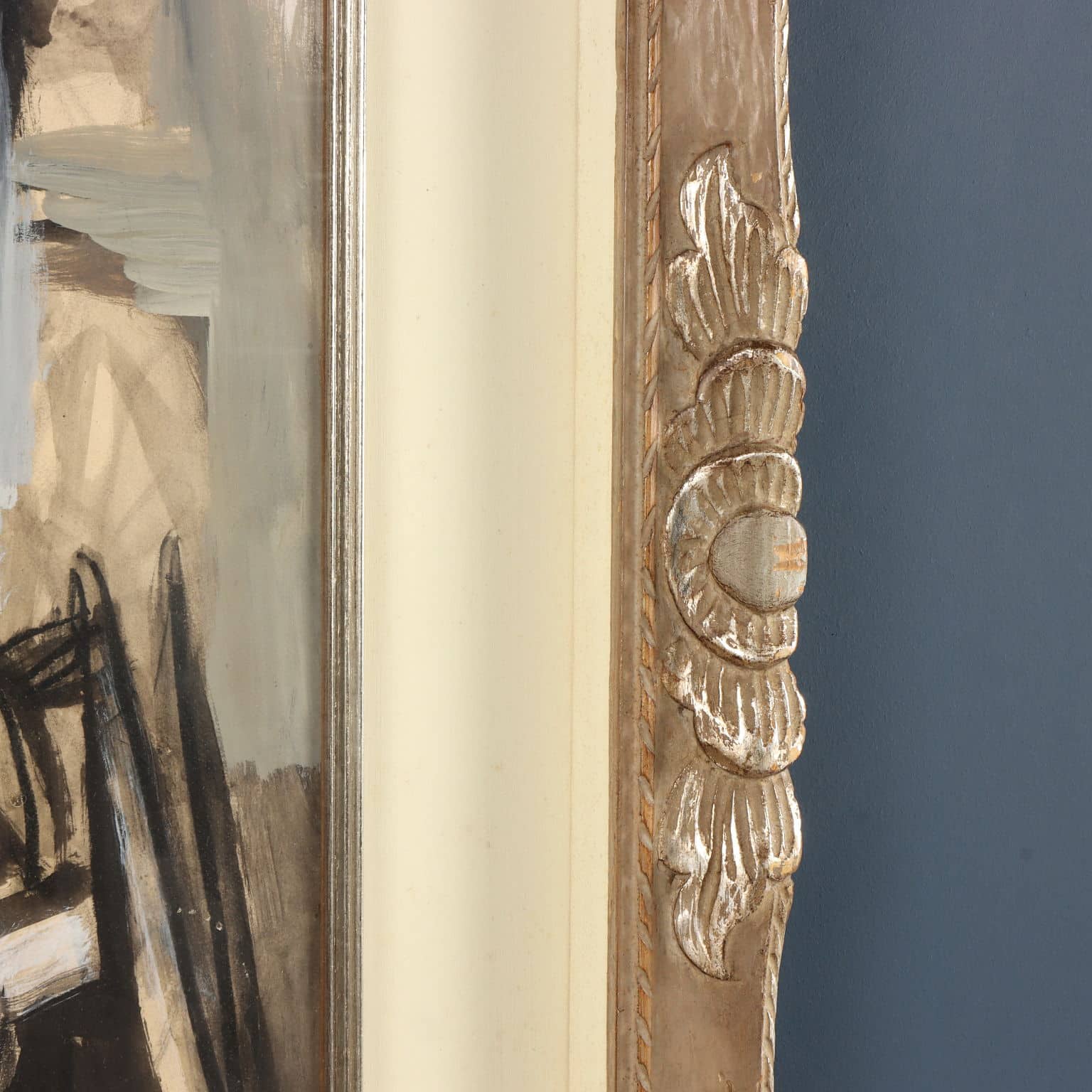
Dimensions: 67.5 × 52.5 cm (framed: 100 × 85 cm)
Code: ARARNO0306437
Born in Bagheria, Sicily, in 1911, Renato Guttuso was one of the most important Italian artists of the 20th century, and his name stands among those who shaped the history of Italian art in the second half of the century.
He discovered art through his father, who was also a painter, and began painting landscapes at an early age, depicting the scenery and mountainous terrain of his native Sicily, which would remain a source of inspiration throughout his career.
He initially studied in Palermo before moving to Rome in the 1930s and eventually arriving in Milan in 1932. During these years, he became acquainted with numerous prominent artists and intellectuals and, above all, developed his anti-Fascist political consciousness.
He became a leading figure in Corrente, an artistic movement named after Corrente di vita giovanile, a magazine founded in Milan in 1938 at the initiative of the painter Ernesto Treccani (Milan, 1920–2009). The movement sought to reconcile political engagement with an independent conception of art, free from the influence of the Fascist regime, in opposition to the Novecento group, which was considered close to Fascism.
The group’s manifesto was published in 1938, although the movement had largely come to an end by 1943, when the magazine was suppressed by the Fascist regime.
In 1945, Guttuso fled to Paris to escape Fascist repression, where he met Pablo Picasso.
After the war, Guttuso’s art acquired an increasingly significant political dimension, becoming one of the most compelling artistic expressions of its time.
He joined the Fronte Nuovo delle Arti (New Front of the Arts, 1946–1948), an artistic movement established to give a voice to artists who had been unable to practise their art freely under Fascism.
Guttuso travelled extensively throughout Italy and abroad, receiving numerous awards and recognition. He undertook important collaborations in theatrical set design and worked with Italian and international magazines. He was also invited to exhibit on several occasions at the Venice Biennale.
From 1965 onwards, he lived and worked in Rome at Palazzo del Grillo, while continuing his political career. His commitment to Communism remained unwavering: he had already joined the clandestine Communist Party of Italy in 1940, and his political involvement culminated in his election as a senator for the Italian Communist Party (PCI) in 1976.
Renato Guttuso died in Rome on 18 January 1987, at the age of seventy-five.
Guttuso is regarded as the foremost representative of Italian pictorial Neorealism, characterised by a strong commitment to civil, social and political issues.
His style combines elements of German Expressionism, particularly in his use of vivid, intense and often contrasting colours to convey dramatic emotions, with Picasso’s Cubism. Especially in the post-war period, he reinterpreted Picasso’s fragmentation of forms to structure his compositions, while remaining firmly rooted in figurative painting.
His art, undoubtedly realist in nature, is deeply grounded in the social realities of his time, with particular attention to the working classes and a strong element of social and political criticism.
His paintings portray political figures, friends, artists and ordinary people, but above all the humble Sicilian agricultural labourers, represented through intense colours and a raw, emotionally engaging figurative language.
His work also includes Mediterranean landscapes (Palermo, La Vucciria), scenes of rural life and trade union struggles, as well as allegorical and autobiographical compositions of a more intimate character, particularly during the 1960s and 1970s.

FineArt is the new ambitious Di Mano in Mano project that offers an exclusive choice of antiques and design works, presenting them for their singularity and uniqueness.

FineArt by Di Mano in Mano is a team of experts at your service to enhance furniture, paintings, finest antiques, art and design masterpieces at best.
Di Mano in Mano
Via Castellazzo 8, Cambiago (MI)
20040