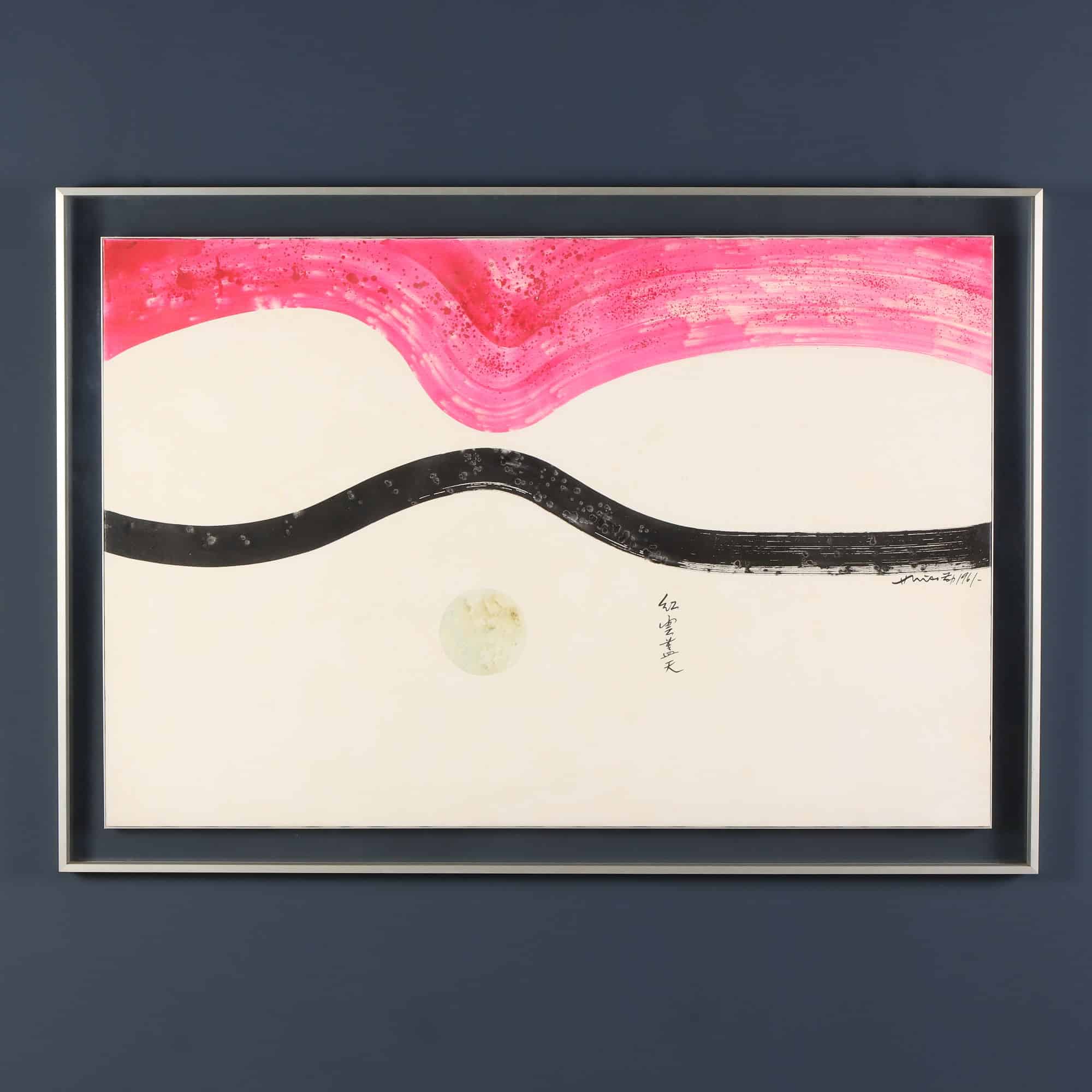
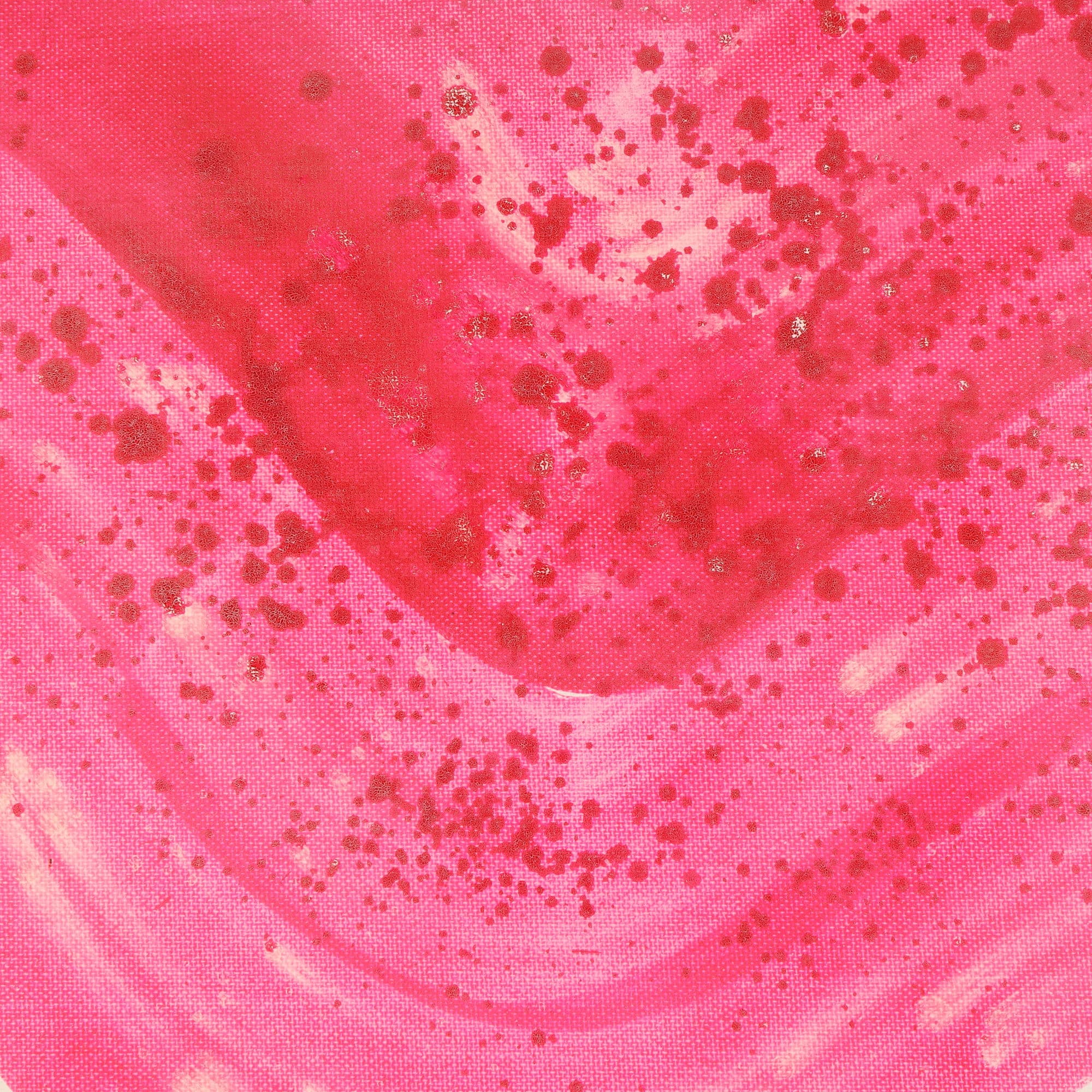
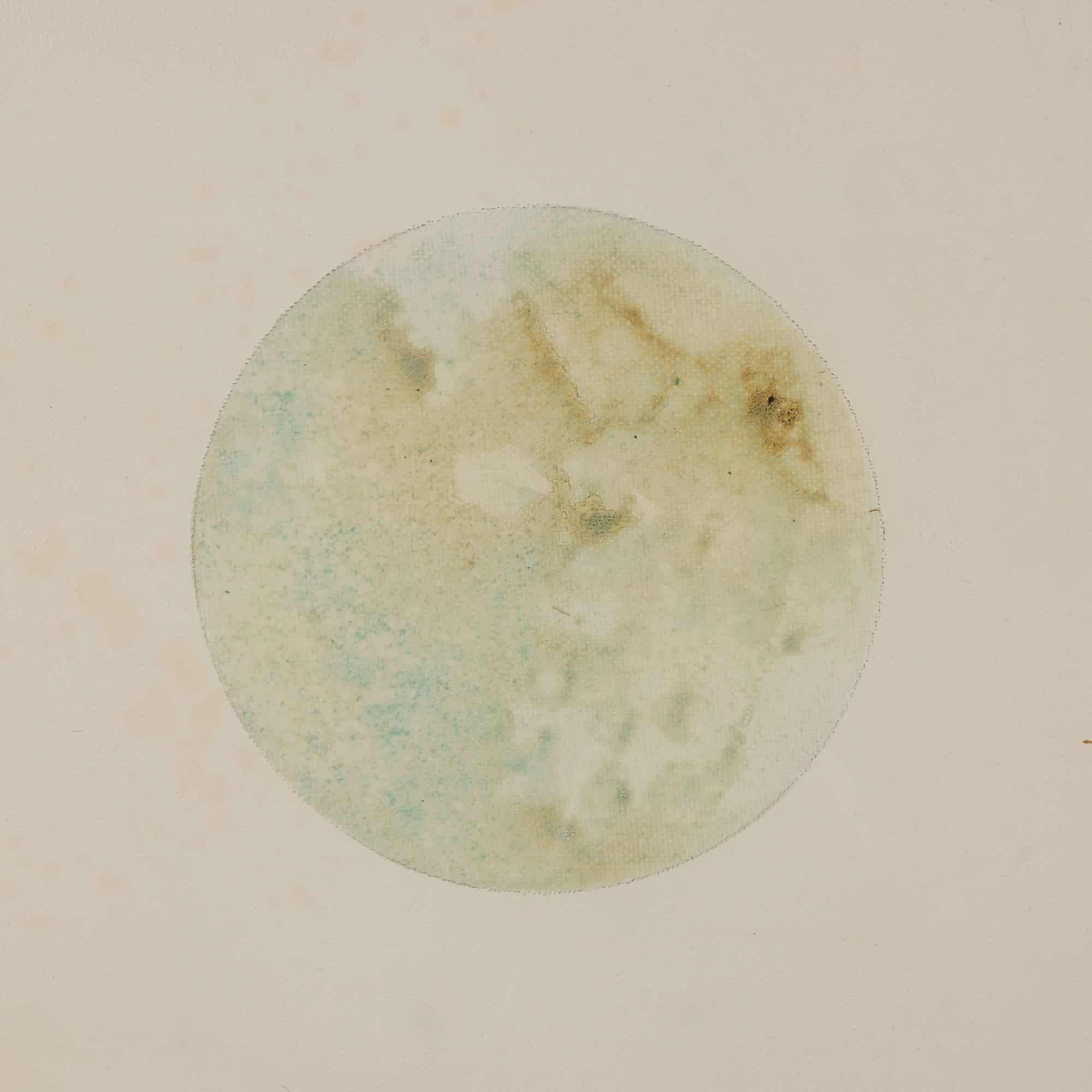
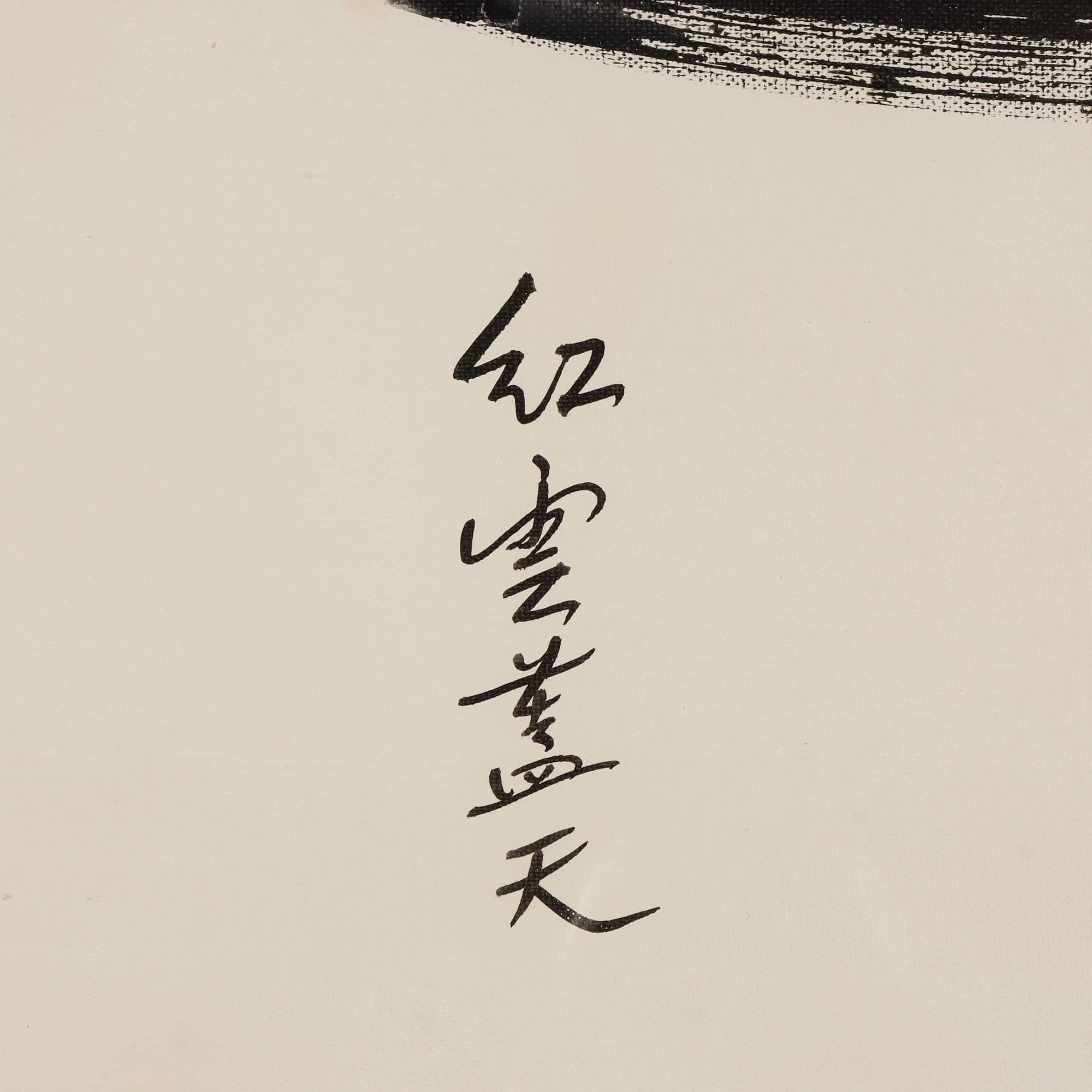
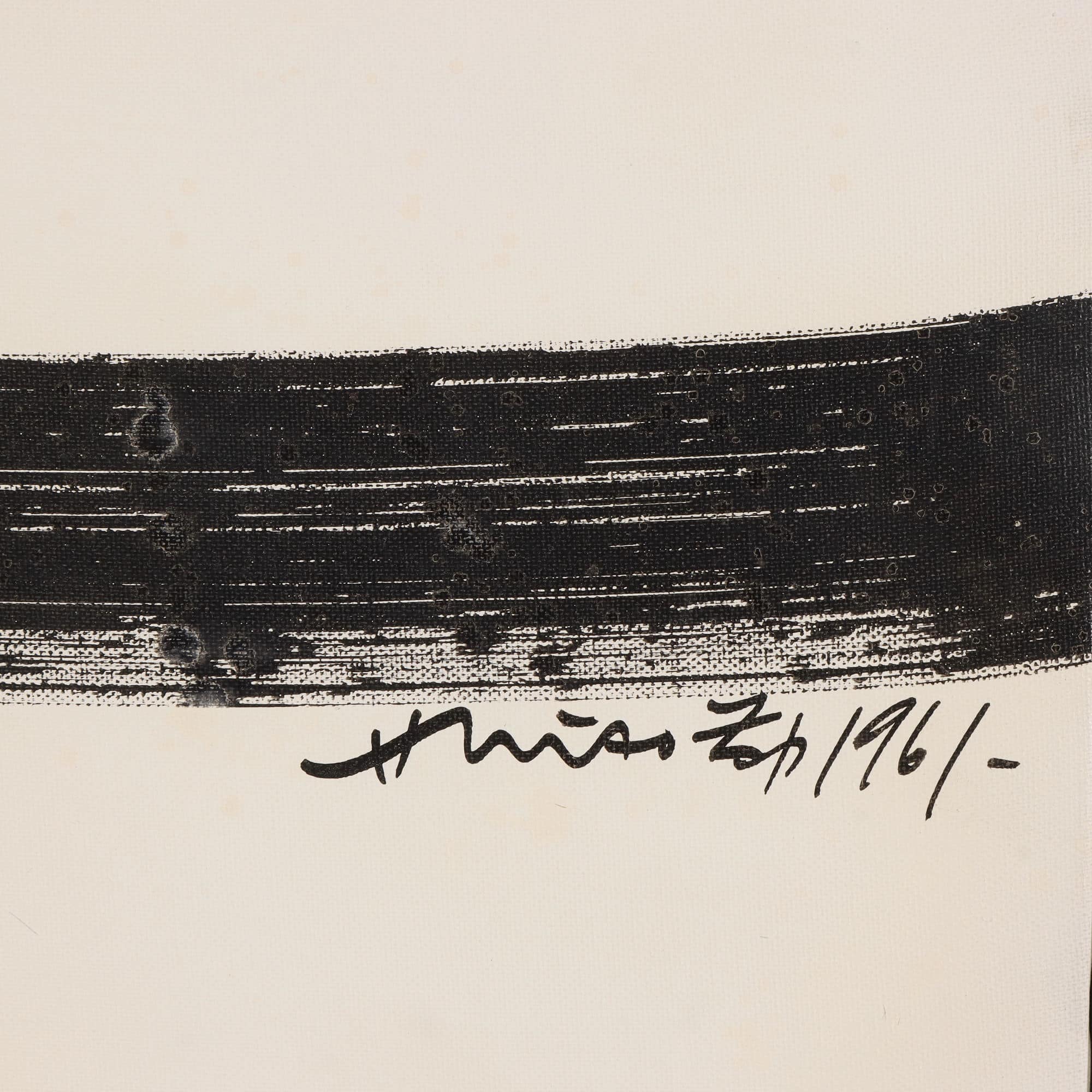
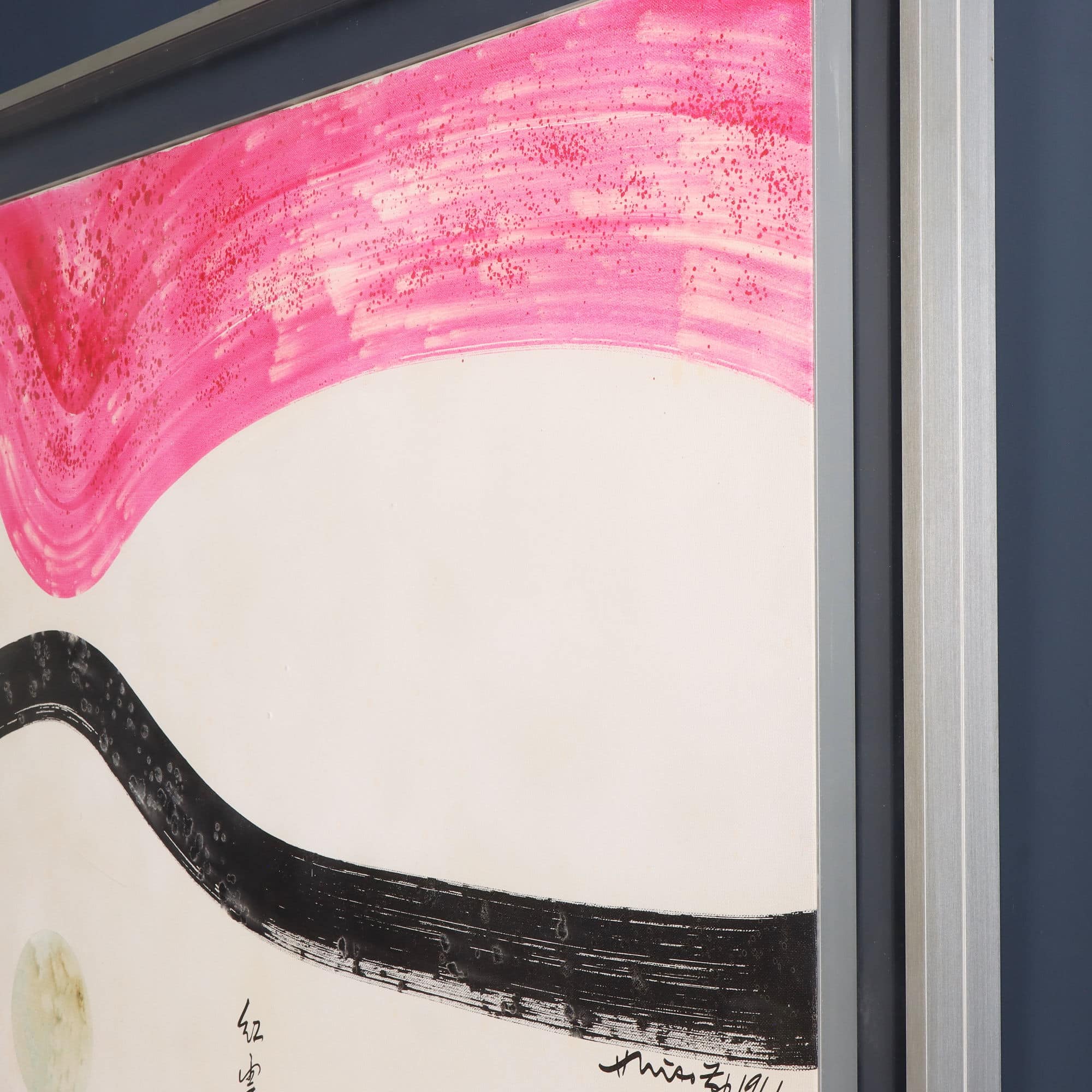
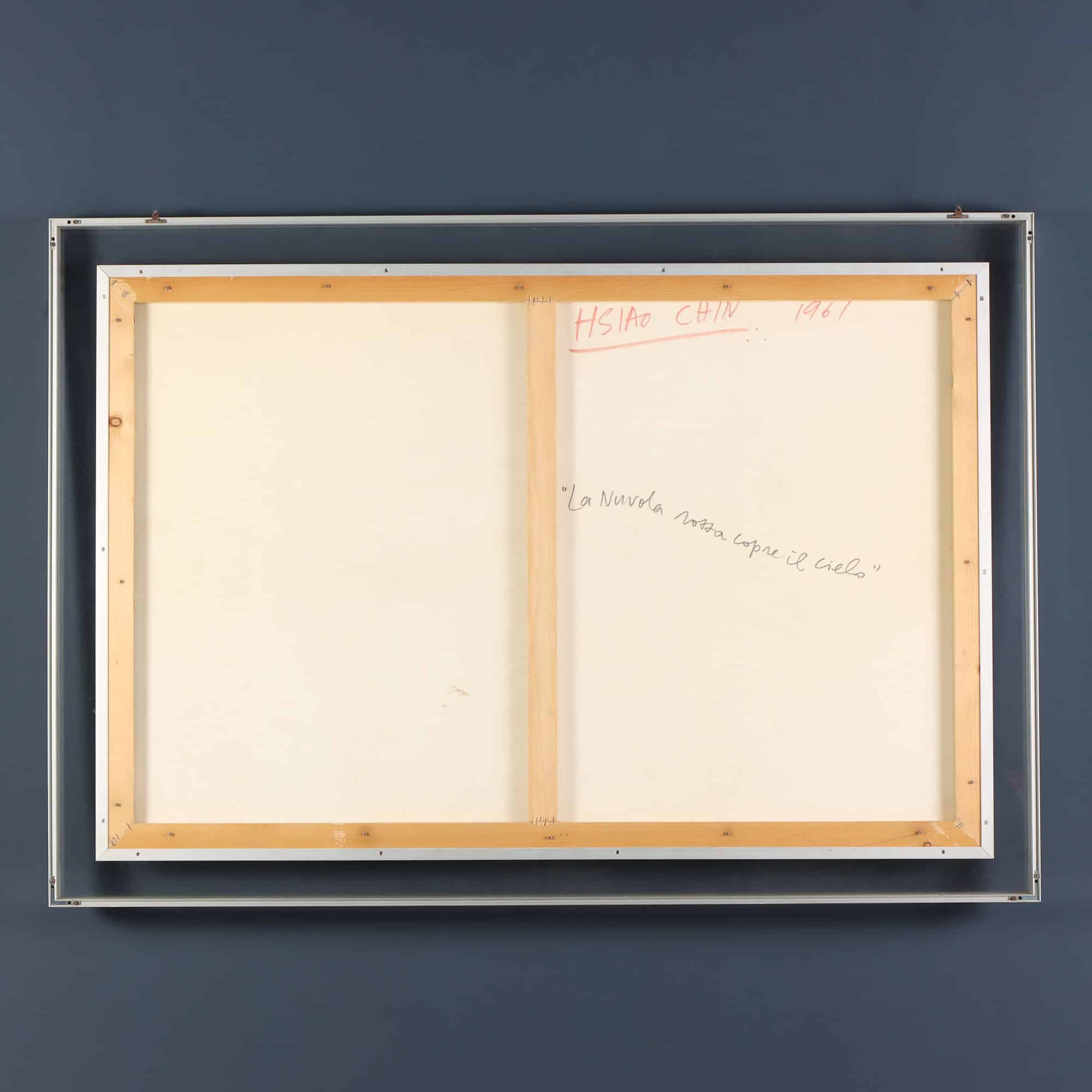
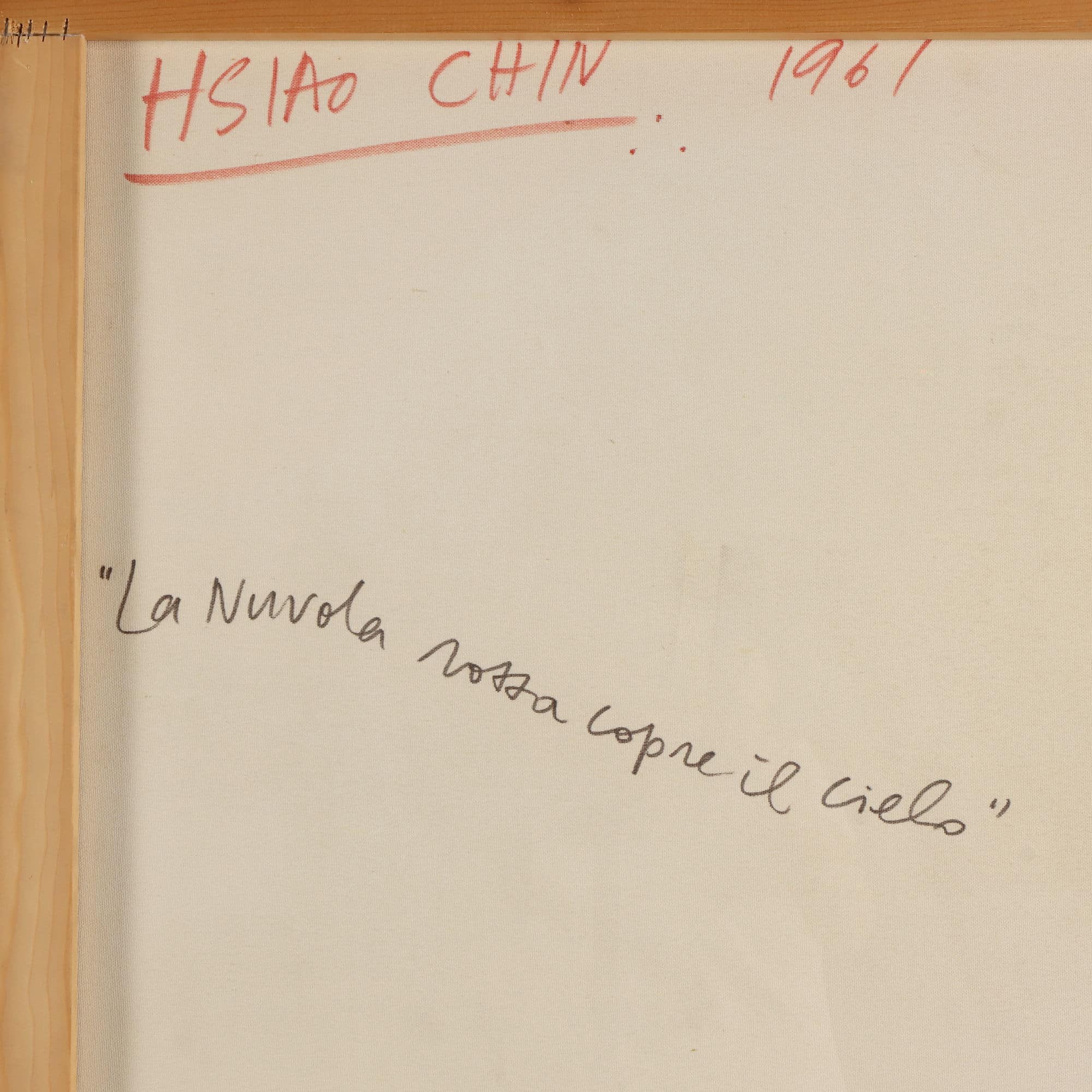
- Hsiao Chin, The Red Cloud Covers the Sky, 1961
Hsiao Chin conceived art as a path of personal growth and knowledge, a spiritual journey through time and space that transcends all geographical and cultural boundaries.
In his works, Eastern spiritual practices blend seamlessly with Western artistic experimentation, which he encountered during his extended stays in various countries around the world.
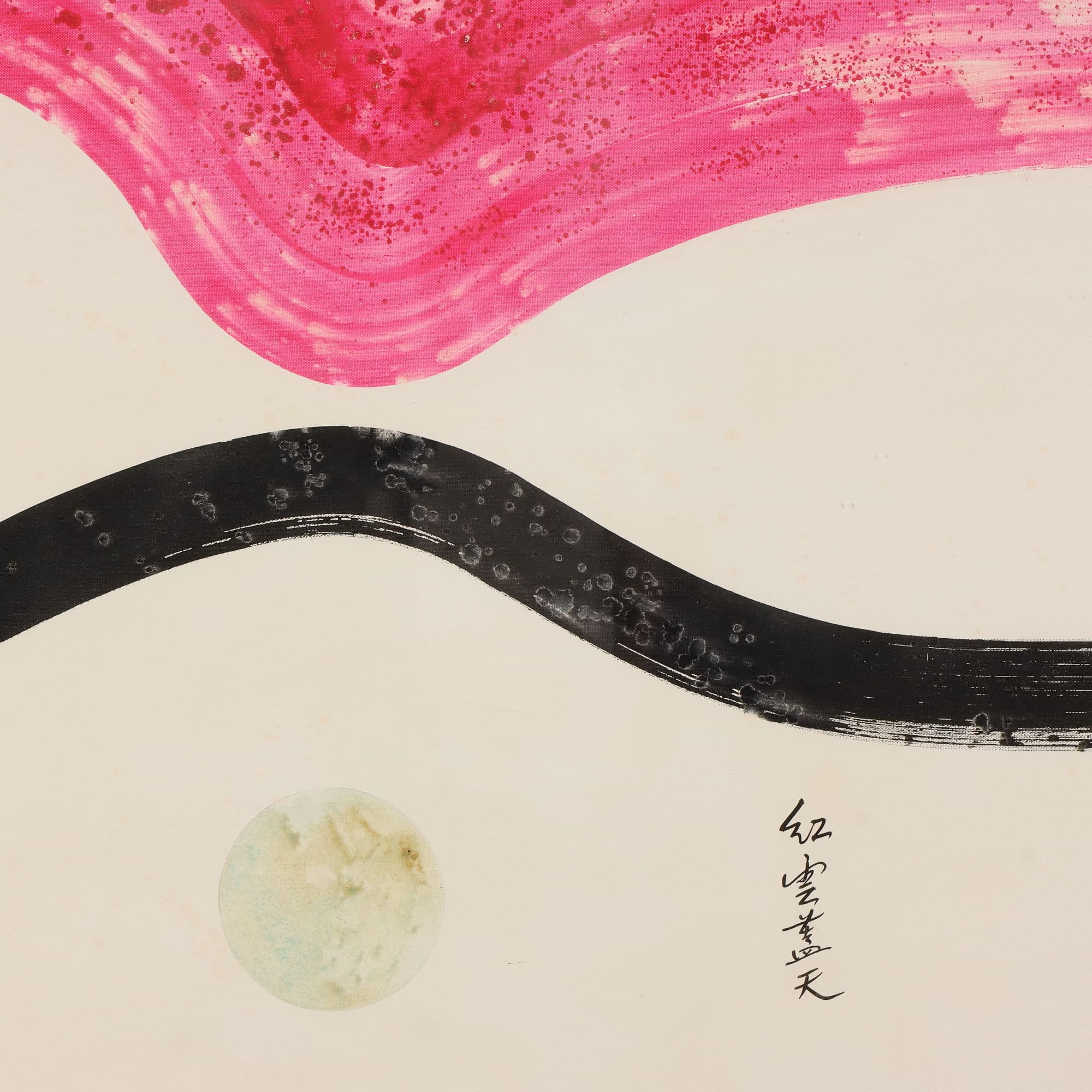
On the one hand, his paintings may evoke a written page in which the artist draws upon Eastern symbolism, creating a visual language of subtle signs, almost resembling ideograms, interspersed with geometric forms that evoke ancestral and universal meanings (circles, squares, spirals, and so forth).
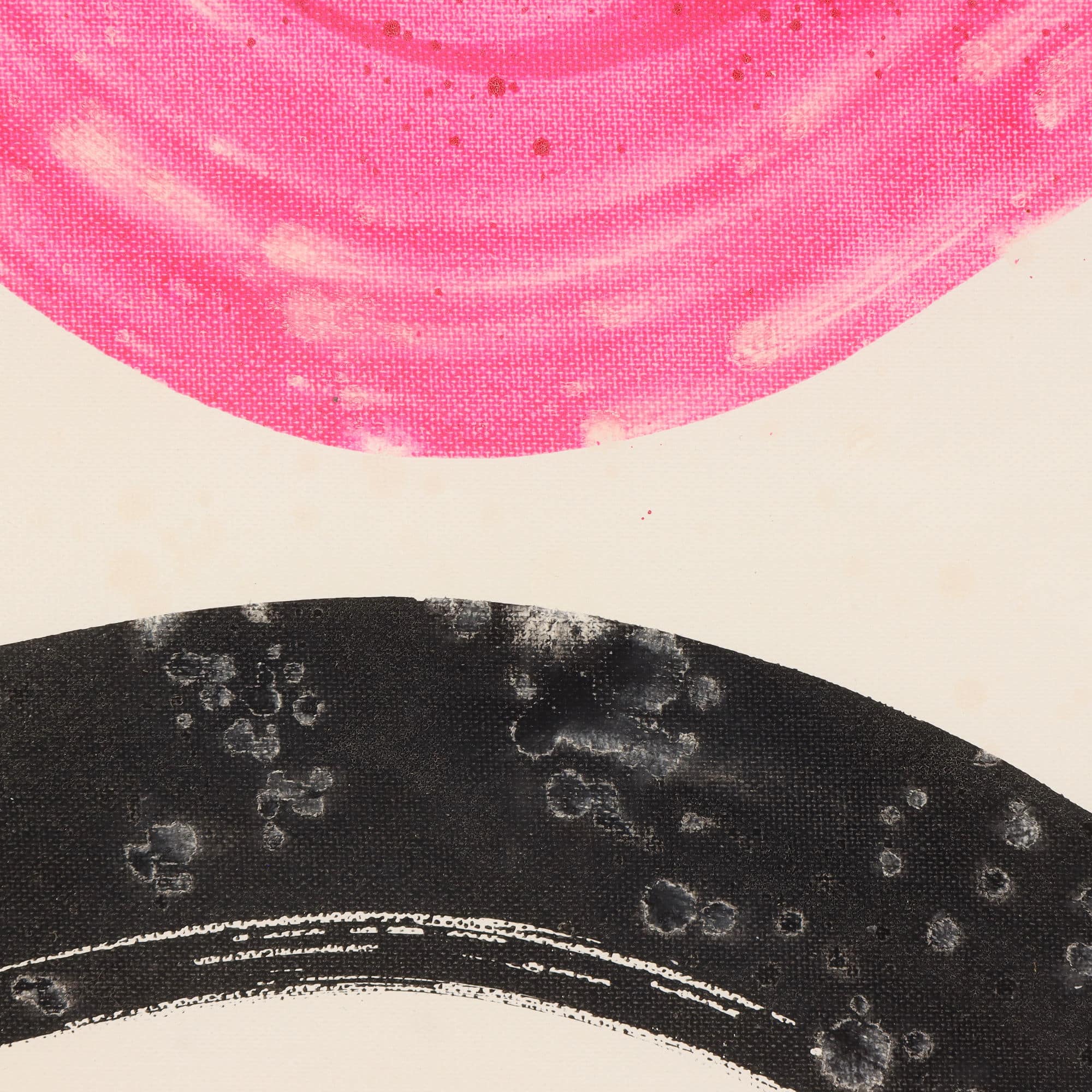
On the other hand, his bold chromatic choices, charged with energy, and his brushstrokes—at times frenetic and vibrant, at others more fluid and controlled—appear distinctly Western.
The artist himself stated:
“Today, the question of whether my art is Chinese or global is no longer important to me. I seek to go beyond these boundaries, with the intention of creating new works that are not conditioned by techniques and ideas.” (Hsiao Chin, 2016).
The work presented here, dated 1961, belongs to the period Hsiao Chin spent first in Europe and subsequently in New York, during which he came into contact with the emerging movements of abstract art.
These encounters marked a new direction in his painting, revealing a clear affinity with American Minimalism and Hard-edge painting, a style characterised by sharp, clearly defined contrasts between different areas of colour. These may take the form of simple, complete geometric shapes or straight lines, with each area predominantly uniform and monochromatic.
The work comes from a Milanese family who knew the artist personally during the extended periods in which he lived and worked in Milan.
Dimensions: 98 × 148 cm
Display case dimensions: 115 × 165 cm
Reference cCode: ARARCO0324662
Hsiao Chin was born in Shanghai in 1935 but moved to Taiwan at a young age, where he began studying art and developing his artistic education.
His lively and inquisitive temperament, combined with his remarkable ability to assimilate new influences and his strong desire to experiment and acquire knowledge, led him towards the avant-garde movement of Fauvism.
In 1951, martial law was introduced in Taiwan with the aim of promoting anti-communism. The restrictions also affected the arts, which were considered a potentially dangerous subversive instrument because of their avant-garde experimentation.
The country was governed by a rigid totalitarian regime, and artists who did not depict realistic and traditional subjects were regarded with suspicion. Even certain colours were considered subversive: red (communism), black (death), and grey (depression).
Hsiao decided to challenge these restrictions and, on 31 December 1955, together with fellow artists, founded Ton Fan, the first abstract art group in China.
Meanwhile, he obtained a scholarship from the Francoist government to further his studies and moved to Barcelona in 1956.
This marked the beginning of his rise within the European art world. He exhibited in numerous cities and at prestigious exhibitions, while also teaching at renowned art institutions in several countries.
His academic appointments included:
1969: Painting and Drawing at Southampton College, Long Island University, New York.
1971–1972: Visual Communication at the Istituto Europeo di Design, Milan.
1972: Painting and Drawing at Louisiana State University, Baton Rouge, Louisiana.
1983–1984: Artistic Anatomy at the Academy of Fine Arts in Urbino.
1984–1985: Decoration at the Academy of Fine Arts in Turin.
After 1985: Printmaking Techniques at the Brera Academy of Fine Arts in Milan.
Throughout his life, Hsiao Chin travelled and lived in various countries. In 1975, however, he returned to Italy and settled in Milan, from where he organised solo exhibitions throughout Italy and abroad.
He also founded the Surya Group (1977–1979), whose name means Sun in Sanskrit. The group explored the potential of line and colour to express the moment of creation through art, acknowledging the Creator as its ultimate source.
After 1985, he taught printmaking techniques at the Brera Academy of Fine Arts.
In 1989, he founded the Shakti Movement in Copenhagen. The name Shakti, meaning Energy in Sanskrit, reflected the movement’s aim of channelling the energy contained within the universe and nature into artistic creation.
Hsiao Chin lived and worked in Milan for many years. During the final years of his life, he continued to produce works, remaining faithful to his belief in art as a means of communication and a way of rediscovering pre-existing energies.
He died in Milan in 2023.

FineArt is the new ambitious Di Mano in Mano project that offers an exclusive choice of antiques and design works, presenting them for their singularity and uniqueness.

FineArt by Di Mano in Mano is a team of experts at your service to enhance furniture, paintings, finest antiques, art and design masterpieces at best.
Di Mano in Mano
Via Castellazzo 8, Cambiago (MI)
20040