- Eugenio Quarti, Antique Salon Suite, Early 19th Century

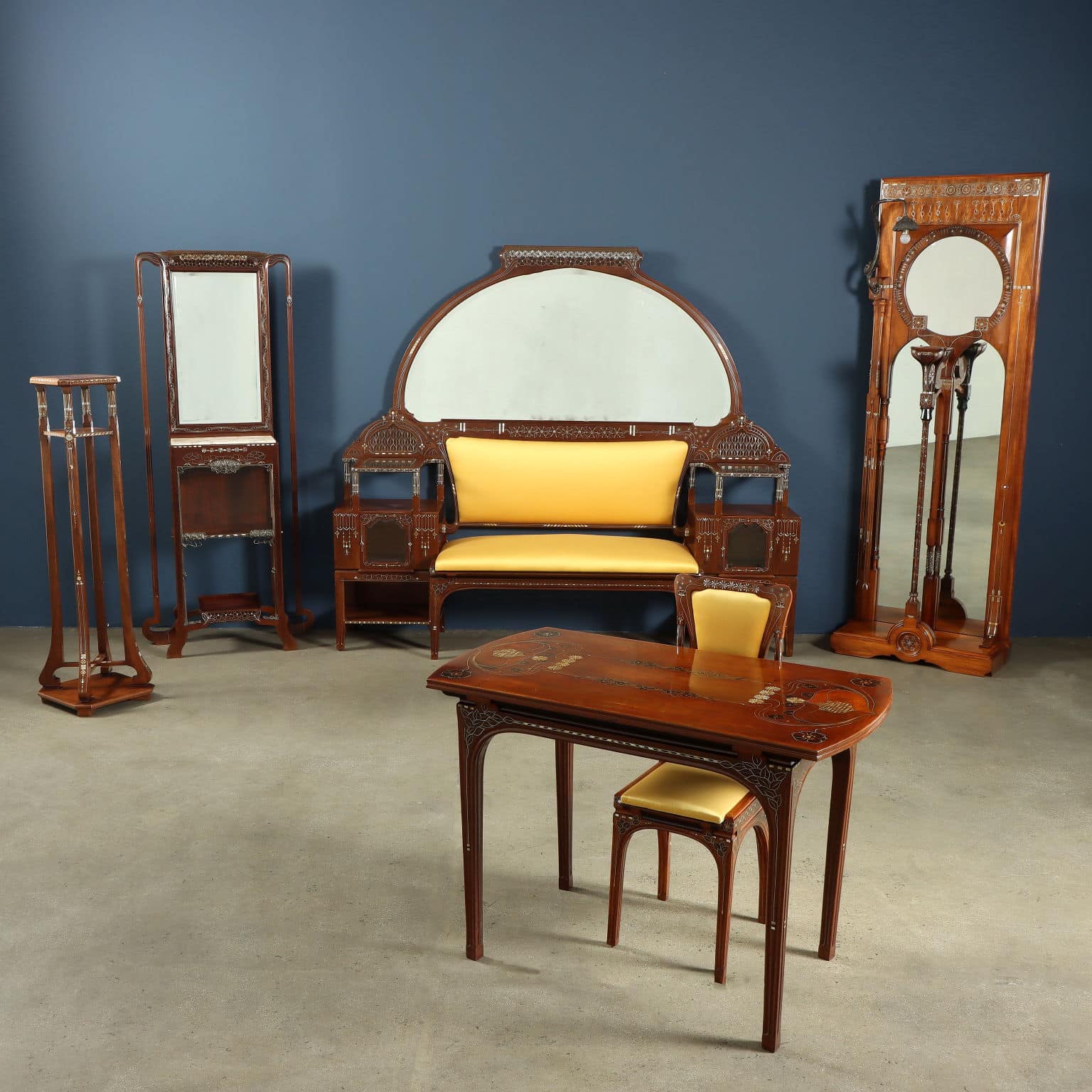
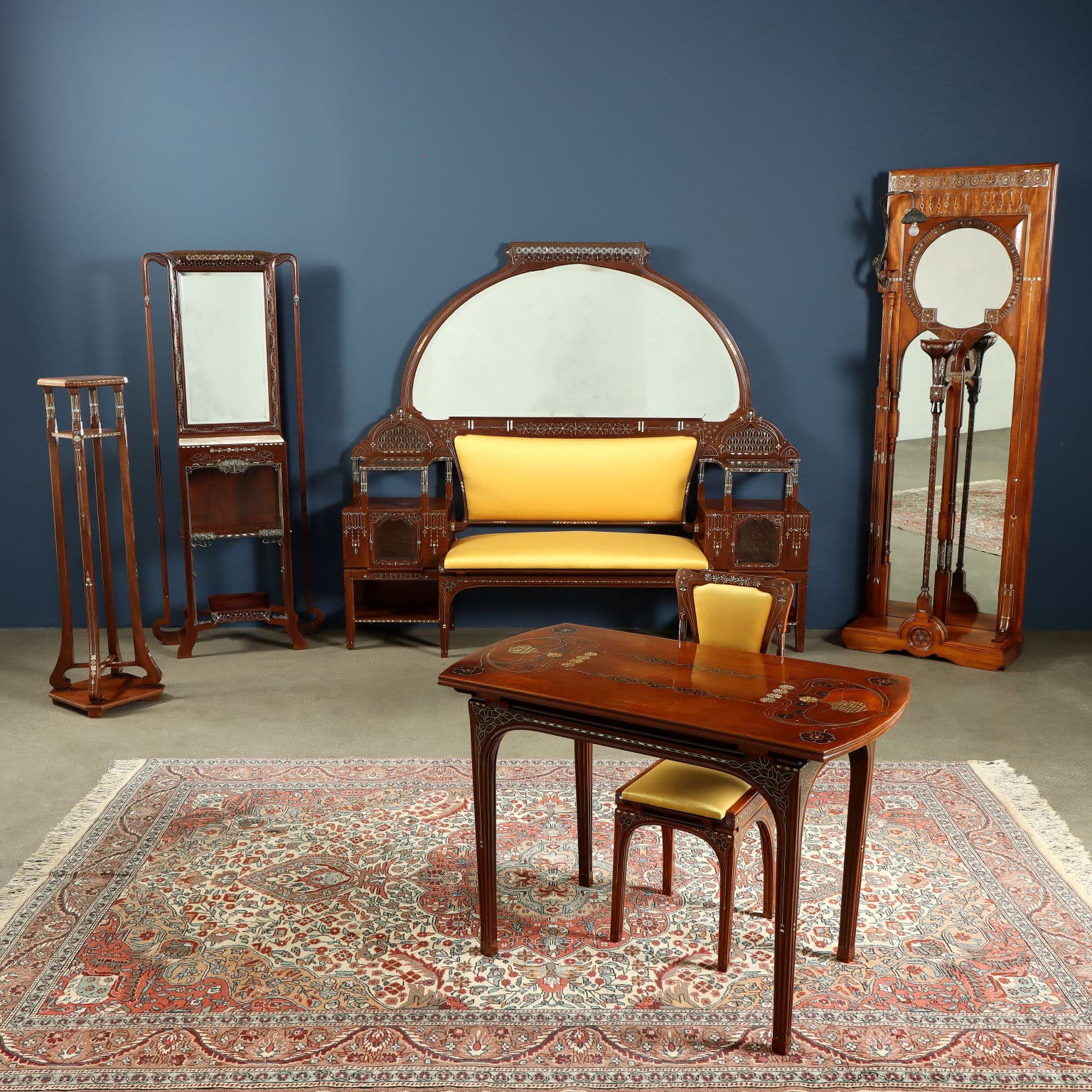
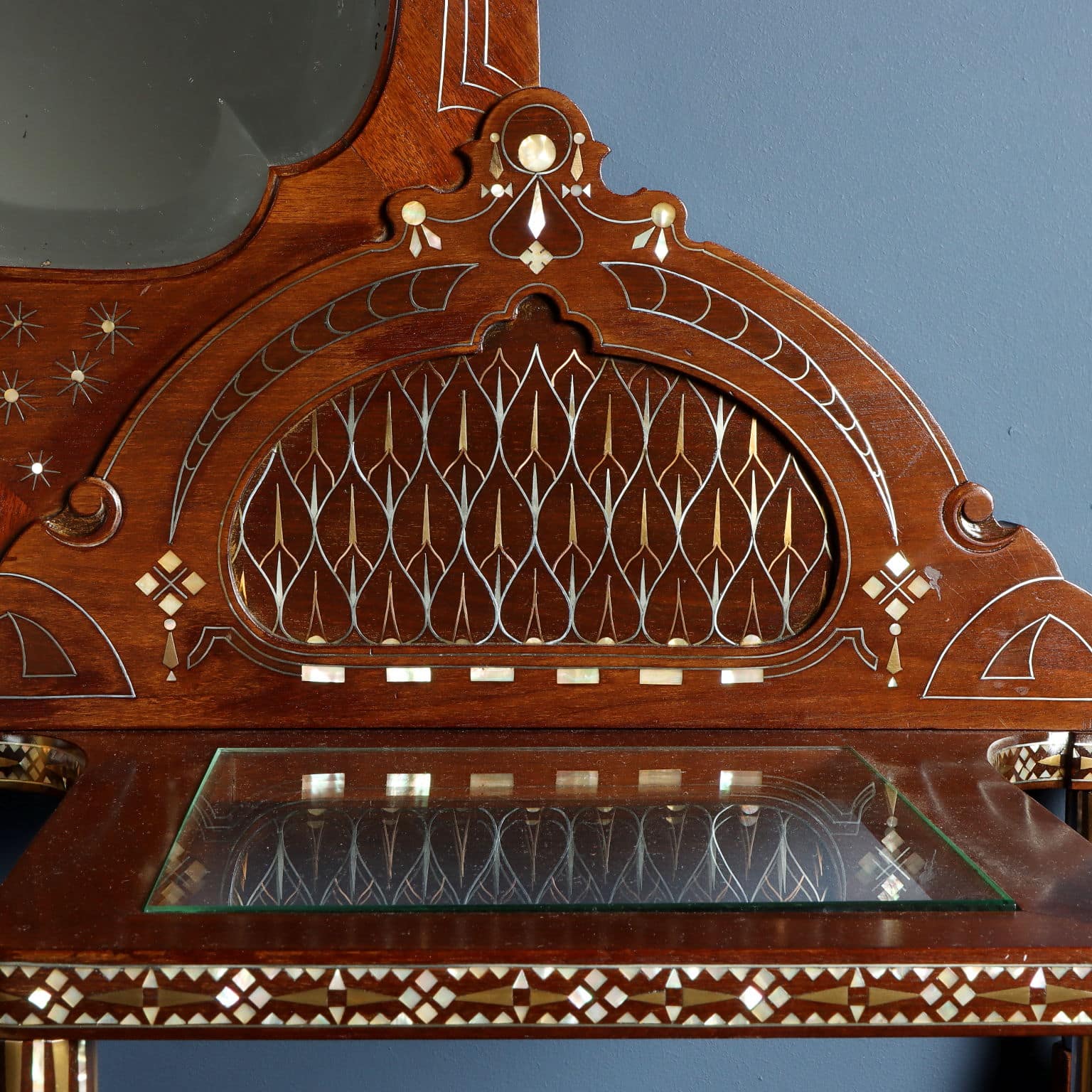
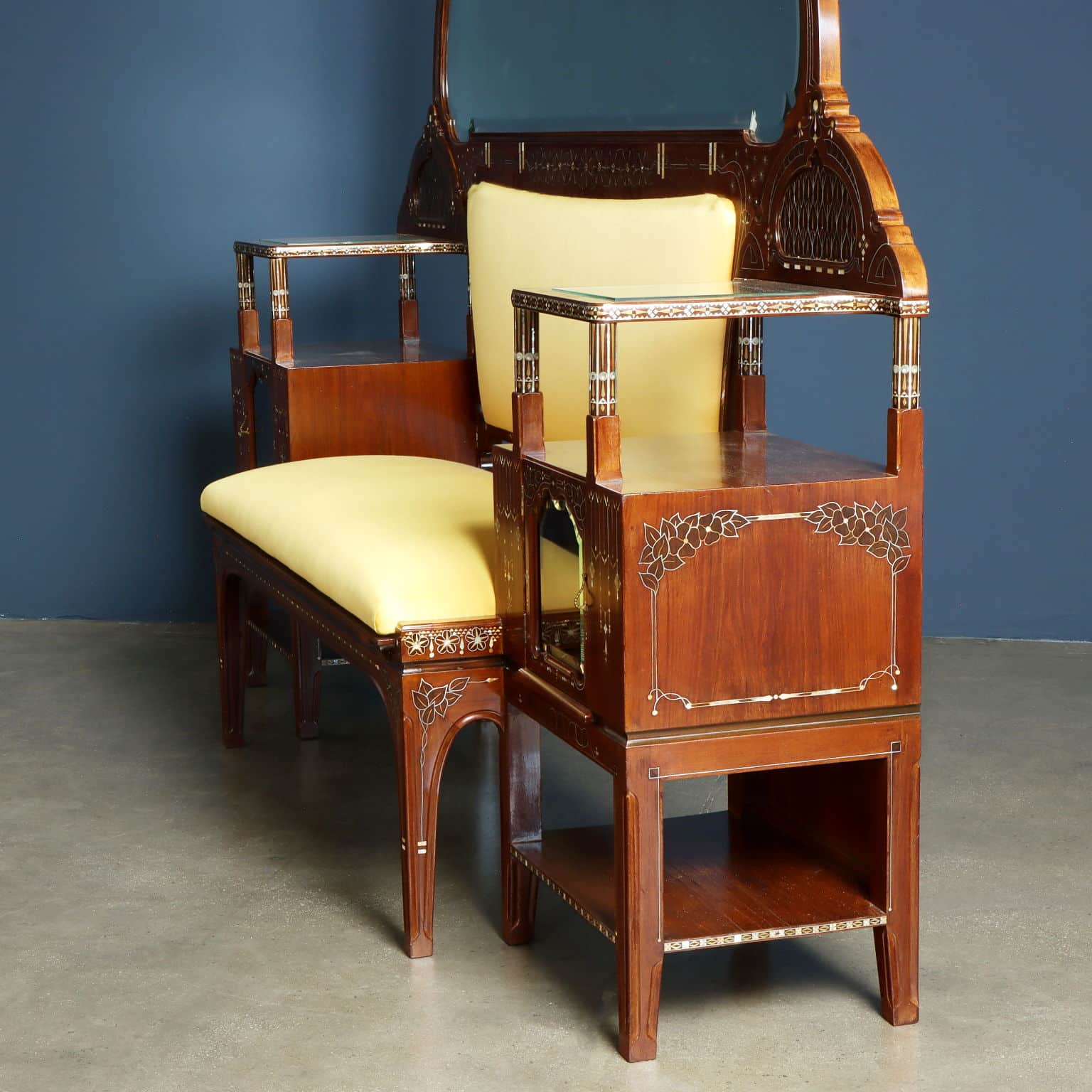
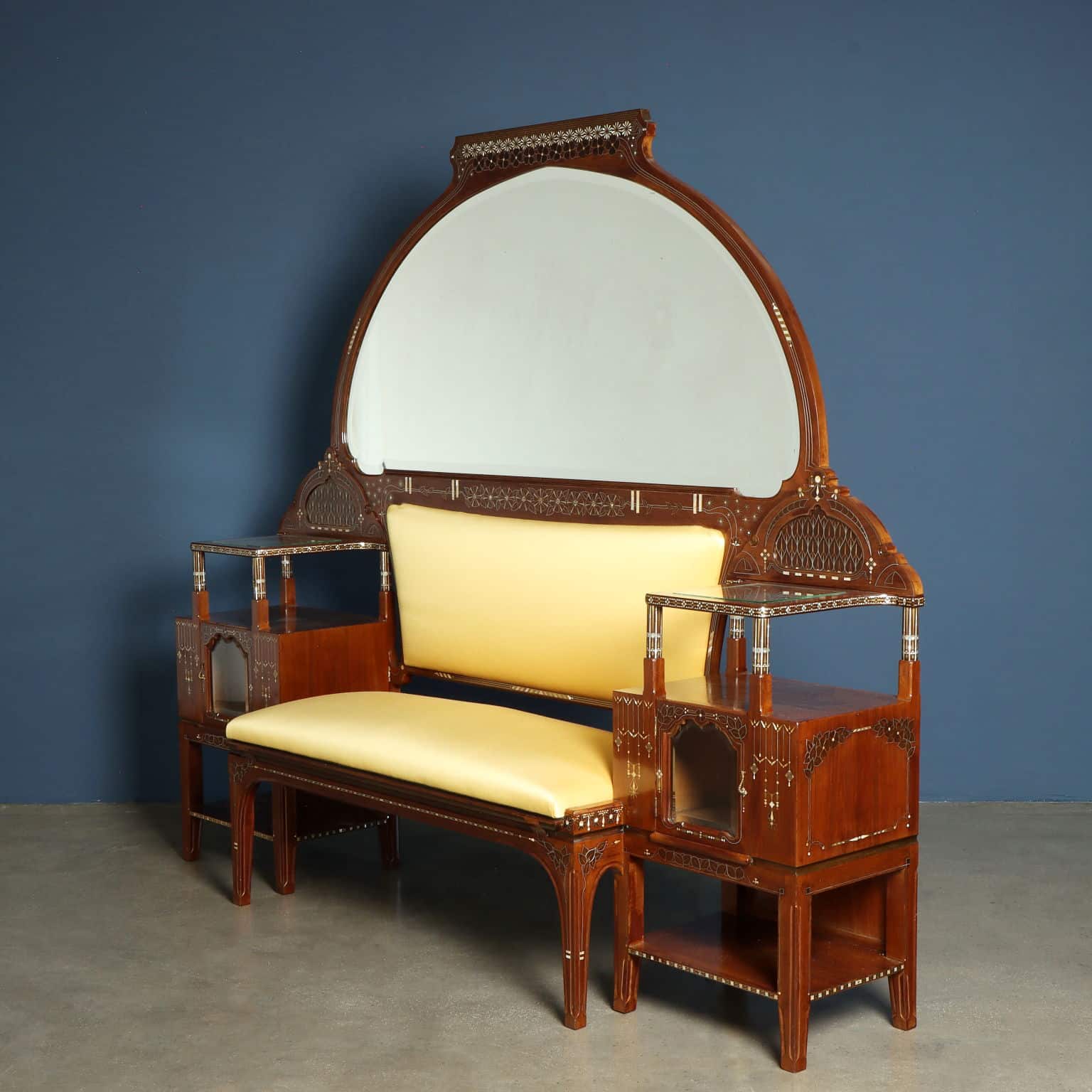
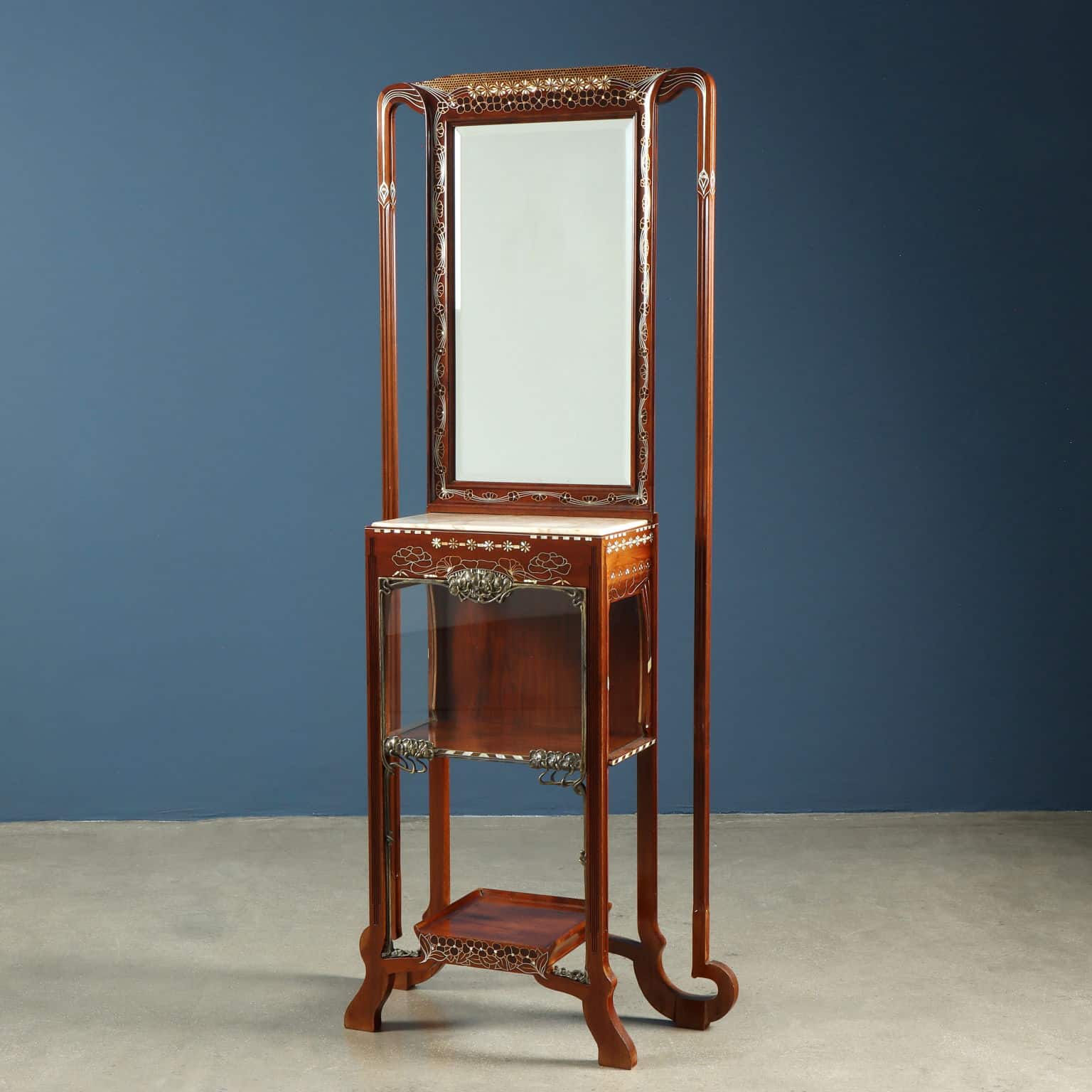
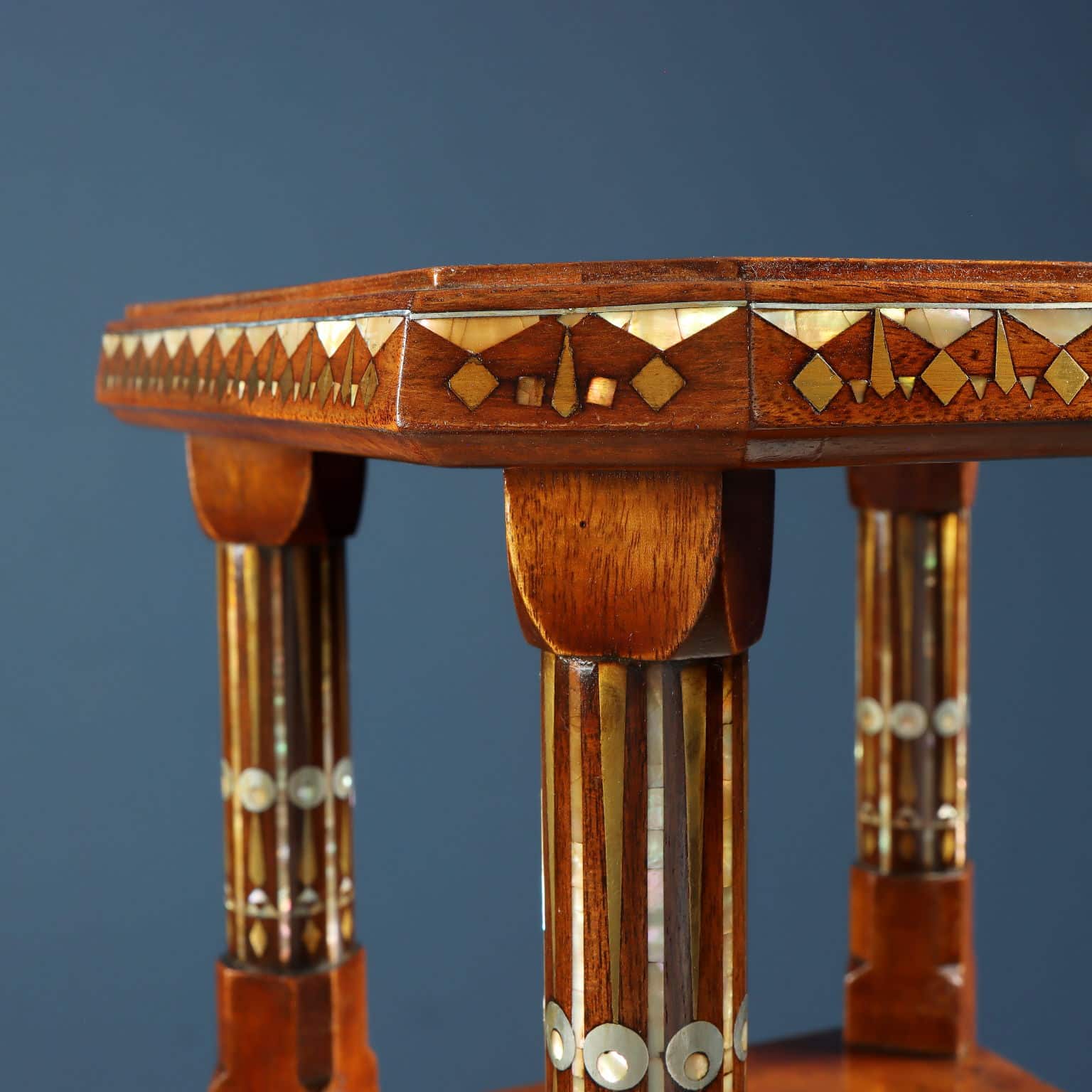
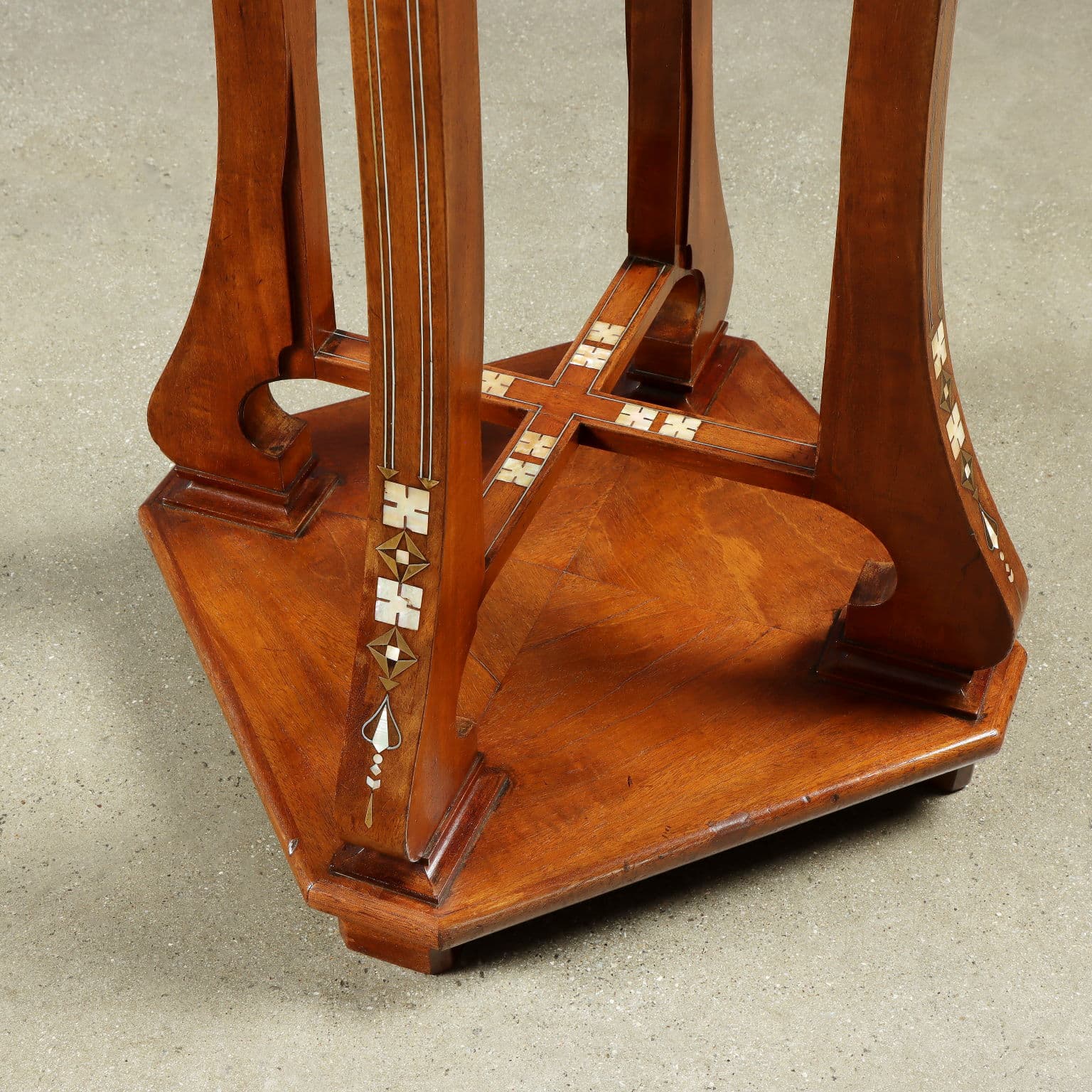
An exceptional salon suite comprising a sofa, wall mirror, display cabinet, plant stand, writing desk and chair.
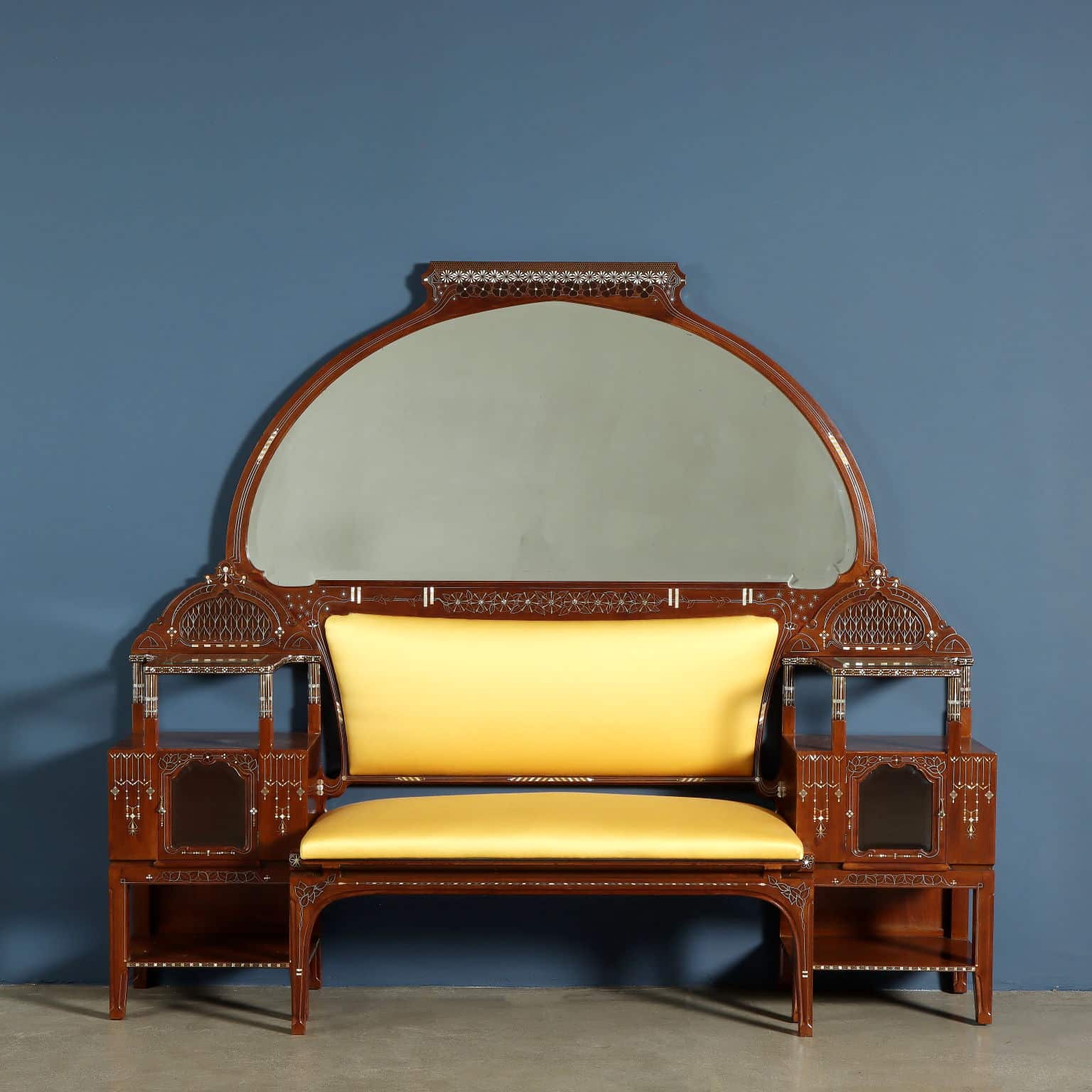
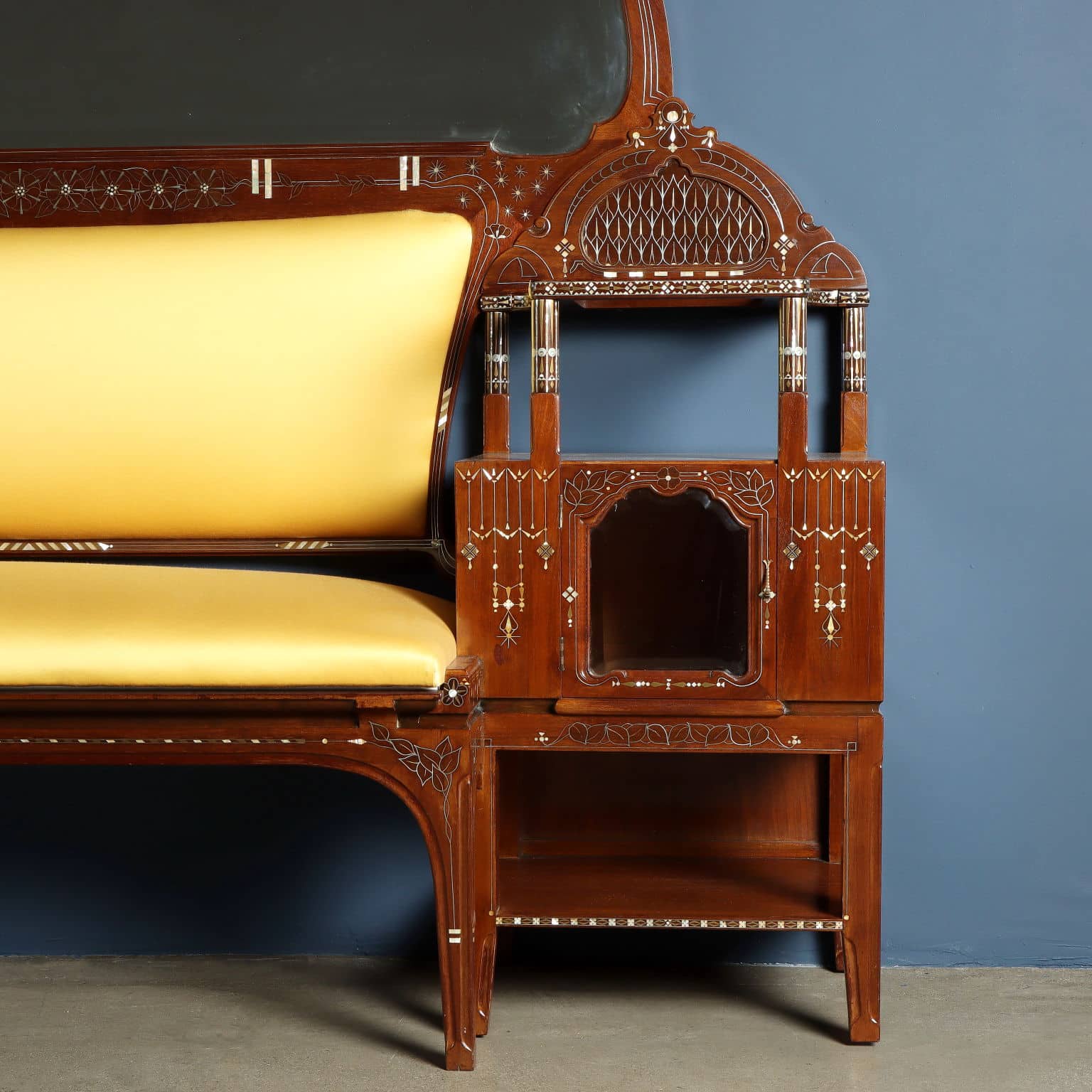
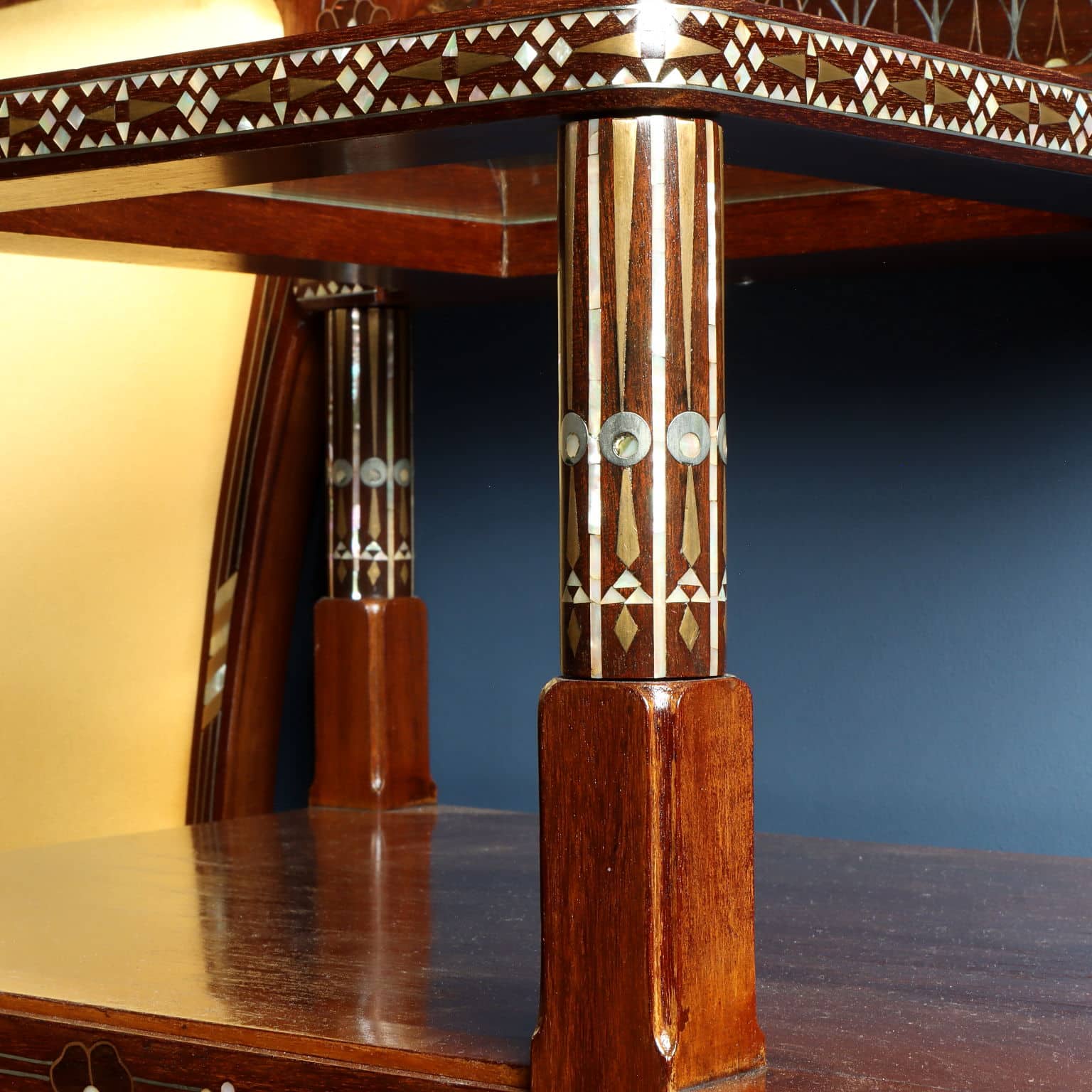
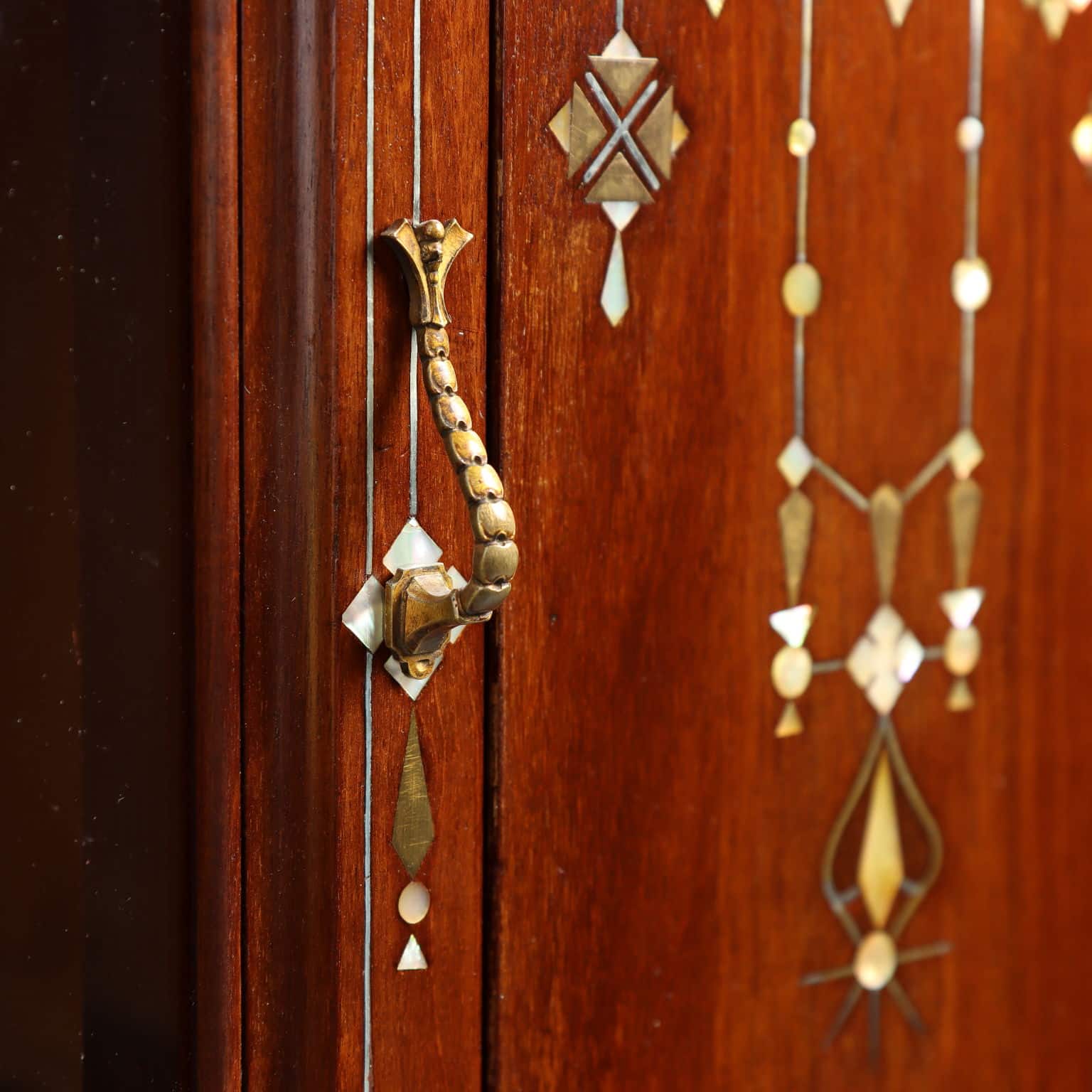
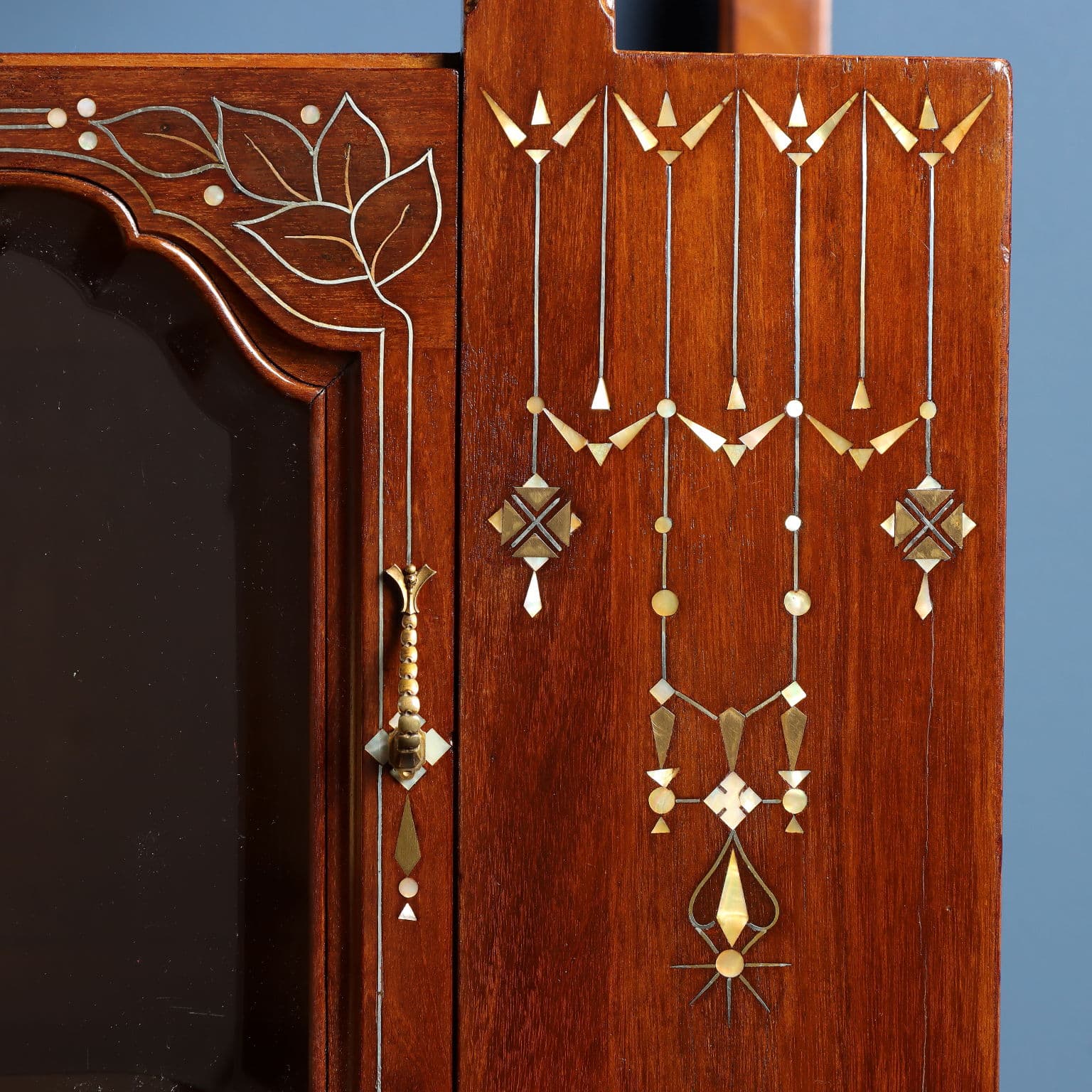
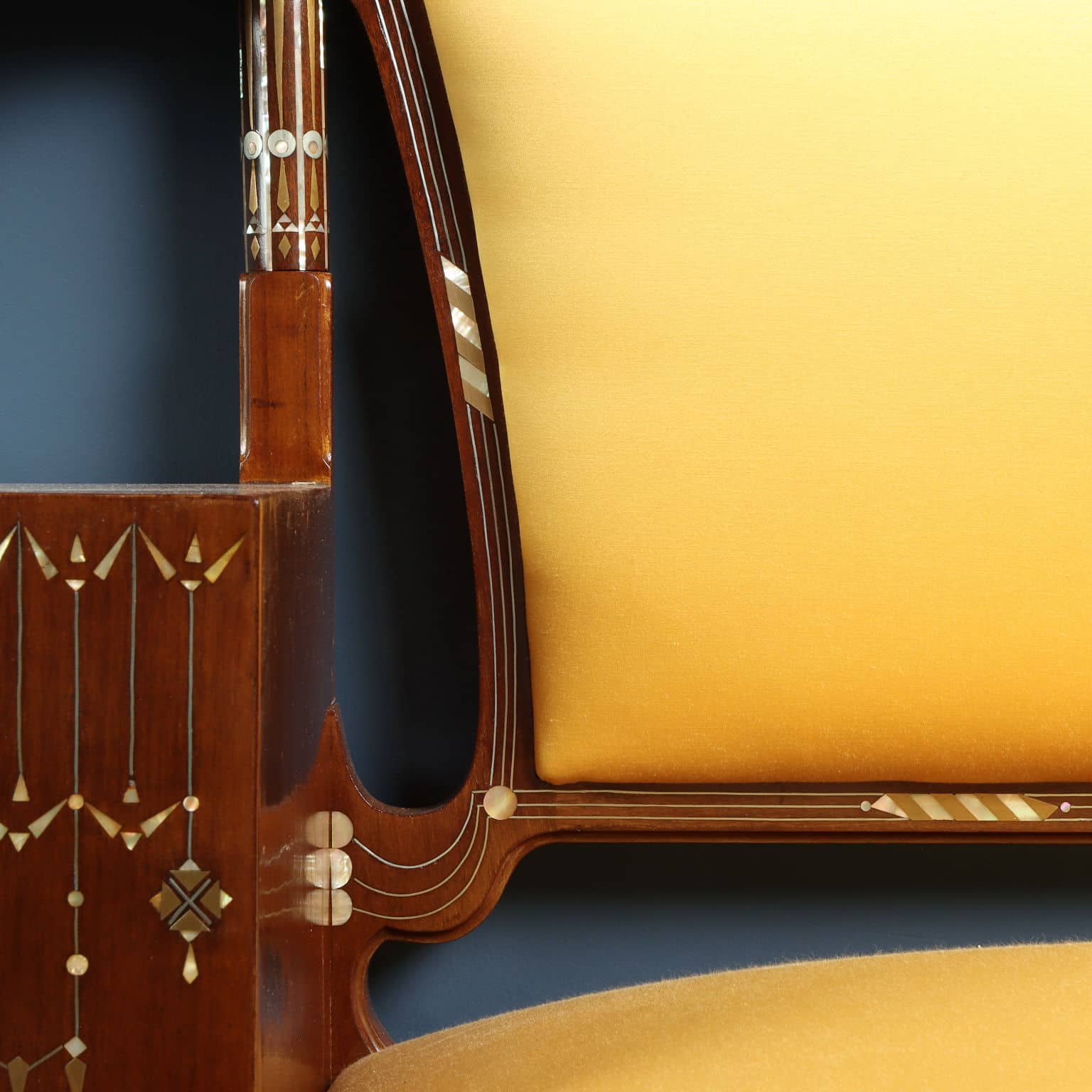
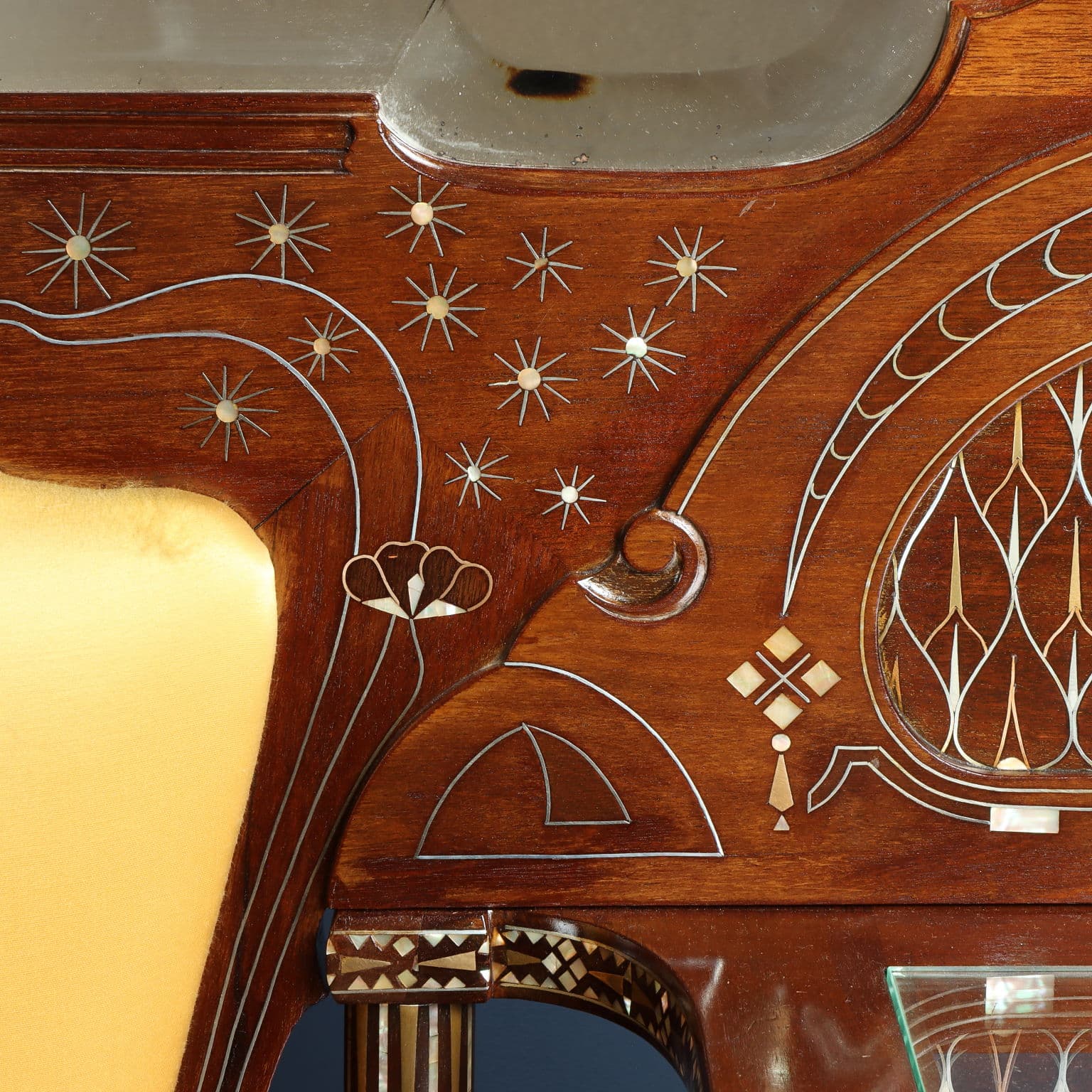
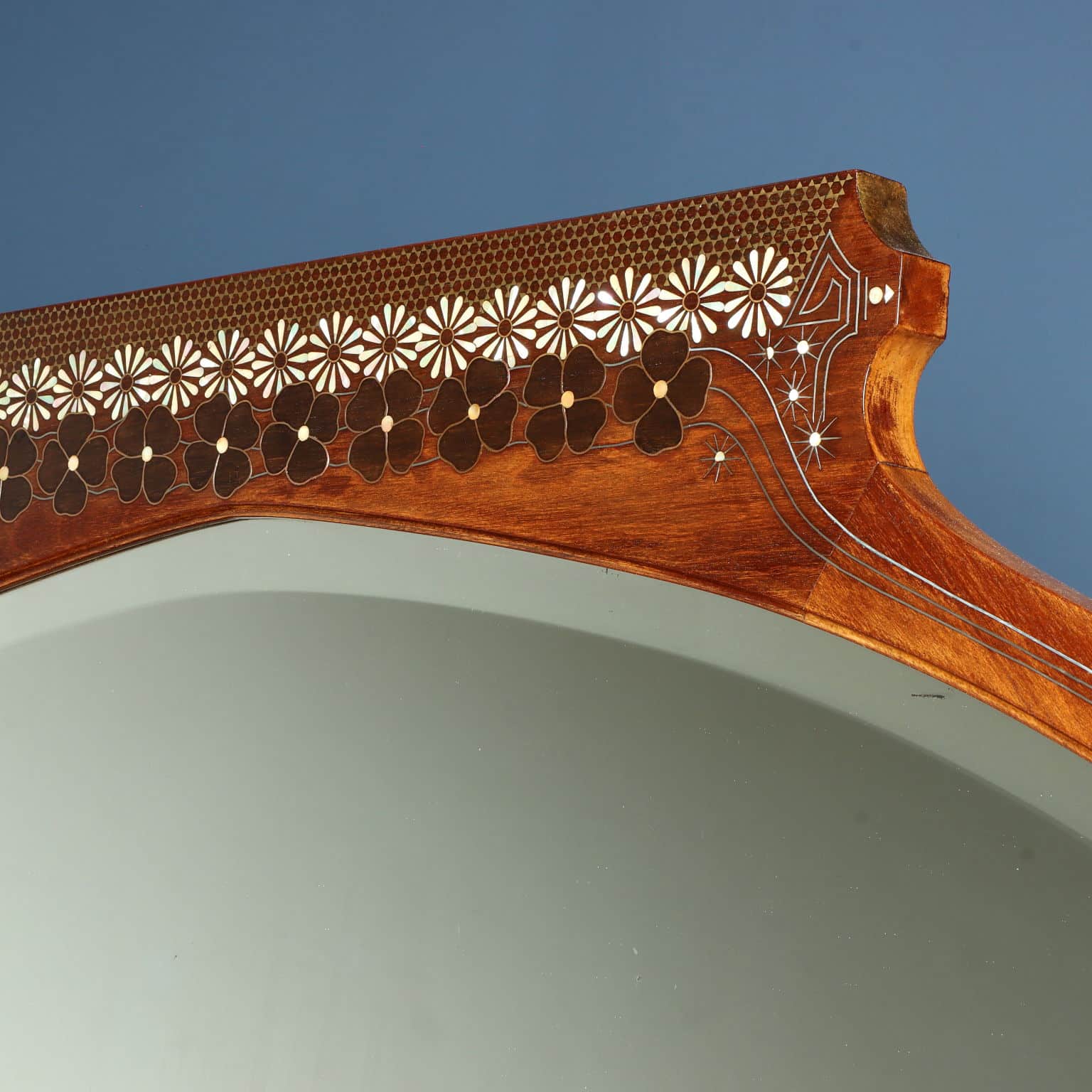
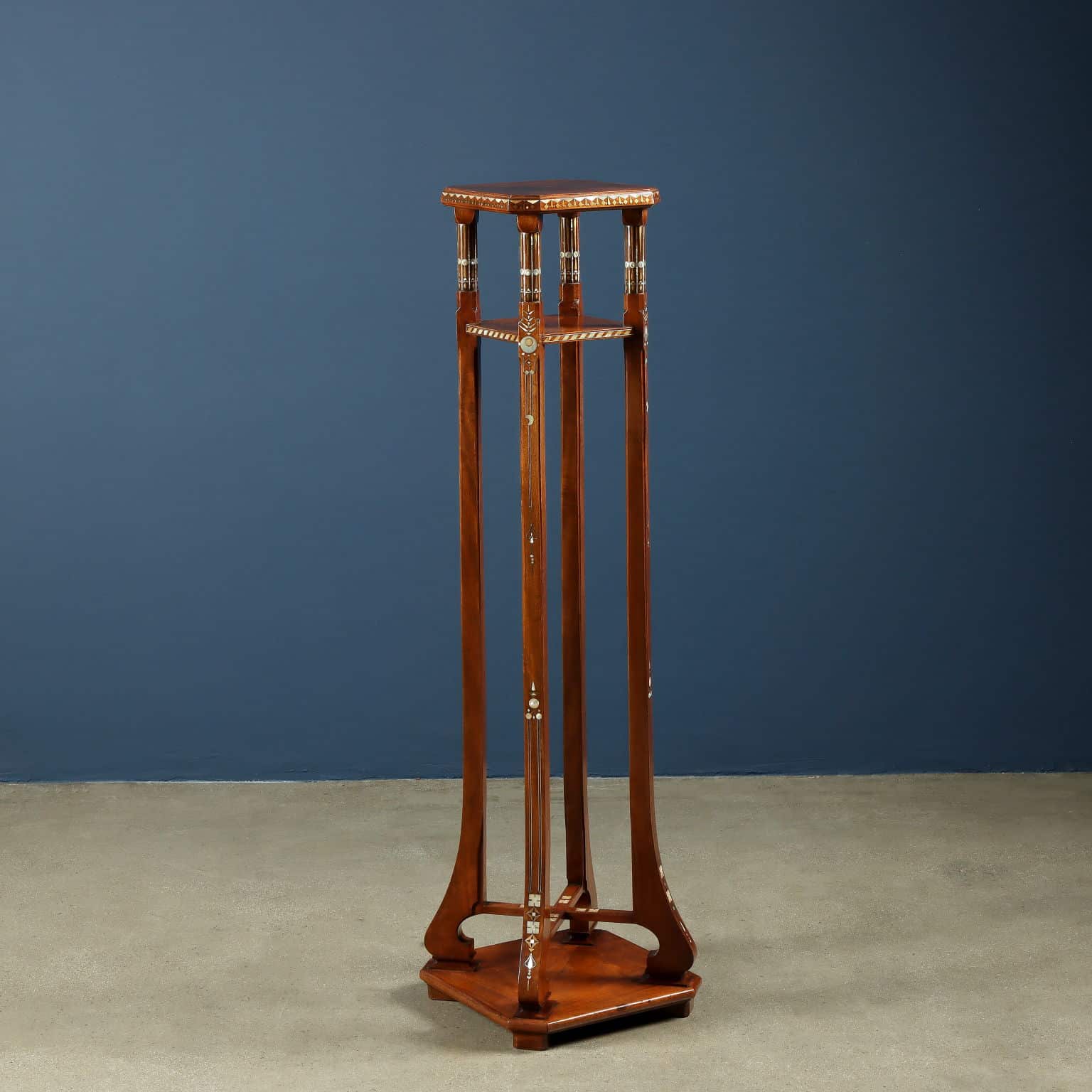
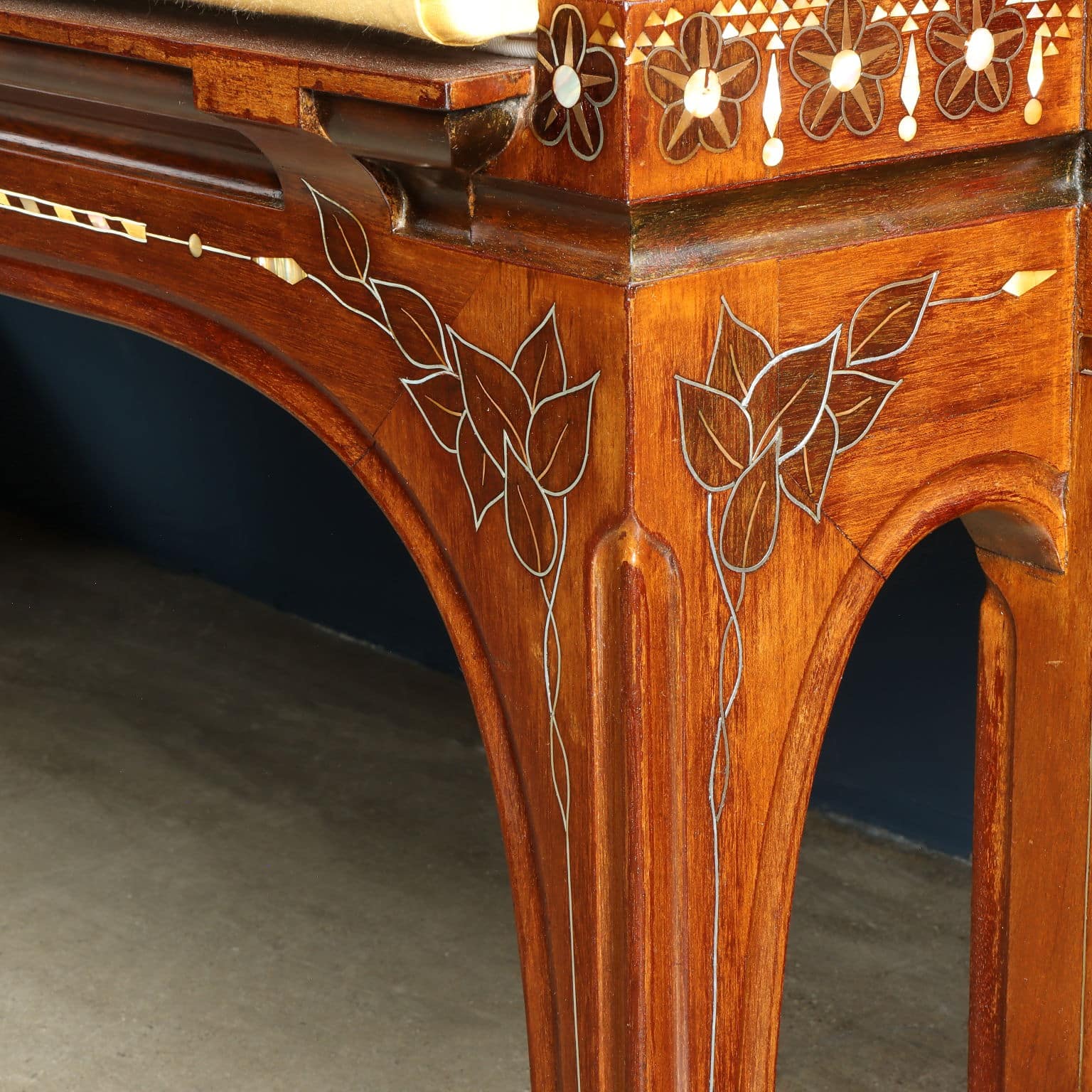
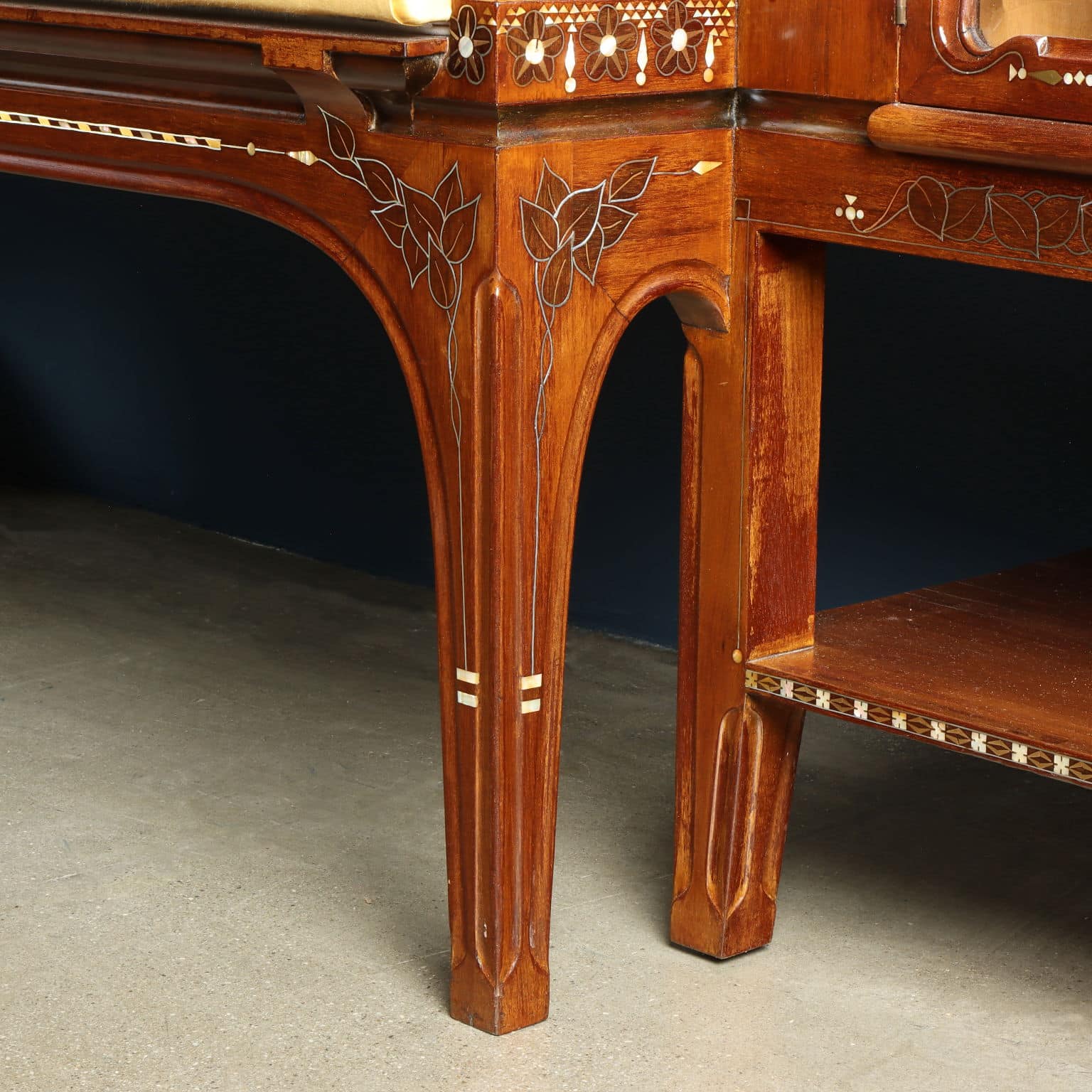
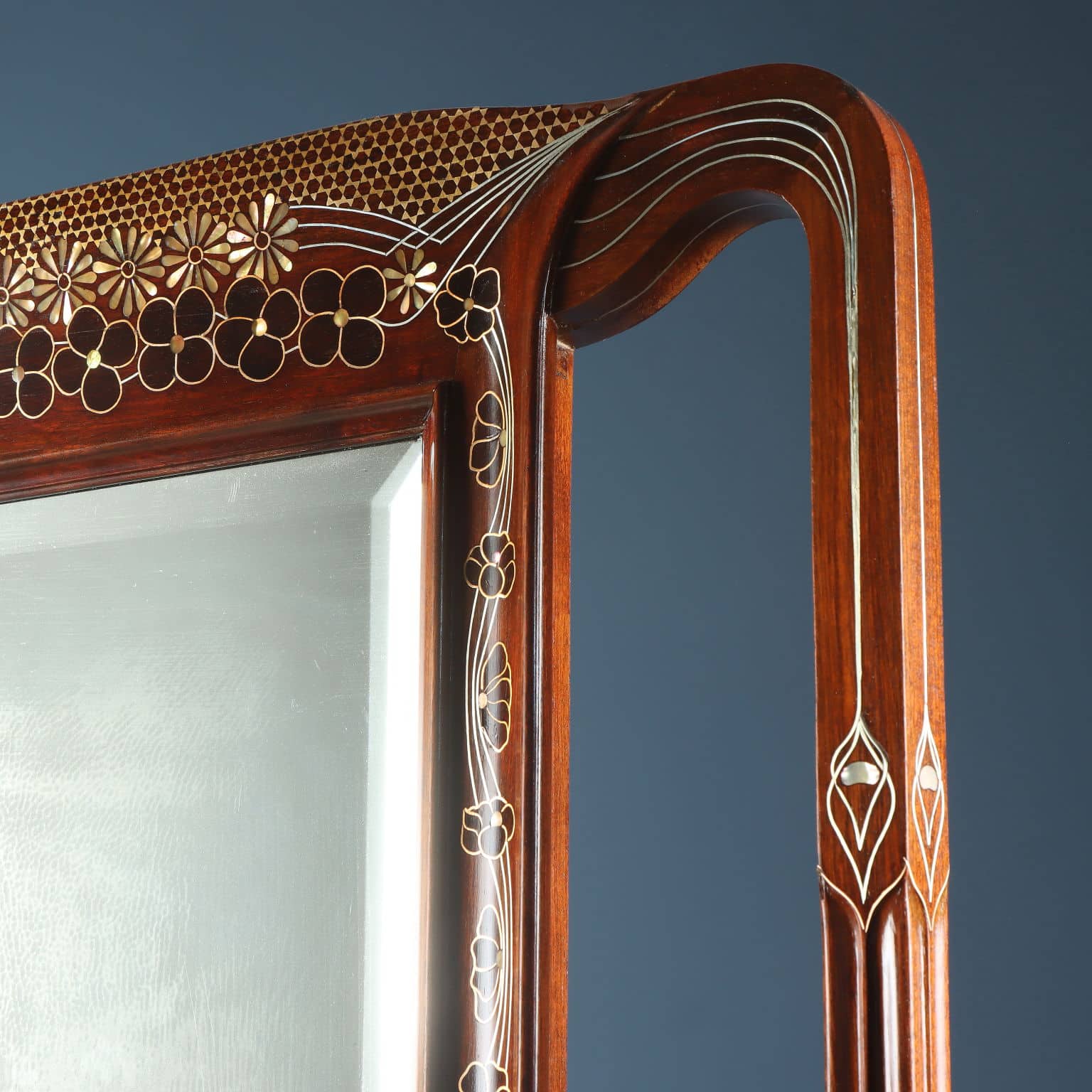
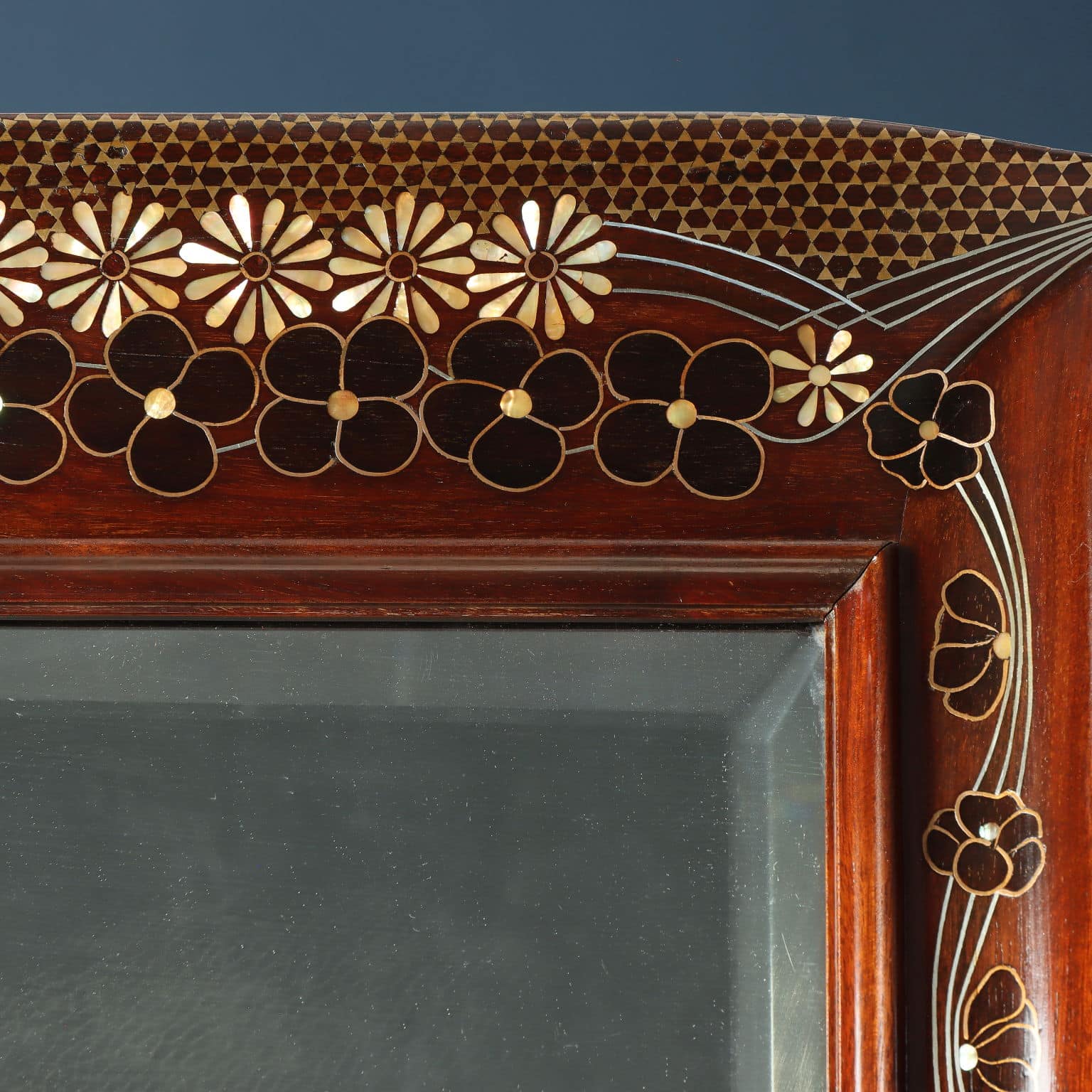
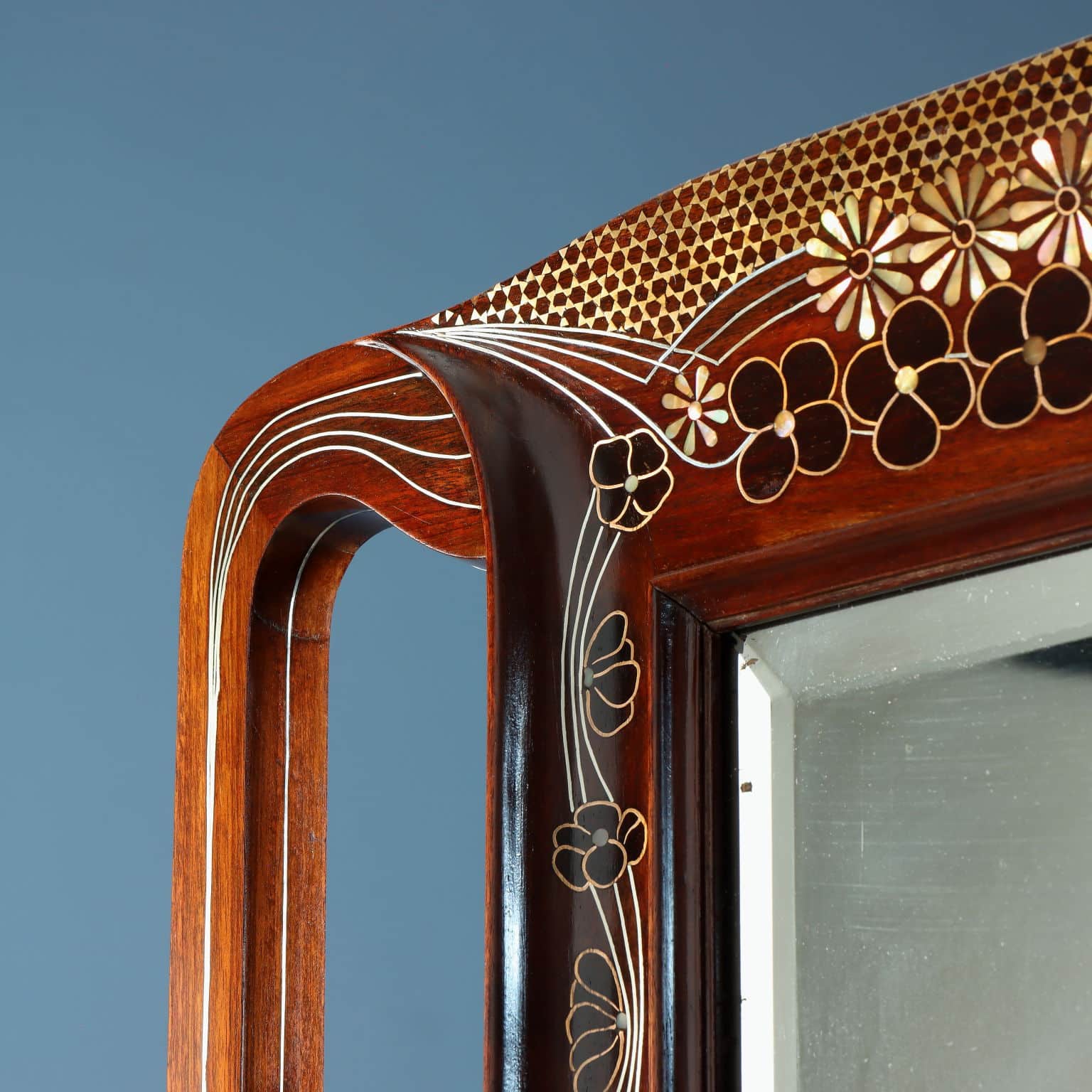
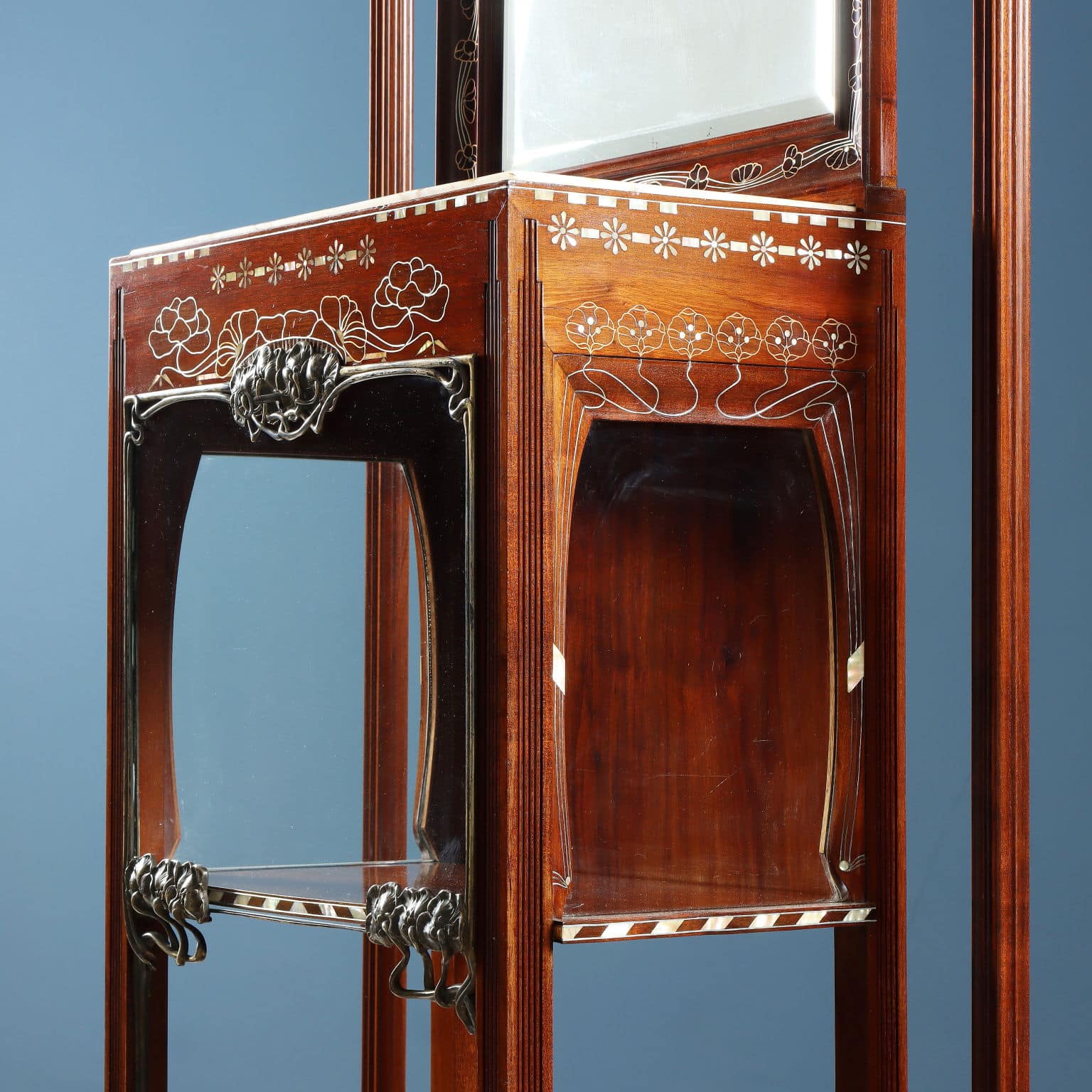
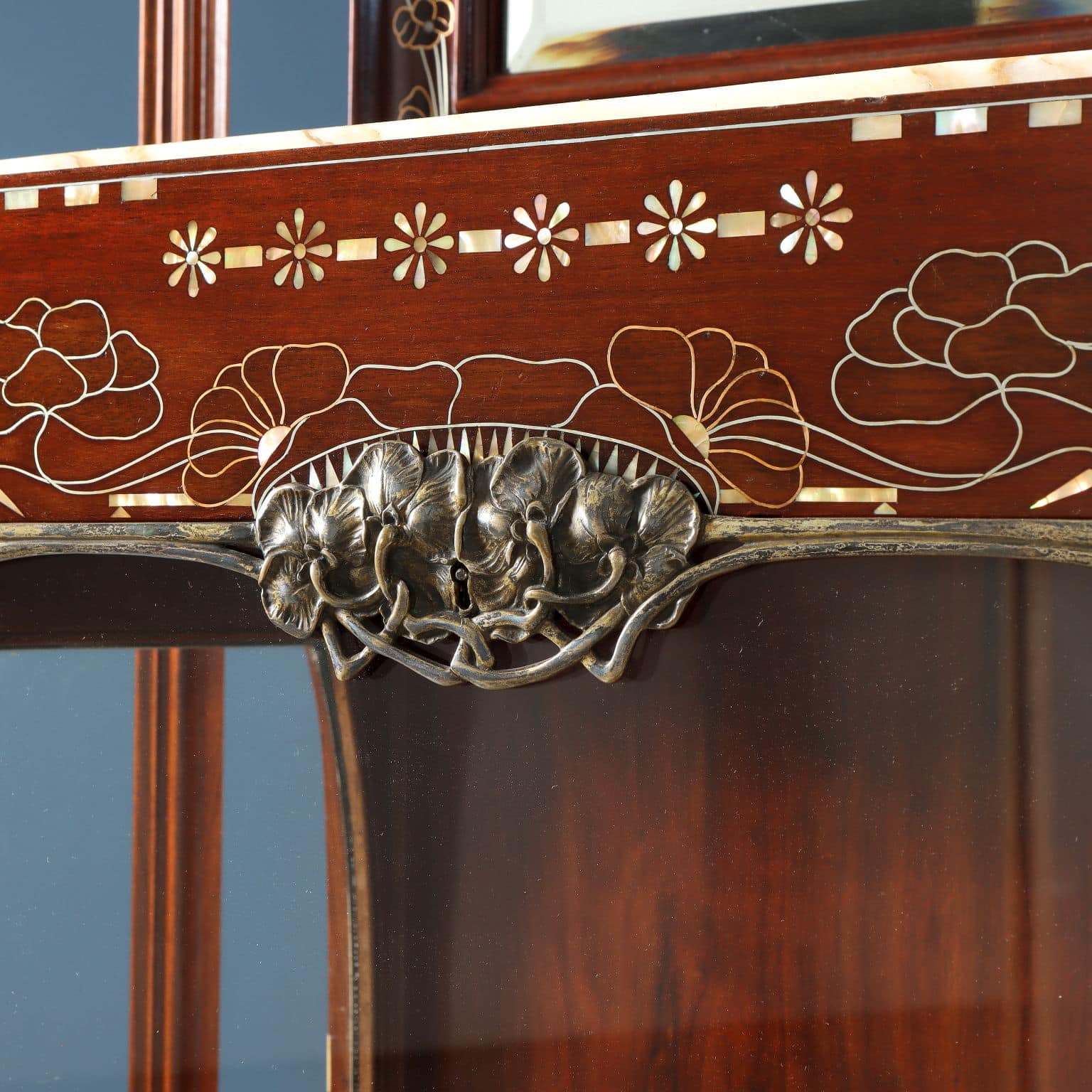
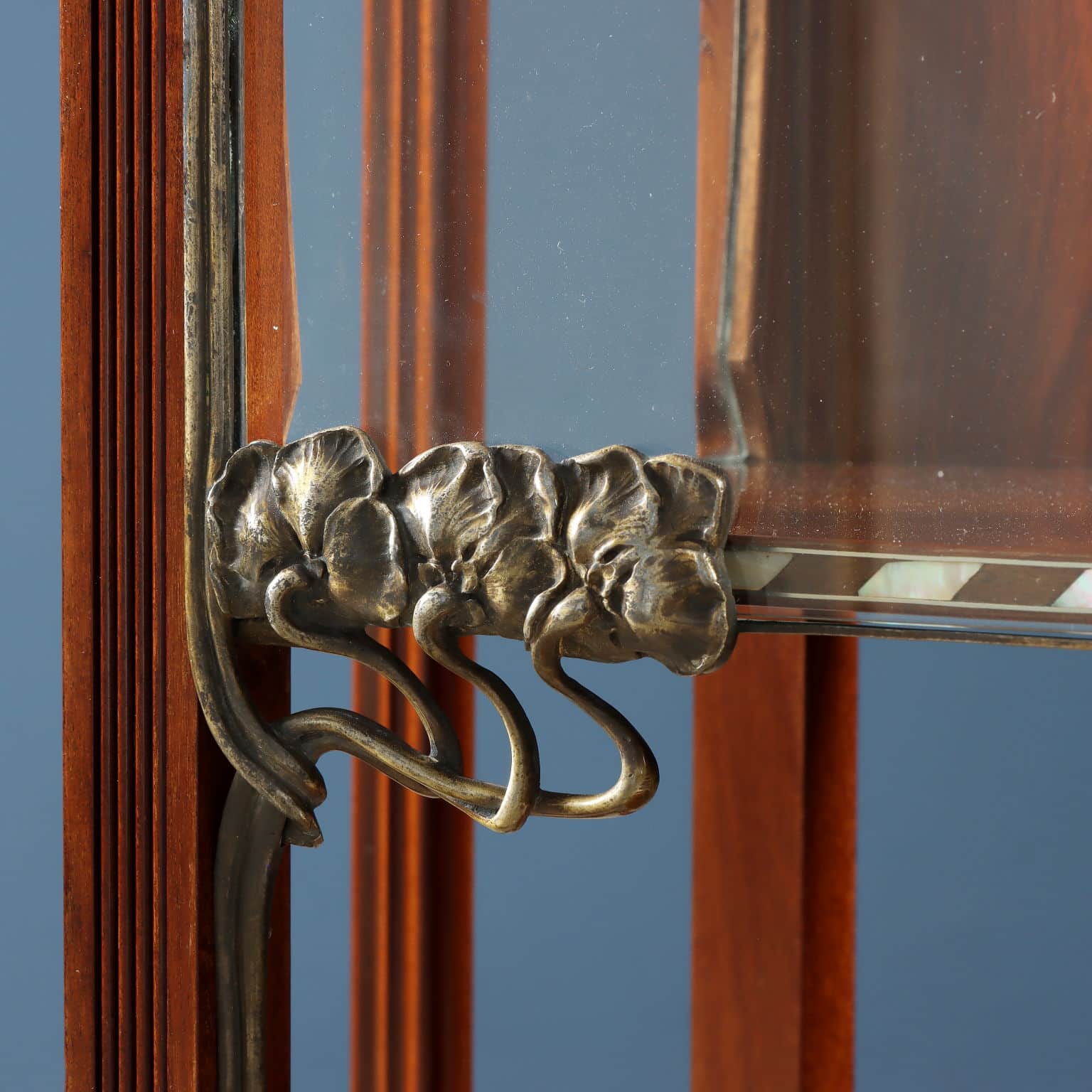
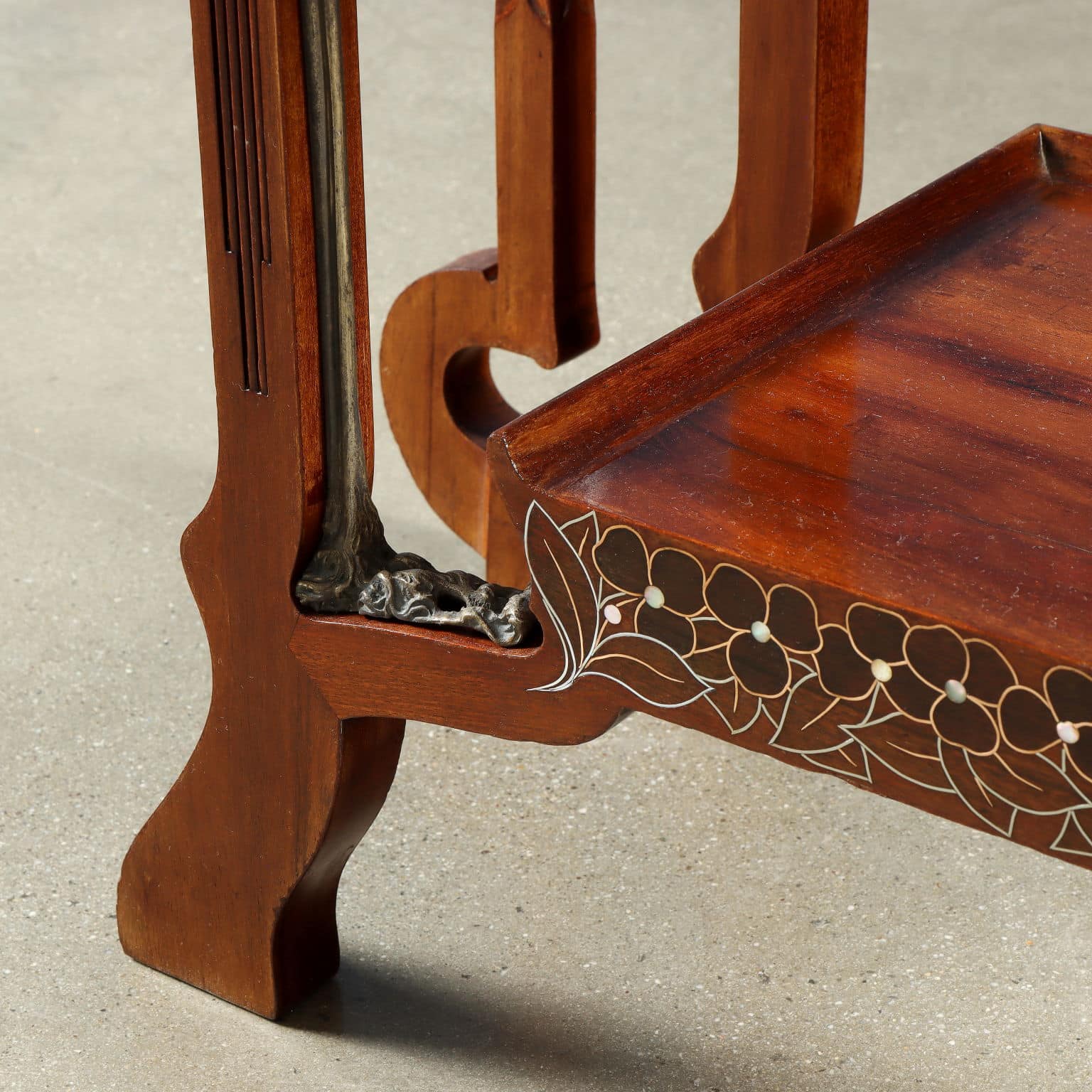
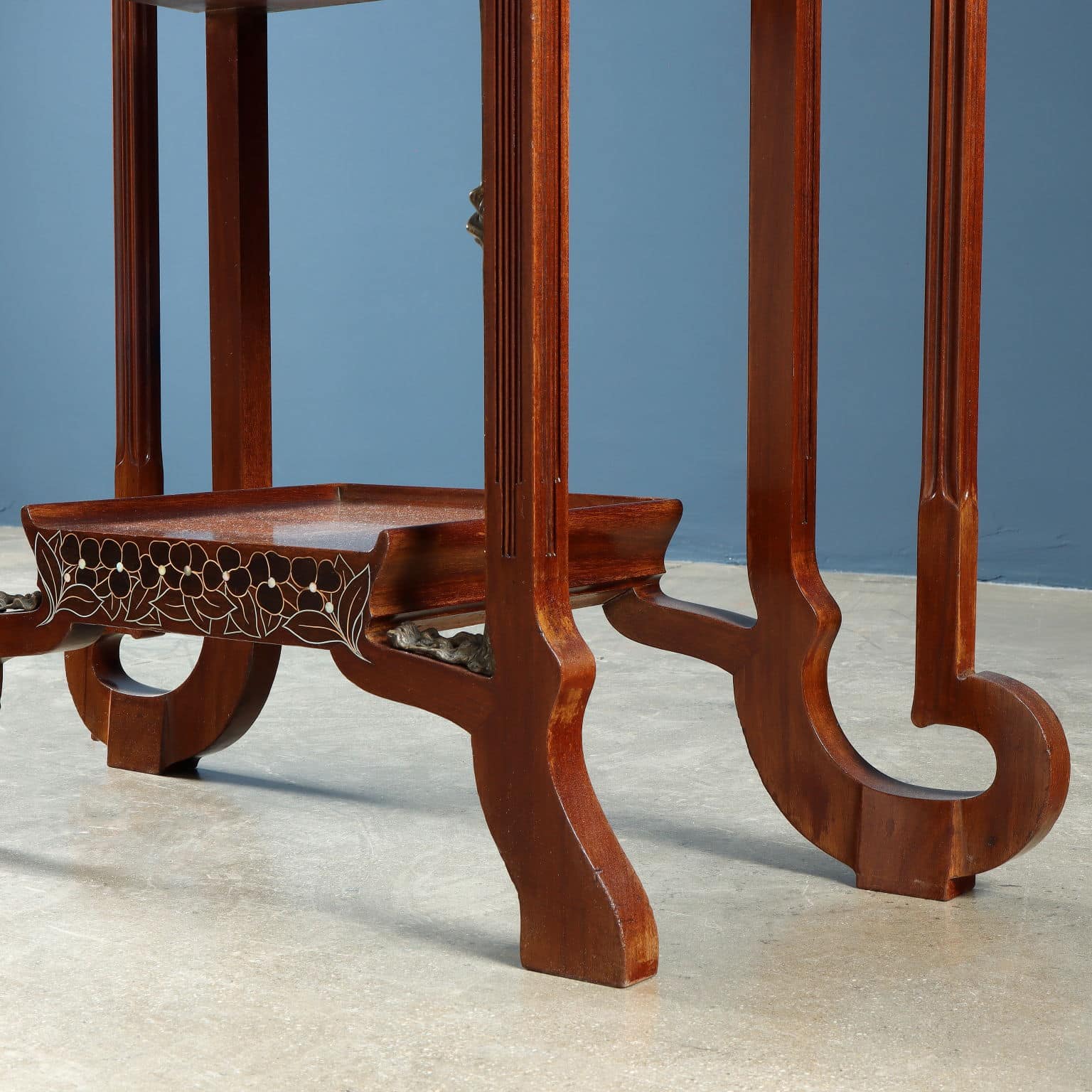
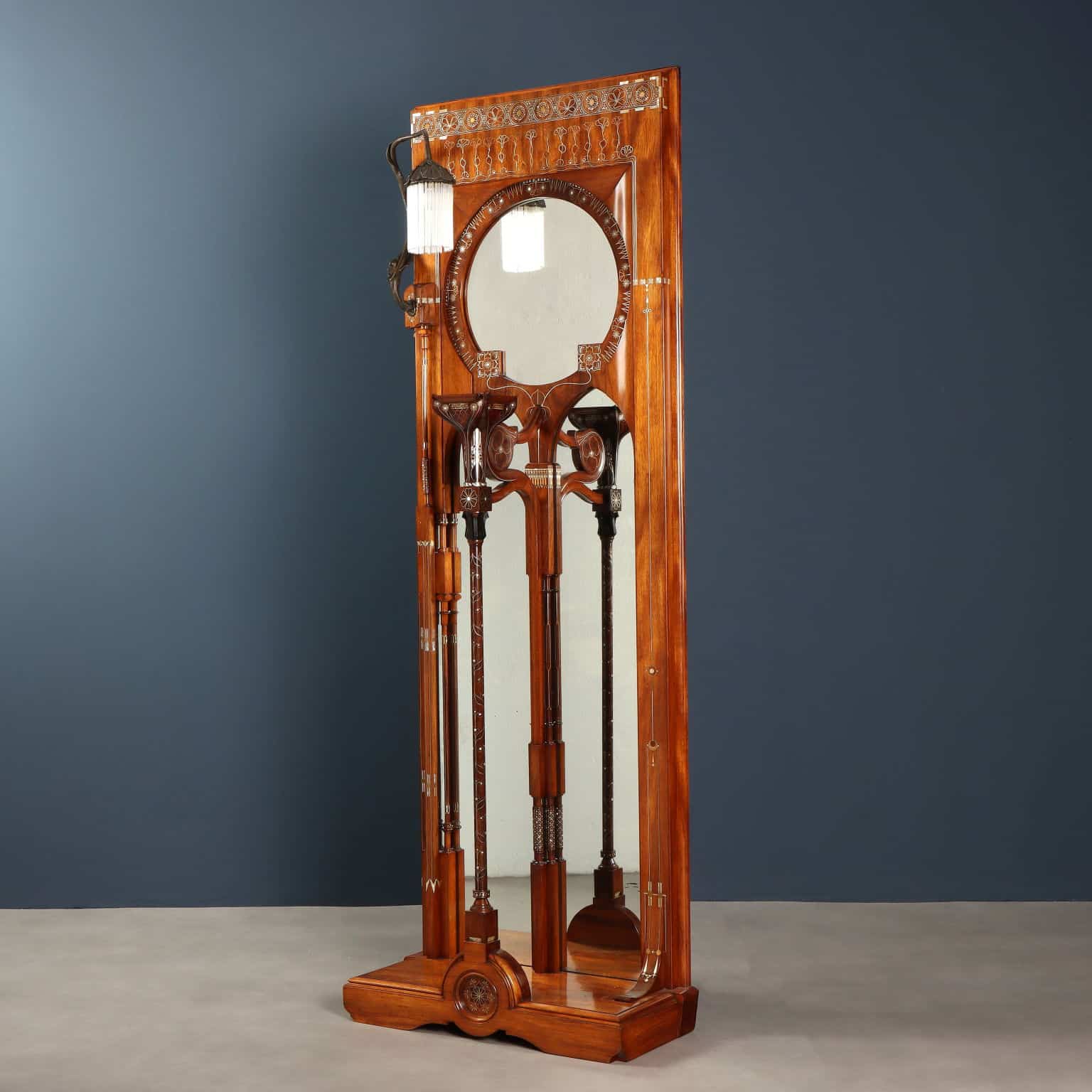
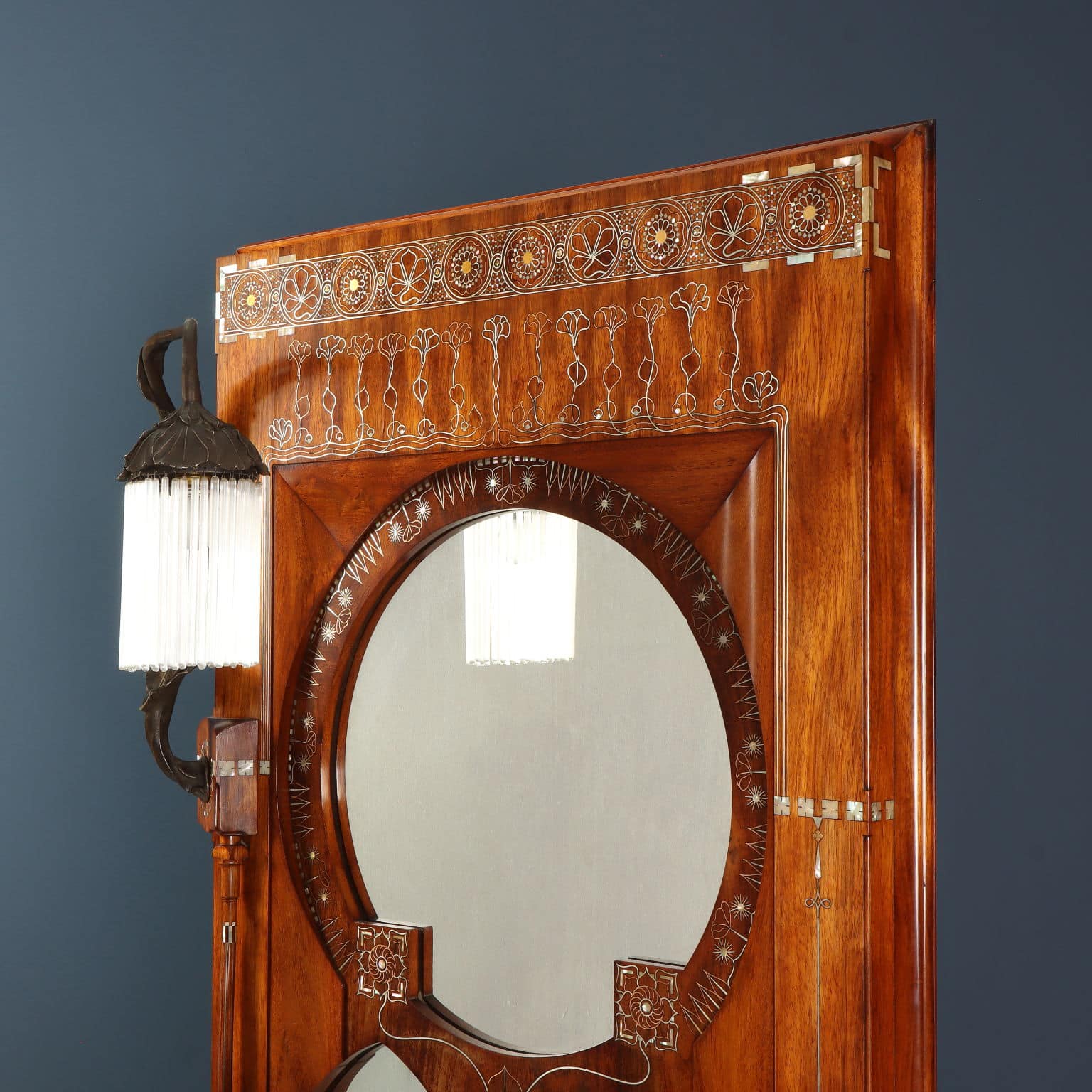
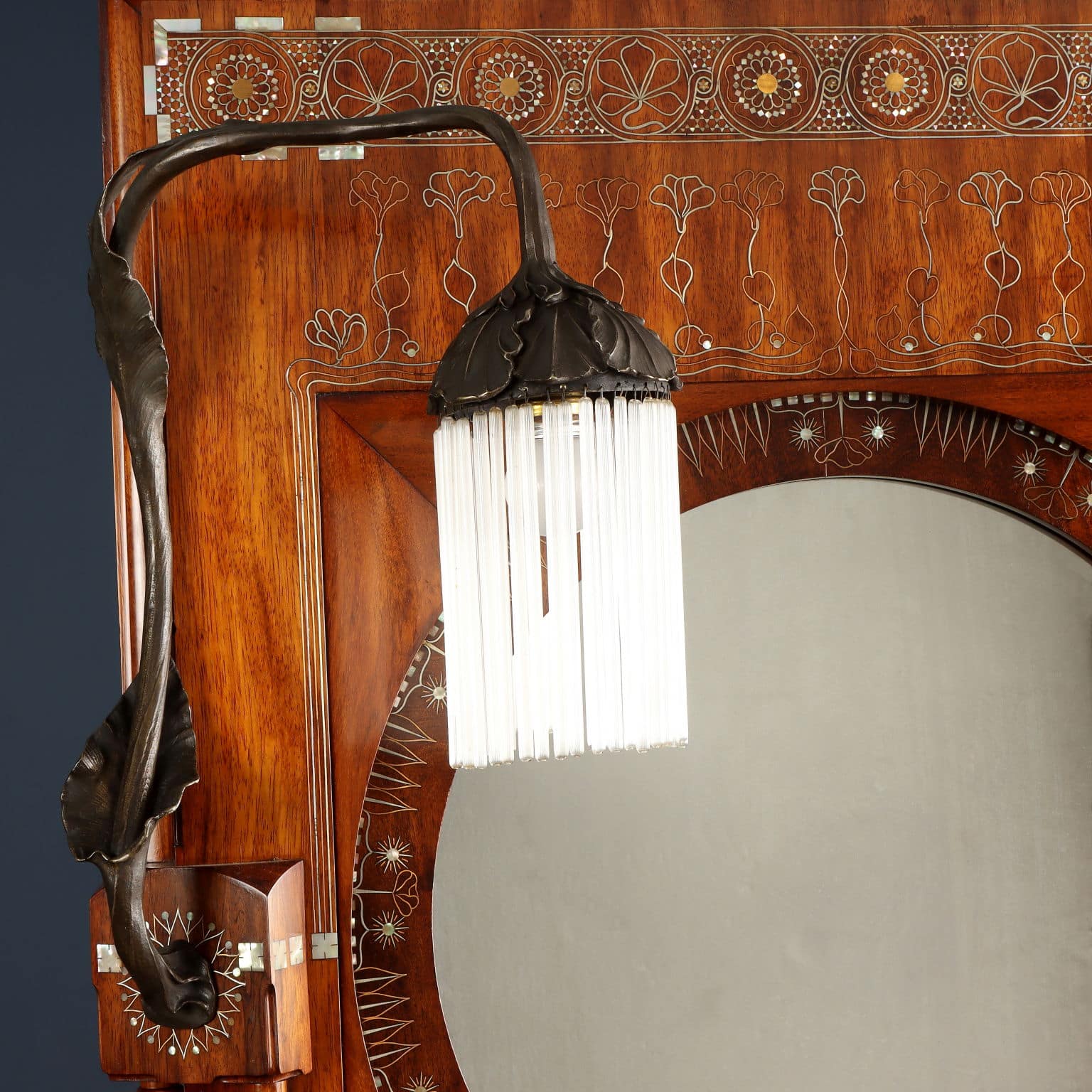
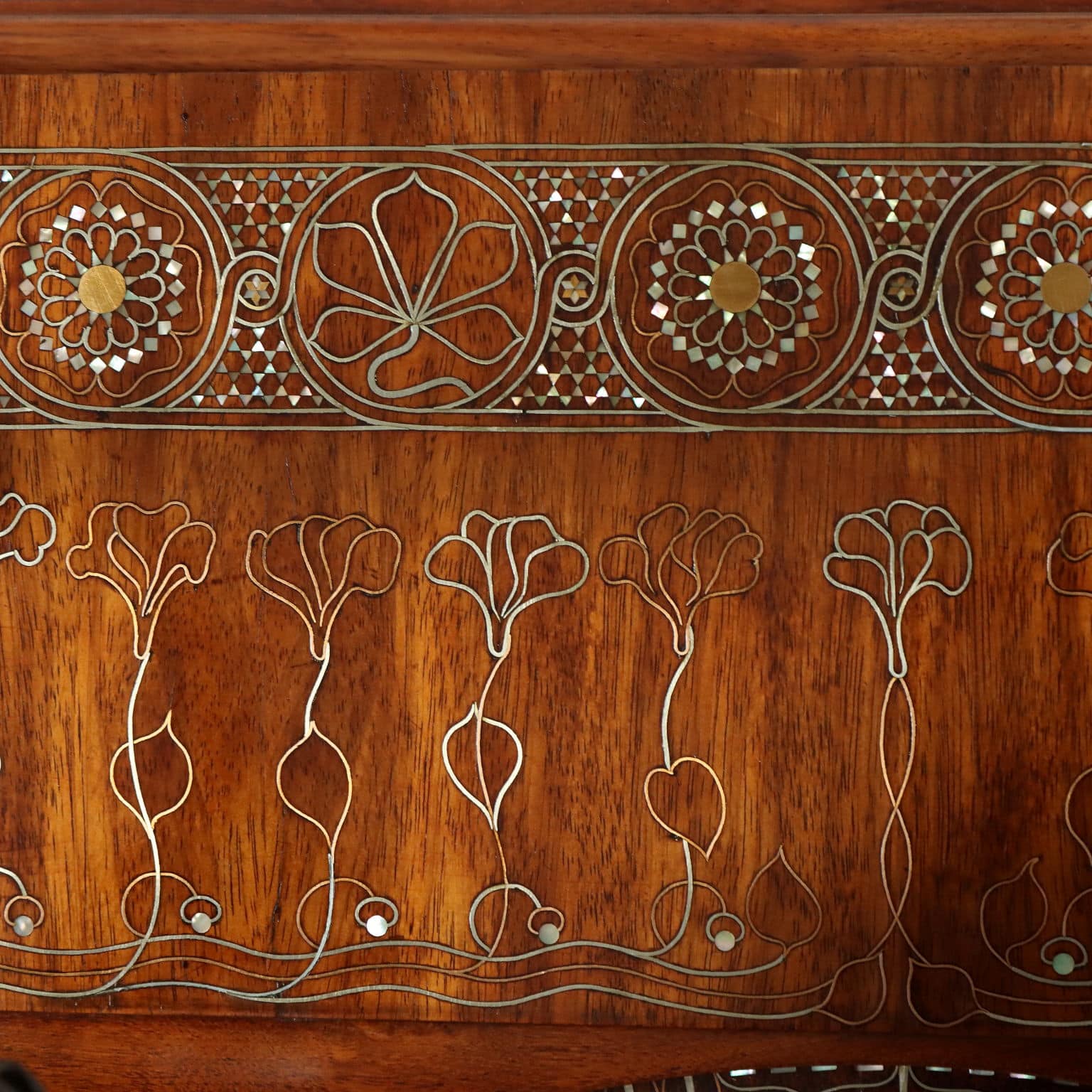
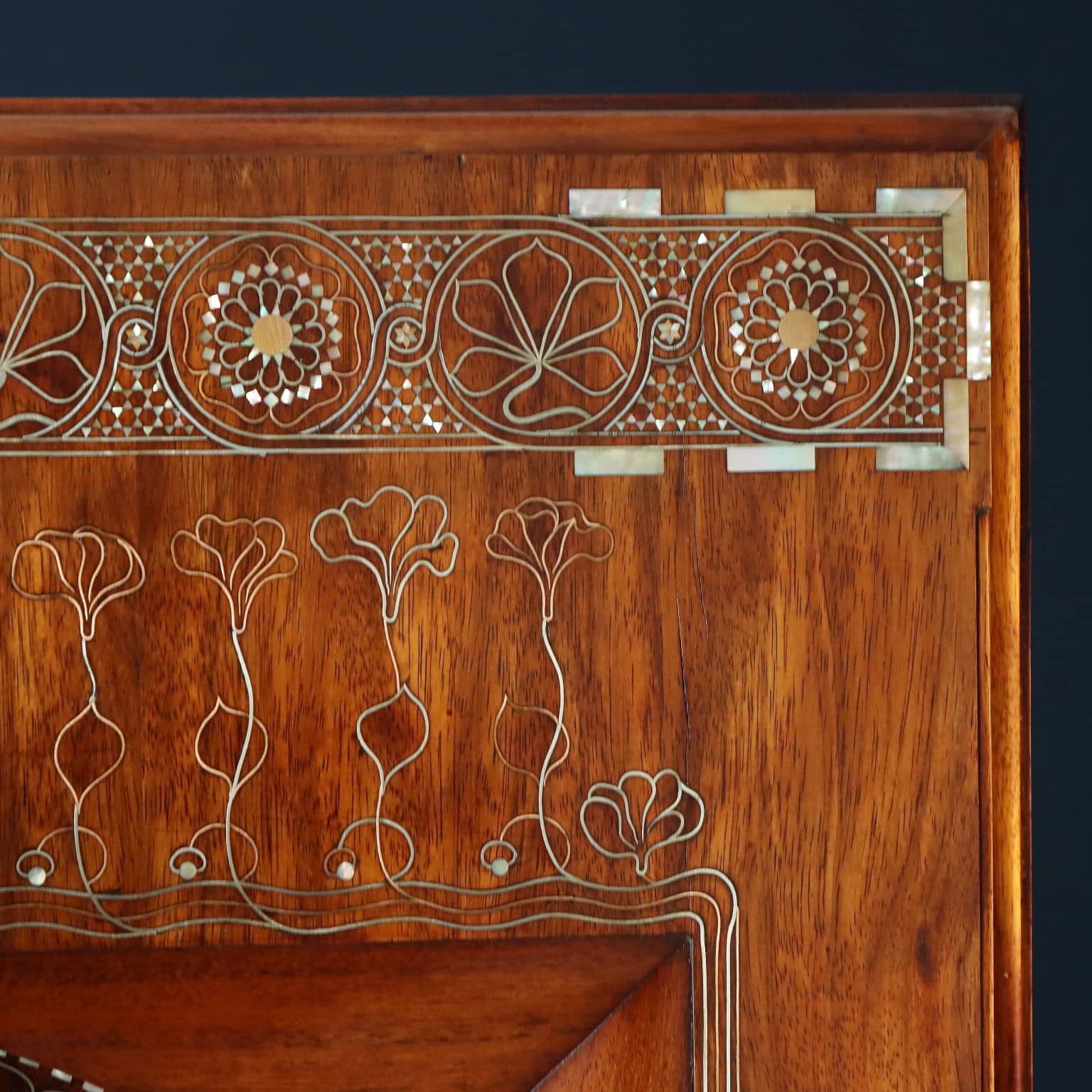
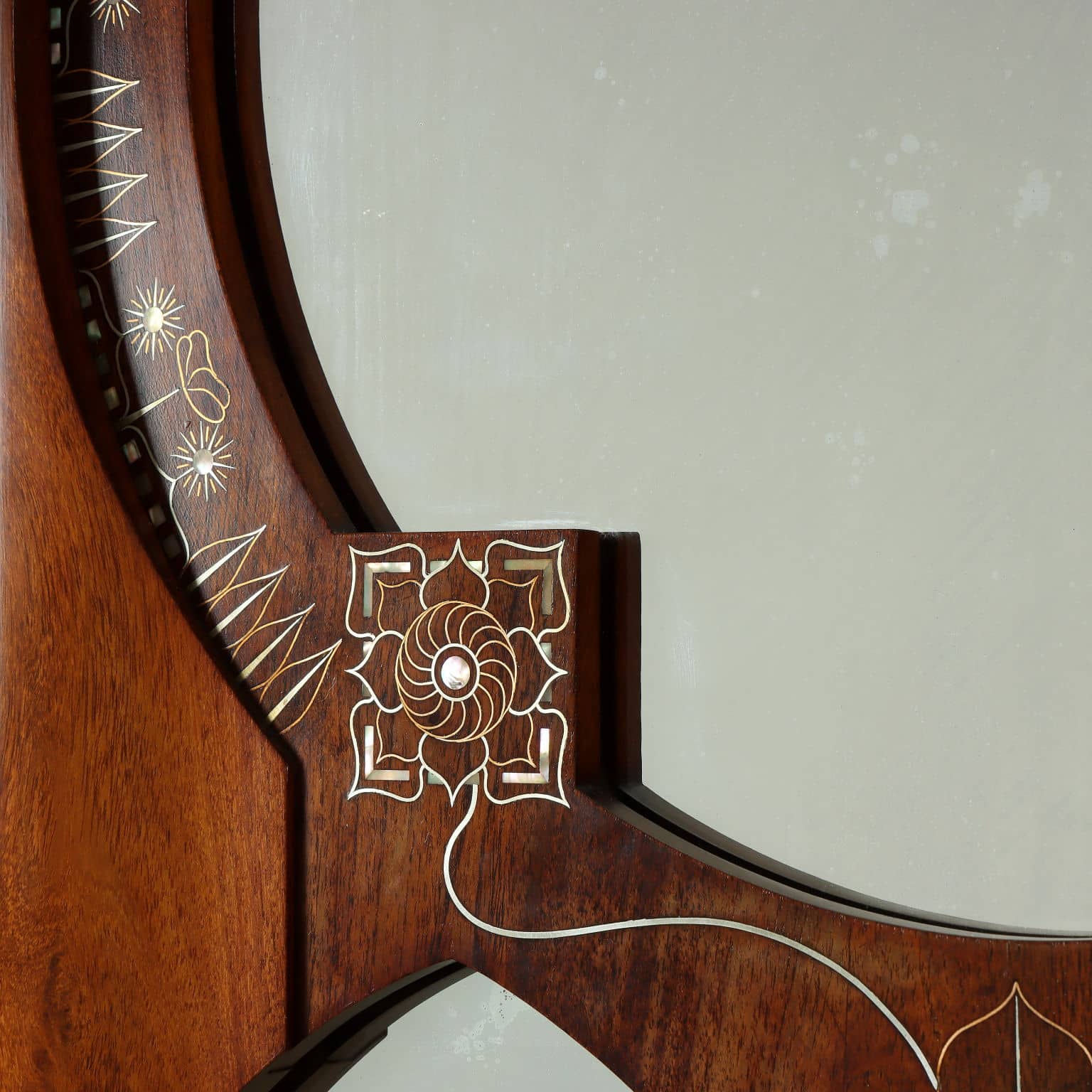
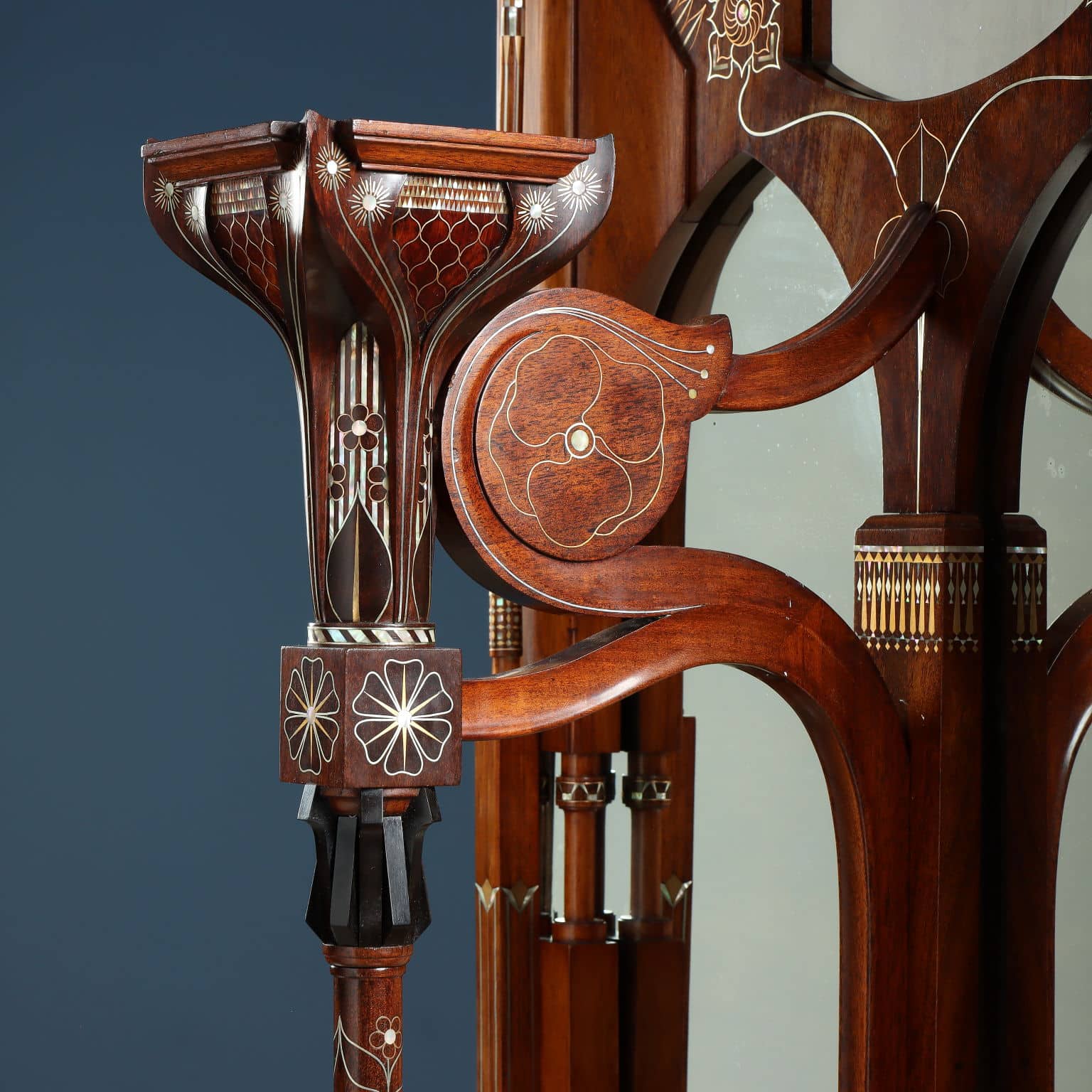
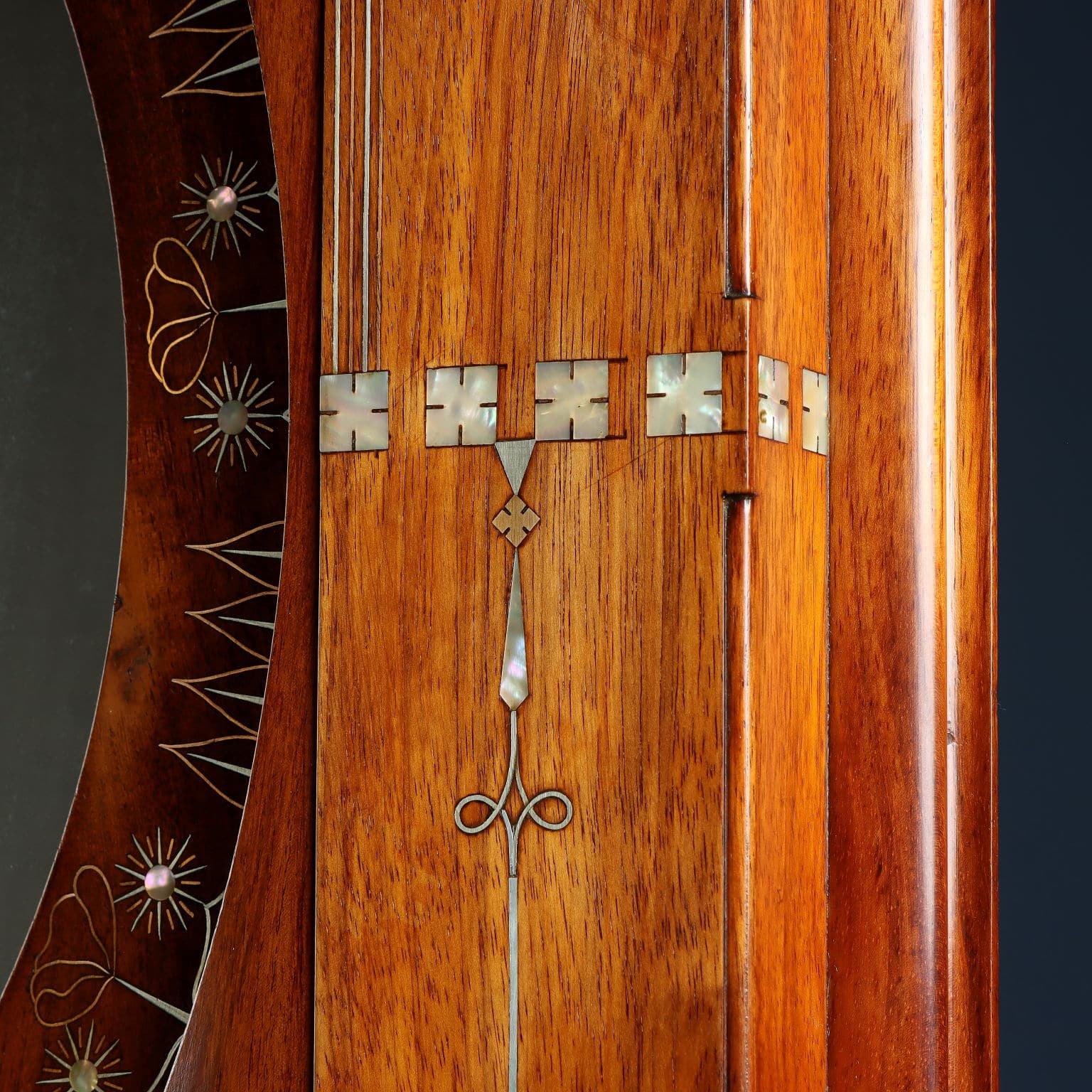
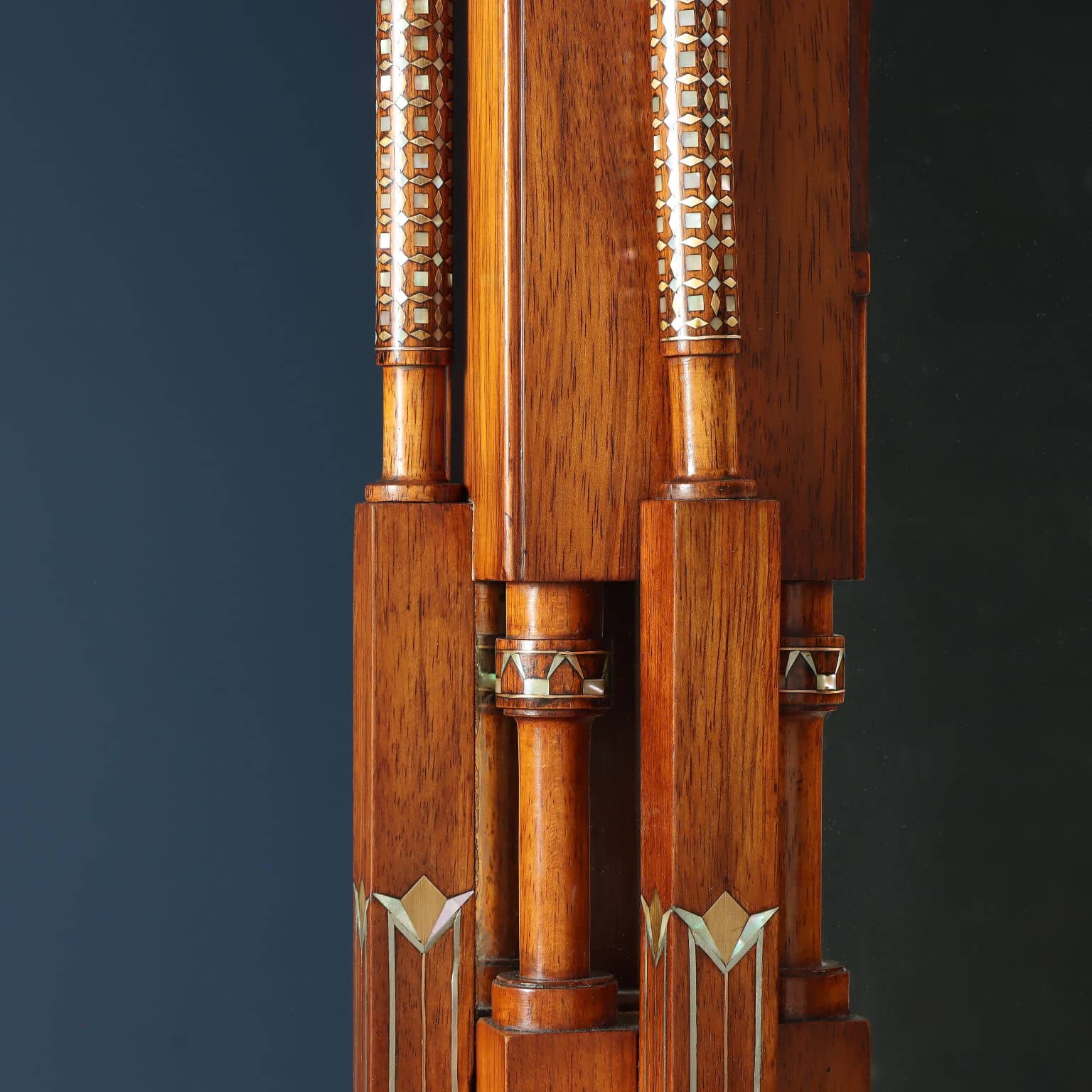
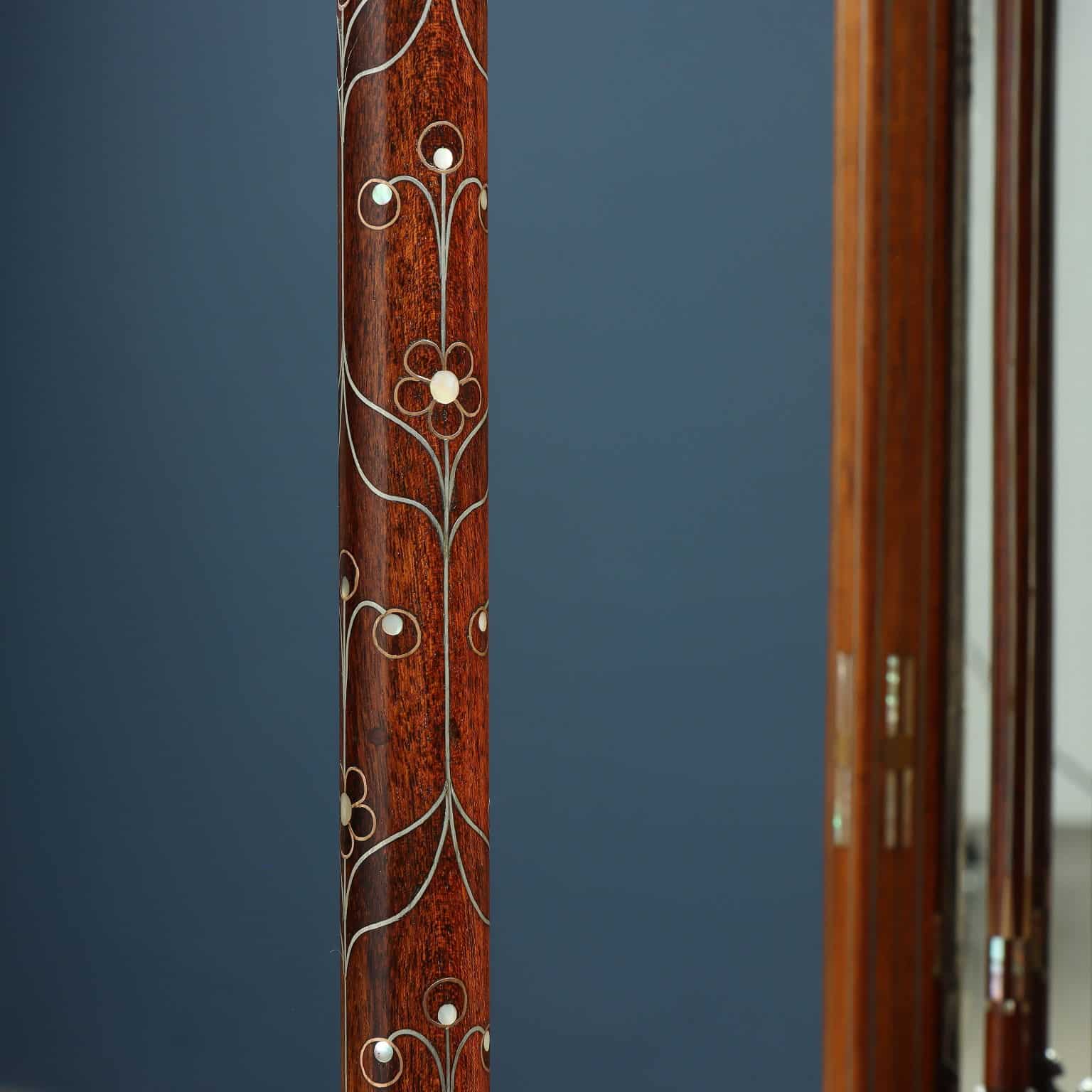
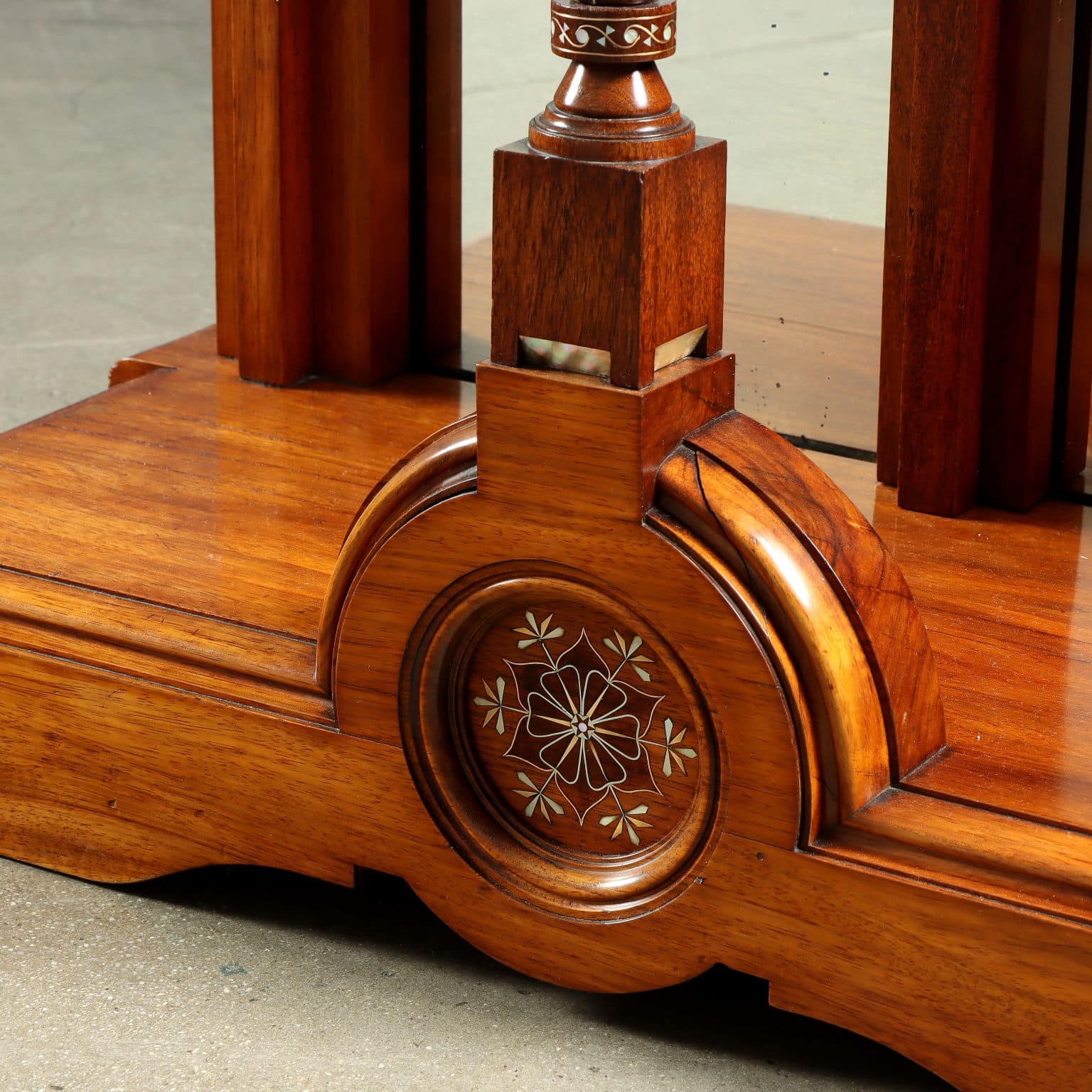
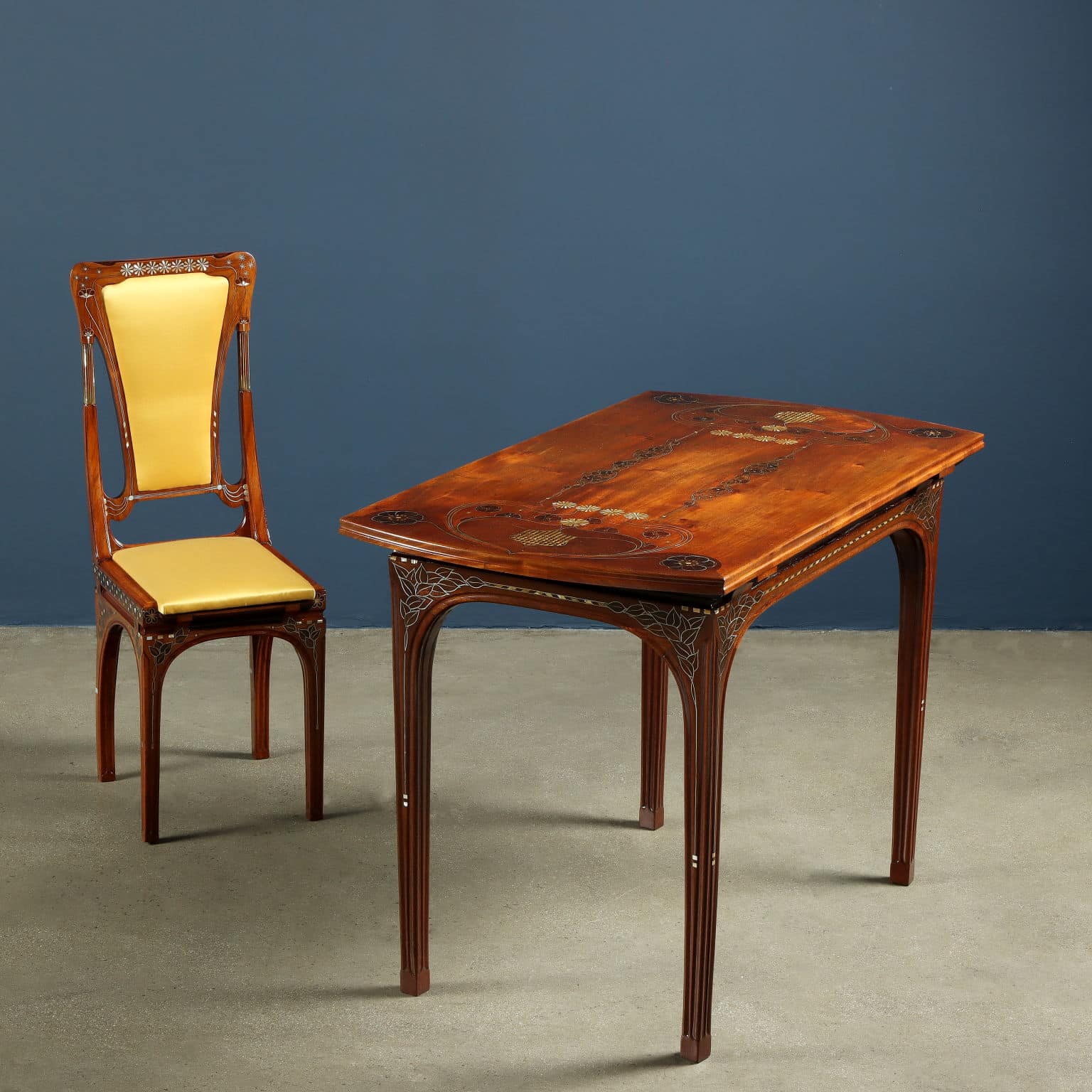
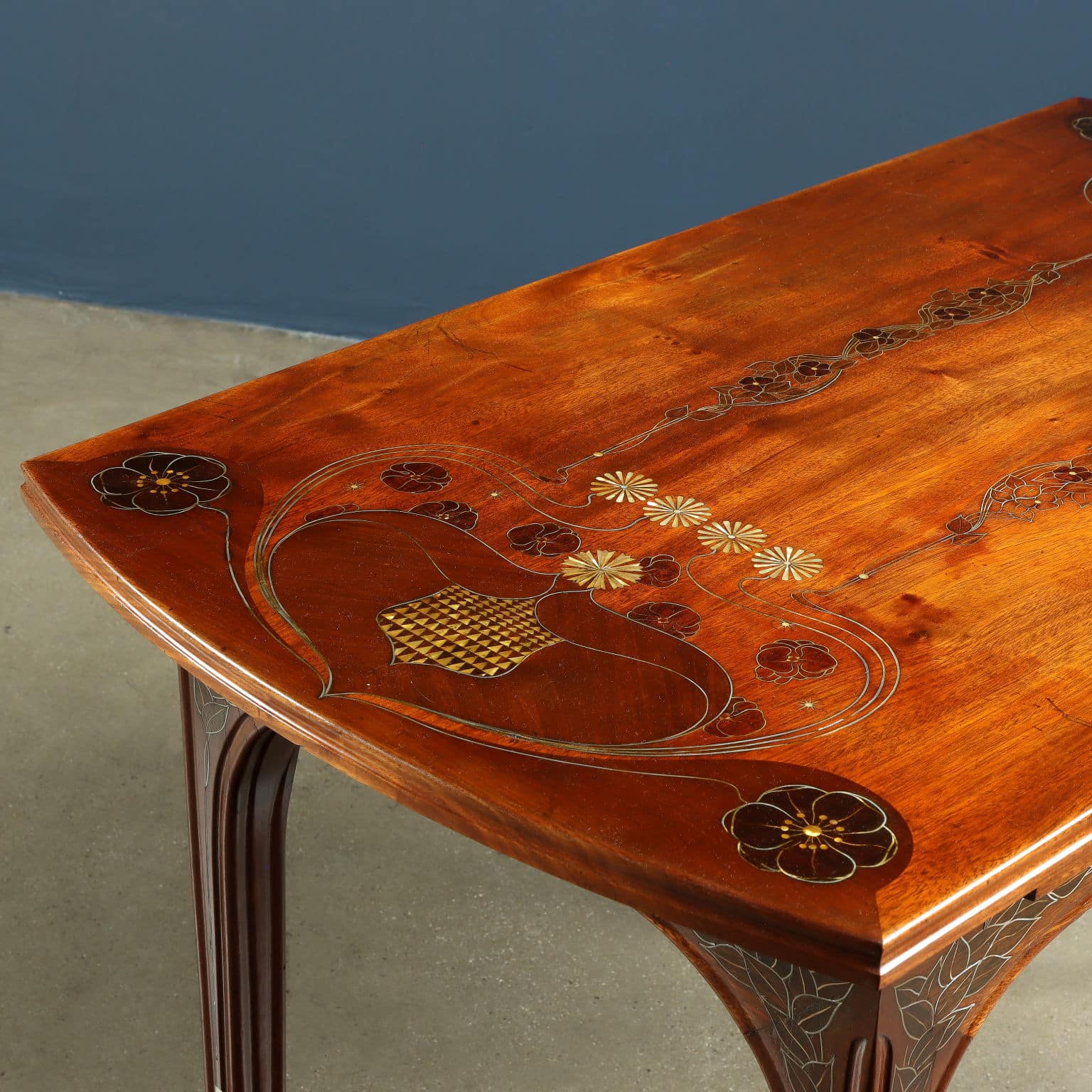
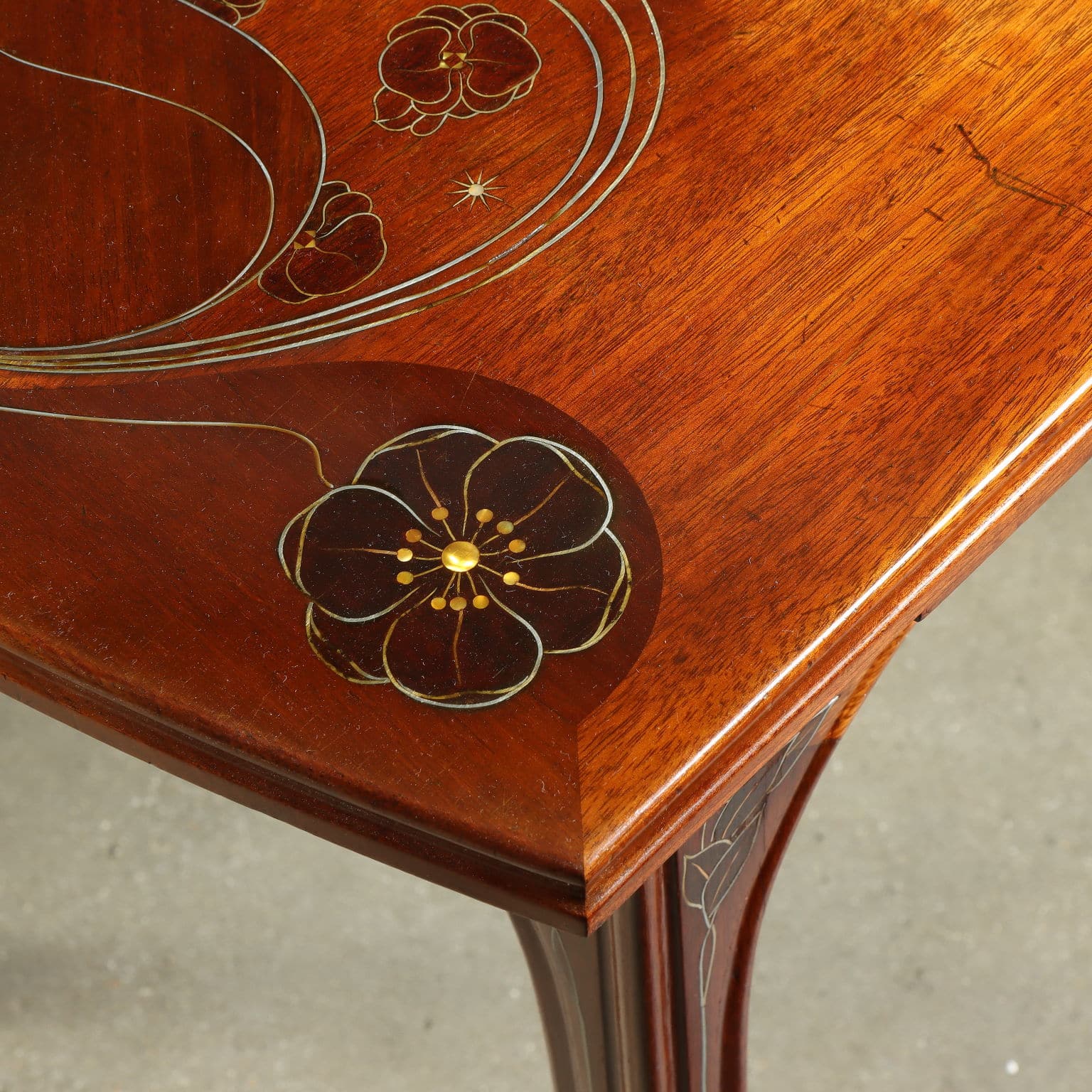
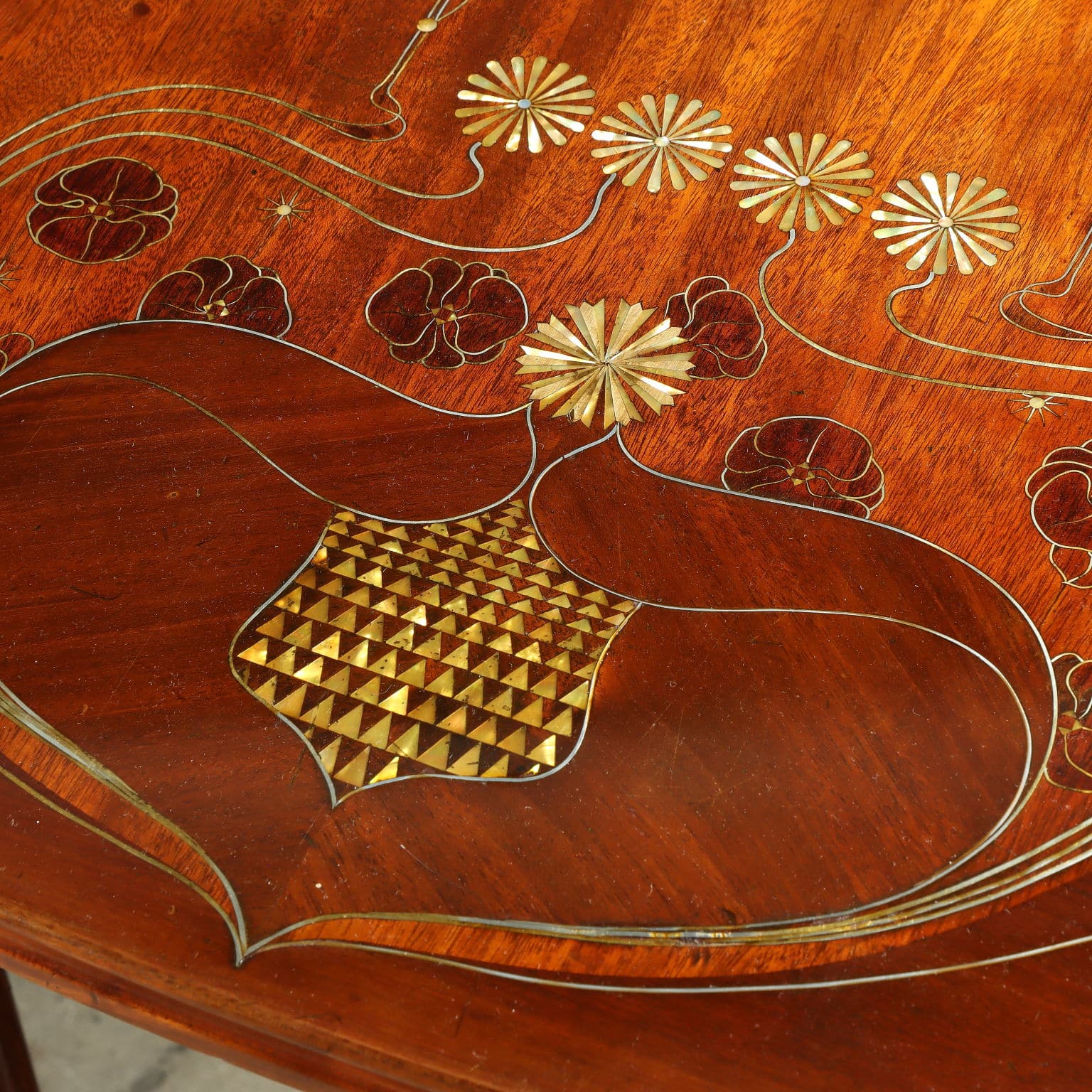
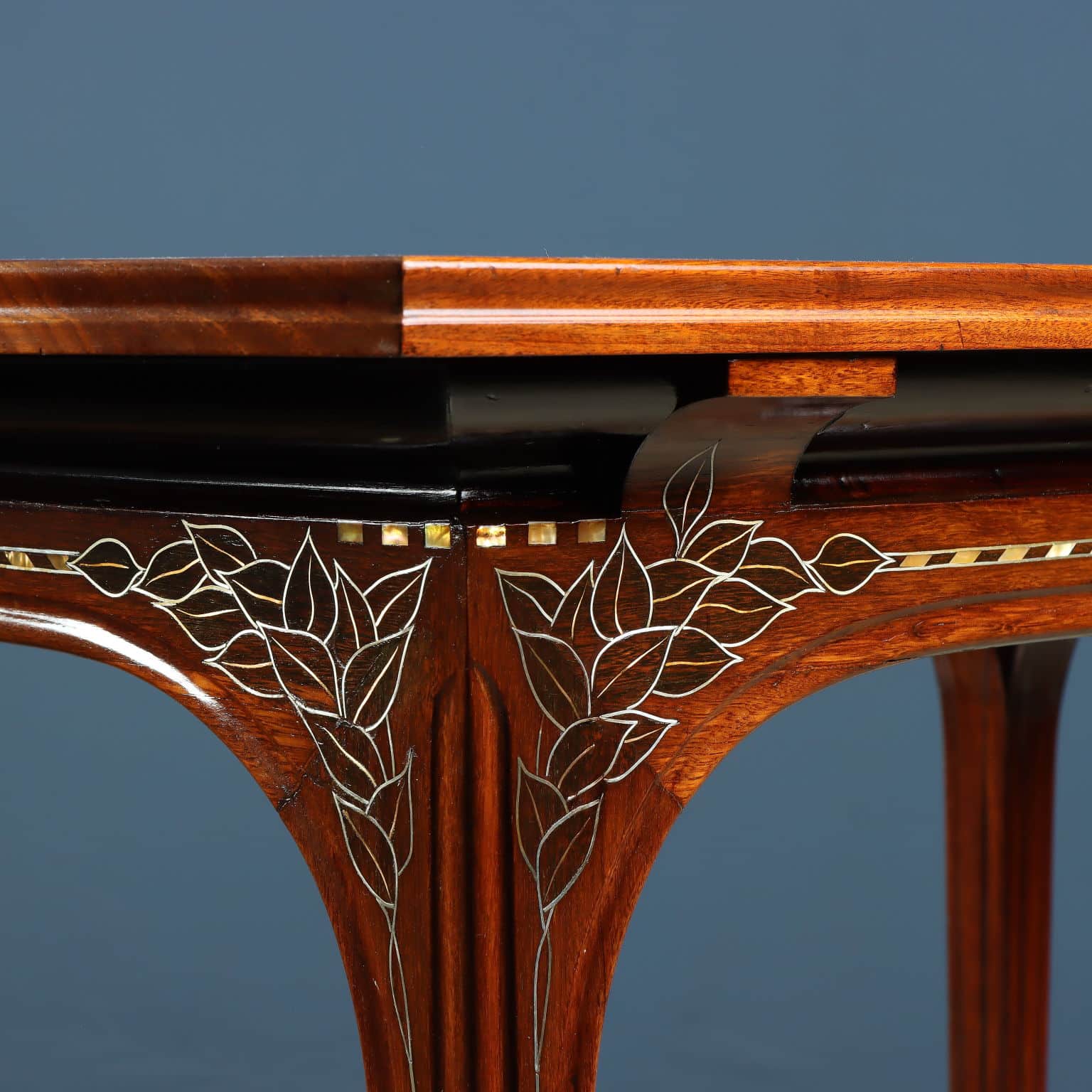
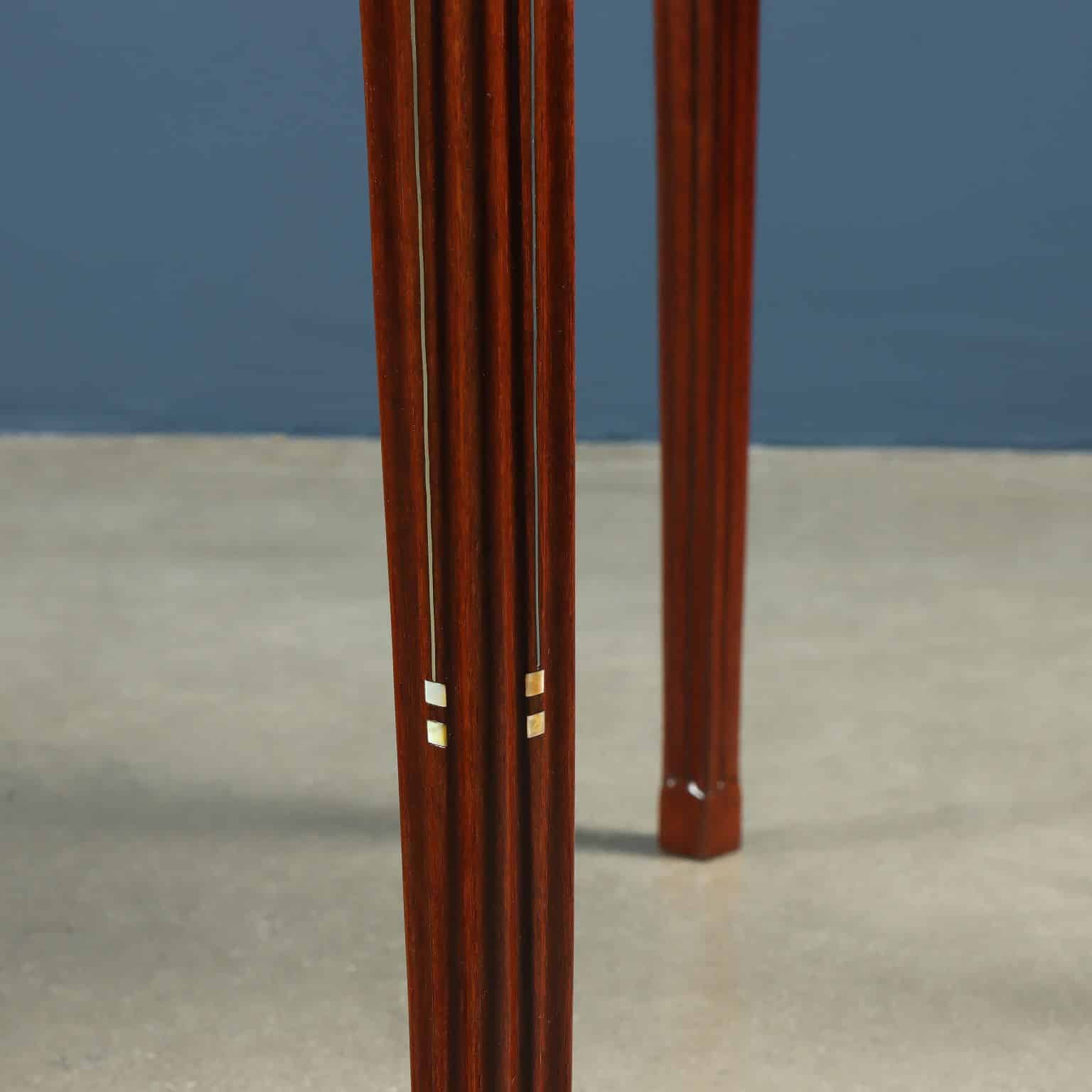
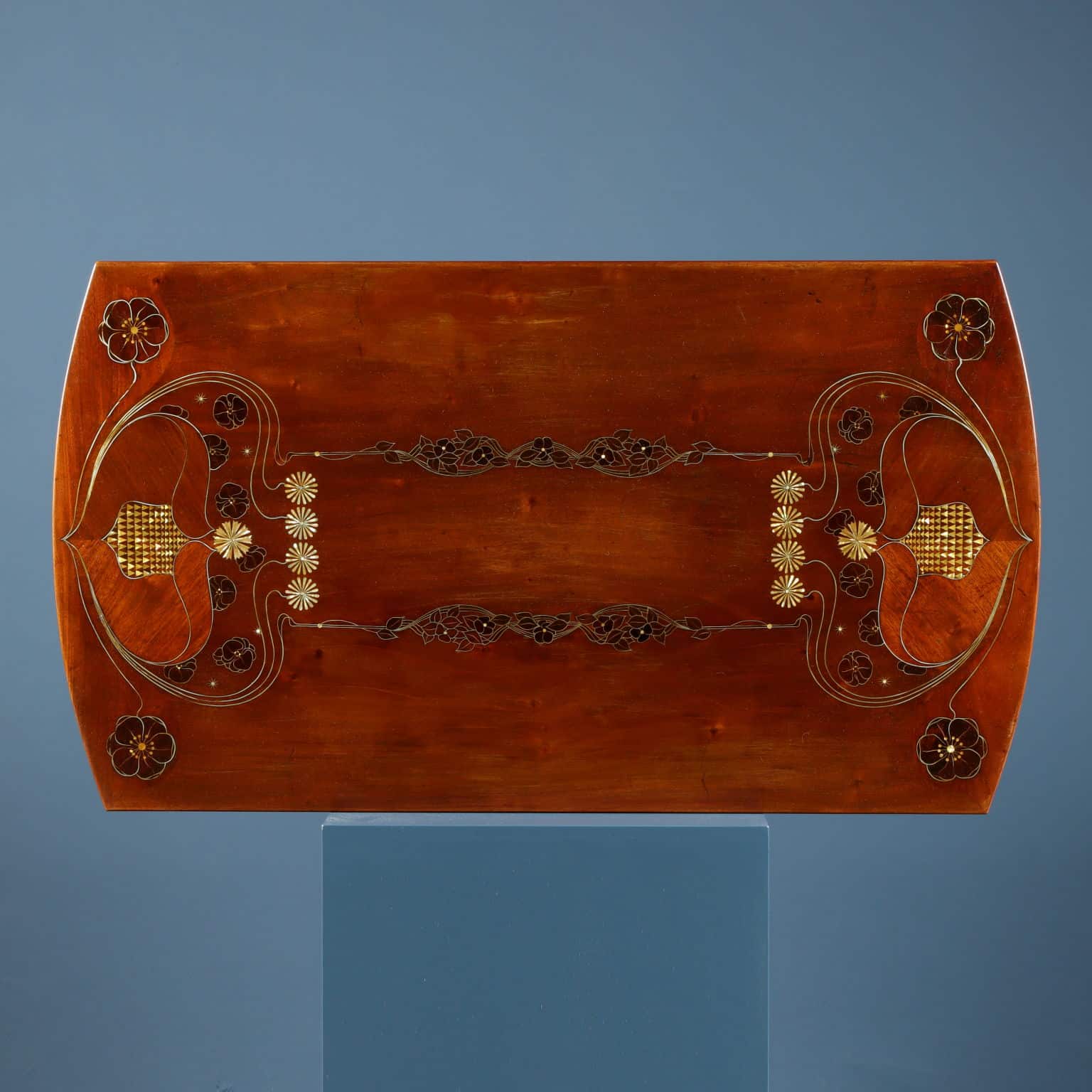
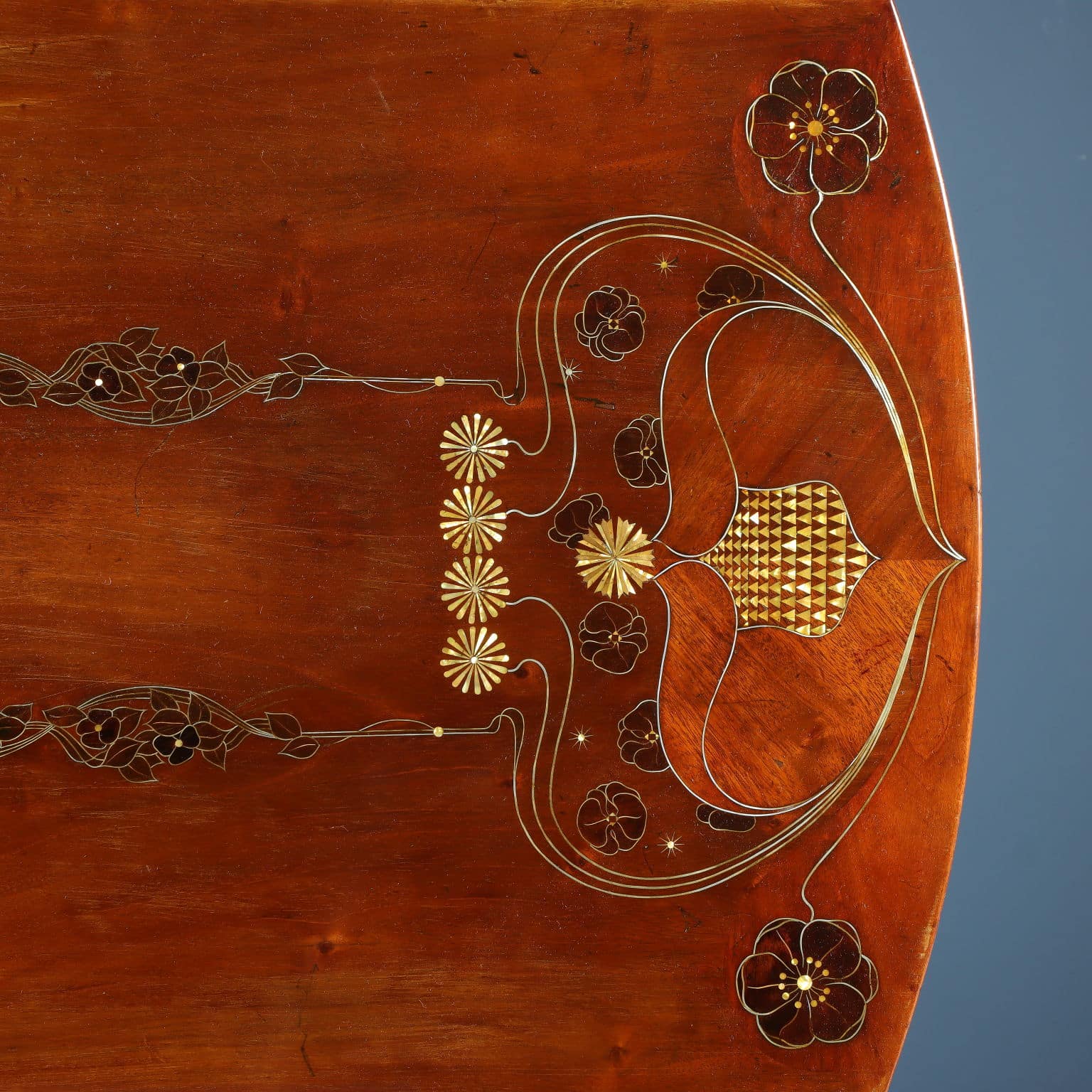
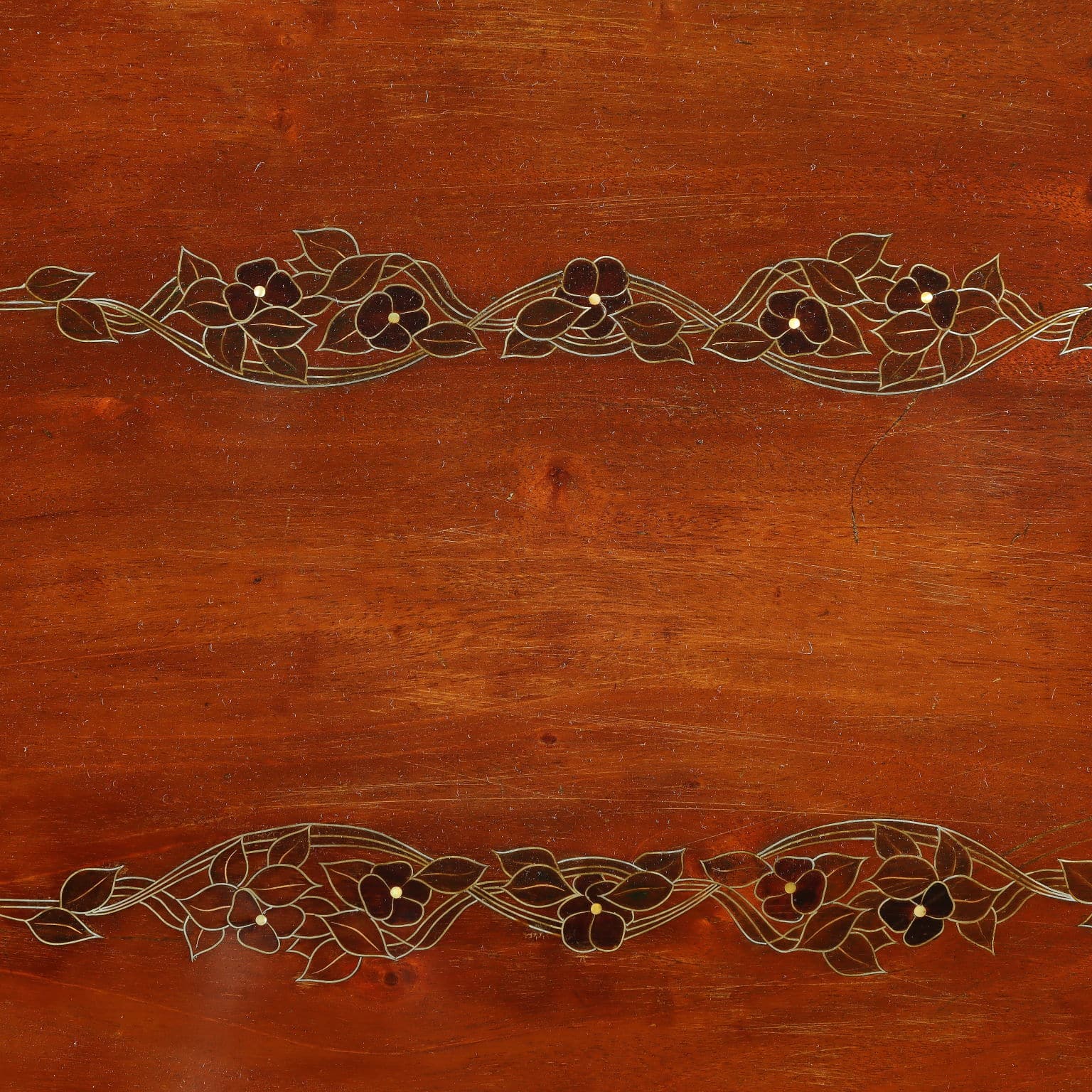
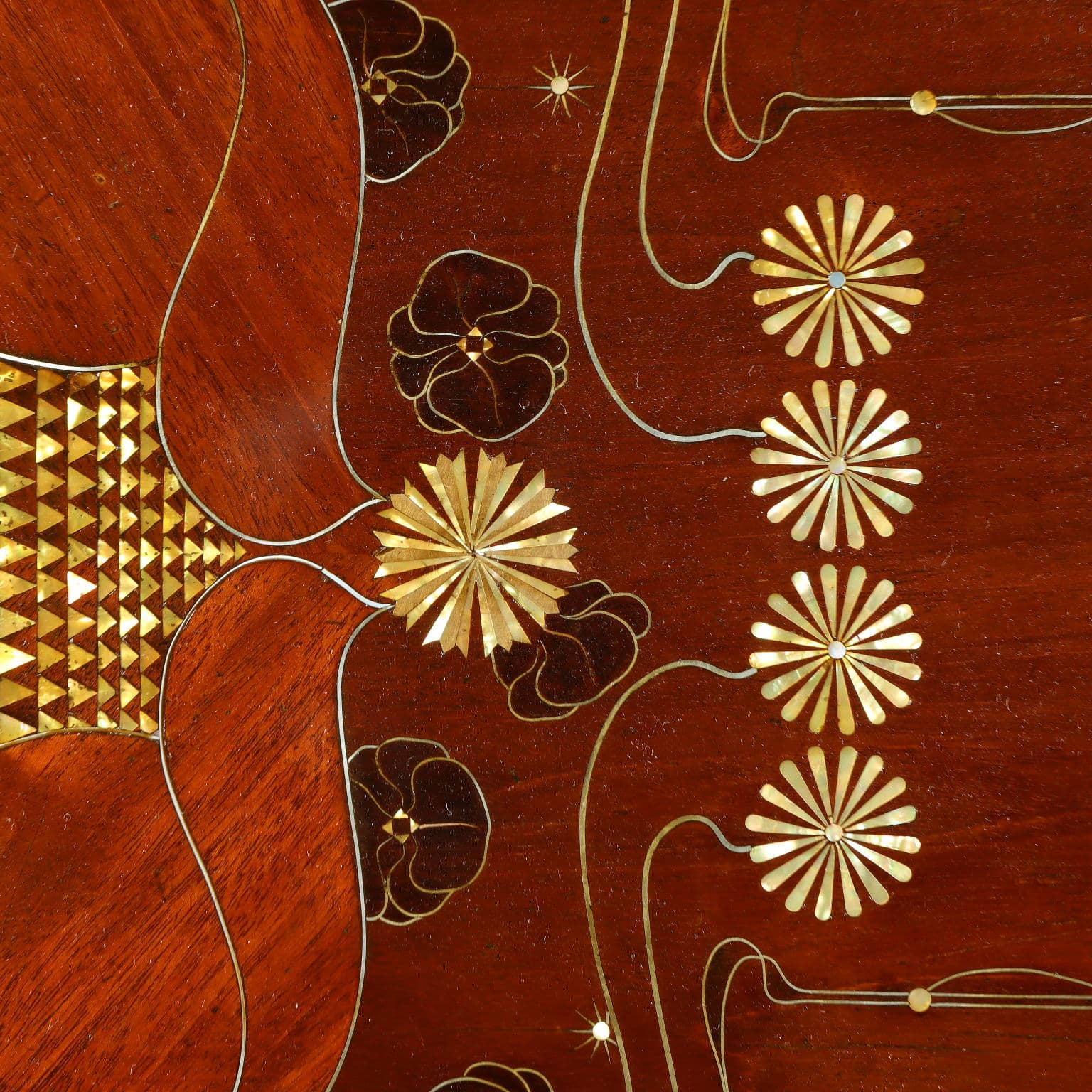
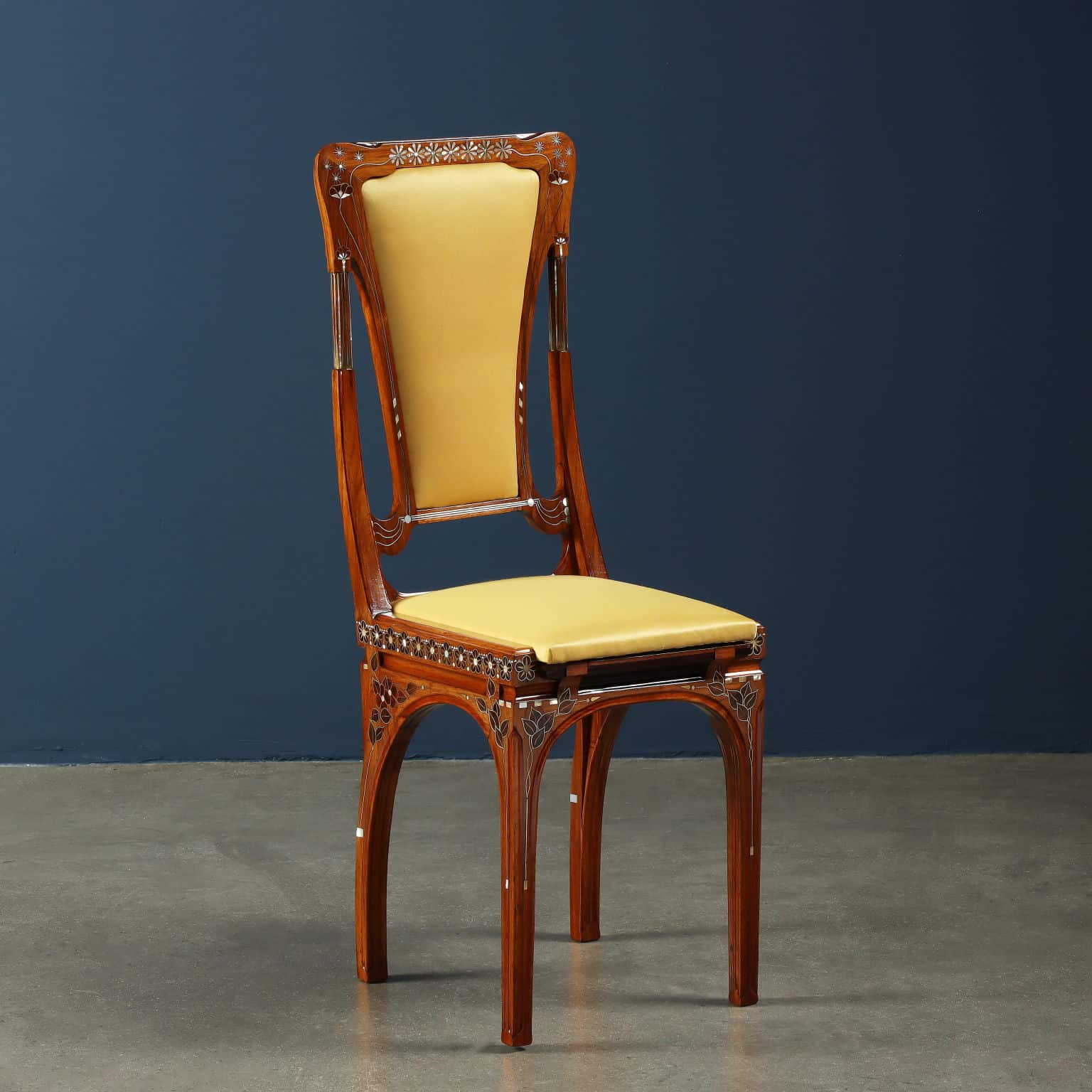
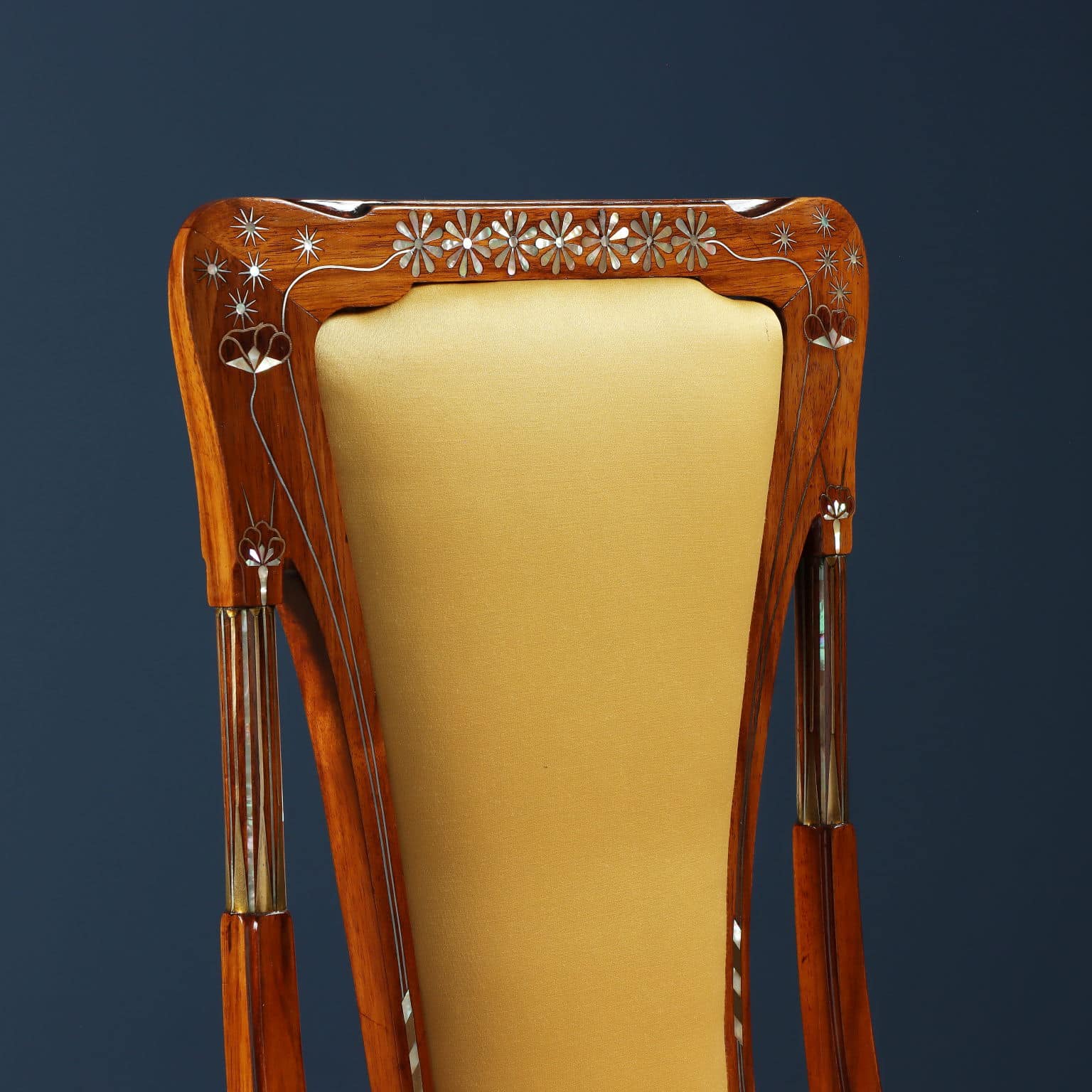
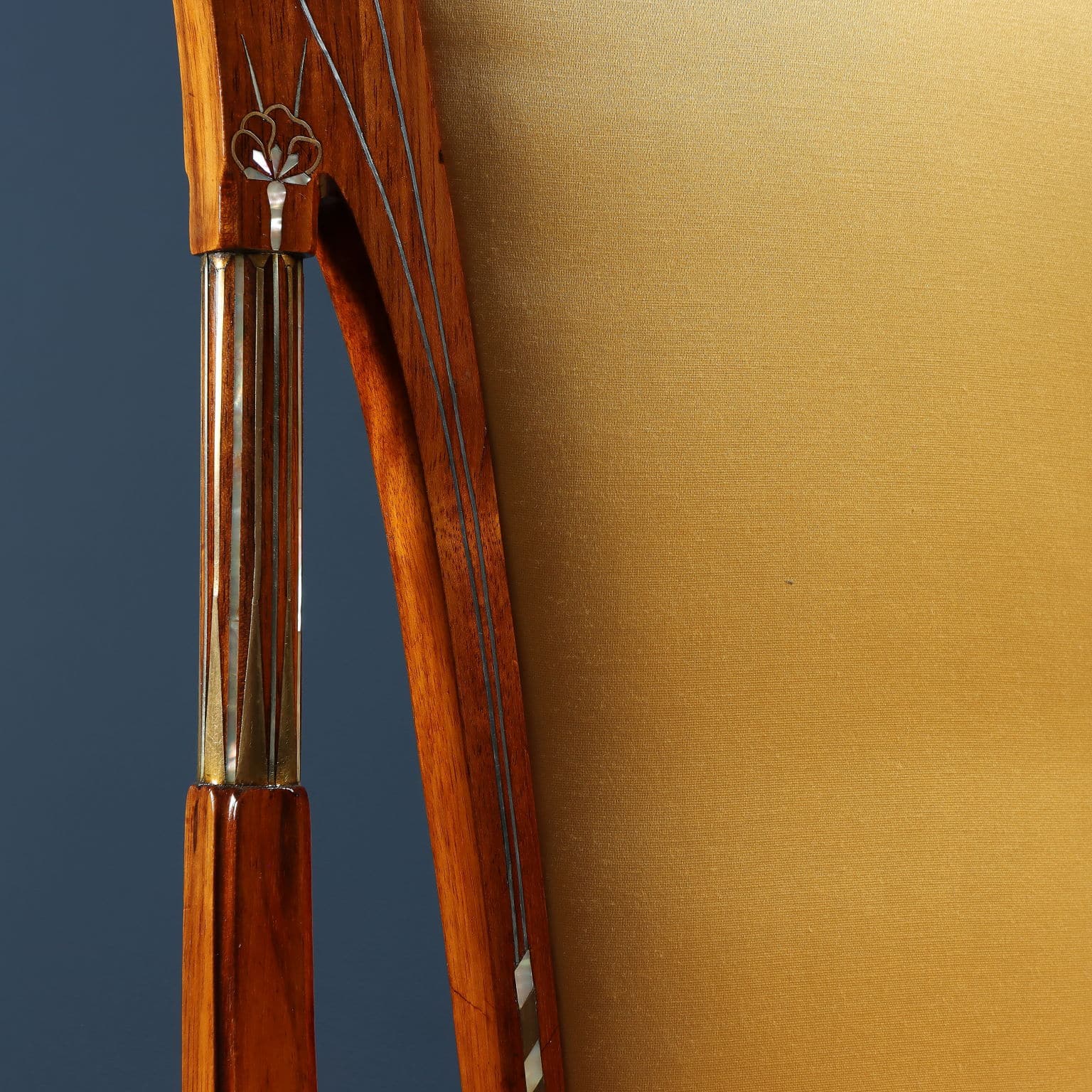
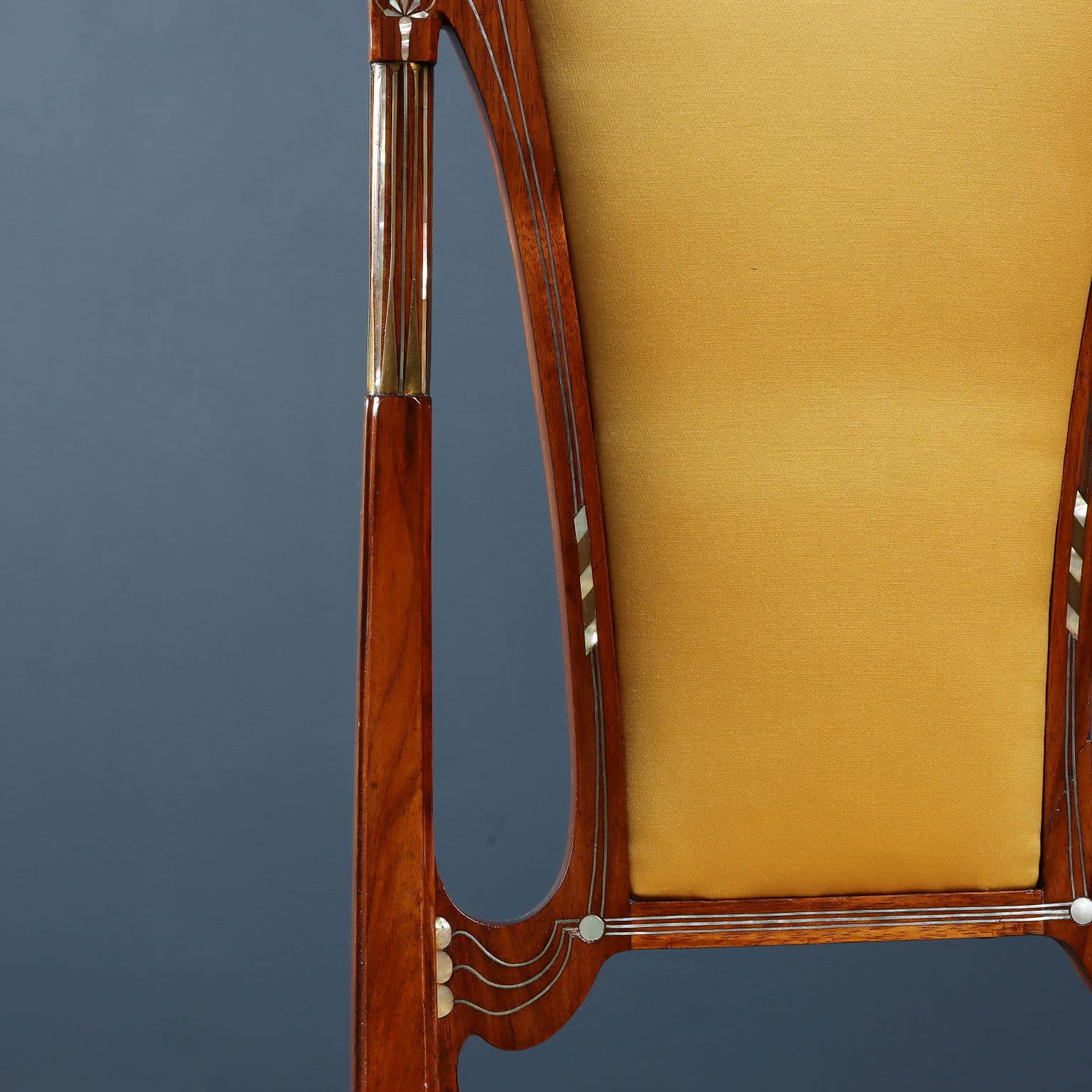
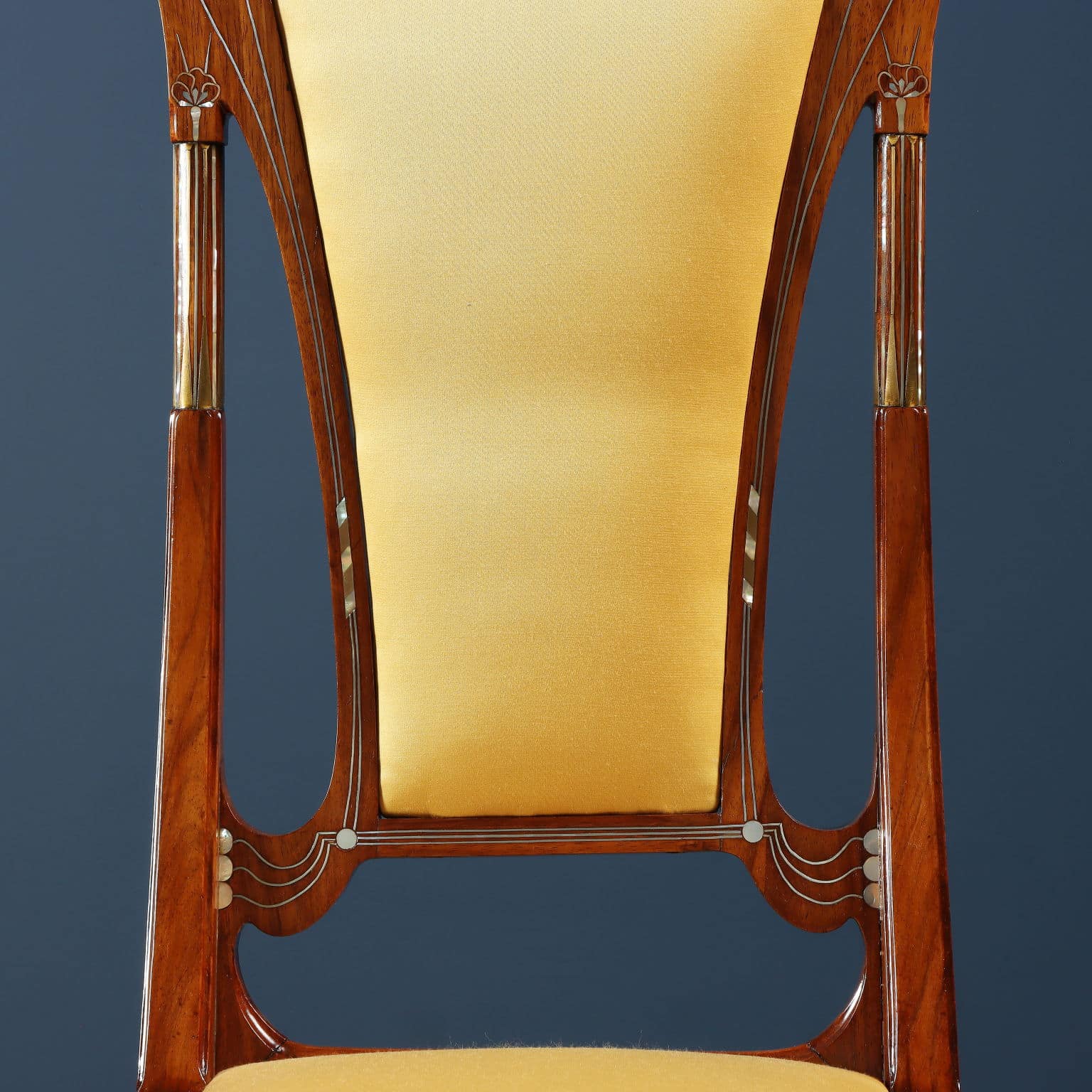
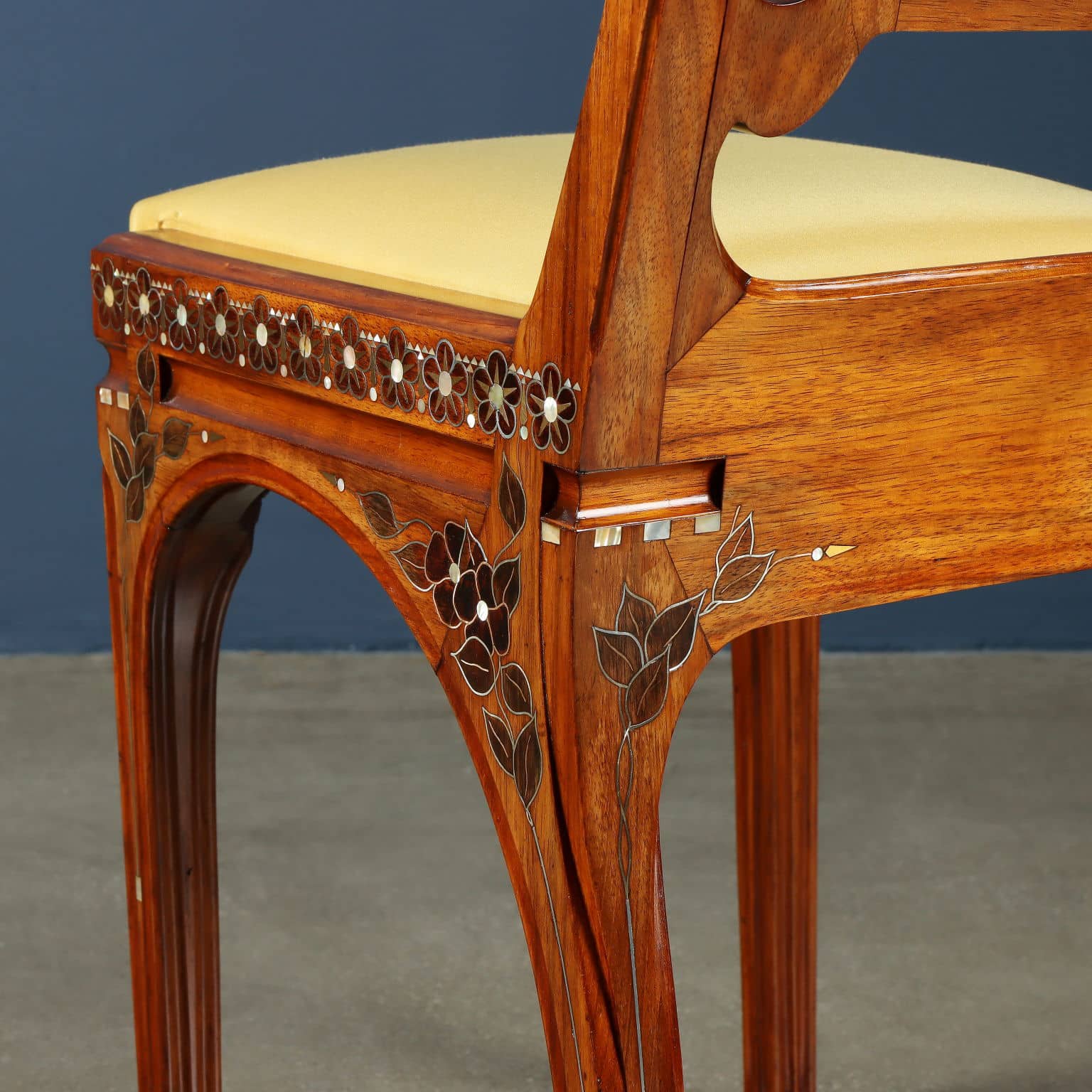
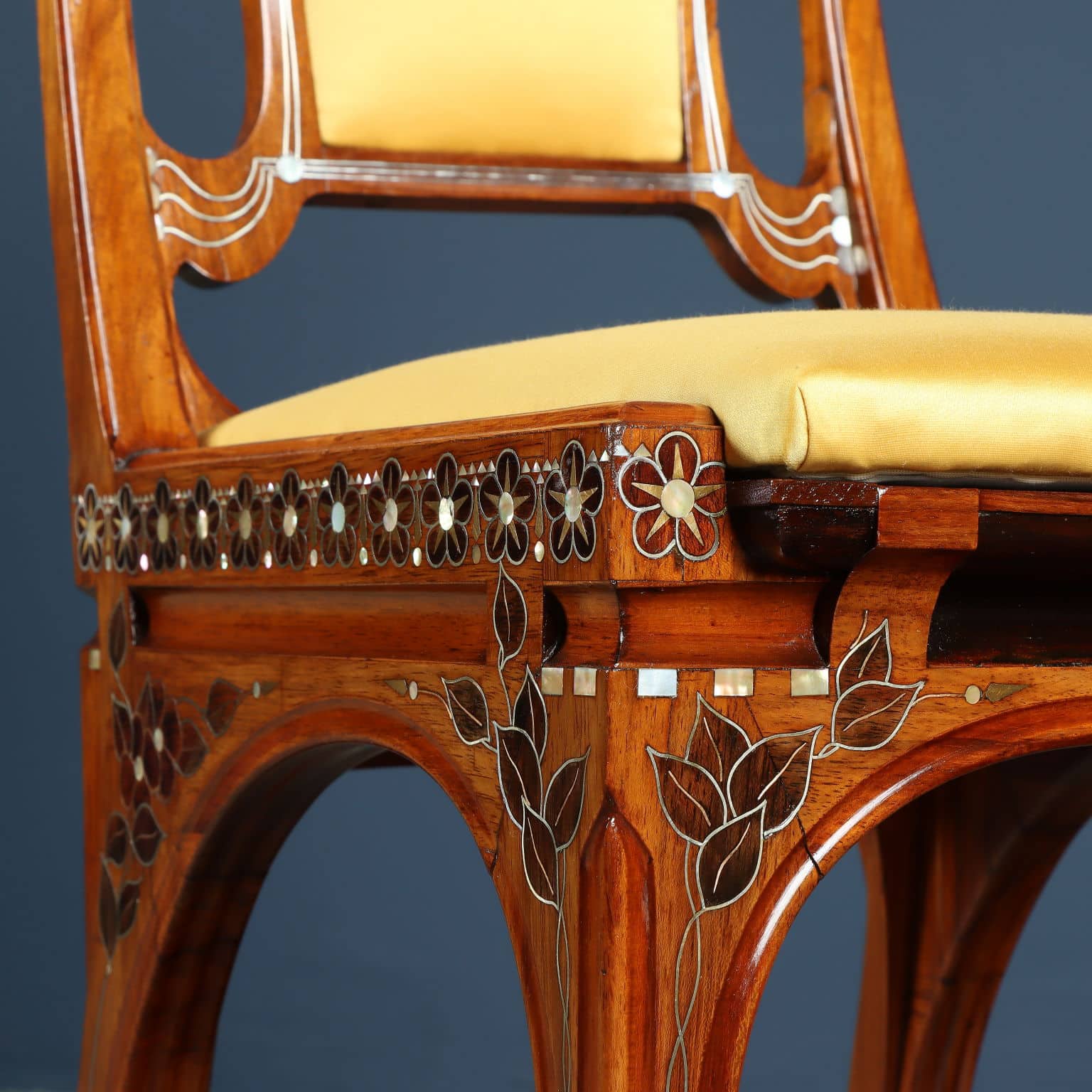
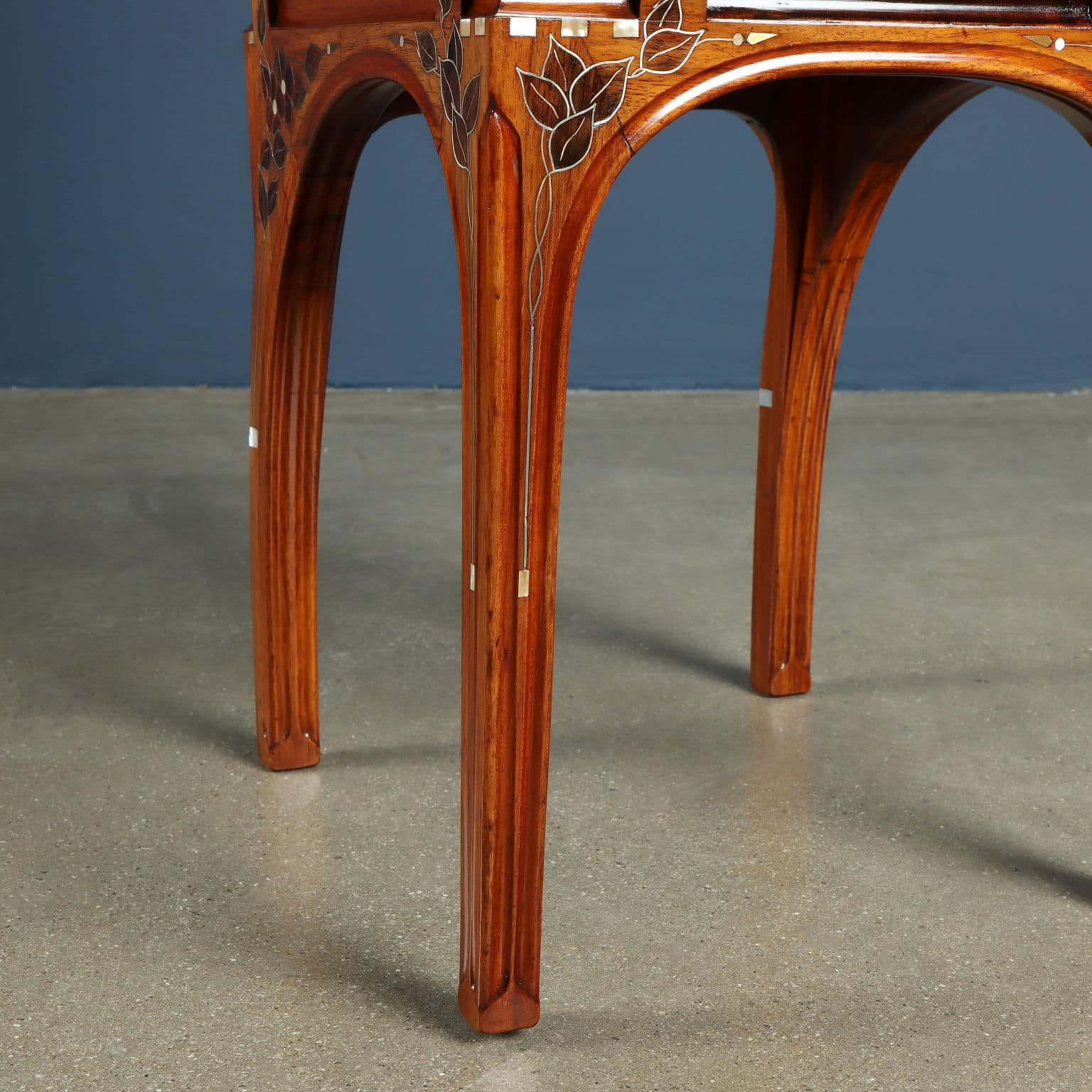
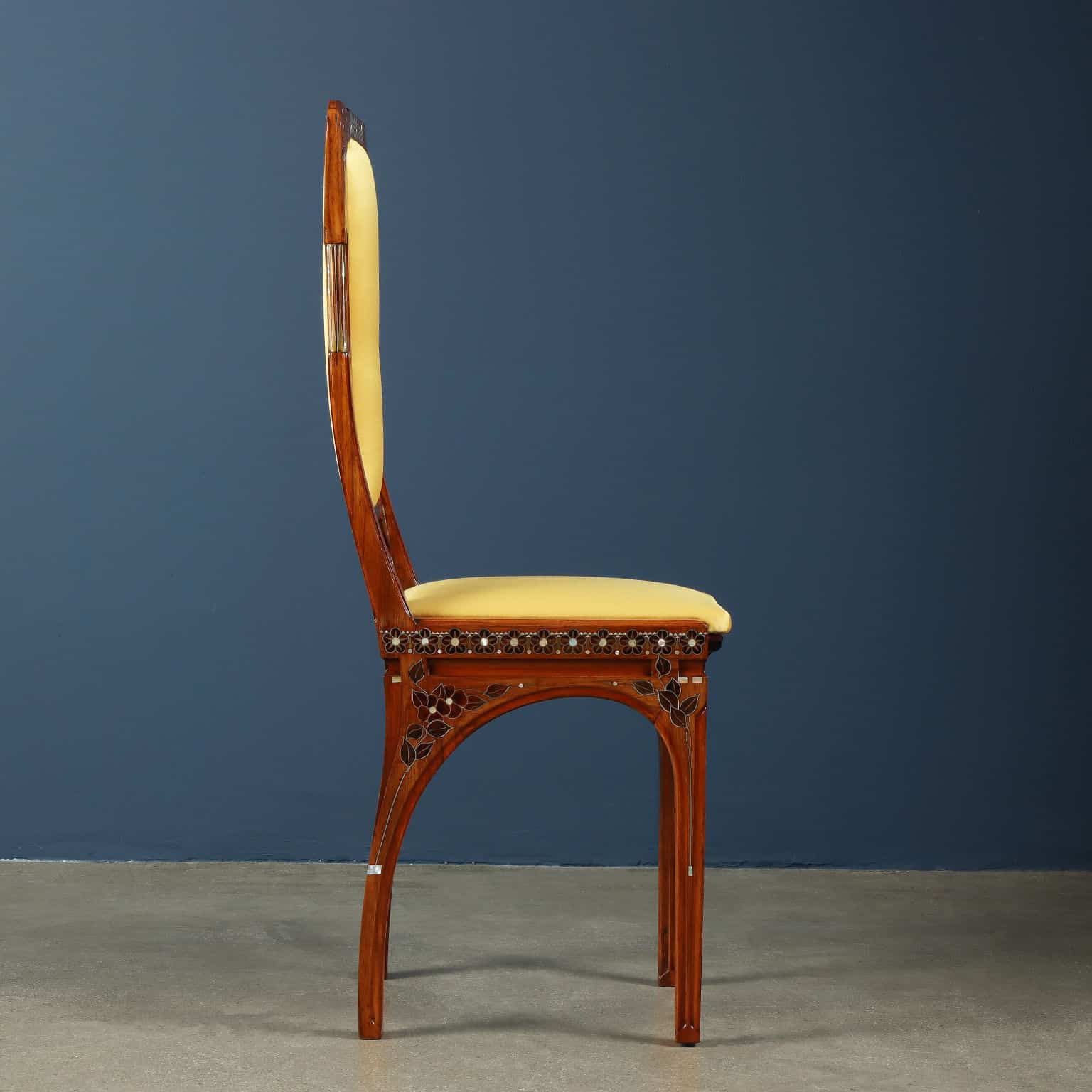
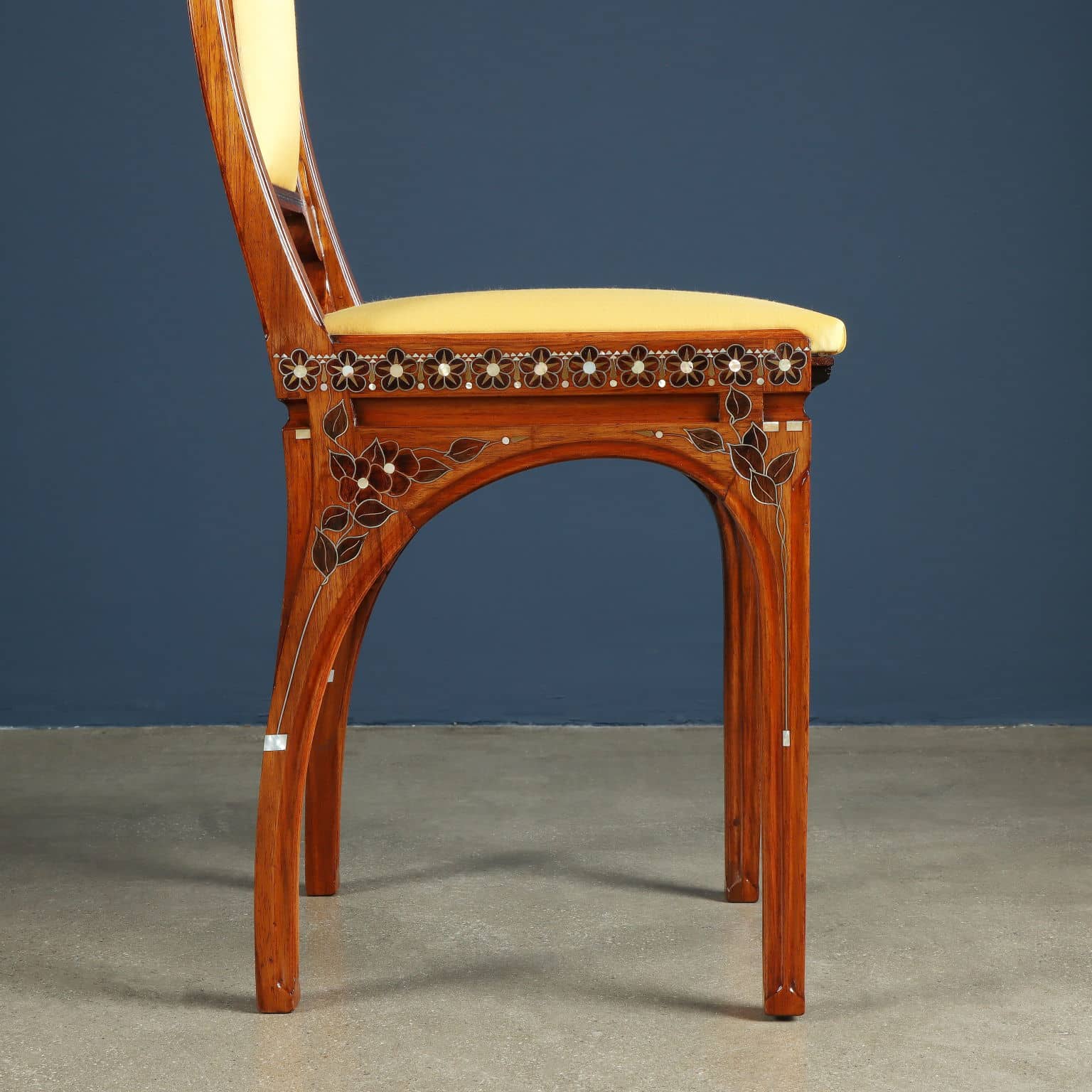
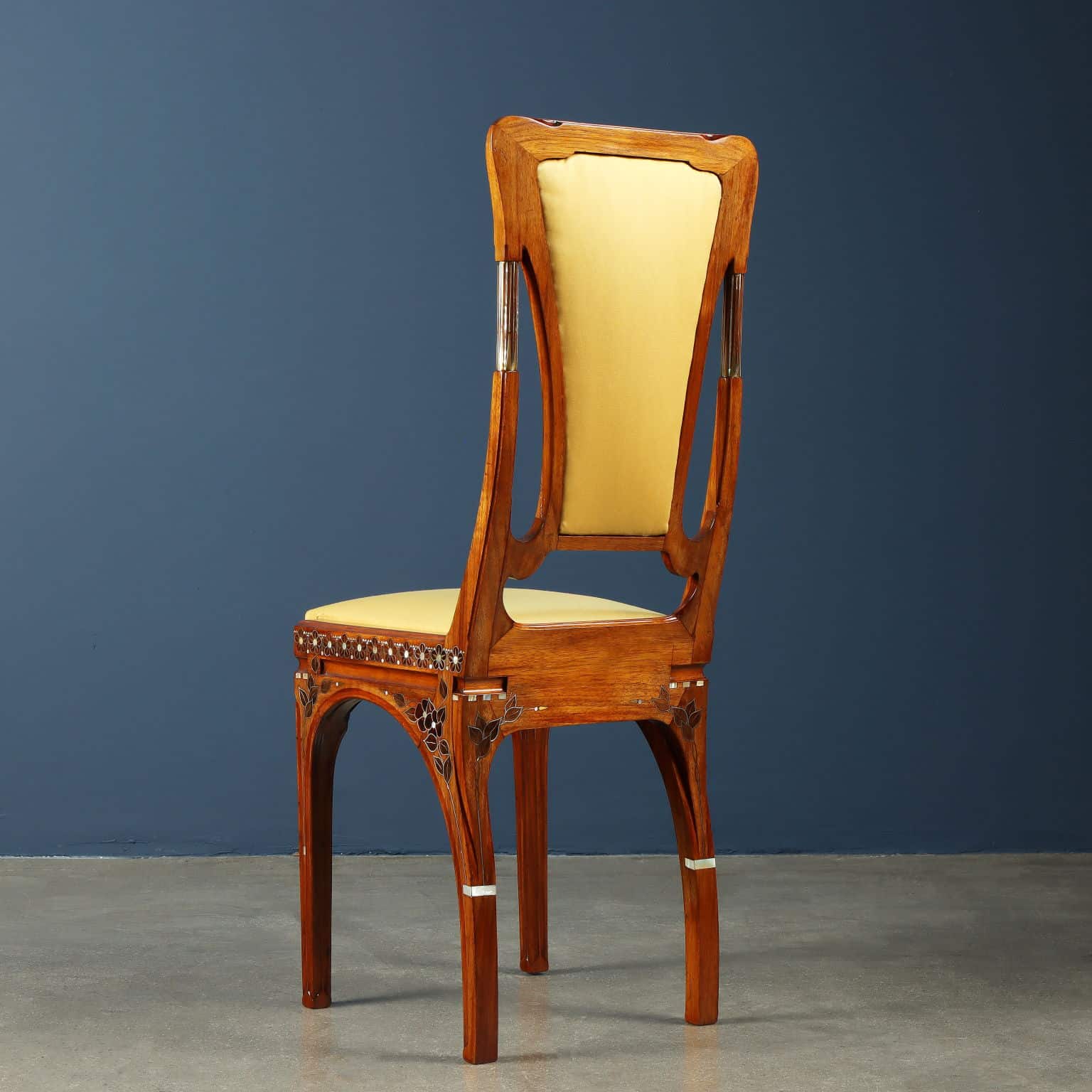
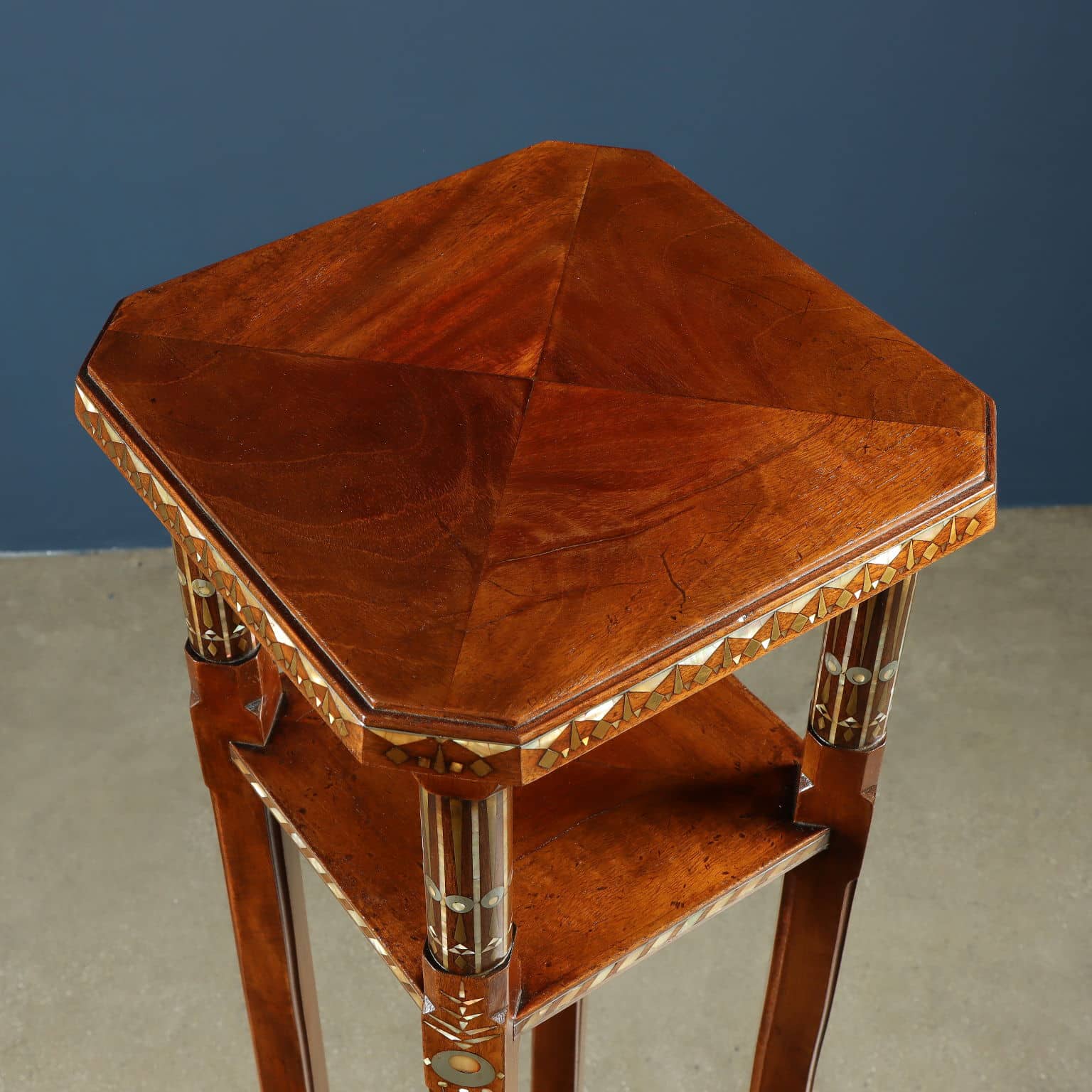
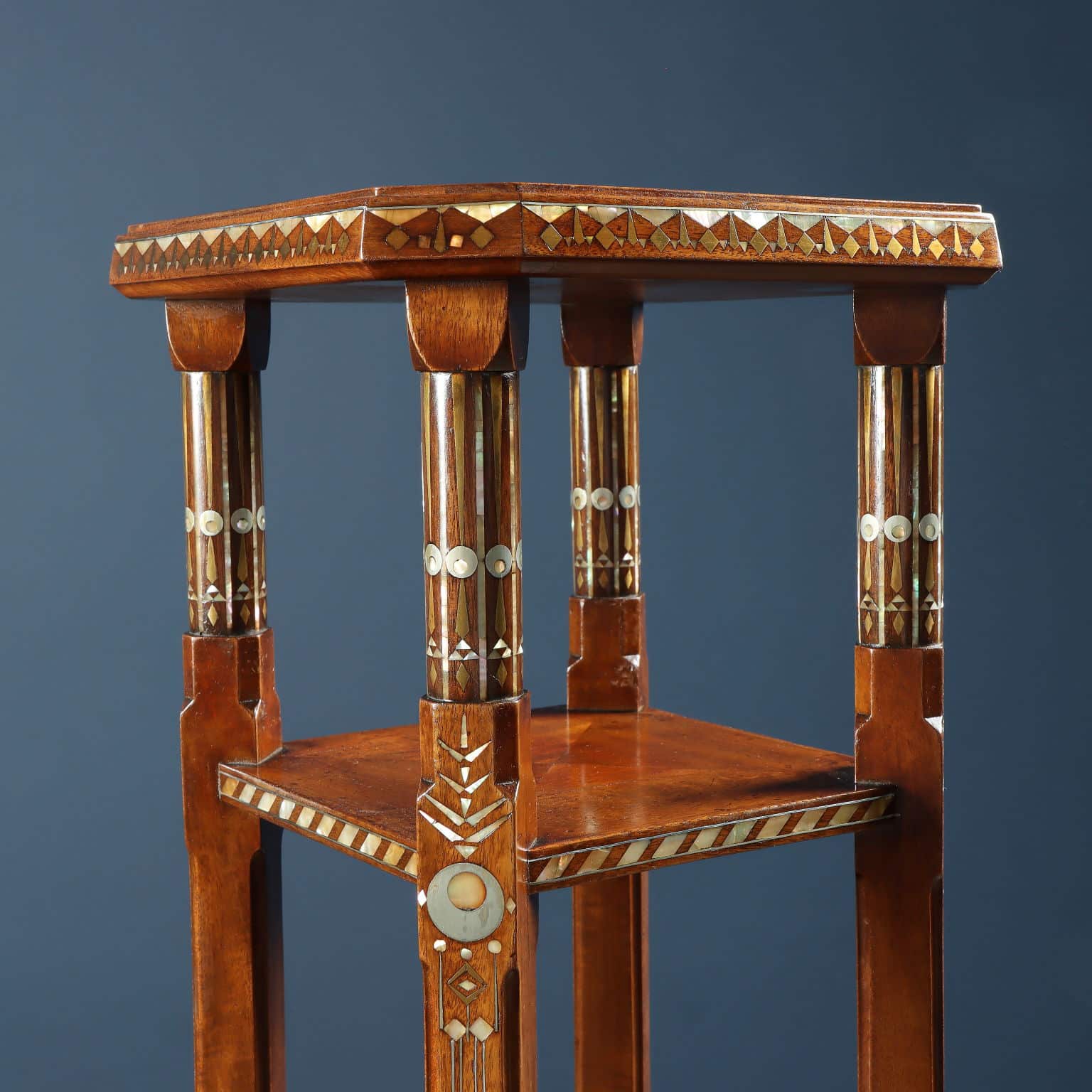
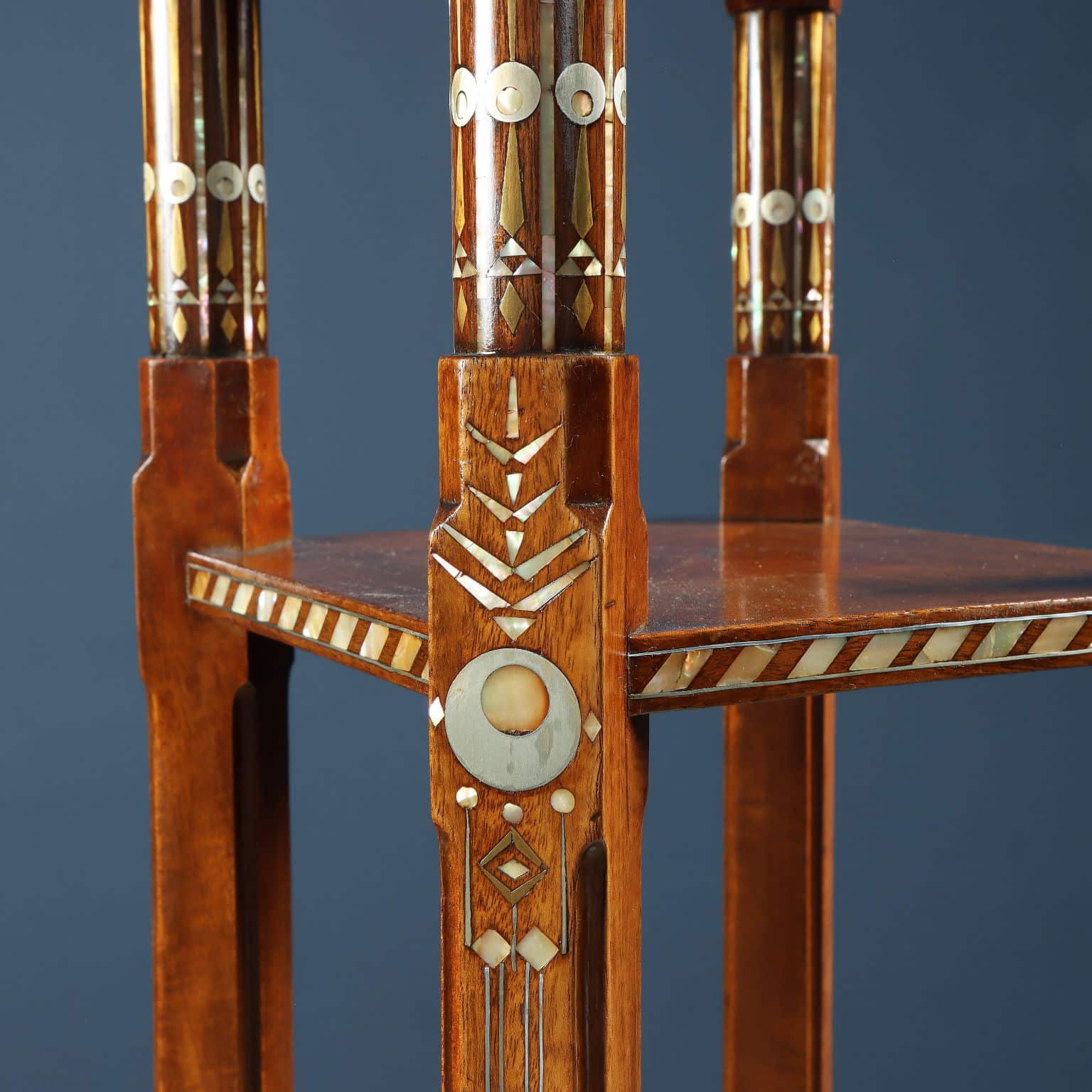
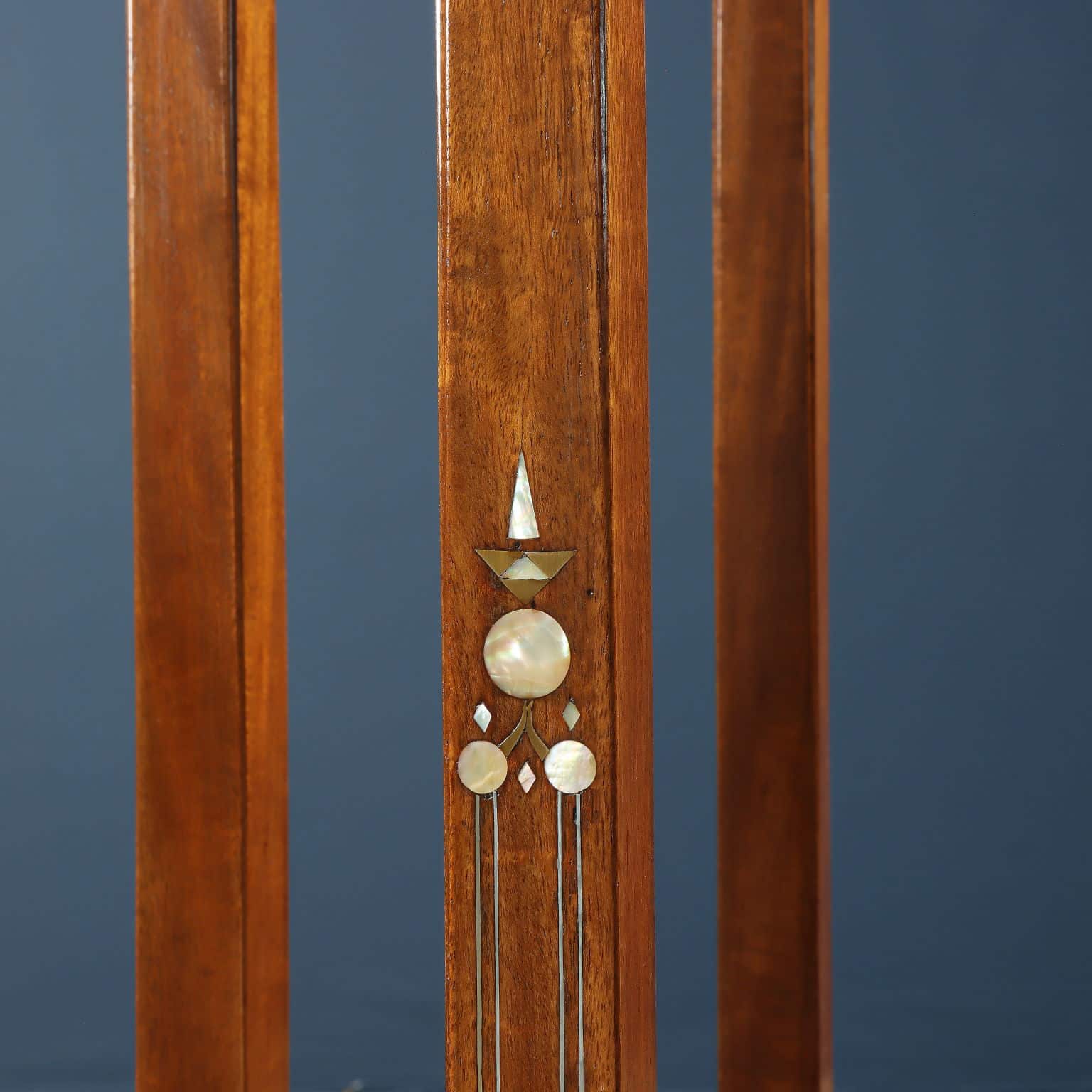
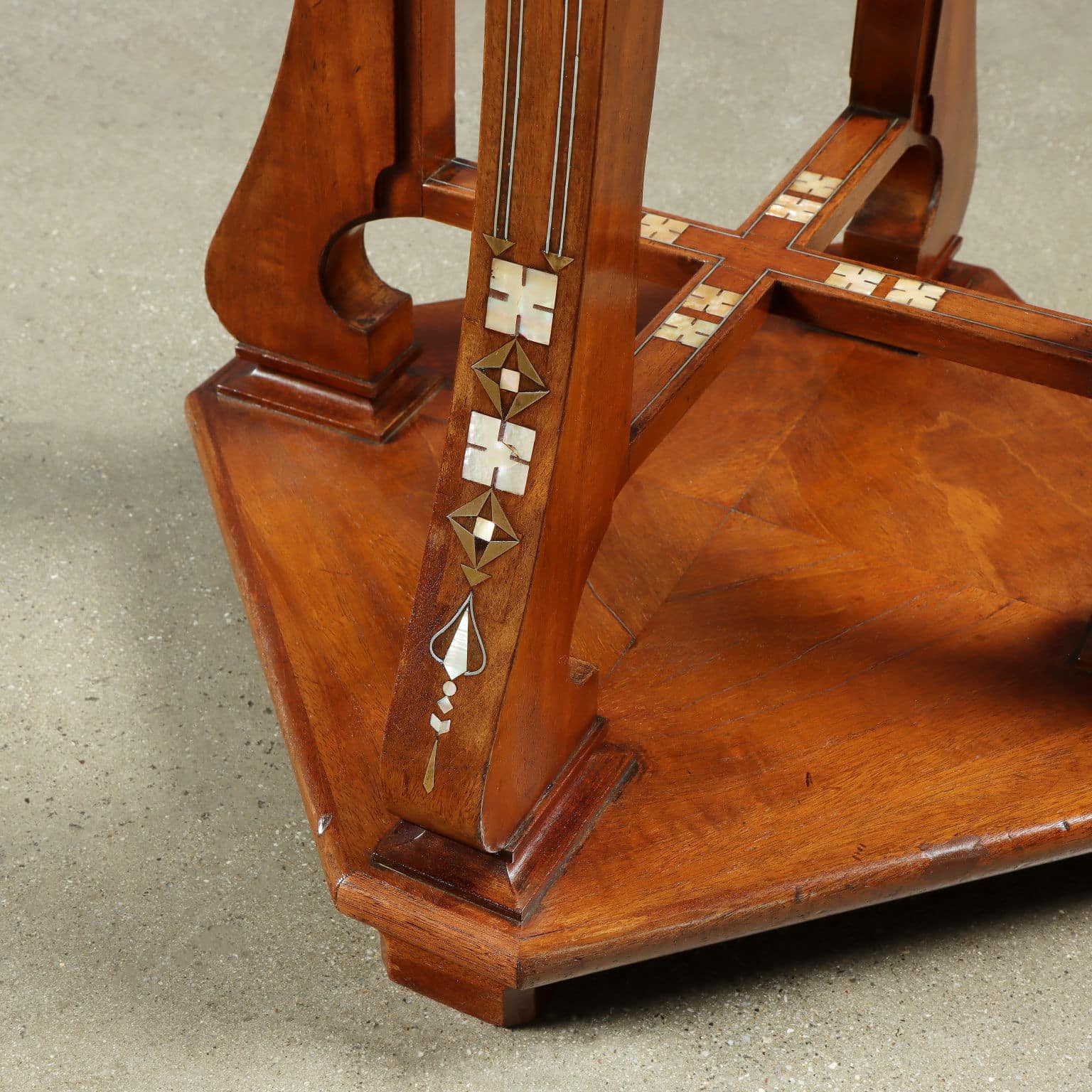
The sofa is composed of two small open-front cabinets surmounted by an elegantly arched mirror. The wall mirror features a central mirror ending in two pointed arches, above which is mounted a circular mirror. On the front, a slender column serves as a plant stand, while a bronze lamp is mounted on one side. The display cabinet consists of a glazed compartment above an open shelf, surmounted by a mirror. The glazed door is framed by an elaborate floral bronze mount. Four slender uprights support the plant stand, which incorporates a lower compartment divided by an intermediate shelf. The writing desk has a rectangular form with gently curved short sides and is accompanied by its original chair, raised on arched legs and upholstered, like the sofa, in yellow silk. The suite is crafted in mahogany, enriched with brass and white brass stringing, mother-of-pearl inlays forming Oriental-inspired decorative motifs, and floral marquetry executed in stained mahogany.
Dimensions: Sofa: 193 × 220 × 58 cm; Wall mirror: 224 × 85 × 35 cm; Display cabinet: 187 × 85 × 30 cm; Plant stand: 135 × 38 × 38 cm; Writing desk: 75 × 107 × 60 cm
Code: ANMOAR0284415

Following several years of training in Paris and a brief apprenticeship in Carlo Bugatti’s Milan workshop in 1888, Eugenio Quarti (1867–1929) established his own cabinetmaking atelier in Milan while still in his early twenties. Although his earliest works, exhibited at the Antwerp International Exhibition and at the Milan Exhibition of 1894, clearly reflected Bugatti’s influence, Quarti soon developed an unmistakably personal style. His designs became increasingly refined, characterized by elegant, slender lines and delicate inlay work executed with precious materials.
At the 1900 Exposition Universelle in Paris, the salon suite presented by Quarti was awarded the Grand Prix, the exhibition’s highest distinction. As noted by Irene de Guttry:
“The English and Japanese commissioners—the two most knowledgeable jurors in the field of decorative arts—championed his work, praising both the cabinetmaker’s outstanding craftsmanship and the exquisite refinement of his marquetry.”
This prestigious award established Quarti’s international reputation. Two years later, at the Turin International Exhibition, his display room was listed for the highest award but declared hors concours in recognition of the Grand Prix already received in Paris, further confirming his superiority over his contemporaries. Historical photographs surviving from the Paris exhibition clearly identify the same chair, display cabinet and writing desk, while an original photograph of the desk top has also been preserved. Quarti was among the first designers to conceive complete interior environments, creating harmonious ensembles in which every furnishing was integrated with the architectural decoration, wall finishes, carpets and decorative arts through close collaboration with other craftsmen. This innovative approach led to numerous prestigious commissions following later exhibitions, including the 1906 Milan International Exhibition (Esposizione Internazionale del Sempione). Among his most celebrated projects were the interiors of the Casino at San Pellegrino Terme and the iconic Camparino Bar in Milan’s Galleria Vittorio Emanuele II. During the 1920s, Quarti was joined by his son Mario, who assumed the direction of the family workshop following his father’s death. The present suite represents one of several variations developed from the prototype exhibited in Paris, where the original pieces remained unchanged. Among the known variants, both the sofa and the wall mirror are considered particularly remarkable for their elegance and artistic quality. Although the upholstery has undoubtedly been replaced over time, the furniture itself has been preserved in outstanding condition. Works by Eugenio Quarti are held in numerous public collections. Among the most important is the Museum of Decorative Arts at Milan’s Castello Sforzesco, which houses an extensive group of Quarti’s furniture, including a chair identical to the present example. The Musée d’Orsay in Paris also preserves a writing desk and chair dating from 1898, works that already reveal the emergence of Quarti’s distinctive artistic language.
A closely related version of this salon suite, with several variations, is preserved in the Fondazione Chiara e Francesco Carraro.
Several pieces from the present suite—including the writing desk, chair, wall mirror and display cabinet—were exhibited in the Art Nouveau exhibition “Liberty. L’arte dell’Italia moderna”, curated by Manuel Carrera, Davide Dotti and Anna Villari, held at Palazzo Martinengo, Brescia, from 24 January to 14 June 2026.

FineArt is the new ambitious Di Mano in Mano project that offers an exclusive choice of antiques and design works, presenting them for their singularity and uniqueness.
FineArt by Di Mano in Mano is a team of experts at your service to enhance furniture, paintings, finest antiques, art and design masterpieces at best.
Di Mano in Mano
Via Castellazzo 8, Cambiago (MI)
20040

Automated page speed optimizations for fast site performance